Andrew from Very Good Taste lists 100 food items that he thinks “every good omnivore should have tried at least once in their life.” Andrew explains how he made up the list, which has proved immensely popular amongst food-bloggers. It is a challenge to find most of the listed food items in my area: for instance, crocodile, scotch bonnet pepper and fugu would have to be imported, and I doubt that there would be a huge market for them anyway. Some of the items on the list are simply too expensive for most people's pockets: I don't drink whisky, which is widely available all over the world, so I don't think I'll be dying to taste malt whisky from a bottle worth £60/$120 or more, which is on the list.
With a little artistic licence, most of the items on Andrew's list can be replaced by another local food item, in my case from Hania, of course; in other words, the same list can be made up with similar food items found in a different form in other parts of the world. Andrew freely admits that his list contains more curry and alcohol than necessary because of his origins (he's English), making the list non-definitive; a Haniotiko list will probably contain a preponderance of wild greens. Some of the items on the list are actually cooked meals, which can also be made up at home using local ingredients and a good recipe, for example "huevos rancheros" and "borscht".
Although I don't do memes (I prefer themes), I couldn't help myself with this one: after Lulu and Kat, I decided to give it a try. If I were to present you with a list of the top 100 food items that you should try to get your teeth stuck into on your next Cretan holiday, my list (based on Andrew's) would look something like the one below. Andrew's items are on the left, while mine are on the right. Some items have not been replaced: they may be considered classics among foodies. I've italicised the ones I've tried; the ones in bold are those I had never heard of before reading the original article.
1. Venison - Greek spring lamb slaughtered just before Easter
2. Nettle tea - malotira from the Lefka Ori (White Mountains)
3. Huevos rancheros - strapatsada could be the Greek equivalent of this dish as it uses eggs and tomatoes
4. Steak tartare - in Greece, meat is never eaten raw; there is no equivalent
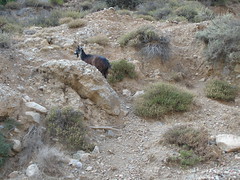
5. Crocodile - Cretan ibex, locally called kri-kri, an endangered species, often hunted by poachers (Andrew received negative comments concerning his inclusion of endangered species; the fact that they are endangered does not detract from how good they taste)
6. Black pudding - splinogardoumo: the Greek equivalent of blood sausage
7. Cheese fondue - kalitsounia (traditional Cretan cheese pasties) made with malaka cheese
8. Carp - fried red mullet; it doesn't look like a pet, so it will be more edibly desirable
9. Borscht - avgolemono (egg and lemon) soup is the Cretan signature equivalent
10. Baba ghanoush - melitzanosalata is just about the same thing
11. Calamari - we find ourselves at the source
12. Pho - this sounds about as boring as my husband's family's recipe for kreatosoupa (meat soup, made with beef, using the same ingredients as fish soup, with fish replaced by Greek stringy beef); eat at your own pleasure
13. PB&J sandwich - Greeks don't commonly mix their sweet with their savoury; a BLT is much more preferable to Andrew's choice
14. Aloo gobi - there is no substitute for a curry in Greece, and as a curry fan, I would have to agree with Andrew
15. Hot dog from a street cart - souvlaki, indisputably
16. Epoisses - there are plenty of excellent Cretan cheeses widely available all over the island
17. Black truffle - local varieties of these can be picked in our forests
18. Fruit wine made from something other than grapes - I've had koumara wine (made from the arbute berry); give me grape wine any day
19. Steamed pork buns - steamed bread is not a Greek comestible, but if I were to choose my own favorite meat-in-bread food, it would have to a Kiwi sausage roll
20. Pistachio ice cream - good ice-cream is expensive in Greece, but it does exist: my favorite in Hania is banana ice-cream from Klimatsakis
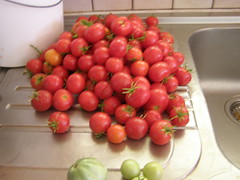
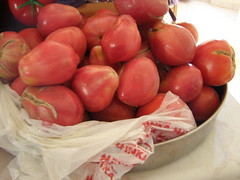
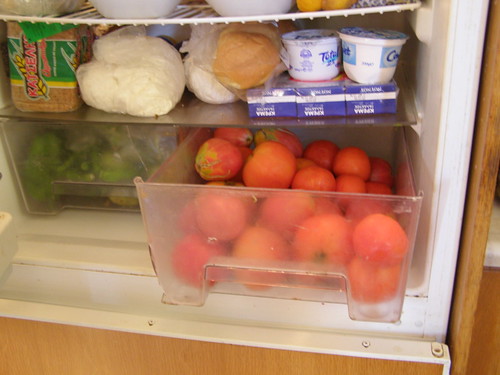
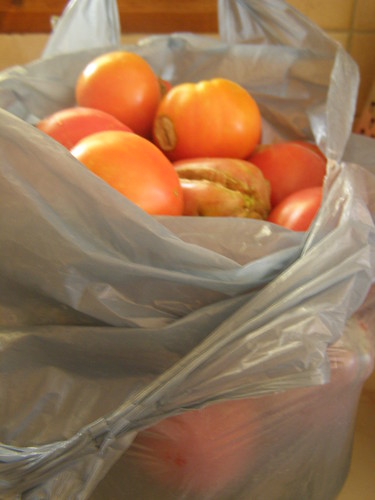
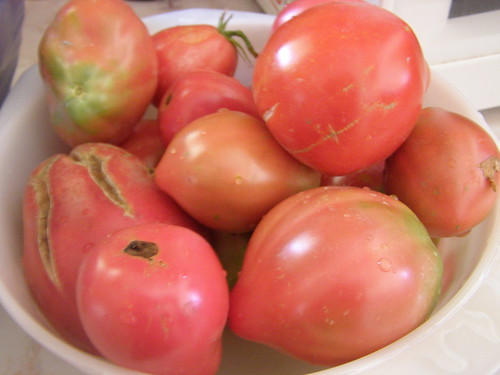
21. Heirloom tomatoes - they grow in our garden
22. Fresh wild berries - wild blackberries in Fournes; to date, I don't know anyone else who picks them apart from myself
23. Foie gras - offal is eaten in various forms in Crete, and there is plenty of variety available
24. Rice and beans - Cretan pilafi, especially that which is served at a Cretan wedding, is simply heaven
25. Brawn, or head cheese - my father remembers a similar kind of preserve prepared from pork meat, in the days when refrigerators did not exist; a whole pig could not be eaten by one family, and one way to preserve it was to cook some and save it in its own fat in ceramic pots
26. Raw Scotch Bonnet pepper - Greeks don't eat overly hot peppers; piperonia (bud-size hot red peppers) are grown as ornamentals and are added to soups - we grow them ourselves
27. Dulce de leche - try a good Greek rizogalo; tasty, and very good for the stomach
28. Oysters - preferably from Bluff, New Zealand; my parents often served these in our shop - in their raw form, they are pure ambrosia
29. Baklava - we find ourselves at the source
30. Bagna cauda - here's a regional alternative: grate a clove of garlic into some seasoned grated fresh Cretan sun-kissed tomato; add chili if desired, and enjoy with good quality sourdough bread
31. Wasabi peas - try salted chickpeas (we call them (a)stragali, the Greek word for "ankle", as they are shaped) with a nip of tsikoudia home brew
32. Clam chowder in a sourdough bowl - we have nothing like it, and I can't wait to try it
33. Salted lassi - Greek strained yoghurt with drizzling honey
34. Sauerkraut - stamnagathi; there is no salad quite like it
35. Root beer float - I've had a spider, but this has nothing to do with Cretan cuisine
36. Cognac with a fat cigar - salata zonianon is supposedly the best kind of smoked greens you can get, according to the Dutch...
37. Clotted cream tea - staka dip (with fried eggs)
38. Vodka jelly/Jell-O - try a Yiotis cake, if you're inclined towards cake mixes and the like
39. Gumbo - we find ourselves at the source
40. Oxtail - surely it can't be more exciting than goat's or sheep's balls
41. Curried goat - we eat plenty of goat in Crete, so this could be replicated
42. Whole insects - cats, dogs and hedgehogs were eaten during the war, but insects were definitely not
43. Phaal - only if you're into self-flagellation; the closest equivalent in Crete would be super-strength tsikoudia
44. Goat’s milk - my grandmother gave me fresh goat's milk to drink as soon as she'd milked the goats without boiling it, and I remember it was the best milk I'd ever had to drink
45. Malt whisky from a bottle worth £60/$120 or more - barrel-aged wine
46. Fugu - one's man food is another man's poison; Cretans eat stifno and avronies, both of which are considered toxic in other cultures
47. Chicken tikka masala - if the English can invent a dish and christen it Indian, they can invent a Greek dish too: the BBC has a recipe for vegetarian moussaka using lentils instead of mince; eat at your pleasure
48. Eel - moray eel; one of the tastiest fish I have ever had, eaten within hours of being caught in the region of Sfakia in southern Hania
49. Krispy Kreme original glazed doughnut - Yotis millefeuille is considered the culinary climax in terms of boxed cake mixes
50. Sea urchin - we find ourselves at the source
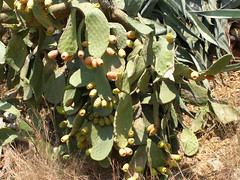
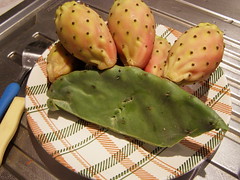
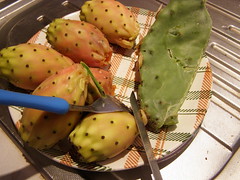
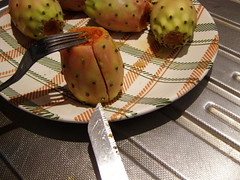
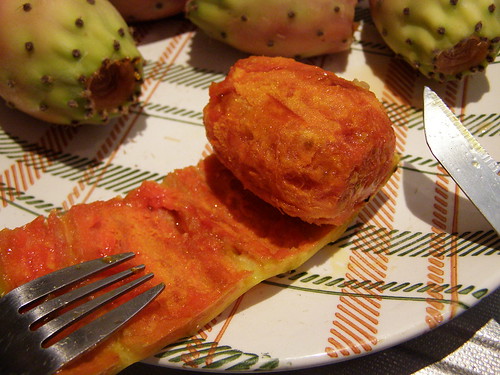
51. Prickly pear - we find ourselves at the source
52. Umeboshi - as a salted dried fruit, I found it quite revolting; similar prunes from different varieties are also sold all over Greece
53. Abalone - as I have tasted the real thing in New Zealand (which we call paua), I won't replace it; it is simply divine
54. Paneer - Cretan mizithra is much the same kind of thing as this Indian cheese
55. McDonald’s Big Mac Meal - Goody's Junior meal (it's just as plasticky, tasteless and fast)
56. Spaetzle - Cretan hilopites are just as gooey
57. Dirty gin martini - tsikoudia, especially the night it is distilled, straight from the spout
58. Beer above 8% ABV - beer is produced in Greece according to non-Greek traditions; one could instead try home-brewed Cretan rose wine, after it has been left to mature for five years; we are still drinking from my late father's barrels
59. Poutine - fry some potatoes on a gas element (not an electric ring) and sprinkle some mizithra cheese over them - they'll look more healthy rather than cheap and nasty
60. Carob chips - haroupia (carob pods); they remind you of chocolate, but aren't eaten any more, except by goats; my father remembers them as his first candy bar
61. S’mores - such processed culinary wonders are unheard of in Crete
62. Sweetbreads - although sweetbreads are eaten in Crete as part of a dish containing offal, the guts, heart, spleen, liver, kidneys and sweetbread cooked 'ofto'-style - thrown onto burning coals - are a more original version of offal, often eaten this way by hunters overnighting on mountains
63. Kaolin - try sea salt by the teaspoon if you desire that much to eat something that is generally speaking considered edible; it's especially tasty when you have collected it yourself from a salty beach and added it to your Greek salad
64. Currywurst - sounds very much like a melting pot culture's meal; try making a moussaka which is completely unrelated to what the average Greek will consider is moussaka - again the BBC is an expert on such concoctions; or maybe a Greek salad with the wrong type of tomato
65. Durian - no such thing as stinky fruit in Greece, or any kind of fruit that needs to be banned from hotels and public transport systems, for that matter
66. Frogs’ legs - spicy chicken wings can be just as tasty; far less troublesome, more easy to find
67. Beignets, churros, elephant ears or funnel cake - poor Andrew, you don't know the Cretan xerotigana, do you...
68. Haggis - most cultures in the world have their own version of this Scottish specialty; in Greece it would have to be kokoretsi
69. Fried plantain - fried battered unripe bananas probably taste very similar; this is a popular fast food staple in New Zealand fish and chip shops
70. Chitterlings, or andouillette - Cretan gardoumia are an Easter specialty; another way to enjoy the ingredients used in this dish is as a soup called patsas, popularly served in old-fashioned mayeiria rather than tavernas
71. Gazpacho - never heard of cold soup served in Crete; gazpacho salad would probably go down better
72. Caviar and blini - fine food is recognised everywhere in the world; although I can only think of sea urchin accompanied by sourdough bread as an interesting alternative in Crete, I would also be inclined to keep this one in as is
73. Louche absinthe - I don't like ouzo myself, but my bet is it could safely replace this French drink; it certainly transforms its colour with the addition of water
74. Gjetost, or brunost - we can safely say that there are plenty of Cretan cheeses available for all tastes
75. Roadkill - I thought it was just us Cretans who did this; ask any Cretan hunter how he's caught a hare, and I'm sure this method will have been used by him at some point in his life
76. Baijiu - tsikoudia will do just fine, and probably tastes better
77. Hostess Fruit Pie - again, if mass-produced high-fat high-calorie prepared refrigerated food is something you crave, one could replace that with a Greek baker's milopita (apple pie)
78. Snail - we find ourselves at the source
79. Lapsang souchong - Cretan teas are famous for their clear natural taste and medicinal values; try malotira and diktamo when you come here
80. Bellini - this is all a matter of personal taste; limoncello can't be beat in my mind
81. Tom yum - I think a good kakavia (the Greek version of bouillebaisse) can easily replace it
82. Eggs Benedict - I would have to agree with Andrew; we all love a cooked egg with some bread, and it can take many different forms according to culture
83. Pocky - these biscuits look similar to mass-produced chocolate coated biscuits that are sold all over the world in different forms; I doubt the Japanese version is any better than other types of biscuits of this type
84. Tasting menu at a three-Michelin-star restaurant - a meal in a mayeirio in the Agora of Hania; nothing quite like it...
85. Kobe beef - good Greek beef is hard to find in Greece; if you're worried about too many stringy bits in your meat, try lamb or goat instead
86. Hare - we find ourselves in the source
87. Goulash - fasolada and lentil soup (fa-kes) are both considered national Greek hearty soups
88. Flowers - we find ourselves at the source
89. Horse - like crocodile (number 5), this cannot be substituted
90. Criollo chocolate - chocolate is not a Cretan product, but it doesn't have to be Criollo chocolate to taste good
91. Spam - corned beef and canned luncheon meat used to be very popular in Greece when people were not able to keep products fresh; it'snow considered a kind of old-fashioned meat
92. Soft shell crab - we do this with shrimps when they are small enough, especially when they have been barbecued; ifsmall crabs were avaialble as frequently as shrimps here in Hania, I would probably eat them in this way too
93. Rose harissa - this complicated sauce sounds like it can be replaced by a good spicy sauce for stifado or soutzoukakia, which can be used to flavour spaghetti, potatoes and rice
94. Catfish - skate is also a very tasty fish when fried
95. Mole poblano - see rose harissa (number 93)
96. Bagel and lox - these should be mentioned separately; lox is not a Cretan specialty (and quite frankly, our cuisine is too rustic for such a refined food item), while the Greek koulouri is unbeatable for taste and shape
97. Lobster Thermidor - this sounds as special as the Greek version of bouillebaisse (kakavia), and just as expensive
98. Polenta - xinohondro; an old-fashioned wheat rusk, still enjoyed by people who have developed this acquired taste
99. Jamaican Blue Mountain coffee - a cold, frothy frappe coffee, while sitting on a balcony overlooking the Mediterranean sea on a very hot summer's day
100. Snake - try hedgehog, another unusual meat; it was eaten during the war
The rules for the game Andrew invented (from Very Good Taste) are as follows:
2. Nettle tea - malotira from the Lefka Ori (White Mountains)
3. Huevos rancheros - strapatsada could be the Greek equivalent of this dish as it uses eggs and tomatoes
4. Steak tartare - in Greece, meat is never eaten raw; there is no equivalent
5. Crocodile - Cretan ibex, locally called kri-kri, an endangered species, often hunted by poachers (Andrew received negative comments concerning his inclusion of endangered species; the fact that they are endangered does not detract from how good they taste)
6. Black pudding - splinogardoumo: the Greek equivalent of blood sausage
7. Cheese fondue - kalitsounia (traditional Cretan cheese pasties) made with malaka cheese
8. Carp - fried red mullet; it doesn't look like a pet, so it will be more edibly desirable
9. Borscht - avgolemono (egg and lemon) soup is the Cretan signature equivalent
10. Baba ghanoush - melitzanosalata is just about the same thing
11. Calamari - we find ourselves at the source
12. Pho - this sounds about as boring as my husband's family's recipe for kreatosoupa (meat soup, made with beef, using the same ingredients as fish soup, with fish replaced by Greek stringy beef); eat at your own pleasure
13. PB&J sandwich - Greeks don't commonly mix their sweet with their savoury; a BLT is much more preferable to Andrew's choice
14. Aloo gobi - there is no substitute for a curry in Greece, and as a curry fan, I would have to agree with Andrew
15. Hot dog from a street cart - souvlaki, indisputably
16. Epoisses - there are plenty of excellent Cretan cheeses widely available all over the island
17. Black truffle - local varieties of these can be picked in our forests
18. Fruit wine made from something other than grapes - I've had koumara wine (made from the arbute berry); give me grape wine any day
19. Steamed pork buns - steamed bread is not a Greek comestible, but if I were to choose my own favorite meat-in-bread food, it would have to a Kiwi sausage roll
20. Pistachio ice cream - good ice-cream is expensive in Greece, but it does exist: my favorite in Hania is banana ice-cream from Klimatsakis
21. Heirloom tomatoes - they grow in our garden
22. Fresh wild berries - wild blackberries in Fournes; to date, I don't know anyone else who picks them apart from myself
23. Foie gras - offal is eaten in various forms in Crete, and there is plenty of variety available
24. Rice and beans - Cretan pilafi, especially that which is served at a Cretan wedding, is simply heaven
25. Brawn, or head cheese - my father remembers a similar kind of preserve prepared from pork meat, in the days when refrigerators did not exist; a whole pig could not be eaten by one family, and one way to preserve it was to cook some and save it in its own fat in ceramic pots
26. Raw Scotch Bonnet pepper - Greeks don't eat overly hot peppers; piperonia (bud-size hot red peppers) are grown as ornamentals and are added to soups - we grow them ourselves
27. Dulce de leche - try a good Greek rizogalo; tasty, and very good for the stomach
28. Oysters - preferably from Bluff, New Zealand; my parents often served these in our shop - in their raw form, they are pure ambrosia
29. Baklava - we find ourselves at the source
30. Bagna cauda - here's a regional alternative: grate a clove of garlic into some seasoned grated fresh Cretan sun-kissed tomato; add chili if desired, and enjoy with good quality sourdough bread
31. Wasabi peas - try salted chickpeas (we call them (a)stragali, the Greek word for "ankle", as they are shaped) with a nip of tsikoudia home brew
32. Clam chowder in a sourdough bowl - we have nothing like it, and I can't wait to try it
33. Salted lassi - Greek strained yoghurt with drizzling honey
34. Sauerkraut - stamnagathi; there is no salad quite like it
35. Root beer float - I've had a spider, but this has nothing to do with Cretan cuisine
36. Cognac with a fat cigar - salata zonianon is supposedly the best kind of smoked greens you can get, according to the Dutch...
37. Clotted cream tea - staka dip (with fried eggs)
38. Vodka jelly/Jell-O - try a Yiotis cake, if you're inclined towards cake mixes and the like
39. Gumbo - we find ourselves at the source
40. Oxtail - surely it can't be more exciting than goat's or sheep's balls
41. Curried goat - we eat plenty of goat in Crete, so this could be replicated
42. Whole insects - cats, dogs and hedgehogs were eaten during the war, but insects were definitely not
43. Phaal - only if you're into self-flagellation; the closest equivalent in Crete would be super-strength tsikoudia
44. Goat’s milk - my grandmother gave me fresh goat's milk to drink as soon as she'd milked the goats without boiling it, and I remember it was the best milk I'd ever had to drink
45. Malt whisky from a bottle worth £60/$120 or more - barrel-aged wine
46. Fugu - one's man food is another man's poison; Cretans eat stifno and avronies, both of which are considered toxic in other cultures
47. Chicken tikka masala - if the English can invent a dish and christen it Indian, they can invent a Greek dish too: the BBC has a recipe for vegetarian moussaka using lentils instead of mince; eat at your pleasure
48. Eel - moray eel; one of the tastiest fish I have ever had, eaten within hours of being caught in the region of Sfakia in southern Hania
49. Krispy Kreme original glazed doughnut - Yotis millefeuille is considered the culinary climax in terms of boxed cake mixes
50. Sea urchin - we find ourselves at the source
51. Prickly pear - we find ourselves at the source
52. Umeboshi - as a salted dried fruit, I found it quite revolting; similar prunes from different varieties are also sold all over Greece
53. Abalone - as I have tasted the real thing in New Zealand (which we call paua), I won't replace it; it is simply divine
54. Paneer - Cretan mizithra is much the same kind of thing as this Indian cheese
55. McDonald’s Big Mac Meal - Goody's Junior meal (it's just as plasticky, tasteless and fast)
56. Spaetzle - Cretan hilopites are just as gooey
57. Dirty gin martini - tsikoudia, especially the night it is distilled, straight from the spout
58. Beer above 8% ABV - beer is produced in Greece according to non-Greek traditions; one could instead try home-brewed Cretan rose wine, after it has been left to mature for five years; we are still drinking from my late father's barrels
59. Poutine - fry some potatoes on a gas element (not an electric ring) and sprinkle some mizithra cheese over them - they'll look more healthy rather than cheap and nasty
60. Carob chips - haroupia (carob pods); they remind you of chocolate, but aren't eaten any more, except by goats; my father remembers them as his first candy bar
61. S’mores - such processed culinary wonders are unheard of in Crete
62. Sweetbreads - although sweetbreads are eaten in Crete as part of a dish containing offal, the guts, heart, spleen, liver, kidneys and sweetbread cooked 'ofto'-style - thrown onto burning coals - are a more original version of offal, often eaten this way by hunters overnighting on mountains
63. Kaolin - try sea salt by the teaspoon if you desire that much to eat something that is generally speaking considered edible; it's especially tasty when you have collected it yourself from a salty beach and added it to your Greek salad
64. Currywurst - sounds very much like a melting pot culture's meal; try making a moussaka which is completely unrelated to what the average Greek will consider is moussaka - again the BBC is an expert on such concoctions; or maybe a Greek salad with the wrong type of tomato
65. Durian - no such thing as stinky fruit in Greece, or any kind of fruit that needs to be banned from hotels and public transport systems, for that matter
66. Frogs’ legs - spicy chicken wings can be just as tasty; far less troublesome, more easy to find
67. Beignets, churros, elephant ears or funnel cake - poor Andrew, you don't know the Cretan xerotigana, do you...
68. Haggis - most cultures in the world have their own version of this Scottish specialty; in Greece it would have to be kokoretsi
69. Fried plantain - fried battered unripe bananas probably taste very similar; this is a popular fast food staple in New Zealand fish and chip shops
70. Chitterlings, or andouillette - Cretan gardoumia are an Easter specialty; another way to enjoy the ingredients used in this dish is as a soup called patsas, popularly served in old-fashioned mayeiria rather than tavernas
71. Gazpacho - never heard of cold soup served in Crete; gazpacho salad would probably go down better
72. Caviar and blini - fine food is recognised everywhere in the world; although I can only think of sea urchin accompanied by sourdough bread as an interesting alternative in Crete, I would also be inclined to keep this one in as is
73. Louche absinthe - I don't like ouzo myself, but my bet is it could safely replace this French drink; it certainly transforms its colour with the addition of water
74. Gjetost, or brunost - we can safely say that there are plenty of Cretan cheeses available for all tastes
75. Roadkill - I thought it was just us Cretans who did this; ask any Cretan hunter how he's caught a hare, and I'm sure this method will have been used by him at some point in his life
76. Baijiu - tsikoudia will do just fine, and probably tastes better
77. Hostess Fruit Pie - again, if mass-produced high-fat high-calorie prepared refrigerated food is something you crave, one could replace that with a Greek baker's milopita (apple pie)
78. Snail - we find ourselves at the source
79. Lapsang souchong - Cretan teas are famous for their clear natural taste and medicinal values; try malotira and diktamo when you come here
80. Bellini - this is all a matter of personal taste; limoncello can't be beat in my mind
81. Tom yum - I think a good kakavia (the Greek version of bouillebaisse) can easily replace it
82. Eggs Benedict - I would have to agree with Andrew; we all love a cooked egg with some bread, and it can take many different forms according to culture
83. Pocky - these biscuits look similar to mass-produced chocolate coated biscuits that are sold all over the world in different forms; I doubt the Japanese version is any better than other types of biscuits of this type
84. Tasting menu at a three-Michelin-star restaurant - a meal in a mayeirio in the Agora of Hania; nothing quite like it...
85. Kobe beef - good Greek beef is hard to find in Greece; if you're worried about too many stringy bits in your meat, try lamb or goat instead
86. Hare - we find ourselves in the source
87. Goulash - fasolada and lentil soup (fa-kes) are both considered national Greek hearty soups
88. Flowers - we find ourselves at the source
89. Horse - like crocodile (number 5), this cannot be substituted
90. Criollo chocolate - chocolate is not a Cretan product, but it doesn't have to be Criollo chocolate to taste good
91. Spam - corned beef and canned luncheon meat used to be very popular in Greece when people were not able to keep products fresh; it'snow considered a kind of old-fashioned meat
92. Soft shell crab - we do this with shrimps when they are small enough, especially when they have been barbecued; ifsmall crabs were avaialble as frequently as shrimps here in Hania, I would probably eat them in this way too
93. Rose harissa - this complicated sauce sounds like it can be replaced by a good spicy sauce for stifado or soutzoukakia, which can be used to flavour spaghetti, potatoes and rice
94. Catfish - skate is also a very tasty fish when fried
95. Mole poblano - see rose harissa (number 93)
96. Bagel and lox - these should be mentioned separately; lox is not a Cretan specialty (and quite frankly, our cuisine is too rustic for such a refined food item), while the Greek koulouri is unbeatable for taste and shape
97. Lobster Thermidor - this sounds as special as the Greek version of bouillebaisse (kakavia), and just as expensive
98. Polenta - xinohondro; an old-fashioned wheat rusk, still enjoyed by people who have developed this acquired taste
99. Jamaican Blue Mountain coffee - a cold, frothy frappe coffee, while sitting on a balcony overlooking the Mediterranean sea on a very hot summer's day
100. Snake - try hedgehog, another unusual meat; it was eaten during the war
The rules for the game Andrew invented (from Very Good Taste) are as follows:
1) Copy his original list into your blog or journal, including these instructions.
2) Bold all the items you’ve eaten.
3) Cross out any items that you would never consider eating.
4) Optional extra: Post a comment here at www.verygoodtaste.co.uk linking to your results.
5) My additional rule: Try to think of local alternatives that most of us who don't live near you will not have heard of and will be similar to something on Andrew's original list.
©All Rights Reserved/Organically cooked. No part of this blog may be reproduced and/or copied by any means without prior consent from Maria Verivaki.