Showing posts with label ARTICHOKE. Show all posts

Saturday, 2 June 2012

500: Artichokes with purslane (Αγγινάρες με γλιστρίδα)

Flash fiction: 500 words (or thereabouts).

It is morning. The sky is clear and blue. It is hot, even though it is still early morning. It will stay hot the whole day.

The air is cool at this hour. Time to open the windows for fresh air, but not the shutters - the sun burns too brightly at this time. The rooms fill with the fresh breeze as the birds tweet their songs, as they feel the warmth of the coming summer.

The garden looks lush and verdant. All that winter rain is now working to its benefit! The tomato plants have grown stronger, they already need training. The zucchini is filled with small fruit - not long now, we will be eating them. The apricots are still green but the tree is overloaded.

It's Saturday and there are jobs to done and promises to be attended to:
"You promised to sew up my jeans."
"Didn't you say we'd bake a cake today?"
"Don't get me to do it, I'm going to sow some corn today."

It's Saturday and our supplies must be replenished before the shops close: 
"How much bread should I buy?"
"Do we need any milk?"

"What meat will we have for Sunday lunch?"
"Are there any leftovers? No? So, τί θα φάμε σήμερα?"

This salad was inspired by Magda's post on purslane. I used artichokes instead of the cucumbers mentioned in her recipe. 

There is no time to waste, but there is plenty of time. Time to turn the sheets, air the pillows, put on a washload, clear the dust off the shelves (it will come back in less than an hour), sweep the yard, mop the dusty balconies (which will fill up again with dust by nightfall), and simply enjoy the morning at home away from school, the office, the roads, and all the other emblems of civilisation that have ensnared us for the sake of the evolution of humanity.

Where we once thought that life can only get better, we now find that life can in fact get worse and we cannot keep up with improvements because we cannot compete with those who have jumped the gun. But when we cast aside the modern urban world that put us into this mess, and we put a bit of the primitive back into our contemporary, it is possible to believe that life can be sweet without too much sugar.

Spring is a time for new growth. The garden looks empty, but it still yields fruit to those that accept its offerings. The artichokes will begin to bloom if they are not harvested soon, and the purslane has just sprouted, all on its own, as if by magic. Lunch just needs some cheese today, with a few pantry staples added (olives and onions), and that ubiquitous splash of olive oil. We take it for granted that we live like royalty. But I'd prefer to keep such things to myself - I don't really want the place to get too crowded.

©All Rights Reserved/Organically cooked. No part of this blog may be reproduced and/or copied by any means without prior consent from Maria Verivaki.

Wednesday, 9 June 2010

The little red hen (Η κόκκινη κοτούλα)

I heard it's really cold in my former hometown (something like 5 degrees Celsius, but feels like 1); here's a dish to warm everyone up a little. 

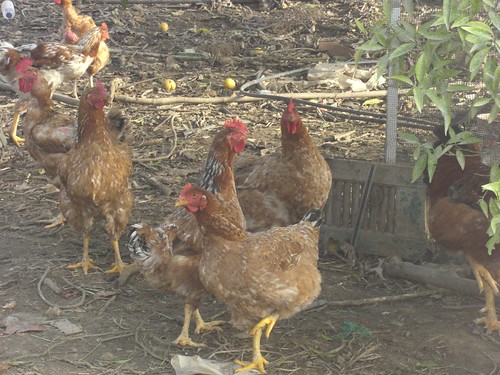
On a cold dark day in winter, when no one felt much like going out and the house felt warm and cosy, a little red hen asked her husband, the big brown rooster: "What shall we have for lunch today?"

The big brown rooster thought a little bit about that question and answered: "Oh, I don't know, whatever you like." He was keeping his toes warm on the pouffe under a blanket as he sat in the big green armchair watching television.

The little red hen asked him again: "Something meaty or something vege?"

And the big red rooster again answered: "Whatever, you know I;ll have anything."

That did not give the little red hen any firm idea to start with, but at least it gave her a clean slate and she could place anything on it, as long as it fitted into the general taste spectrum of the big brown rooster's preferences. So the little red hen looked into her cupboards and pantries and refrigerators, where she noticed a bag of artichokes which she had picked and cleaned (at the risk of getting thorns stuck in and discolouring her claws) and blanched and frozen the previous spring.


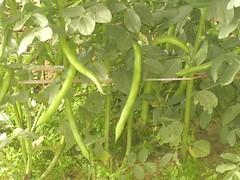
The bag was lying on top of a big bag of broad beans which she had picked and cleared and partly shelled and blanched and frozen at about the same time as the artichokes.


And the little red hen then thought how wonderful it would be if she could start emptying her fridge of last season's fresh frozen vegetables, to make way for the new season's produce.

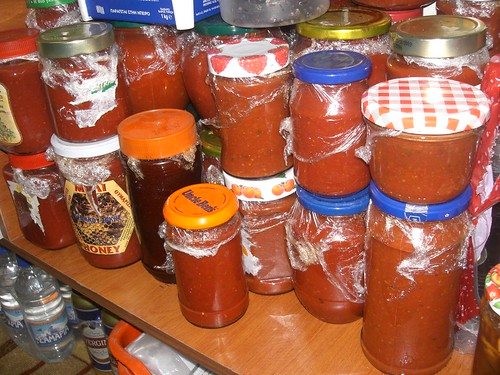
So she set to work cooking a pot of agginarokoukia for the midday lunch. As she sauteed the onion in the olive oil, she noticed that there were no more lemons in the house, and it being such a cold dark dismal winter's day, she decided not to make agginarokoukia lemonata, but agginarokoukia me tomata, the latter of which she had picked and cleaned and pureed and turned into tomato sauce from the previous summer, in sealed jars which made a 'popping' sound as she opened each one every time she wanted to use one.

tomato paste for the winter

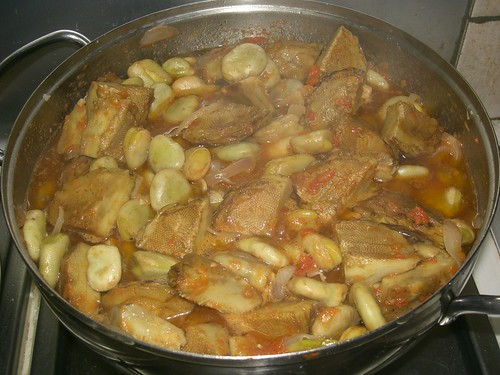
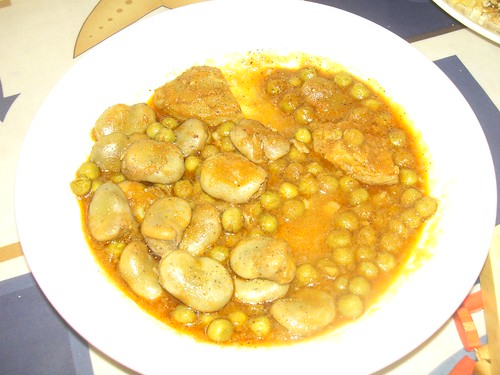
When the onions were done in the sauce, she added the artichokes and let them stew a bit, before adding the broad beans which didn't require so much cooking time, and in less than half an hour, she had cooked a hearty stew, which admittedly didn't look as good as it tasted, because it looked rather grey in colour, but tasted like a fresh spring breath amidst the dismal cold of the dark winter's day that had beset them.

artichokes and broad beans

And when lunch time came, she set the table in her usual way, with a little bowl of olives, a chunk of feta cheese in olive oil on a plate, and some freshly toasted slices of yesterday's bread, before she set a plate of hot warm agginarokoukia stew before the big brown rooster, and then she sat beside him to keep him company while he ate his lunch, not dining with him because she had already had her fair share of agginarokoukia during the cooking time, as she tasted it here and there to check for doneness and seasoning, just to get it perfect for the big brown rooster.

She was feeling quite full with the hefty aroma that filled their small kitchen.The big brown rooster had almost finished his meal; he was wiping the plate down with a piece of bread to mop up the sauce left on it. It being rather quiet, she decided to start a little chit-chat.

"That WAS delicious, wasn't it?" she asked for confirmation. 

"Hmm," the big brown rooster replied, wiping his beak with his napkin. 

The little red henwas wondering whether he really didn't like the meal, but had been too polite to say so all that time.

"See how good it is to save some of that fresh food for a rainy day like this one when there's no fresh food to be found?" she beckoned him encouragingly.
"Well," the big brown rooster started, "it's not as if you did anything special."

The little red hen was startled. She looked on the planning and preparation of every meal as a special event, and she knew that if she didn't do that, then the meal would be missing the most important ingredient in it, which was love, and no one would want to eat it, and she'd have to treat the meal as leftovers for the dog's dinner.

"Well," the little red hen was taking on a huffier tone, "would you have preferred it if I had cooked the agginarokoukia in a lemon sauce instead of a tomato sauce, then?"

The big brown rooster grimaced and said: "No, no, not at all, I'm just saying, it was a bit of an άρπα κόλλα sort of meal, wasn't it?"

"Arpa kolla?" she repeated. "Whatever do you mean?"

"Well," now the big brown rooster was almost smirking, "all you did was take everything out of the deep freeze and throw it in the pot, didn't you?"

The little red hen had now become a shade of crimson. "Are you trying to say," she began, in a voice that could be heard over the thunder and lightning that was striking at that very minute, "that this was one of the easiest meals I have ever prepared in my life, and I hardly had to DO anything to get it onto your plate?"

The big brown rooster swallowed hard. That last bit of bread almost got stuck in his throat. He knew he was in big shit.

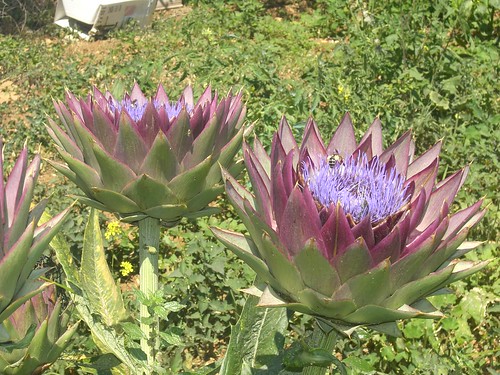
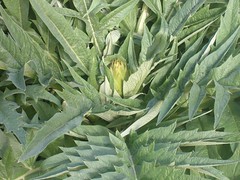
"Yes," she began slowly, as she always did when she she began her spiel about how much she does around about the house, "it didn't take much at all to make, didn't it," she continued. "It's a good thing I cut those thorny agginares before they became a blooming purple thistle good enough for a flower vase,

artichoke in flower

and pricked my hands cleaning them and getting the furry choke out of them, and getting my nails dirty - do you REALISE just how DIFFICULT it is to clean ARTICHOKES and keep your HANDS CLEAN??!!"


And she didn't stop there. "And it's also a good thing I picked all the koukia before they started resprouting, and cleared the black eye off them and blanched them for a minute in scalding water, and let them drain and cool before I put those in the deep freeze as well?"

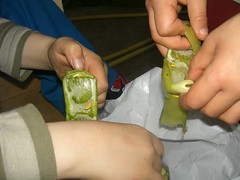
broad beans shelling 
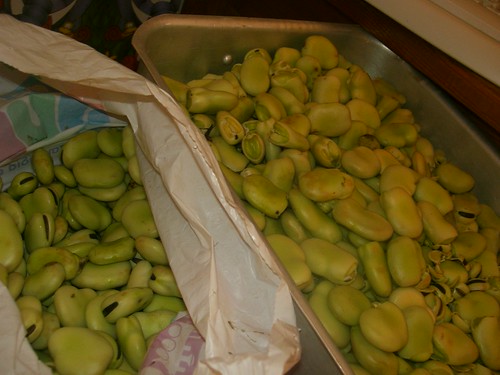
broad beans
removing black eye from broad beans

The big brown rooster began to smile now. He knew that she had beaten him, but in order not to feel outdone, he put on a big happy contented face, so that the little red hen would know that he appreciated her efforts. But she was not quite done yet. 

broad bean stew

"And if I didn't turn all those tomatoes you were growing all summer long into pulp," she said, waving a wing in the air, "they'd STILL be rotting on the TREES, wouldn't they?!"

"Ahh, that was a good meal, wasn't it?" the big brown rooster said, in an attempt to appease the situation.
The little red hen was now standing by the stove, ladling the stew onto a large plate. "I'll let you know how good it is once I have some, then!" she said, and with that, she sat down and proceeded to gobble up her plate. Even though she wasn't really hungry, she dipped some thick sourdough bread slices into the sauce, and thought about what she'd cook for the next day's meal, because today she would make sure that there would be no leftovers, and not even the dog was going to get any of them if there were.

too many roosters

Cluck, cluck, cluck.

©All Rights Reserved/Organically cooked. No part of this blog may be reproduced and/or copied by any means without prior consent from Maria Verivaki.

Wednesday, 20 May 2009

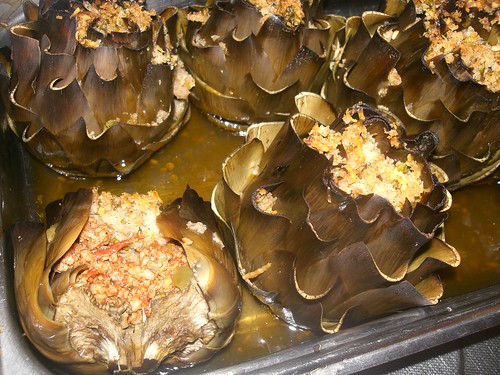
Stuffed artichokes (Anginares yemistes)

Artichokes are an incredible crop. Every spring, we see the first signs of their thorny leaves sprouting up out of the ground. Slowly, the leaves turn into a low shrub, overtaking the spot where they are growing. A month later, the first artichoke pops up; as the stem grows, more and more artichokes jut off it. If artichokes aren't your kind of food and you leave them on the plant, by the end of spring, they turn into a beautiful flower with furry purple thistles. The whole plant then starts drying up and slowly dies away down to ground level. You won't see any sign of the artichoke plant for the rest of the year, until the whole cycle starts up again next spring, without the touch of a human hand; nature takes care of this plant with her own cycle of weather patterns.

artichokes
artichoke in flower

We have two rows of artichoke plants which fence the garden like a kind of hedgerow. They produce about 100 heads per season. In Greek cuisine, fresh tender artichokes are eaten raw in a salad, or stewed in red or white sauce. They can also be baked with meat in the oven as a substitute for potatoes. We recently gave our Sicilian neighbour some of our excess crop, and it was her use of them that gave me my idea for these Italian-style stuffed baked artichokes.

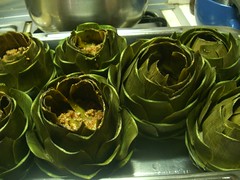
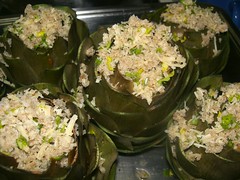
stuffed baked artichokes stuffed baked artichokes

1. Snip off half of each leaf on each artichoke, and cut off the stem, but leave the thick outer leaves on the artichoke, so that they form a cavity above the heart.
2. Boil the artichokes in some water for a few minutes, then drain them and scoop out the furry choke and pull out the purple tinged leaves in the centre.
3. Fill each artichoke with approximately 2 tablespoons of mince mixture (like the one for makaronada).
4. Make a bread and herb topping with some grated cheese, and sprinkle over the mince. It doesn't matter if it falls in between the remaining leaves of the artichoke.
5. Place them on a baking tray, drizzle olive oil over them, and pour some water in the tin a third of the way up the artichoke.
6. Cook on high heat for an hour. To test the artichoke heart for 'doneness', insert a knife through it. It should pierce the heart easily.

stuffed baked bartichokes

When they are ready to serve, peel off each leaf and eat the bit of heart that remains on them as they are pulled away, finally working towards the tender heart, which may be spooned off with the filling from the tough base. The actual leaf will still be too tough to eat; only a small bit is edible at the base.

This dish makes a great appetizer at a dinner party, something I haven't held myself or been to in a while; this must have something to do with all the good dining-out opportunities we get in Hania...

©All Rights Reserved/Organically cooked. No part of this blog may be reproduced and/or copied by any means without prior consent from Maria Verivaki.

Monday, 13 April 2009

Athens, the Acropolis and artichokes (Αθήνα, Ακρόπολη και αγγινάρα)

Here's PART 4 of our adventures in Athens. Click here for PART 1, PART 2 and PART 3.

When I first arrived in Athens nearly two decades ago, my greatest desire was to see the Acropolis. I had first visited it in 1974 when I was eight years old with my parents on my only trip to Greece before I came to live here on a permanent basis. After I had settled in at my relatives' house in Aspropirgos, I asked them for directions about how to get to the Acropolis. My aunt had no idea, as she never went into Athens herself, conducting all her business within the seven kilometres between Aspropirgos and Elefsina. My 20-year-old cousins didn't know either; the last time they went to see the Acropolis was when they were at school.
'Athivoles' from my first time in Greece

I asked them if they had a map of the area so I could locate myself on it and see how I could go there myself. They had no map. The only thing they knew was that the dirty blue buses that plied the main road near their home had their depot in Koumoundourou Square near Omonoia Square, a central location in Athens. That was about the best advice I managed to procure from them on how to get to the centre of Athens cheaply without trying to flag down a taxi whose driver would most likely rip me off, or walk the congested polluted Holy Road myself like the ancient pilgrims did when they paid homage to Dimitra, the goddess of the Earth, at her sanctuary in Elefsina.
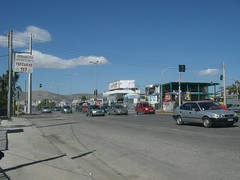
athens avenue leoforos athinon athens avenue leoforos athinon
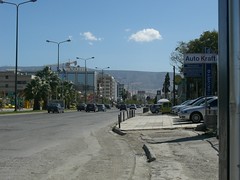
Waiting at a bus stop on Athens Avenue: looking towards Elefsina (left), and Athens centre.

One day, I took took one of those dirty blue buses myself - on my own; no one else was interested in going to see the Acropolis with me. Why would anyone be interested in a pile of rubble in one of Europe's most polluted cities? My aunt knew it was located on a hilly site. "Can you pick horta there?" she enquired. "Probably not," I answered. "Too much rock."

I had chosen a cloudy grey day in November, hoping that it would at least stay dry until the end of my trip. The morning peak traffic hour had passed, so that the bus could tear along at great speed, as if the driver had never seen such an empty stretch of road. I had a seat, but still had to hang onto the top of the seat in front of me to steady myself.

The route was one long boring stretch of concrete, flanked by a few low-lying hills which form the Athens basin. I was horrified by what I saw: gargantuan-sized gas works, steel works, cement works, oil distilleries, all found within metres of what looked like residential zones. Dust flew everywhere, piling on the side of the road like mud, especially outside the cement works. No one wore masks; no one seemed to care that they were inhaling dust. I wondered how my family managed to stay alive all those years of living here. Does dust not damage one's health, as my mother had raised me to believe? Maybe there isn't any need to constantly dust one's house; maybe once a year is enough.

As the bus approached the man-made Lake Koumoundourou, the scenery began to change slightly, with less industry and more bare hills on the left-hand side, while on the right-hand side I had a direct view of the sea which was filled with rusty ships. There was a small strip of land which looked like a beach area separating the coastline from the road and there were also a few signs advertising 'seaside' tavernas. The roaring traffic aside, this could otherwise have been a friendly looking place.

nafpiyia aspropirgou athens iera odos athens
Not the prettiest sights on the Holy Road to Athens - isn't the sea supposed to be blue in Greece? The haphazardly placed signs outside the monastery mask its significance.
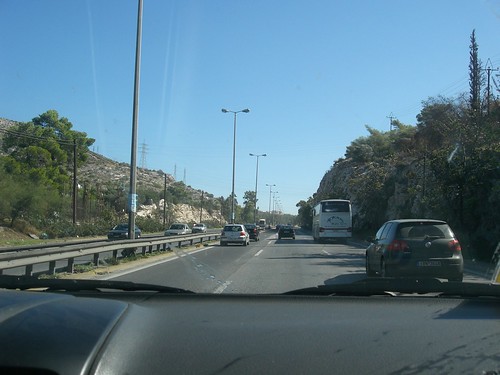
part of iera odos athens
This pretty patch of forest stands deceptively like an oasis, smack bang in the middle of the up-built western suburbs of Athens and the horrendous industrial further westwards.

As the bus drove past the sea, I began to view evidence of a forested area, just beyond the 'lake district'. Pockets of houses had been built on some parts of the hill, making these areas look like picturesque Swiss villages, without the cows. The bus had now stopped at some traffic lights near a large junction. To my left was the mental hospital, a congregation of buildings erected in a purely functional style, while on my right, in total antithesis, were the remains of a former Byzantine monastery. The lights turned to green, and the bus driver careened out of control, rushing past the Western suburbs of Athens at lightning speed, braking hard at the bus stops to pick up or drop off passengers. Once or twice, he didn't even bother to stop when he was flagged down by a pedestrian waiting at a bus shelter. There were plenty of buses following him, going in pretty much the same direction.

After what seemed like a cartoon film strip showing the same scenes over and over again - light industry and shops surrounded by apartment blocks stretching up to the tops of the low-lying hills, one block after another - depicting the ritualised chaos that Athens serves up on a daily basis, I saw the mount of the Acropolis come into view. As the bus overtook a lorry, the view became clearer, and suddenly I saw the crumbling ruins of the Acropolis sitting at the top of the mountain. It was such a saddening sight to see it looking so lonely among the bad-taste high-rise buildings, all in different shades of filth, some brown, others grey, but most of them black. I was suddenly struck with awe as the history of the Acropolis over the ages passed through my mind. I thought of how she had been watching the wretched urban sprawl overtaking her environs for the last 2500 years and felt guilty for being a part of it. The marble edifice looked so out of place in the world as it had developed around her. I wanted to take her into my arms and cradle her, tell her how much I loved her and wanted to take care of her, that everything would turn out all right in the end, that the missing pieces from her frieze would come back and she would be intact once again. Then I felt foolish because I realised she was so much bigger than me. She wouldn't fit in my arms; I was making promises that could not be kept. What a fraud she must think I am.
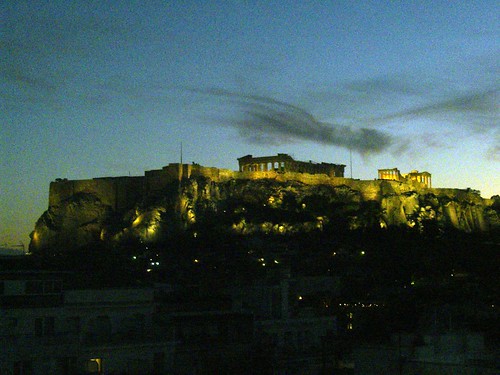
acropolis rock by night
Boy, those Greeks cause so much trouble ,for the loss of ancient marble
From the site of Parthenona; you would think it was a mecca
Of some kind, but wait a minute - to get in you need a ticket
To admire Greek works of art which will touch your soul and heart.

To see the Doric columns high rise above the clear blue sky
Like old stumps from olive trees. But what is missing? It's the frieze!
Yet still they stand proud on the hill where Paul preached goodwill to all,
Denuded of their jewel atop when Elgin heaved a mighty chop.

That man went to so much trouble to turn the frieze into mere rubble,
To gather and store the ancient stone so he could sell it off at home.
But no one wanted it for money, so he bequeathed it to the country
Who thought: "Good oh, now we have something that will look good with Egypt's mummy
And Chinese jade and Turkish weapons we chanced upon in foreign lands.
But where to put them - let us build the best museum in the world!"

And so they started scrubbing white the marbles so they shone in light.
Alas! Too late they realised the marbles looked like dynamite
Had ruined their outer appearance and showed signs that they were to perish
In that stately grand museum where all go if they want to see them.

And now those rabble-rousing Greeks insist on getting back those bits;
They don't deserve to stand alone with all the rest of them at home.
They need to be in company with all the other bits of frieze
Under the clear blue sky of Greece - let's have them back! Return them, please
!
(A little poem I wrote a while ago)

I didn't go up to the Acropolis that day; I was too embarrassed to face the big rock. I waited for a day when I felt more at peace with myself, in the company of friends, on a sunny day, so that she wouldn't recognise me as the big-hearted ignoramus who broke her promise. She wouldn't notice me as I climbed up the smooth slippery steps; I would blend in with the crowds of visitors that had also come to see her and marvel at her beauty, basking under the Mediterranean sun under the clouds of smog that enveloped her.

*** *** ***
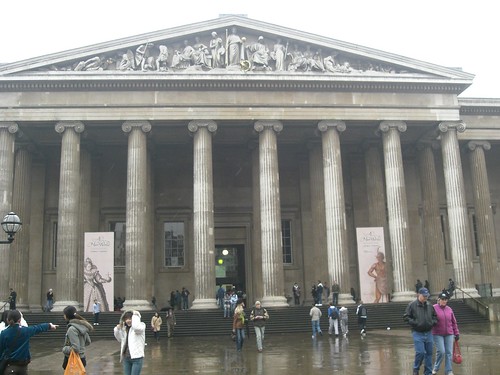
Have you heard the saying "Don't leave town till you see the country?" It was part of an advertising campaign in New Zealand during my youth, in a drive to get people to see more of New Zealand, instead of hopping off to the UK for their big OE (overseas experience) without having ventured through their own country first. I am just as guilty of this error in my judgment, having taken my children to the British museum on two separate visits to London to see the Parthenon marbles; you know the ones I mean - they were cut out, broken up and shopped away from Athens by a scoundrel that went by the title of Lord Elgin.

When I saw the stolen (beg your pardon, but that's what they are) marbles in the British Museum for the first time, it was as a foreign-born Greek straight from Sheepland. I visited them in that 'oh-look-that's-Greek' way that most foreign-born Greeks view elements of Greekdom in a foreign country. I may as well have been saying 'baa-baa'. But the second time, after having lived in Greece for over a decade before my visit to the museum, and having seen the Parthenon from up close, the moment I saw those parts of the Parthenon frieze hanging on a wall in a dark room, my heart felt a piercing sting, as though I was seeing someone imprisoned under treacherous conditions. Where was the Mediterranean sun to shine over the marbles like it had been doing all those centuries before Elgin came along? Some of the pieces were still just pieces, whereas if they had stayed in Greece, they could have been re-built into the main structure of the reconstructed Parthenon.

My heart turned to stone, not because the British had damaged the marble by trying to scrape it white (in Greece, it would have turned black from the pollution anyway), but because the room where the marbles were kept had that semi-dark appearance, rendering it barren and lifeless, completely removed from the cultural heritage it belonged to. If someone visits Elgin's marbles and not the Parthenon itself, they will simply never understand the reason why the marbles should be returned to the original setting. But if they first visit the Parthenon and then see Elgin's marbles, they will realise what a heinous crime he committed against the Greek people 200 years ago, while he was acting as ambassador of England during the last few years of the Ottoman regime. He didn't even need to ask the Greeks themselves if he could 'take' anything - the governing powers at the time were against them in the first place.
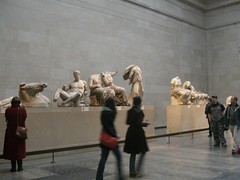
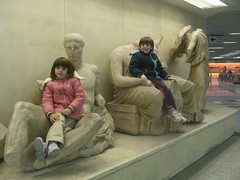
the british acropolis
"Is this the Acropolis?" my son asked me when we visited the British Museum in London.

the genuine parts are in britian... ... while the fakes are in greece
The genuine parts of the Parthenon frieze are in London... while the fakes are in the Acropolis metro station in Athens. Britain has the originals, while Greece has the phoneys.
athens underground acropolis
Another shot from the metro station: compare this with the top left-hand one;
same figurines, different capital city.

When we visited the British Museum, we told the children that these marbles had come from the Acropolis. But since they had never been to the Acropolis, it meant very little to them. I realised that it was time to see for me to take them to see the original site before I took them to another foreign museum again.
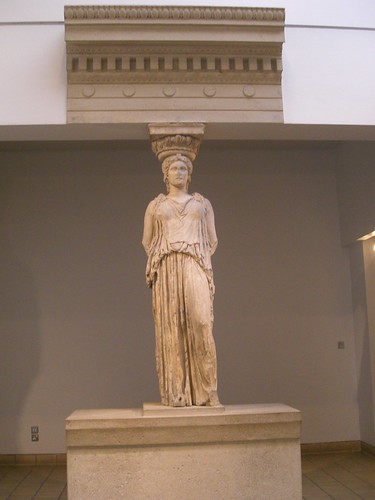
lonely cariatid in the british acropolis
This caryatid looks out of place here without her sisters, not to mention very lonely.

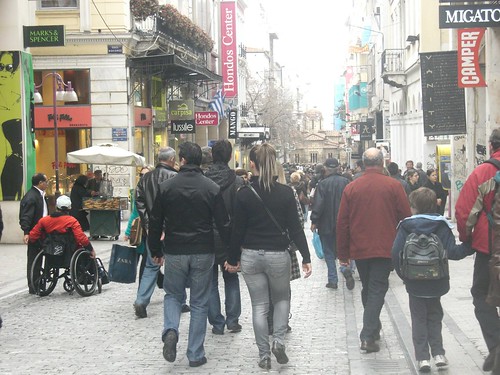
I took the children out of school for two days to make this trip to Athens. When we arrived in the capital city, we discovered, to my great dismay, that the temporary employees at the Ministry of Culture had been blocking the entrance to the Parthenon, barring all visitors to the site, in protest at the loss of their jobs, working on a contract (rather than permanent) basis, and back-pay that they had not yet received. The day was cloudy and rain was forecast. I wasn't sure if the strike was over, so I decided not to make the trip, in case I disappointed them and the trip fell short of their expectations. We took a stroll on Ermou St, where all the famous brand-name clothes shops are located in the inner city. We could see the holy rock rising above the city skyline as we dodged the rain; there was no sign of life on it. Whether it was the strike or the rain, I shall never know.
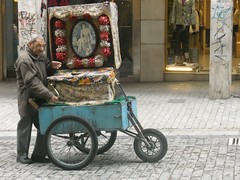
laterna greek musical instrument ermous st athens accordion girl ermou st athens
It's hard to make a living in a big city; can you spot some of the people 'selling air'?
ermou st athens
human statue ermou st athens cops and chestnut roaster ermou st athens

Although Marks and Spencer has opened a store in Hania, the range of clothes is not as wide as in the Athenian branches. As a way to shelter from the cold (cold in Greece? you ask), we entered Marks and Spencer, more to browse rather than buy. Such a wide choice of goods, what to choose first? I found the street views more enticing than the high street fashion: a gypsy girl playing an accordion, a chestnut roaster, the human statue, the laterna player, the policemen (they seemed to be everywhere) and their motorbikes. Such is life in a big city...
the acropolis in the rain
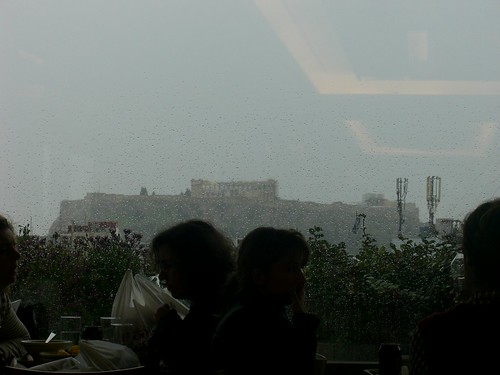
The Acropolis stands tall and proud, even in the rain.
I took this photo from the rooftop restaurant at the Hondos Centre
.

It did end up raining after all. When we couldn't tolerate the drenching any longer, we nipped into the Hondos Centre at Omonoia Square where there is a rooftop restaurant serving good Greek food at low prices. While we looked around the dining hall to find a table, the children spotted the Acropolis from the window which was covered in droplets of rain. The downpour did not obscure our view of the holy rock. Even during the pouring rain, it stands astute, bearing witness to the devastation of the rat-race and urban development that has taken place around it, notwithstanding the cruel blows it has itself been dealt by the various incursions savaged on it, leading to its desecrated appearance today.

interesting drainpipe athens open top sightseeing bus athens
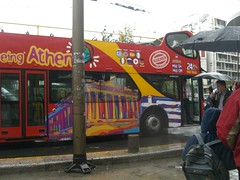
In this weather, the new open-top sightseeing buses in Athens aren't the best option.

"I'd like to go up there one day," my son said. "But not when it's raining."
"Good idea," I replied.

*** *** ***
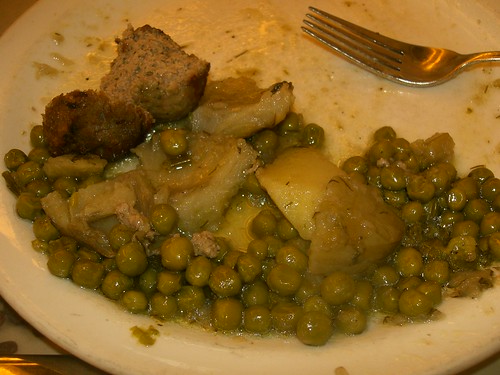
The Hondos Centre has a self-service restaurant which serves Greek snacks like tiropites (cheese pies), which my children ordered, and family meals such as biftekia and potatoes (my husband's choice) and artichokes in a lemon sauce (my choice).
anginares me araka artichokes and peastiropita
I had a bit of my husband's biftekia with my peas and artichokes; I can't imagine any child in Greece who hasn't been brought up to honour a good tiropita.

This meal is simple and light. It is best paired with cheese and some bread. It is perfect as a lenten meal, especially for the Holy Week before Easter; the peas and potatoes provide plenty of carbohydrates, while the dill and lemon juice give it its tangy flavour. Note that in Greece, artichoke hearts are not frozen with the stalks, nor with the leaves, but they can be used if the artichokes are tender enough. This meal can be made with either frozen or fresh artichoke hearts. Canned Italian-style artichokes (they are usually small and have some tender leaves stuck to them) are not suitable for this dish.

You need:
1/4 cup olive oil
1 large onion chopped chopped roughly
2-3 cloves of garlic (optional)
2 large potatoes chopped in large chunks
8 large artichoke hearts cut in halves
2 cups of peas
a small bunch of dill, finely chopped
the juice of 1-2 lemons
salt and pepper

Heat the oil in a pot and sauté the onion and garlic. Mix in the potatoes till they coated in oil. Add the artichokes, peas and seasonings and pour in just enough water to cover the vegetables. Place a lid on the pot and let the vegetables cook until the vegetables have softened. The potatoes may break up at this point, so be gentle when stirring. Now add the dill and lemon juice, stirring them evenly into the pot. The broken potatoes will act as a sauce thickener. Cook for another 5-10 minutes and serve hot.
artichokes and peas in lemon sauce
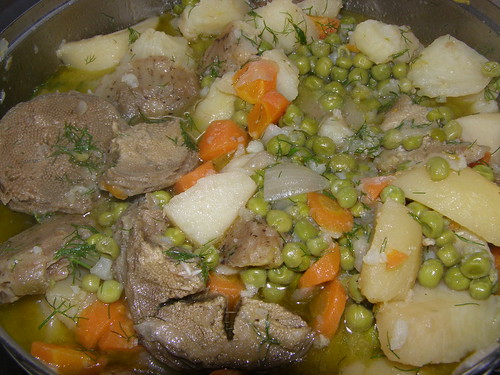
I made this dish as soon as we got back from our trip. My artichokes look a rather dull brown colour; this is because they are from last year's garden, and I froze them at the end of their season. Commercially frozen ones are usually whiter (they are processed in some way).

This dish is made in the style of artichokes a la polita. Carrots, spring onions and leeks can also be added or used to replace another vegetable that you may not have on hand. This meal can also be made using tomato juice (add it to the pot instead of water, and don't use lemon); while we were in Athens, one of our cousins served us freshly-made soutzoukakia-style meatballs in tomato sauce, into which she had added commercially frozen artichoke hearts.

At the roof garden restaurant at the Hondos Centre in Omonoia Square, we ordered two tiropites, a serving of artichokes and peas, a serving of roast potatoes and biftekia, 2 sodas and 2 beers. Total cost: 25 euros.

It's the start of the Holy Week today in the Greek Orthodox church. With this kind of meal, you won't even realise you are fasting.

This post is for you, Sifi.

©All Rights Reserved/Organically cooked. No part of this blog may be reproduced and/or copied by any means without prior consent from Maria Verivaki.

Friday, 9 May 2008

Broad beans with artichokes (Αγγιναροκούκια)

The artichokes in the garden are doing a roaring trade; each plant (we use them as a border around our fences) contains at least 5 heads, and there are 15 plants in all, which really begs the question (to you, not to me): how many artichokes would you eat in one season? So far, we've had artichokes raw in a lemon dressing, I've cooked artichoke a la polita a couple of times, we've thrown artichoke in our salad, and there are still 70 artichoke heads in the garden. The plants remind me of my first home in Wellington, where my parents taught me to tear away the leaves from the heart and eat the succulent ends - and then to go and take a look at myself in a mirror. Followers of black gothic fashion will be thrilled to find out that their lips will match the colour of their clothes.

Artichokes (the globe artichoke, that is - nothing whatsoever to do with the Jerusalem artichoke) are a very Mediterranean ingredient, but they are not difficult to adapt into non-Mediterranean recipes. Once they have been cleared of their thorny fur, think of them as a kind of potato or carrot. They soften up nicely once they're cooked, and are especially delicious in a meat roast. The French really know what to do with them when they stuff them with meat.

It's been a while since we last had broad beans in our meals. Apparently broad beans contain some kind of enzyme that some children can't absorb. A test is done to see if Greek-born babies have this enzyme deficiency (the syndrome is called 'favism') by taking a blood swab from the baby's foot soon after it is born. The hospital staff warn you not to let your child eat broad beans until you can ascertain that it isn't allergic to certain food items. Not many children would want to eat broad beans anyway.

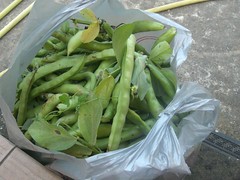
We were not lucky enough to find the time to plant broad beans in our garden this year, so I've bought some from the market. Don't they look revolting? The big fat beans are hidden amongst their unattractive foliage; only a connoisseur would give them a second glance. They need to be cleared of their yellow crown, and the black fibre sealing their skin is a little too tough to chew, so you can slice that off and leave the tender green bean exposed. The pod is usually too tough to chew, but if the pod makes a 'snap' sound when you open it to shell it, it is probably tender enough to eat once it's cooked. When cooked, broad beans are another of those smelly vegetables, like cauliflower, cabbage and celery; they smell raw-grassy, a bit like being stuck in a cow paddock on a rainy day. Broad beans are called fava beans in the West, but this word is reserved in Greece for the yellow split pea dip; the Egyptians make their version of fava from broad beans - the famous ful madames - using a similar technique as the Greeks do. Broad beans are also used in their dried form; they are especially popular soaked in water and eaten during fasting periods (skin removed), or turned into a soupy stew like fasolada. Their dense flavour goes well with meat, which is what the French usually combine with their 'feves'.

Broad beans can be eaten raw in salads (crown and black fibre removed), or they can be boiled and added to horta, especially vlita and stifno, which are now available seasonally. On this note, we're a little biased: our garden, whose soil we prepared for planting, is literally covered in vlita and stifno plantlets, which have sprouted on their own, from seed left in the soil since last year's crop. The horta currently being sold at the market have undoubtedly been sprayed heavily with pesticides, which is why we don't buy them. Not everyone has this choice. Vlita is loosely translated as 'amaranth' in English, while stifno has the morbid name of 'deadly nightshade', known as a poisonous plant in the West, just like the wild Tamus communis asparagus, both of which Cretans eat and still haven't died out.

Broad beans are definitely an acquired taste, as are artichokes, so this dish will undoubtedly appear to contain the strangest combination of unusual vegetables to the more sensitised among us. But it remains a spring favorite nonetheless in Crete as well as other parts of Greece, as my various cookbooks tell me. Broad beans can be substituted for carrots in the famous artichokes a la polita, and they can also be cooked in tomato sauce. Our preference is to cook them in a lemon-flour sauce.

You need:
1/4 cup olive oil
6-7 artichoke hearts (only fresh artichoke works here), cut into small chunks
750g broad beans (shell them from a kilo of pods; keep the pods only if they were tender enough to snap open when shelling), black fibre removed
5 spring onions
a small bunch of fennel, chopped small
salt and pepper
the juice of 2 lemons
a tablespoon of flour
Heat the oil in a large pot and add the onions, artichokes, beans, and fennel. Stir them about to wilt in the hot oil and turn down the heat. Add just enough water to cover them, season the dish and place the lid on the pot. Let the vegetables cook until they are tender - this will need at least one hour on a very low heat. Mix the flour into the lemon and pour it into the pot. Let the covered pot continue to cook on a low heat until the sauce blends with the vegetables, and everything is tender enough to eat. The sauce will also have thickened slightly into a gooey green soup. Serve with the usual Greek accompaniment: sourdough bread and feta cheese.

This is my entry to the Beautiful Vegetables 2008 event, hosted by eat the right stuff.

©All Rights Reserved/Organically cooked. No part of this blog may be reproduced and/or copied by any means without prior consent from Maria Verivaki.

MORE UNUSUAL VEGETABLES:
Artichokes a la polita
Cretan wild asparagus
Okra (lady's fingers)
Zucchini flowers
Swiss chard (silverbeet)
Mustard greens
Summer horta
Winter horta
Fennel pies
Sorrel (dock)