Showing posts with label FASHION. Show all posts

Saturday, 12 September 2015

The Greek Collection: The Greek lady's wardrobe (Άρωμα Ελληνίδας)

After work one hot sunny afternoon - we call that hour μεσιμέρι (mesiMEri) - midday - in Greek, and not afternoon (that starts after 5pm in summer) - just when capital controls had been slightly relaxed and we could make weekly withdrawals of 420 euro (instead of the daily limit of 60 euro), I parked my car on the outskirts of town just above the law courts, which is how the area got its name: Δικαστήρια (dikaSTIria), so I could go to the bank to make my first withdrawal since capital controls were enforced. I had been procrastinating about this cash business, trying to convince myself that I did not need any. That theory was blown out the window when I met up with some friends for a coffee. Asking to pay a total amount of less than ten euro by plastic money at a cafe is still a cause for embarrassment in Greece, despite the greater use being made of debit/credit cards since capital controls were introduced.

I parked the car right in front of the now defunct incarceration unit where prisoners were held until their trial took place. I recall in days of old young handcuffed men being walked down the slope to the courts, flanked by police officers, The building was showing signs of its vacant state, with graffiti scrawled over various parts. But I did not see the graffiti - something else caught my eye: two fashion brand-label carrier bags that had been placed carefully, propped upright so that they did not tip over, against the wall of the former holding cells. Although there was a blue recycling bin on the pavement, the person who had left those bags on the street clearly did not have the heart to throw the contents of those bags straight into the bin. Luckily for me, she did not.

Bags full of used clothing left on the street are a relatively common sight in my town (along with toys and furniture, and other stuff associated with babies and children). I admit I used to do it too, before the second hand clothing stores owned by foreigners opened in the town. It made me feel that I was doing my bit for poverty, I have now changed tact; when my children grow out of clothes, I take them to the second hand shop where my profit is passed onto a local children's cancer charity. Whatever clothes do not end up being sold (very cheaply) in this way are passed on to other charities that look after refugees stranded in Hania, various church-related organisations that pass on clothing to the needy, and even to the local animal care centres for strays to keep warm during the winter. 

I always rifle through bags of clothing that I come across on the street, in the hope that I will find some useful fabric for my patchwork projects. My children say it feels embarrassing to do this, even though they know that the clothes I pick up are used in my fabric art. (I'm particularly fond of old jeans - they make great quilting material as well as nifty looking fashion bags.) It may seem somewhat unethical to take used clothing which was obviously destined for reuse as clothing for a poorer person, and tear it all up to use as patchwork. But I do not believe that the clothing would all have been re-used in this way had I left it. For a start, the recycling rubbish collectors would have trashed it themselves if it hadn't been picked up before their rounds, so it might not have been used after all. Hania is a rather well off town, so a lot of clothes are dumped. People are generally aware of the way they can be reused, but dumping them on the street is a sign of laziness. If they really wanted to help the needy, they'd make the effort to take them to the right place. Leaving clothes on the street is a slovenly way to help the needy. You need to seek them out to help them more appropriately.

Even so, I knew I had got lucky today. The bags contained a lot of light summer cotton and denim clothing, perfect for reusing in patchwork. There were also quite a few T-shirts which I don't re-use myself (although they can be cut up into strips and used as knitting/crochet yarn). The items were in such good condition that I decided to take the bags home and sort the items out in my peace and quiet, taking those clothes that could not be used to the second hand store to sell on behalf of charities.

The clothes

The clothes were well used. Some had yellow age stains under the armpits. They smelled musty, as if they had been sitting in a basement for a long time, and had not been aired. They had clearly not been in use for a while. The owner of the clothes was obviously well off - it isn't a coincidence that these clothes were found at Dikastiria, generally known as the inner city neighbourhood where the wealthy/upper-class live. Nearly all the clothes had branded labels; she particularly liked the Greek Bill Cost. She was a stylish woman judging by the cuts: she must have been slim and wore specific styles and colours. I was quite surprised to find so many whites: 2 white denim style skirts and 2 white jean style trousers, as well as some white T-shirts. You can only really wear white successfully if you are slim. There was also a beige pair of pinstripe trousers, which shows how old the clothes were: pinstripes are no longer in fashion. She must have been tall, judging by the trouser leg length. Her shirts were mainly in single earthy colours: cream, white, ecru, brown, brick red(compare that to Varoufakis' last - ? - appearance in the Greek Parliament), things that don't go out of fashion too quickly.  There was only one mainly blue item, a blouse with large blue spots. Blue is a difficult colour in the fashion world, and this particular Greek lady knew that well. Most of the t-shirts had some 'straz' stuck onto it. Greek women love straz. The former owner of these clothes was probably not a smoker - cigarette smoke lingers in a house, especially an apartment, affecting everything in it, and these clothes did not smell of smoke.

Straz
Because the items she was throwing away all seemed quite stylish, I believe she had problems giving them away. It must have been a difficult decision to take: the truth must have dawned on her when she realised that there was no other option but to get rid of those bags which were cluttering her apartment (most homes in the Dikastiria area are mainly apartment blocks). Maybe she had put on enough weight to know that she would never fit into these clothes again; maybe she had updated her wardrobe umpteen times and the old stuff had to go to make way for the new. There were no children's clothes in the bags, nor were there any men's clothes, suggesting perhaps that she lived alone. Therefore, she was able to afford to dress well. The clothes suggest that her income probably included inheritance as well as a well-paid position in the public service: the clothes remind me of what mature female office workers would wear.

Jeans
Some items consisted of clothing that all self-respecting fashion-conscious women would own. A pair of jeans were included in her throwaways and there were also quite a few black items - you can't do without black in Greece, it's the colour of choice for a church memorial service.  The only multi-coloured clothes were a dress in a red, green and white print, a sheer blouse in various shades of orange and yellow, and a blouse in various shades of green. There were also a couple of items that clearly did not fit in with the lady's dress style, the kinds of things we ladies would label as bad purchases, wardrobe mistakes: in her case, it was a pair of brown cotton trousers from a 'kineziko' store, which had been cut off to be used as shorts, but whose elastic band had loosened, and a satin blouse that looked as though it may have been bought at the laiki - a sign of the crisis finally hitting home, perhaps...

Burberry

The Greek lady's wardrobe, like the wardrobe of many stylish women, must also include a bit of Burberry somewhere. There was no Burberry in the throwaways, which was to be expected: if you buy Burberry as an accessory, it should last you forever. You don't wear Burberry all over, although I have seen this too: the woman who committed this crime failed miserably in her attempt to be a fashion icon, instead becoming the epitome of bad taste, pretentiousness and ostentatious elegance. (She was boarding a budget flight with me for London.) Burberry needn't be expensive, either - you can buy a scarf, or bag, or hat in the classic beige Burberry tartan for just a few euro at the laiki from the fake designer clothes sellers. (Plenty of them in Greece, too. Fake designer fashion is called 'maiMOU' in Greek, which means 'monkey'. It describes the everywhere-Burberry woman I bumped into to a tee.)

*** *** *** 

I decided to reuse the fabrics in an artistic way, which is how my project took on the name 'The Greek lady's wardrobe'. Even though there was no Burberry item included in the bags, no doubt there would be a Burberry-something in this particular Greek lady's wardrobe. I decided to add a Burberry-something to the collection of fabrics. I also needed to add some blue and some yellow-orange-red fabrics to substitute for the blue and white t-shirt, and the yellow-ish sheer blouse whose fabrics were not suitable for patchwork projects. I bought these items at the laiki (a Burberry print mini skirt - 50 cents; a blue and white mini apres-swim skirt - 1 euro; a blue satin pair of pants - 2 euro; and a summer dress in bright colours - 2 euro). The Burberry was not used much in my design - I tired to use it in the same way that a stylish woman would wear Burberry (just a dash of it, mainly as an accessory).


The chosen pattern looks quite attractive in the photos. Up close, I can see all the imperfections of my patchwork. The work is not quite finished - I have quite a few pieces to put together. To be continued...

Bonus photo: the top part of the jeans were turned into a bag which I now use. I made it during an evening when my next-door to the next-door neighbour had an outdoor party. The musicians arrived at 9pm and tested the sound system. They began playing at midnight and stopped at 5.30am. I sta outdoors, using my sewing machine on the balcony until the wee small hours, knowing that no one would notice.


UPDATE: "Economics is like coca-cola," a friend once said to me, "it goes with everything." So does denim - old jeans, upcycled together with the remaining pieces of the The Greek Lady's Wardrobe.


©All Rights Reserved/Organically cooked. No part of this blog may be reproduced and/or copied by any means without prior consent from Maria Verivaki.

Friday, 31 July 2015

The psychedelic world of Mr V's shirts

I wanted to tell you today about my latest patchwork project, whose fabrics I found in some tidy bags full of designer clothes, placed against the wall of the former incarceration unit of Hania in the middle of town, which I am already cutting up to get the patchwork project started.  I had a job to do in the town, so I parked the car above the law courts, in front of the former holding cells, in the area known in Hania as Dikastiria. I noticed these bags lying neatly against the wall, a tell-tale sign that someone has left clothes on the street for someone else to pick up. I always rifle through these bags when I see them, looking for fabric I can use for patchwork. Most of the time, these bags contain children's clothes, and the only salvageable items are usually jeans (which are quite good for denim patchwork). So I was really thrilled with my find when I discovered what looked like expensive brand-label women's clothes. (Dikastiria is known at its lowest as an upper middle-class area.) The former owner of the clothes preferred classic lines, and her colour choices were mainly earthy tones in strappy Tshirts paired with white pants and skirts. The clothes were mainly petite sizes, as would be expected for someone who wears white pants. Since the clothes were still in tip top condition, I guess she gave them away because she got fat.

But instead of telling you this story, I will simply allow you to click this link to my facebook page, where you can read all about it, because a Greek patchwork story is unfolding right at this minute as I write and taking the country by storm. The veritable Mr V has appeared in Parliament today sporting a patchwork shirt. Oh, I know, it all sounds blase to you westerners who cite the proverb 'the clothes do not maketh the man' like gospel, but at the same time, you have probably been guilty at least once of looking down on those Greek parliamentarian males that refuse to wear a tie in deference to their position.

My understanding is that Mr V's shirt has made the global press headlines already, but... you are probably unable to access the Greek tweets on his choice of attire. So while you might have seen the photo...
ΑΠΕ-ΜΠΕ/ΟΡΕΣΤΗΣ ΠΑΝΑΓΙΩΤΟΥ
The OXI brigade in Parliament today

... you probably have not heard/read the quips. Sit back with your cuppa and enjoy a bit of Greek humour (keep a coaster handy to place your mug so as not to spill your drink):

- Γιάνη πήρε ο Μιχάλης Μόσιος να πλύνεις το πουκάμισο λέει πριν του το επιστρέψεις
Yani, Mihalis Mosios (Greek comedian) just called and he says he wants you to wash his shirt before you give it back to him.

- Αν είσαστε παρατηρητικοί θα ανακαλύψετε το Plan B σχεδιασμένο στο πουκάμισο του Βαρουφάκη
Careful observation of Yanis' shirt will allow us to discover Plan B. (the word 'plan' in Greek - σχέδιο, sHEdio - can also mean 'design')

- πουκαμισο τεντοπανο των '80ς... αμάνικο ρομπάκι της γιαγιάς μου την ίδια εποχή
shirt made of canvas awning fabric, 80s style - my yiayia's sleeveless robe from the same period

- Η πλήρης κάλυψη του π/θ στον κ. Βαρουφάκη γεννά πολλά ερωτηματικά.... Το λαχούρι πουκάμισο του τέως υπουργού παραπέμπει σε παραλία...
PM's full support for Mr V raises many questions... his 'lahuri' (oriental-style pyjama) shirt points to the direction of the beach

- Νταξ, τέτοιο πουκάμισο δεν έχω. Προσκυνώ Γιανη, προσκυνώ 
OK, so I dont have that kind of shirt. Kowtow Yani, kowtow.

- αν ήμουν γιάνης θα έπαιρνα τον λόγο επί προσωπικού και θα χάριζα στον αλέξη ένα πουκάμισο με λαχούρια. με σκληρό γιακά για γραβάτα
If I were Yani, I would take it personally and I'd present a lahuri shirt to Alexis Tsipras with a stiff collar suitable for wearing a tie.

Ωραιο LSD
- Το πουκάμισο του Βαρουφακη είναι
"Nice LSD." 
"Oh, it's Yani's shirt."

- Έβαλα ένα άσπρο πουκάμισο, μπήκα βράδυ στην πινακοθήκη της Βιέννης και κυλιστηκα σε έναν Κλιμτ
I put on a white shirt, i entered Vienna's art gallery in the evening and I rolled around in a Klimt.

- φίλε μαζί σου. αλλά στυλιστικά υστερείς. Το πουκάμισο αυτό πάει με βερμούδα και παντόφλα δίχαλο...
Buddy, I'm with you, but stylistically, you are lacking. The shirt would go better with Bermuda shorts and flip flops...

- Μου χύθηκε ο καφές στο λευκό μου πουκάμισο... Αυτό είναι το πλαν μπι
My coffee spilt all over my while shirt... That's Plan B (plan = design here)

- έχω βγάλει κι εγώ μάτι με κουμπί από παλιό πουκάμισο που εκσφενδονίστηκε αλλά του βαρουφάκη φαίνεται να είναι το νούμερό του.
I've poked someone's eye out too, wearing an old shirt which popped a button, but Mr V's looks like its the correct size

- Άλα της ψυχεδελιάρικο πουκάμισο ο Γιάνης, ο μακαρίτης ο Sky Saxon είχε ένα τέτοιο 
Sky Saxon had a psychedelic shirt like Yani's.

- Δηλαδή άνοιξε την ντουλάπα του το πρωί, βλέπει το πουκάμισο κ λέει καλέ πού ήσουν κρυμμένο τόσο καιρό, εσένα θα βάλω. 
So he opened his wardrobe this morning, saw the shirt, and said: "hey sweetie, where have you been hiding for so long?"

Το πουκάμισο του Βαρουφακη είναι ο ορισμός της δημιουργικής ασάφειας σε ύφασμα
Mr V's shirt is the designation of creative vagueness on fabric

- "Ωραία η εσάρπα της Κατριβάνου. Θα ήταν όμως too much με αυτό το πουκάμισο" 
Ms Katrivanou's shawl is nice, but it would just be too much as a shirt. (see above photo)

- Ο τέως ΥΠΟΙΚ στη , όπου ο Πρωθυπουργός απαντά για τα περί "σχεδίου "
Former FinMin in Parliament, where PM responds to questions re Plan B. (remember: plan = design)

- Ιδανικό πουκάμισο για να...χορεύεις μπροστά στον καθρέφτη
Perfect shirt for dancing in front of a mirror

- Δεν ξέρω για σας αλλά εγώ μια φορά γάμησα με το πουκάμισο του Βαρουφάκη. Ερωδιό.
Don't know about you, but I got laid once wearing a shirt like Mr V's. Heron. (lifo.gr printed this in Greek - i am just translating)

Nick Paleologos / SOOC
My own tweet would read something like this:
'Why didn't you ask me to make it for you? 
I wouldn't have left the pins in it.'

I will let the PM have the last word: 
Varoufakis may have made mistakes like all of us. He may be liable. You can blame him as much as you like for his political project on the statements he made about not wearing stylish shirts and that he takes his holidays on the island of Aegina (where readers may recall that he owns a holiday home with his wife). You can blame him for that, but you can't call him lazy! You can not accuse him of stealing money from the Greek people! You can not blame him for having a secret plan to lead the country onto the rocks!" (this was Alexis Tsipras' reply to floosy-brained my-daddy-was-a-politician-too newly-elected leader of PASOK, Fofi Genimmata http://www.lifo.gr/now/politics/72620
With discussions like these taking place in high summer, when people are still happy and smiling, I don't see why I should not be optimistic even as autumn comes (vote Syriza). 


Either he got it cleaned regularly, or he had bought a dozen of them - Mr V most often wore this blue check shirt during his (short) tenure as FinMIn

Thanks to lifo.gr http://www.lifo.gr/now/politics/72618 for providing today's entertainment, including this video clip, which will leave you drooling for a Greek holiday. (For those of you who don't understand Greek, you will just have to enjoy the scenery.)


Have a great weekend, everyone, as we bake through a heatwave, while welcoming in August tomorrow. Can't wait long enough for Persephone to depart...

Bonus photo: 
"I swear I borrowed it from Theodore in France." (according to this link:  http://www.newyorker.com/magazine/2015/08/03/the-greek-warrior)


©All Rights Reserved/Organically cooked. No part of this blog may be reproduced and/or copied by any means without prior consent from Maria Verivaki.

Tuesday, 23 September 2014

The Greek Collection: A history lesson

The project is well underway: come and join me at The Greek Collection.

My aunt came to my house recently so we could have a Skype session with my mother's side of the family, connecting Hania, Athens, London and Wellington all on one screen. At the end of the excitement, as we left my computer space, I noticed my aunt looking intently at my computer chair.


"I recognise that from somewhere," she said, picking up a patchwork mat that I have placed on the chair to keep it clean.

Detail of the chair mat

"You made it, Thia," I said. Or at least, that's what my mother used to tell me. The chair mat was used in our New Zealand home as a table mat for a large chest of drawers. Although it is now not in very good condition, I still keep it for sentimental purposes. In some parts, it is very tattered.  

"No, your grandmother made it," she corrected me. "I think I remember her sewing it." We inspected the chair mat more carefully, and discussed the fabrics on it. She can't remember where they came from. They all have that vintage look which sells like hotcakes on the likes of etsy and ebay. Looking around my living room, she peered at the foot stool.


"You mother made that," she said, pointing to the fabric I had sewed on top of the dust cover I had made for the foot stool. The original dust cover was made with a floral fabric remnant with the words "House and Home Fabrics and Draperies Inc.", dated 1986, running around the selvage. I'd bought it in Athens sometime in 1992 from a warehouse fabric store across from my first job. The fabric eventually suffered wear and tear where it was used most of all - the top. So I covered the large hole that had formed with my mother's loom-made fabric. Despite the heavy use made of that stool, it shows no sign of tearing (it's been in use for at least 6-7 years already).


Raising her eyes from the foot stool to the large table next to it, my aunt recognised another piece of fabric. "Your mother made that tablecloth too, She wove cloth on the loom, in long narrow strips, and sewed them together by hand to the size that she wanted. Then she made the δεσιές (macrame-type ties) by hand. I was the only one of the three girls who didn't make δεσιές. I just didn't get round to learning how to do it. By that time, we had moved away from the mountain, and had come to live close to the sea, and this all seemed unnecessary at the time, as we did other things, and we could buy the same products for less effort." 

Indeed, all these skills, the time spent on making the items and the items themselves seemed like a waste, even for my mother: she had never used any of her hand-woven items, leaving them in the μπαούλο her mother had bought for her, to store her dowry items. On leaving for New Zealand, my mother never saw them again.  

I then brought out some other fabrics that belonged in my mother's baoulo, hoping Thia could give me a bit of background to them from what she remembers of our family's history. "Kitchen towels," she said, as soon as she saw the familiar patterns of the darker woven material (see above). "You could still use these, you know, all they need is a hem. And the white fabric with the δεσιές were body towels, but we wouldn't use them now..." Her voice trailed off with a tone of regret, as if she remembered the times when she did in fact use them as body towels, remembering laundry days, after which she had to untangle and comb out the  δεσιές, something I've done too, and know how much trouble it is.

Detail of a body towel made by my mother. Yellow age stains are visible on the cloth. The whole cloth was hand-woven on the loom, including the decorative parts. The ties on the edging are also hand-made. This particular towel has been turned into the lining of one of my hand-made bags.

"But I still use them in other ways. I use them now as furniture coverings, and they look very pretty."

"And what about these, Thia?" I took her to the bathroom where I have some bundles of cream fabric ready to be dyed because the material contains a lot of dirty-looking brown age stains that are difficult to remove. Once the fabrics are dyed a dark colour (I am sticking to blue at the moment), the stains vanish.


Some of my first designs in The Greek Collection, made with the bought fabric (ie my mother did not weave it herself - it was made in Greece on an industrial loom: more information here). The brown age stains are visible. The tiny dark brown spots are the husks from the cotton plant. Both the husks and the stains become invisible when the fabric is dyed; the blue fabric below is the same white fabric above. The checked fabric below is also hand-woven on a loom by my mother  - more kitchen towel fabric.

"Oh, your mother didn't make this fabric on the loom," she said, fingering the fabric. "It's too heavy, you can see that yourself." She beckoned me to touch the fabric. "This is what we used to call καποτέ". I have since understood that this is the pronunciation that my family must have used for the Greek word κάποτο or κάμποτο, which means 'calico cotton'.

Detail of embroidered runner edge. The tacking is still in place

The fabric was bought in narrow lengths, which were cut and sewn by hand to the required size (the above piece in the photograph had three hand-sewn seams in the main body), to make bed coverings, namely decorative sheets. More fabric was hand-sewn around the sheet as a border, which was eventually embroidered - again all by hand.


I showed my aunt what I was doing with the fabrics, and she seemed quite excited with the idea of my reinventing uses for 'unuseable' things. She told me many stories on that day, and hopefully I'll remember them when I write the next installment of The Greek Collection

(To be continued.)

Bonus photo: My bathroom tidy, unwittingly made with my mother's hand-woven fabric (the white background fabric). The ribbons conceal old baptismal 'witness pins' known as μαρτυρικά (scroll down this link for FAQ on witness pins).

Find out more:
Blog - The Greek Collection
Facebook - The Greek Collection 
Pinterest - mverivaki/the-greek-collection
Stories - The Greek Collection

©All Rights Reserved/Maria Verivaki/The Greek Collection/Organically Cooked. No part of this blog may be reproduced and/or copied by any means without prior consent from Maria Verivaki.

Saturday, 8 September 2012

Behind the Agora of Hania (Πίσω από την Αγορά στα Χανιά)

Throughout the summer, I've steered clear of the town centre. It's been too hot and dusty for walking; the coast and the countryside are more appealing at this time of year. But now that schools have started, we find that we need to go into town more often, which gave me a chance to catch up on what's happening there the other day.

The area behind the Agora (the central cross-shaped market) has a completely new look: Tsouderon St has become pedestrianised. Although I used to go by there regularly in the past, I don't have any photos of the area behind the Agora, and no wonder, as it lacked the charm visitors associate with Hania's historic Venetian port.


Tsouderon St was known for its mixture of old-fashioned shops, some of which are still going, like the fresh pastry supplier and the egg merchant, as well as its specialised boutiques, but it was very difficult to browse with pleasure there due to the traffic, so I often avoided it. The footpaths were narrow and the two sides of the road were separated by another narrow strip of tarmac where cars often sped past, with no space for stopping, creating a loud noisy annoying atmosphere.


It's the first time I've been able to walk along this inner city street without feeling jostled. It looks as though an urban rejuvenation will take place here, after some of the side streets (with narrow footpaths like the ones here used to be) coming off this road  almost emptied out as the boutiques closed down one by one during the crisis (overpriced shops selling not very usefull stuff). But now, it looks more like an area that you feel like visiting  - there are even single stools placed at regular frequent intervals to sit down and rest: I am impressed.


To the west, Tsouderon St leads on to Skridlof St, commonly known by the locals as the touristy Stivanadika ('leather street') which ends up at Halidon St, which leads directly to the Venetian port. 

I think this area is going to become a meeting point now - since the shops began to empty, due to elitist tactics and mobility issues, the main πιάτσα all went to the grimy Apokoronou St shopping area, which I detest, because it has loud stinky traffic. There is a cafe on the corner there which has taken up all the footpath (probably completely illegally, since handicapped people would find it difficult to cross through the tables and chairs); if you sit there for coffee, you will become deaf.


Turning streets into pedestrian zones isn't an easy task, as it means closing off other streets that would eventually lead onto the pedestrian area. Mousouron St, also known as Keradika (the 'candle sellers' due to the preponderance of many old fashioned shops, some of which are still selling funeral accessories and other religious items) has now been cordoned off. This street is also well known for its shoe shops and a popular zaharoplasteio (confectioner's).

On a warm evening, this area is going to be irrestible in the winter. I reckon it will take off sometime then, when our tourists leave and we get the city back to ourselves, so that we can reshape it into the town we like to see - in the summer, too much in this area is geared towards tourists' needs, which are not similar to our own. This move might even help the Stivanadika to keep going later in the season, as they always close down after summer. But they sell useful leather items (mainly for giving as gifts), and I don't see why they shouldn't be treated as part of the main shopping area. Tourists can't be the only ones interested in our unique Cretan arts and crafts based on leather!

Not everyone is happy with this change; my cabbie husband thinks that it has created too much congestion on the main roads. You can't please everyone, I guess.

©All Rights Reserved/Organically cooked. No part of this blog may be reproduced and/or copied by any means without prior consent from Maria Verivaki.

Friday, 12 November 2010

Lettuce salad (Μαρουλοσαλάτα)

When I first landed a job in Athens nearly two decades ago, the first thing I realised I had to do was set myself up to live independently. Up until that moment, I had been living at home or with relatives. I had saved up my New Zealand earnings to take a European holiday, but after starting work, I had the instinct to know that I shouldn't be using my savings any more. Leaving some money aside to tide me through to my first salary payment, I put whatever I had left into a bank account and pretended that it didn't exist. I would now have to get used to spending only from my new salary; if I needed more money than what I was earning, I could then safely say that living and working in Greece wasn't going to work out for me, and I would return home to New Zealand (which we all know never happened).
egaleo city athens
My first job: proofreading English-language coursebooks during the day and teaching English in the evenings. The owner of this school also ran a successful publishing house. This is the time in my life that stays in my mind and helped shape my personality after I left New Zealand. (The photo was taken on a Sunday, the rubbish reflects the densely populated suburb, and the fact that rubbish collection is often inadequate in Athens.)

Although the average Greek starting salary at the time was 75,000 drachmas (approximately 220 euro), my own one was 180,000 drachmas (approximately 530 euro). Private teaching has always paid well, although in recent times, the private teachers' wages haven't quite caught up with public sector jobs, which progressed mainly on borrowed money (teachers' salaries have now been reduced, just like all state employees' salaries). Given my qualifications, I was always given the older/advanced students, which meant a higher hourly wage. I figured that if I was making so much more money than the average person, I should have enough to rent an apartment, pay for my everyday living expenses and put some money aside.

I didn't count on the cost of renting an apartment in Athens, which has never been cheap. In those days, a small apartment of the type called 'garsoniera' (one room plus bathroom and kitchen) would have cost me at least 40,000-50,000; at the time, my sister was renting a 'thiari' (two rooms plus bathroom and kitchen) which was costing her 75,000. These prices were only found in areas considered lower-class neighbourhoods; higher-class areas demanded much higher prices. When I phoned about an apartment in Ilissia, for example, I was quoted 75,000 for a garsoniera. To rent an apartment in Greece, you had (and still have) to fork out at least half a basic salary to pay for rent (utility bills not included), and then live off the remaining salary - there clearly is no room for putting much money aside. On top of that, apartments in Greece generally come with not a scrap of furniture, not even a curtain or a stove unit. This is why few people actually rented on their own in those days (and they still don't these days, either), preferring instead to stay on at home if this is possible, or find a flat-share situation if the situation allows. 

pangrati 
My first rented apartment: my landlord was a fanatic gardener. The green balcony deceives the viewer - the apartment was located in a large building, on a very central junction very close to the centre of Athens. All the buildings were so tall that you couldn't see any of the hills surrounding Athens, neither from the apartment nor from street level, unless you went to the top floor to hang out your washing. 

I finally found a fully-furnished shared flat with a monthly rental fee that I felt I could afford: for 35,000 drachmas per month (not including electricity charges), I would live in a furnished garsoniera (complete with TV!), but my duties included sole responsibility for cleaning the landlord's kitchen and balconies (she had knocked down the wall dividing her apartment from my one), and putting up with her miniature pincher doberman shitting in my room every now and then. I still think of it as a small sacrifice to make for cheap rent and a cozy apartment. 

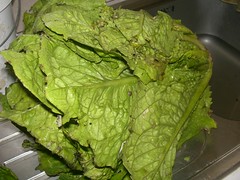
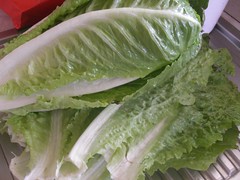
garden lettucecleaned garden lettuce
Cos lettuce, straight from the garden, is not an appealing sight. You need to wash all the soil away, remove deocmposed leaves, and clean it really well. All your efforts will be rewarded with crips tasty salad. These days, a head of Cos lettuce is very cheap, at 39 euro-cents a piece. For a long time, this was the stardard lettuce available in Crete.
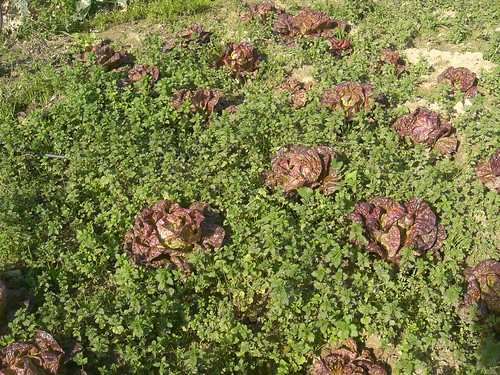
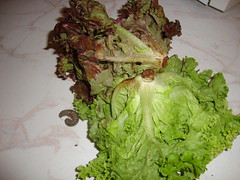
red lettuce
My uncles grew only Cos lettuce on their farm for many years, but now they are growing all sorts of leafy salads, like this curly red variety.

For work purposes, I also had to clear up my residence status in Greece. It was important that I did so very quickly, so that my Greek medical insurance (the infamous IKA) could kick in. I had come on a New Zealand passport and needed to either get a Greek passport, or a Greek identification card issued to me. To get a Greek passport, I needed an ID card, so I had to start off with the latter. This could only be issued in Hania, where my birth had been registered by my father. I needed to travel down to the island (these days, this kind of paperwork can be done at a distance with less hassle). During the coldest month in Greece (February), I travelled to Hania by ferry boat, sleeping in one of the third-class beds (which don't exist these days). If I didn't manage to snap one up, I'd have to sleep on the floor; my experienced ferry-travelling relatives told me to simply take a sheet to wrap myself up in, so as not to sleep on a dirty bed or soiled trodden floor, but I shouldn't worry about the cold, because the indoor areas of the ship were always air-conditioned.

All the expenses involved in my setting up an apartment and unscheduled travelling were adding up in my head. I had received an advance on my salary, but already, I was taking days off work, I had major  expenses, and I didn't have any idea how much I would have to set aside for the electricity bill. It suddenly became more important to me than eating. I started to plan for how I would economise: I would not eat out, I would not go out for entertainment, I would not take taxis; I would allow myself an English-language newspaper once a week, I would have a coffee with friends only once a week, I would call my parents only once a fortnight and write letters to them every week. 

While I was doing this, I was surrounded by people who did not choose to live so frugally. Eating out was de rigeur most nights among some of my colleagues (all Greek girls from abroad), which would often be preceded by a visit to a cafe and/or followed by a bar club. They were living life to the full; it was unthinkable for them to spend Friday and Saturday nights at home watching television. They had no idea when the buses ran, they only used taxis. They rented more expensive apartments than I did, but they never spent much time in them. As I watched them living life as if there were no tomorrow (which always came with hangovers, headaches, lie-ins, and late starts in the day for them), I often wondered how they could afford to live like this. I knew what they were making, as we were all on similar salaries. They often did a lot of private language lessons, and were well paid, but such overpriced work (which often commands unreasonably high hourly charge rates that are set randomly at the discretion of the teacher) is temporary and insecure. Students (or their parents) run out of money, cancelling lessons without notice, and the teacher is left without work all of a sudden; in essence, their expensive lifestyle was unsustainable and it had an unknown expiry date that often came when it was least expected.

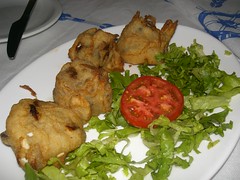
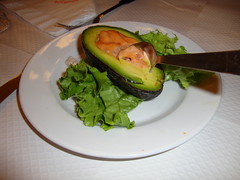
aithrion cassandra halkidiki avocat crevettes 
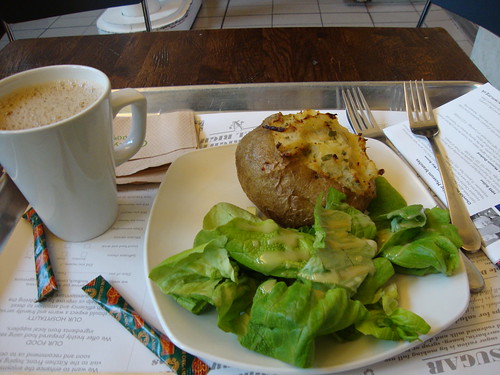
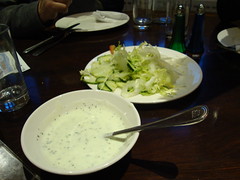
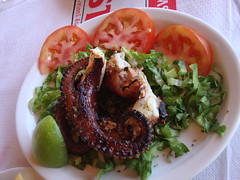
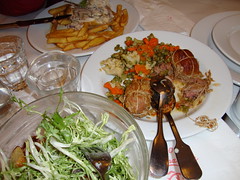
Right around the world, chefs use lettuce as a background decoration on the plate. 
ministry of food cafe iwm london
These plates have been photographed from my travels in Thessaloniki, Paris, London and Crete.
raita and green salad lahore kebab house DSC01564

Even with their higher-than-average salaries, they still managed to run out of money every now and then, and they'd ask me to lend them some. My upfront refusals made them think of me as 'not a good sport', a 'stingy person', 'a tight-arse'. "If you needed any money, Maria," they said snivelling with a guilt-ridden complex, "you know I'd lend you some". Yes, they would, if they ever had any remaining on them. I don't know where these people are now, or what they are doing, as I have lost contact with my Athenian ex-colleagues, but I see similar examples of them in the more recent arrivals of younger women in Hania (always women - there is a special reason for that which I might go into in another post). Most of them find that, eventually, they can't keep up with their expenses and blame it all on the low Greek salaries and high living expenses. The present global (not just the Greek) economic crisis could easily have been predicted by watching the spending habits of my colleagues; they were all Greeks who had been born and educated abroad, all living on temporary financial sources like private lessons, all spending without saving, living with a false sense of security within the instabililty of their present situation.

You may be wondering what 'lettuce salad' has to do with this post. Well, it just so happens that, in those early days of my avid economising, when I went to Crete to apply for a Greek identity card, I stayed with my grandmother in the village. When I left to return to my new apartment, my new job and the concrete jungle, my relatives gave me some food to take back with me: a four-litre plastic tube of olive oil, some eggs, a few spring onions and two very large, very thick heads of Cos lettuce, still clinging onto the earth that they were rooted in, to keep them fresh. They would have also killed a chicken and given it to me, but I told them that I had nowhere to store it and was worried it would go off before I got it home (which is silly really, because I now know that nothing would have happened to it by the next day, especially in the middle of winter!).

anne's salad
Anne's salad: a friend taught me to mix vinegar and lemon juice together to make a very tangy salad dressing. Traditionally, Greek cooks use one or the other in their lettuce salads.

When I got back to the apartment in the early hours of the day, I put away my fresh produce and went to work that same morning. I knew that coffee would be served throughout the day at the office, so I never drank any coffee at home for the next few days until I received the remainder of my salary. I also knew that my extremely generous boss always bought everyone cheese pies and rolls for lunch, so there was no need to spend money on lunch, either (the office was located in an industrial area of Athens away from a central shopping district, on a kind of motorway). At the end of the day, I'd come home and cut some lettuce leaves off one of those thick heads I'd been given, and make myself an old-fashioned Greek lettuce salad, which I'd eat with a boiled egg and a slice of bread (I'd bought one loaf and made it last the whole week). At the weekend, I'd go and visit my sister (by bus, of course), and we'd pool our resources and cook up a cheap meal. On Sunday, I usually visited my very generous aunt, who was always happy to have her niece over for a meal with her family (my contribution to the meal was a bottle of drink). I did this for (as far as I remember) two weeks, until I received my first salary. If you ask me, only an Albanian would live like this in Greece in our days, because they've learnt to economise in similar ways. One day, when my children move away from home, I'd like to tell them this story, but I'll let them decide for themselves what they'll do when it's their first time living away from home.

lettuce green salad
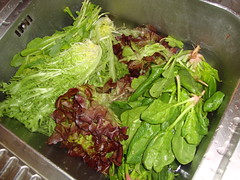
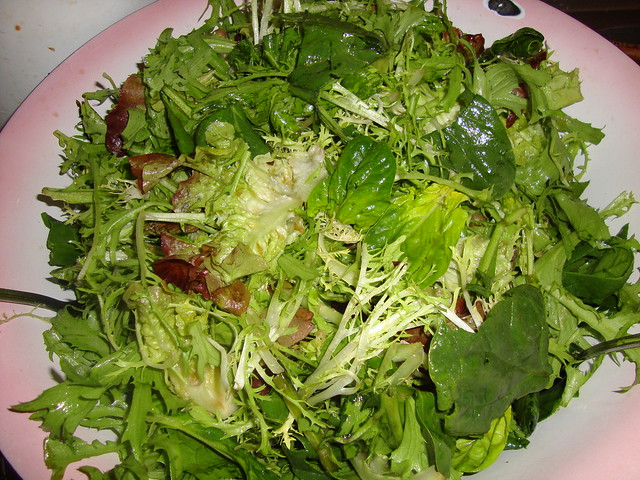
Nowadays, green leafy salads are much more exciting than the early days on Cos-only lettuce in Crete. These leafy heads cost TWICE the price of a head of Cos lettuce. Some of them do not keep as well as Cos, so they need to be bought when you actually want to use them.
green salad

Maybe I was just born with the instinct to economise, but it had to start somewhere, which I think was from home, watching my parents working and saving. There was always good food on the table, and we never went without any of the basic necessities. We also had our luxuries: our parents gave us a handsome sum of money every Christmas and Easter to use as we wished, and we were taught to save our money through a bank account from when we were at high school. Most importantly, we were never in debt, we never took out bank loans, and we never asked others to lend us money. This is probably how I've managed to stay in Greece. Some people might like to remind me that I got a better start in life with the help I received from my parents to buy my own property, but that came many years after I had already been living in Greece. I'd already learnt how to work and live independently; parents often reward their children once they see them living within their means. 

*** *** ***

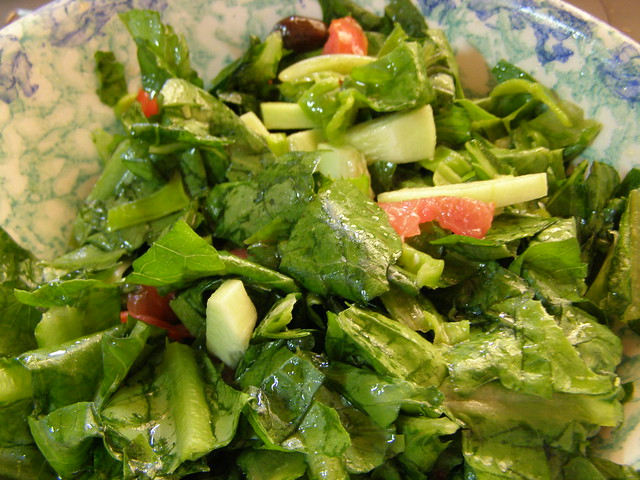
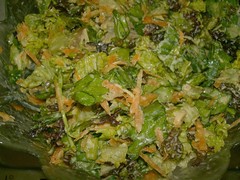
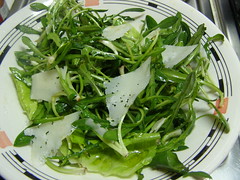
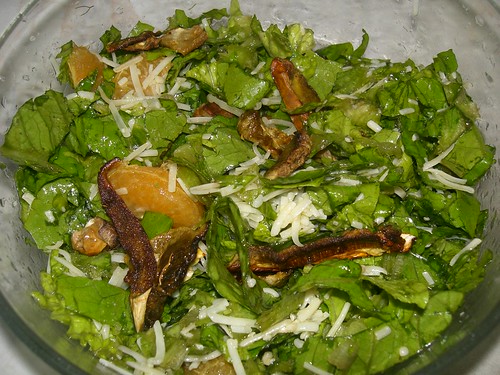
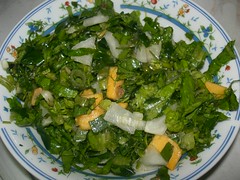
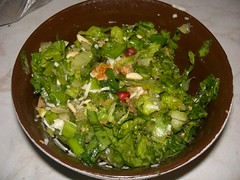
For many years, I've been making the same kind of lettuce salad as in my early days, adding some grated carrot and chopped dill to the lettuce and spring onion. These days Greek lettuce salads are nowhere near as simple as they once were, because of the greater variety of lettuce now available in Crete. Cos lettuce was once the staple lettuce, but these days, it's seen as very old fashioned, especially when there is a wide range of leafy salad greens to choose from at most supermarkets, and nearly all of them locally grown, for those of us who are environmentally conscious. Even the simple olive oil and wine vinegar (or lemon juice) dressing has changed: balsamic vinegar has stormed the market, and a local product called houmeli (derived from the honeycomb by boiling it after the pure honey has been extracted from it) is often added to salad dressings for a more sweet-and-sour taste. Only the olive oil has remained the same...

botanical park restaurant fournes-lakki hania chania maroule
I first tried this salad at the Botanical Park restaurant in Hania, and have been making it ever since.

The following salads can be found these days in most good tavernas, although the old-fashioned one is what is commonly referred to as 'maroulosalata', while the more decadent one often goes under another name mentioning the meat/cheese added to it.

To make an old-fashioned taverna-style Greek lettuce salad, you need:
a head of Cos lettuce
some dill
2-3 spring onions, with their green tops
1 carrot, grated (optional)
wine vinegar or lemon juice (I've used both before, and made a very tangy salad with in this way)
olive oil
salt

Chop (not tear) the lettuce into chunky slivers, the dill finely and the spring onions into thin chunks. Add the carrot if using. I also add some pickled peppers into the mixture, which have been soaking in wine vinegar. Sprinkle some salt over the salad, pour over the oil and vinegar/lemon juice, and toss well.

To make the new style of lettuce salad that is all the rage in Greek eateries these days, you need:
some fancy lettuce (curly green, curly red, frisee endive, iceberg, etc)
some spinach leaves
some rocket (arugula)
honey or houmeli (a product made from boiling the honeycomb after the honey has been extracted)
balsamic vinegar
olive oil
pomegranate seeds
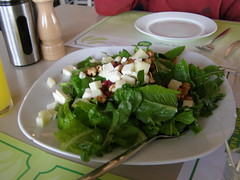
EITHER: the vegetarian version: salty piquant-tasting cheese (blue vein, graviera or feta cheese are used in Crete)
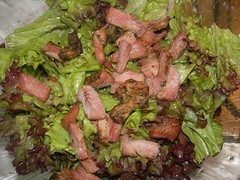
OR: the omnivore version: smoked pork strips (apaki or singlino is used in Crete; lardons would be a good substitute, as is boiled chicken)
OR: the vegan version: avocado chunks

frisee lardons salade verte melangee
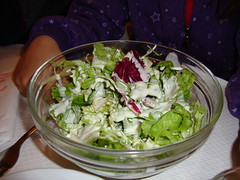
My first French salads (above) - I've learnt to mimic their vivid colours by buying salads in a variety of colours and textures. I also like to add protein to them, to make them into more complete meals. 
red lettuce singlina salad chicken salad

Wash and tear (not chop) all the leafy greens into a large bowl. Pour over the honey (or houmeli), balsamic vinegar and olive oil onto the leaves and toss well to mix. The amounts you pour in depend on your preference, but they are usually used in drizzled, just to coat all the leaves. Add a handful of pomegranate seeds into the bowl. Now add some shavings of graviera or chunks of blue (or feta) cheese, or the heated pork strips, or the avocado chunks. Serve the salad like this.

chef's salad creation porcini mushroom salad
Lettuce salad has come a long way in my house since my early days in Greece.
organically scented salad fruity lettuce salad 

Lettuce salad is very much a seasonal product. I would never buy lettuce in the summer, as it doesn't really suit the seasonal garden to grow this kind of vegetable in a dry Cretan summer. Unlike the old-fashioned maroulosalata, the cheese/pork one makes a complete meal when a slice of really good sourdough bread and a glass of really good white wine is served with it.

©All Rights Reserved/Organically cooked. No part of this blog may be reproduced and/or copied by any means without prior consent from Maria Verivaki.