Showing posts with label the way we.... Show all posts

Tuesday, 13 June 2017

Walls

"Walls are hot right now" 
Banksy, wall artist, and creator of the newly opened Walled Out Hotel in Palestine
https://www.theguardian.com/world/2017/mar/03/banksy-opens-bethlehem-barrier-wall-hotel

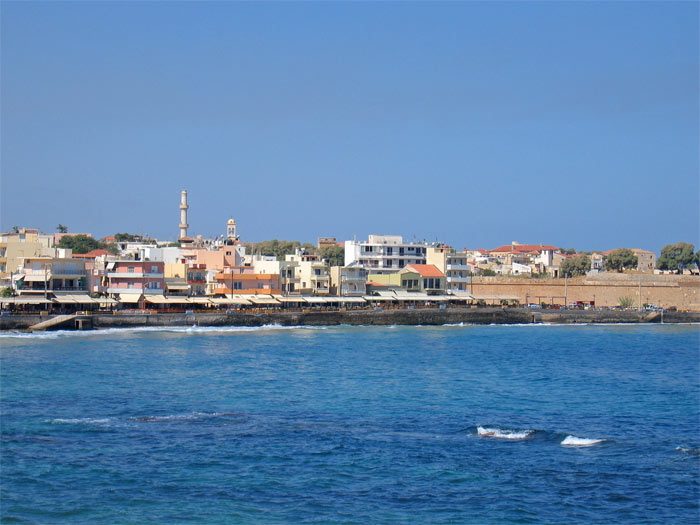
The Byzantine and Venetian fortifications of Chania - Click to enlarge

The oldest walls delineating the limits of the town of Hania were built about 1500 years ago by the Romans who ruled in the East - those who conquered modern-day Istanbul (formerly Constantinople and originally Byzantium) at one point - otherwise known as the Byzantines, hence the 'Byzantine wall' (the green line in the above photo) as we refer to them in Hania. These walls were loosely based on the origins of the town which lie in the area of Kastelli, generally regarded as the oldest part of Hania. The Byzantine walls were built to protect the town from Arab invasions, but they were probably not very effective because the Arabs eventually invaded anyway, and despite their short rule, when the Byzantines took back the town, they needed to strengthen them due to the destruction that they had incurred.


The fear of losing what you gained - even if it was gained using illicit, violent means - was great in older times. Building a wall around your belongings has always been regarded as a way to keep yourself and your property safe. Even so, the newer Byzantine walls again failed to protect the town from invaders. The Venetians (Romans from the West) had conquered the city by the beginning of the 13th century. Their arrival also entailed a greater population. Builders began adding extra stories on the existing buildings, and new ones began to be built beyond the Byzantine walls. Since the town had expanded, new walls were in order. These newer walls - known as the 'Venetian wall' (orange line in the above photo) - began to be built soon after the Venetians established themselves in Hania, as they too feared attacks from other invaders (Arabs, Ottomans).

But the Venetian walls - built mainly by forced labour from the region - took a long time to be built. The Venetians weren't really very popular in Hania. For a start, they got rid of the high priests in the town, and installed their own ones. Different language, different customs, and a clearly urban attitude among the mainly rural people of Hania kept the two worlds apart, to the extent that the Venetians (read: Catholic) were living in the urban part of the province, while the Cretans (read: Orthodox) lived in the villages. The town of Hania was being constructed according to Venetian architectural standards - but beyond the urban area, the province remained decidedly Greek.

The arrival of the Venetians transformed Hania into a very beautiful one with distinct Venetians features. Hania was regarded as a mini-Venice. The Venetians built impressive walls around the modern town they created, with ramparts built at vantage points, enough room for a deep moat around the walls, and a large fortress on the west side. But these walls were not without their problems, which were known to the Venetians. They needed constant repair which was too costly to be done at regular intervals. It was to be expected that they too would eventually fail to secure the town against attacks. Barely had the fortress on the west side (known as 'Firka') been built than the Ottomans (read: Moslems) invaded and and conquered the island. The proposed moat had never actually been used, despite its existence. So the Venetian walls really did not live up to their expectations.

The Ottomans really didn't care much about the walls. They had already realised that the walls weren't very useful in performing their original function, so they basically went into decline after that. The Ottomans took over the Venetian buildings without changing them very much, and added a few landmarks of their own, like mosques and turreted towers on the churches and monasteries. Churches became mosques, storage areas, even soap factories. Such is the fate of the spoils of war. But the Ottomans were considered 'nicer' conquerors than the Venetians, because they reinstated Orthodoxy in the town, doing away with Catholicism. The Ottomans simply took over a pretty much ready-to-use town. When Greek independence became an issue of concern to the West, the Ottomans - who stayed in Crete longer than any other Greek territory of the time - must have realised that their time was almost up. Crete became a nation state in 1898, eventually joining modern Greece in 1913. It's been Greek ever since then.

When the Ottomans finally left Hania, and the Greeks took over, no more walls were built. The old walls were allowed to remain, but parts of them were knocked down in order to make way for roads. Ease of access was regarded as more important than preservation of the existing architecture. By then, Hania had become an important centre of trade as the capital of the Crete. Before town planning restrictions came into force in 1960, parts of the Venetian walls were knocked down to make way for roads, and people were living in houses built on, in and around both the Byzantine and the Venetian walls. The walls were therefore still serving a purpose, but it was quite different to their original use.

It's interesting to consider the failures of the fortifications of the town of Hania in the present time, when walls continue to be built (or are at least int he planning stages), and people continue to cross hypothetical walls - country borders - in order to reach their desired destination. The European Union is a prime example of having broken down barriers between countries by doing away with borders. But just 25 years after the fall of communism and the Schengen convention, borders are being reinstated in the EU, and in quite a few cases, physical walls are going up, such as the one between Hungary and Serbia, to stop immigration coming in mainly from Greece and Italy. Natural borders like the sea are no deterrent. A physical wall in such cases is impossible.

Beyond Europe, Donald Trump intends to build a wall to stop people entering the US from the Mexican side, while Theresa May wants the UK to leave the EU to curb migration. Yet Turkish authorities continue to turn a blind eye to people departing from its shores as they make their way to Greek territory, while Greek authorities continue to turn a blind eye to the disappearing migrants that were initially registered here. Whether a wall - physical or hypothetical - is able to prevent the movement of people is pure conjecture - history tells us that walls do not stop people's movements. The Cretan waters surrounding the island are a great deterrent to the movement of people as they are very rough and they are considered too dangerous to cross on a rusty leaky dinghy. But only a month or so ago, 60 illegal migrants were found hiding in caves near the north coast of Hania (they were temporarily housed in the gymnasium where my children do their sports activities), and another 113 were found on the south coast of Crete; the determined will always find a way to execute their plan.

Image may contain: stripesWalls come up and walls fall down. Sometimes they come back up again. Since the late 1980s, the existing walls in Hania have been prominently restored, with work continuing in the present day. Some of the houses were removed from the walls, and a whole hotel was knocked down on the western side of the fortifications, so that the walls could be renovated, restored and displayed. These fortifications are being given a new lease of life for sentimental and historical reasons: for tourists to marvel at, and for future generations to learn the history of the town. As recently as last month, the wall on western rampart was damaged due to bad weather. This part of the wall is deemed a precious relic of our history and will be restored: in fact, it isn't the first time that it has fallen and been restored according to historical records.

Walls against 'invaders' continue to be built, restored and maintained. But they aren't really working.

Image may contain: one or more people and outdoor

Collage of Hania's walls by Vaggelis Diamantakis: Byzantine walls (961 -1204AD) red colour. Venetian walls (1204-1645) yellow colour. Hania was captured (sic) in 961AD by the Byzantines led by Nikiforos Fokas who took it from the Arabs and they rebuilt the city with fortifications on the Kastelli hill, turning Hania into a walled city. Of the Byzantine wall, what remains is the north section near the coast  and a small part on Sifaka St.  

My photos were taken on a recent trip to Iraklio, Crete's biggest city, showing another use for walls in modern times: as an outdoor art gallery. This post is based on discussions I had with a group of 60 students from MAICh, when I conducted a tour of the old town of Hania with them at the beginning of the year. See http://www.organicallycooked.com/2016/02/the-multicultural-layers-of-hania.html for more information about Hania's landmarks. 

Sunday, 3 November 2013

A century old (Εκατό χρονών)

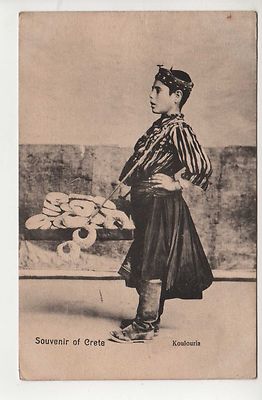
The koulouri seller...

... made a comeback...

... for yesterday's celebration of the Agora's 100 years of operation.


©All Rights Reserved/Organically cooked. No part of this blog may be reproduced and/or copied by any means without prior consent from Maria Verivaki.

Saturday, 6 July 2013

Squabbles (Καυγάδες)

My very kind cyber-friends all over the world often pass on weblinks to me which often end up being the basis of a blog post. As one of those friends said to me once, I can create a post out of practically nothing. (I don't know if that is a good thing or not, but it allows me to keep boredom at bay.) This morning, I received a link to a card (being sold on ebay) showing an ancient Greek site (Acrocorinth), sent in April 1922, by what seems like an American who was visiting Corinth, to another American in Constantinople, Turkey. It is often the little message written on the card that provides revealing little insights into our past.
Little did the writer know that only 5 months later, Constantinople would no longer exist on the map - it would be known as Istanbul, as it is today, after the Smyrna catastrophe in September 1922.
On another occassion, my friend Betty asked me to explain to her what was written on a century-old postcard selling on ebay. The postcard, showing the entrance of St Sophia in Constantinople, was sent by a Greek man living in a place called Pera (referring to a suburb of Constantinople which was also known as Galata, and now called Beyoglu in modern-day Istanbul) to his Greek female cousin in Alexandria, Egypt, which had a thriving Greek community at the time (to this day, the Greeks remain one of the biggest minority groups in Egypt, primarily centred in Alexandria). For these reasons, the postcard could be deemed to possess great historical value, showing the widespread shores that the Hellenic people had made thier homes in around the at the time fledgling Greek state.

The language of the actual postcard is in French, as was common at the time, when French was the international language of Europe. It is dated 26 March 1910, with the 26 highlighted in a different pen colour from the remaining text, which may be deemed significant, given the ensuing discussion on the postcard. It arrived in Alexandria on 1 April 1910, according to the stamp. The person receiving the postcard probably doesn't know French, since the writer explains the phrases found on the picture side of the postcard. The form of the Greek language used by the writer is Katharevousa, the 'compromise' between Ancient Greek and Modern Greek which was invented for the purposes of keeping a high levelof the language alive for official purposes; the use of Katharevousa Greek also suggests that the writer must have been quite educated, as most diaspora Greeks living close to the Hellenic shores were at the time.

The writer starts off with the globally common way of adressing someone in writing: "Dear Cousin Sophia". But he does not continue with the common salutations that often open a letter - he gets straight to the point of the epistle with little hesitation:

You have absolutely no right to accuse me of not writing a letter to you detailing Polixeni's latest opinions. I immediately wrote you a letter, addressed to Nikolas or to Michail, but maybe unfortunately you did not receive it. You must know, my dearest cousin, that I care a lot about you, and you have to understand this, and not put it in your mind, as you write here to me, that I concern myself with alien issues. I believe that my attitude towards you so far is not that of a stranger but a relative, at least in my opinion. If you did not receive the letters, ask for them at the post office. I beg you (turn over) Sofia, please do not send me another letter within a letter addressed to someone esle, because the last letter you sent me was contained in Lemonias' letter, even though you had closed it, they gave it to me opened [...]. Please don't write to her. Because the best way is not to send letters inside others' - not including, of course, your brothers' - letters. 
We are well, and I wish the same for you. I hope I am proved wrong [...] the unjust [...].
Your cousin, A......, 1910. 
Επαίτης = Beggar

It seems incredible that during the years when letters took a long time to get to their recipients, someone would spend money and time writing a postcard of this sort to scold their cousin! But then, family relationships in those days were not as simple as they are now, and the telephone did not exist for them. He talks about privacy in the message/letter, although he did not heistate to send it as a postcard without an envelope!

The whole essay sounds to me like a grand spiel of an explanation for missing mail. If this letter were to be written in modern times, I expect that it would be some kind of text message or email, and it would contain something similar to the following message:
"didnt u get my msgs? pls check yr junk mail"
Throughout the centuries, Greeks have always had a liking for a good debate, philosophising trivialites, without any fear of letting it turn into a squabble, as this postcard attests. One wonders what Sophia would have said to her cousin or how she would have greeted him upon seeing him after a very long time after a very long trip, even if a war or some other social upheaval may have taken place during that time: "Did you get my letters?"

©All Rights Reserved/Organically cooked. No part of this blog may be reproduced and/or copied by any means without prior consent from Maria Verivaki.

Friday, 4 January 2013

To Pazari (Το Παζάρι) - The Bazaar

I'm a member of the CIC, a group that brings together foreigners living in Hania. It organises events such as coffee mornings, nature walks, daytrips in Crete, and fund-raising events for charity. My annual €15 subscription helps the group to organise and promote these activities, and my posts are also published in the monthly CIC newletter. My subscription fee is due at about this time every year, and I always pay it at one of the CIC's events, or at To Pazari.


To Pazari (= The Bazaar) is a consignment shop selling second-hand used goods on the owners' behalf. If the owner doesn't want to pick up any money when their items are sold, they can ask for the proceeds to be given to charity.

The goods sold at To Pazari are not what people just want to throw away: they must be seasonal, appropriate, in good condition, clean and useful. So To Pazari doesn't act like a charity shop - it wants to sell useful items at an affordable price, helping both individuals and people in need.

Second hand shops in Crete were started by foreigners living here. There was no such concept until a foreigner started the first one, which happens to be To Pazari. It has now been operating in Hania for over 20 years (opened in May 1992). I still remember coming across it in amazement when I first moved to Hania about 18 years ago. I\d lived in Athens up to then, and I'd NEVER come across a second hand shop, despite living in a working class area (Egaleo). Such stores were seen as a compete novelty at the time, because they were considered as places 'poor people' shop at, people who can't afford to shop at 'real' shops. That prejudice has been partly broken down now by the crisis. Before the crisis, Greeks thought that second hand shops just sold over-priced 'antiques', as in the Monastiraki quarter of Athens. They are only beginning to understand the concept now.

A lot of To Pazari's original customers were once mainly foreigners: economic immigrants and ex-pats who had made their home in Hania. Buying second-hand goods has always been taboo in Greece, carrying the stigma of  'other people's rubbish'. But the truth is that some of us have always needed to buy things from places like this store because that is all we can afford. There are also others like myself who know that I will find what I am looking for only in places like To Pazari: English-language books for example, which can only really be bought online in Crete. Second-hand shops are also great places for 'off-the-beaten-track' fashion garments at rock-bottom prices. It makes no difference that they have been worn before, since most items are one-off as they have been often been bought in a different country. Multimedia discs are also a good choice in these places - buying a DVD here will cost you less than half the price of one of those Sunday newspapers that offers you a 'free' DVD along with a paper you will probably not read!


St Nicholas
Splantzia
To Pazari is located in one of the historically most important parts of Hania, the former pre-20th century Turkish quarter of the town, in an area called Splantzia. It is a short stroll up the road from St Nicholas church, which is unusual in that it has a both a bell tower and a minaret attached to it, reminding us of past times. Splantzia is now known for its κουτούκι-style food and drink scene - cosy tavernas, wine bars, graphic cafes, and retro eateries - and it is a place where economic immigrants congregate, with a number of organisations based there that look after the needs of people in difficult situations. The link between Ottoman and modern-day Splantzia cannot be underestimated.
My daughter's first second hand store purchase - a luxury evening bag. We found the shoes on the same evening that we bought the bag, in a bargain box outside a kineziko (Chinese clothes store). 

These days, places like To Pazari are busier than ever, due to the crisis. But what differentiates a place like To Pazari with other stores selling low-priced goods is that To Pazari does not trade in the commercial sense. It's a place where people with like minds meet. It takes on different functions at various times of the year: it acts as a library, a cafe or a meeting place for many of its customers, and makes passersby feel very welcome. And there is always a friendly person available there for a chat. You don't have to buy anything to visit To Pazari. You go there for many other reasons.

You can find To Pazari at Daskalogianni St, Splantzia, in the eastern side of the town of Hania - look out for the two minarets, and it is somewhere in between them. Open during all regular trading hours.

©All Rights Reserved/Organically cooked. No part of this blog may be reproduced and/or copied by any means without prior consent from Maria Verivaki.

Thursday, 29 November 2012

Clogs (Τσόκαρα)

When I was in Holland, I visited an open-air windmill museum in Zaanse Schans. One of the windmills was being used to show the history of the clog, and there was a display in the windmill of how clogs were made. Dutch clogs look kind of strange, and I didn't think anyone would wear them now, as they look so dated, stemming back from a time when people had less and didn't have access to much else - until I saw an older-looking gent wearing a pair of bright yellow clogs as he was riding his bike in a quiet suburb of a Dutch town in the north.


When I decided to buy a pair of clogs (in the Swedish style and not the Dutch, even though they are made in Holland, because I'd really stand out if I ever chose to wear the latter in Crete), my husband thought I was mad. But they suit my kind of lifestyle - I only wear shoes when I have to, and if I can slip them on and off easily, all the better. I was given instructions at the clog windmill as to how to wear them "Always with a thick pair of socks, so they don't cause you any discomfort."

I began wearing my clogs in Hania in late autumn. I noticed that they made a lot of noise as I walked on the bare tiles of the floor, but I only put them on just before I was ready to leave the house. They were relatively quiet on the carpeted areas. But still, they did not pass by unnoticed. I wore them yesterday as I was taking a piece of moussaka to yiayia (which we cooked in the wood-fired heater). She looked down at my feet and said "So it's you who's been wearing tsokara!"

"Oops," I started apologetically. Yiayia lives downstairs from us, so I was obviously making quite a clatter as I walked about the house in them. "I  didn't realise they were that loud, mama, sorry."

"I haven't heard that noise in years," she continued, as if she hadn't heard me. "They were the only shoes we had when I was a young girl, and throughout the war years. Our fathers would hew them out of wood, and nail a piece of leather on top for your feet. Most people didn't actually have any shoes at all, so I was very lucky that my father had made me a pair. And my mother never let me wear them without socks, unlike other children, whose feet were always looking red and sore, because they had no socks to wear with their clogs. And they had no other shoes, so if they didn't wear them, then they'd have to go barefoot. So many children had dirty feet in those days."

"They must have been useful in the fields, mama," I said, hoping to coax her memory to tell me more.

"Well, they never got left stuck in the mud, but if you were walking on the flat road, you often tripped because they were quite slippery. They needed a bit of rubber on the sole, but we didn't have anything, especially when the war broke out. We had nothing, not even any food. And I walked in those clogs without socks to the neighbouring village where we took refuge with another family. By the time we got there, my legs were so red and sore that my ankles had swelled and I collapsed."

Although she went through a terrible ordeal during WW2, she still has the courage to talk about it. Even though she says she'd like to forget those times, it seems that in her older age (my mother-in-law is 88), she remembers those days even more clearly. 

©All Rights Reserved/Organically cooked. No part of this blog may be reproduced and/or copied by any means without prior consent from Maria Verivaki.

Friday, 26 October 2012

Moving on

Just lately, Greece has a lot to commemorate rather than to celebrate. Every day for the past two months, Greek TV has been reminding us of the catastrophic events that took place 90 years ago in Smyrna (a city of modern-day Turkey). Only another decade is needed for the centennial commemorations to take place, yet there are still people appearing in the programmes, describing the events that took place when they weren't even born. They are relating the events as they were told about them by their deceased relatives, for future generations to remember. The photographs and films of the time, despite their blurred and grainy images, depict the devastation very well.

Today, Greece commemorates the liberation of the city of Thessaloniki in Northern Greece, on the same day as the feastday of St Dimitris. Double celebrations are seen as auspicious in Greece (eg independence from the Ottomans), hence the alignment of certain feast days with national events . Thessaloniki's Hellenisation preceded the Smyrna events by a decade. Both events sought to maintain Hellenic territories: one was successful (most of what was known in ancient times as Macedonia is now Greek territory) while the other one wasn't (what was once known to Greeks as Asia Minor is now all lost).

Makedonomahos (Fighter for Macedonia), Thessaloniki
The Macedonian war reminds me of a story my husband told me, as he was told it by his father, who heard it from his father; my husband did not have the chance to hear it from his grandfather becuase he had died before my husband's birth. Many Cretan soldiers went to Northern Greece to fight in the Macedonian wars - this was at a time when the island of Crete was not formally a part of the modern state of Greece. My husband's grandfather had fought close to the border with Bulgaria. The soldiers went for many days without food. At one point, they saw a donkey eating the rind of a watermelon. They fought tooth and nail with the creature to prise the rind out of its mouth, so that they could eat it.

Today of all days, the Greek Prime Minister, speaking from Thessaloniki, told the Greeks that they don't need to be reminded that Alexander the Great was Greek; after all, he spoke Greek, he believed in the Greek gods and his teacher was Aristotle. But he also reminded us that it is now time to move on from Alexander the Great. He is of course alluding to Greece's official position concerning the name of a neighbouring country. That is enough to set off arguments that he is betraying his country.

Greeks rarely forget their glorious past. Just lately, they are coming to terms with some of the less glorious moments of their more recent past, like the post-WW2 civil war, which wiped out more than 150,000 of the Greek population of the time, half the number of Greek lives lost in WW2, while many Greeks who were against the allies (US and UK) fled the country, settling in communist countries, mainly Russia. Since the breakdown of communism, many returned to resettle in Greece, accompanied by the problems of healing old wounds.


The island of Crete will undergo its own question of identity next year, in 2013, when it commemorates 100 years of being part of the modern Greek state which had been created almost 90 years before that date. To understand why it took so long for the island to become a part of Greece means that it is necessary to understand the difference between modern Greece and ancient Greece, without forgetting that Crete has been Greek since the time of the Dorian invasion of the island. 

Knowing your past gives you the chance to carve your way into the future. But knowledge of the past can also keep you back there, as the past does not always coincide with the present; events that are supposed to unite us often end up dividing us. In the past, all that was needed was a state decree to make people comply with the official position of the state; a good example of this is how Christianity spread among the Hellenic world. The ancient Greeks may be said to have invented democracy, but coercion was still an important political tactic in their days. Coercion is not taken lightly by Greeks, the only country to stand up to the Nazis in WW2, and it continues to be opposed, as Greek politics has demonstrated very well in the last three years.


©All Rights Reserved/Organically cooked. No part of this blog may be reproduced and/or copied by any means without prior consent from Maria Verivaki

Sunday, 30 September 2012

Economic migrant (Οικονομικός μετανάστης)

Emigration - it's such a fluid concept in our times.

Stelios, a good family friend, was desperate to get away from a failed marriage and a mountain of debts. Being a New Zealand citizen by birth, he decided to emigrate to Australia. Two years later, he comes back to Greece on holiday, mainly to see his kids and sort out some paperwork. He looked happier and healthier than when I last saw him in Crete. He also had a lot to tell us.

"I don't tell people where I'm working in Australia. I just say I live in Perth, but I actually work in the desert mines. I don't tell them because I'm making good money, and everyone thinks I can get them a job just because I'm there. But that's not the way things work in Australia. You have to prove your worth. I've been at the mines for only 8 months and I've already had one promotion, which is unusual. You are rewarded for good work, and I'm often told that I put in the work of two people. That's how I got the chance to go on holiday before I had even completed a year at the job. I'm very lucky.

"I don't work underground, I'm always above ground. My job has to do with building foundations and pouring concrete. It's very hot work, I'm always working outdoors, often in 50-55°C temperatures. We work 10-hour days in the heat, 13 days in a row. I get every second Sunday off. Every day, I slap sunscreen on my face and put on my long-sleeved uniform. It's the rule - we are forbidden to wear anything else. I'm what's known as a fly-in-fly-out worker. After 6 weeks, I leave the mines and go back to Perth, where I stay for a week at a friend's house. Then I fly back in for another 6-week stint.

"Although I'm making good money, I also pay an enormous amount on taxes. I'm happy with my pay packet, but I'm often astounded to think that I pay almost the same as I make in taxes. My accomodation and food is included in my pay. Our homes are like container units. I have a room to myself with a bathroom and air-conditioning. There are meals served every day through a buffet - I don't have to cook. After work, all I have time for is to clean myself up, go to the gym on the compound and have a meal. The closest town is about an hour's drive away, but I really don't have time to go anywhere after work. There's no point in it anyway, because we're too tired. I don't even have time to go to the workers' pubs. I'm just too tired.

"I'm glad I don't have any hidden expenses where I live. There's nothing to do with your money in the desert, so you can save it all. I make a good amount of money to allow myself to think about buying a house, maybe somewhere in Perth. I'm also paying off my debts in Greece. I don't know if I really want to come back to live there though; things are a mess there. I miss my kids, but I can't offer them anything here. If they come out to Australia with me, they won't be much use to me or even to themselves - if you aren't educated, you have few hopes of achieving anything. Australia's only worth emigrating for if you can secure yourself a high-paying job as a qualified professional, through the programs being advertised for a skilled workforce. Otherwise, you'll be working like a slave and making bugger all. Greeks think Australia is a rich country and everyone has good jobs making good money. There's no truth in that. If you're unskilled and uneducated, you haven't got a chance to improve your life. You'll simply be stuck in a rut.

"I went to Perth because I had relatives there. Before I began working in the mines, I got a job through one of them at a meat market, just to start earning some money. The money wasn't really good, and my job wasn't really a job. I was more of a dogsbody. I wanted to start sending money home as soon as I could, but I felt like I was a burden where I was living, and I'd help with the expenses. I really wanted to become independent. I eventually got a job as a plumber in a firm, which is what I was trained in when I was living in Hania. That gave me the chance to start living independently, so I found a room in a flat in the city. But the company didn't seem to be doing very well. The pay was not good, there were no chances of improving my lot there and I began to worry when I realised that I couldn't send any money home to my kids. I got really depressed.

"I began scouring the newspapers for job ads. My English skills had improved speech-wise, but my written English is still nowhere near up to par. I'm able to read basic stuff now, but I still can't write. I was able to read the job ads, but I couldn't fill in an applicaiton form on my own. I was helped by a friend I met at my plumbing job. He helped me every step of the way in getting the job at the mines. He knew people who worked in the offices of the mining company and he recommended me to them. That helped my application to rise to the top of the pile instead of being hidden among the many applications that get sent there.

"That friend is now like a big brother to me, and I'm very close to him. He's Israeli and he's been in Australia for 30 years. I stay with him and his family in their house when I fly out from the mines. I don't see my relatives much. When I told them I got a job at the mines, they couldn't believe it. When they realised that I was making good money, they seemed to show signs of jealousy. They kept asking me to get them a job there too. But I couldn't do that - I was just a worker there! I think they were wondering how I managed to achieve so much in so little time, when they came out before me and have been living and working there a long time. It's been three months since I last saw them. You can't trust your own family any longer. Blood may be thicker than water but you choose your friends, not your family.

"Living and working in Australia is not what it's cracked up to be. I had a really rough start. After a year, I began panicking and almost packed up to go back to Greece. I had no one to turn to except myself. If I've achieved anything, it's through a lot of my own personal effort. What keeps me going now is the money. I'm able to send some money to my parents to give to my kids, I'm ploughing my way through paying off my debts and I can even think of getting onto the property market. If I do that, I will be able to bring my kids here and they can have a better chance in life. But that's only if they want this for themselves. I won't make them come here. It's a personal choice for them to come here. Life isn't easy anywhere."

©All Rights Reserved/Organically cooked. No part of this blog may be reproduced and/or copied by any means without prior consent from Maria Verivaki.

Sunday, 19 August 2012

Then and now (Πριν και τώρα)

Although I didn't study history formally at school, I enjoyed learning about the past history of the city where I was born and raised, Wellington, mainly through old photos of the first colonisers of New Zealand: the women in their frilly white dresses and long hair tied up in a bun, the men in their stiff formal suits, sporting old-fashioned hats and thick bushy moustaches.

Quite a different picture of the history of the town where I now live is gained from old photographs of the same period. The workers' association of INKA supermarket, a local supermarket chain in Hania, puts out a calendar every year to raise funds. This year's calendar contained an interesting collection of archive photographs showing how Hania was a century ago. I've copied a few of these photos and compared them with what the area looks like now (these photos are also available over the internet, along with many others).

The present law courts of Hania were once a Turkish hospital. The hills above are now part of the suburbs Lentariana and Agios Ioannis.


Koum Kapi, a phrase taken from the Arabic language, as seen from a distance; the area hasn't really changed much.


The Agora, the main market of Hania, was originally built as an open market with covered stalls.


Some things are gone forever; the Turkish kiosk at Splantzia is no longer with uss. Instead, there is a large open square in front of the Greek-Orthodox church of St Nikolas (which also has a minaret attached to its right-hand side, attesting its multicultural history), shaded by a plane tree.
http://www.chania-oldtown-walks.com/wp-content/uploads/2012/01/Splantzia-Square1.jpg

A century (or so) ago, Hania was dominated by Greeks, who were mainly Christians, with a significant Greek-speaking Moslem population (whose origins were Turkish), and a Jewish minority. The different religions were all practiced openly by each group. The Moslems and the Jews lived mainly within their own enclaves in the city; some of their monuments have stood the test of time. A number of minority nationalities were also present in the town, notably the Halikoutides (presumably Egyptians). 

The town that my parents knew at about the time they emigrated was mainly a monocultural one. The Moslems were forced out during the population exchange with Turkey in 1922, while the Jews were forced to leave (and few survived) during WW2.


You can get a glimpse of monocultural Hania in this 1961 video.

The town I am now living in is still Greek-Christian dominated, but there are many other nationalities living among the Greek population. Albanians probably form the largest and most well established minority group in Hania (they are not leaving the town, as is the case of other Albanian immigrants in other parts of Greece), and there is also a large group of Greek-speaking Russian-Greeks whose origins are from the Black Sea. Bulgarians are also present in strong numbers, as are a number of North African nationalities. Although the town could be said to be multi-cultural in this sense, the rise in fascism has created problems for certain groups at certain times of the day (ie at night) in certain areas. This is especially a problem in the case of non-registered (illegal) immigrants.

These two photos have not been taken from the same position, but the same general view can be seen in the background, while some of the same buildings are also visible. The older picture has been taken at the site of the former Honolulu reception centre.  
The photo below shows the Honolulu reception centre, built on the beach.
This is actually nothing new in places like Crete - a century ago, different nationalities (at the time, represented by different religions) fought in similar ways: Christian Greeks and Moslem Turks lived together, but not always harmoniously. Both multi-culturalism and mono-culturalism have their problems. In the case of the former, the problems are often surface ones, but in the latter, the dangers are less noticeable. Mono-cultural thinking cuts a country off from the rest of the world; it's one of the factors to blame for the economic crisis, as it generally leads to a less open mind, which has an effect on the way the monoculture operates in business and trade. Greece is now paying the price, not just for bad spending habits, but for doing things her own way for so long and ignoring the way the rest of the world - the one that she belongs to - was going, which was pretty much in a Western rather than an Eastern direction. Her true Europeanisation didn't really happen at the point where she entered the EU or the euro - it's taking place now, with changes made to the laws to prevent her from slipping back into the easy comfort of pretending that there is no one else around except herself.  

©All Rights Reserved/Organically cooked. No part of this blog may be reproduced and/or copied by any means without prior consent from Maria Verivaki.

Wednesday, 8 August 2012

Passport (Διαβατήριο)

My friend Emilios* turned up to my place last night. I hadn't seen him for over a year, when he had asked me to help him with lodging a New Zealand passport application.

"So why do you want to leave Greece?" I asked Emilios.

"Life," he said. "I'm bored of the life I am living here. There is no possibility to change it. Got an ashtray?" he asked as he lit up a Marlboro.

Emilios is right. Here in Greece, we generally do not think about how we can change our life. We generally think about how we can live comfortably without life being too taxing on us (pun intended).

Emilios could be said to be doing just that right now. He owns his own home (which his parents had built for him), he runs a successful local business (after his dad reitred and did not want to continue to run it himself), and he has no debts. But Emilios also exhibits the classic problems of people whose parents worked hard in foreign countries in order to ensure that their own children would not feel the poverty that drove them out of their country in the first place: he has never actually worked to build something up for himself. Emilios has an added problem: after finishing high school, he never continued with his education (presumably because his parents told him that he was set up for life, through them).

So Emilios is looking for an exit to his personal crisis - he is dead bored.

Emilios began thinking about emigrating after his uncle Stelios, another New Zealand passport holder (also helped by yours truly to lodge his New Zealand passport application), left the country two years ago. In Stelios' case, he was desperate to get away from a failed marriage and a mountain of debts (Emilios is unmarried and childless). Stelios' Kiwi citizenship secured his escape - he went to Australia to join his brother (who had taken flight a decade before the crisis, because he was always being paid in arrears for the piecemeal work he did in the construction sector - it wasn't enough to support a wife and baby: he often had to tell his employer that he needed money to buy baby formula). Stelios found work in the mining industry in a remote part of the Australian outback. I do occassionally ask about the name of the area, but his relatives here really don't know it, simply telling me that he comes back to Perth every six weeks or so, by plane, where he spends a week with his brother's family, and then flies back to work. They tell me that he's making good money, and above all, he is paid regularly. (And since he presumably has nowhere to spend it, he saves it, and will come back to Crete a rich man.)

Both Emilios and Stelios (and his brother) had both left New Zealand when they had just started school, so their English skills didn't develop much further once they came to Greece. Their educational advancement was stunted due to their own parents' lack of education, who managed to survive without knowing much, so they expected that their kids would learn to survive in a similar way. Yes, they all survived - but they aren't happy with the way they are surviving, just like their own parents, who emigrated for a second chance in life. Unlike my parents, their parents got homesick too soon after their arrival in the New World, and they returned home. This is why Emilios' knowledge of English is very limited, but he doesn't see this as a problem. Emilios tells me that his uncle says he'll pick up the language very quickly, and besides, the people he'll be working with all speak a rudimentary form of English that is intelligible among themselves. "You don't need a university degree," he reminds me.

Emilios handed me a box of mini ice-cream sticks which I put into the freezer before printing out the latest copy of the New Zealand passport application form, which I noticed looked very different from the older form that I had helped Emilios fill out the last time he had visited me.

"What's taken you so long to decide whether you really want to leave the country?" I asked him.

"Apathy," he replied. "Another friend left last week, with his wife and kids, and I thought it was about time I started making the move to leave too."

"Who was that?" I asked him, thinking it must be another Kiwi passport holder.

"Oh, you don't know him, he's Greek, but his wife's Greek-Canadian."

I could have guessed. The people leaving Greece are generally dual-passport holders; they have easy access to enter another country. Generally speaking, Greeks don't make the grade when it comes to emigrating to a country where they don't have personal links. Very few have the qualifications required to be accepted as part of the skilled or work visa program of the countries they are generally interested in. When you don't have the skills required, you need to prove that you will make a positive economic contribution to the country, by bringing in loads of money or providing a guarantee that you will make a significant financial investment to the economy of the country. Personally speaking, I have only come across dual passport holders leaving Crete for New World countries. People leaving Crete for European countries are usually students who have landed a university scholarship or are involved in paid research projects with very stringent work conditions.

Emilios doesn't have any money (it's all his parents'), nor does he have any noteworthy skills or qualifications - only his citizenship status in a foreign country has given him the right to enter it (or should I say, enter another country, as he isn't going to New Zealand). He has no expectations to improve his status. He just wants to add a bit of spice to his life. Scorching temperatures don't scare him, nor does dusty outdoors/underground work. He is prepared to leave behind a temperate climate, a loan-free home, a successful business, his family, the clean free beaches, the local food and everything else that comes with living on a small Mediterranean island.

I gave him the application forms and handed him a pen.

"What, I'm going to fill it in myself?" he asked me with a surprised look on his face. While I was printing the forms, he was listening to Cretan music on his iPhone.

"That's what it says in the instructions," I reminded him. I wrote all the responses for him on a scrap piece of paper, and he copied them awkwardly, looking up and down from my notes to the applicaiton form in front of him. He seemed totally unfamiliar with the English language - or maybe it was writing in general, as most people don't do much writing in their life after they leave school: maybe a shopping list and some txtmsging at the most (Christmas cards are pretty much a thing of the past).

"My e-mail? Don't have one," Emilios insisted. Nor does he have a credit card with which to pay the passport fees. I wondered how either could be possible when you own a business these days. I admire Emilios' simplicity. I thought I was a simple person.

Old East and West German passports at the Wall Museum in Berlin

He's not looking to escape the financial crisis, he's not interested in self-advancement, he isn't even thinking about the future. As a young man in his early 30s, he just wants to have a reason to get up in the morning, and he thinks a New Zealand passport and a remote Australian mining town with 50C temperatures will give him that. Καλή του τύχη.  

*All names have been changed.

©All Rights Reserved/Organically cooked. No part of this blog may be reproduced and/or copied by any means without prior consent from Maria Verivaki.

Saturday, 4 August 2012

Greek language maintenance in the diaspora - 7

This post is the seventh (and final part) in a series of posts that have been written specifically for the Hellenic New Zealand Congress, which will be holding a conference some time next year.

For the previous part, click here.

SYNOPSIS OF PREVIOUS FINDINGS 
When we think about Greek language maintenance in the diaspora, we often think about Greek community language schools that help children maintain their culture's mother language. But there are also other ways to maintain a language often spoken at home which does not entail formal lessons: using the language in the home, visiting the mother country, using multi-media devices, etc. Before anyone thinks about how to deal appropriately with this issue, the community in question needs to be described, as previously mentioned in another blog post in this series:
Once language/cultural maintenance in a well-established (and well-assimilated) immigrant community is seen for what it truly is (a sentimental way to keep in touch with one's ancestry), it is easier to deal with it more appropriately. What is the reason behind the desire to keep our language and culture alive beyond the immigrant generation? Is it because we want to pass on some of that heritage to the next generation? Is it because we feel the need to express ourselves through our cultural heritage? Is it because we still have a strong community group whose needs must still be catered for? Maybe none of these apply in the case of Greek New Zealanders in the third millenium; what may be the case instead is that Greek New Zealanders want their heritage to be incorporated into the cultural diversity of the New Zealand make-up. Each case requires a different approach in order to have a successful outcome.
A brief survey of Greeks in New Zealand concludes that they are a successfully-integrated minority group in mainstream society. Some maintain aspects of their heritage - but most don't; a community school exists - but it is frequented by very low numbers; the Greeks themselves are very fragmented, forming tiny Greek enclaves in small clusters; the older members of the community were Greek speakers, most of whom were born in Greece - but the newer members of the community are mainly English speakers who are born in New Zealand, and the number of Greek-speaking Greek-born entering the community is not much more than a mere trickle (despite the crisis in Greece). A number of the community members also returned to Greece, reducing the size of the community, while many former members now do not consider themselves to be part of the community. Hence:
The Greek communities of New Zealand will be plagued by the same problem throughout their development: they are very small and less connected these days.
From this, we understand that what happens in a larger minority group, well-supported in numbers, such as the Greek communities in Australia, is not going to work in a small sparsely-located community like Wellington. The teaching of Modern Greek will not be included in school curricula due to little interest and functionality; nor will it be possible to hire paid staff to teach community members. Greeks in New Zealand need their own model. A survey of Greek language maintenance in the Greek community of Wellington shows that:
The later the generation, the less likely the subject will speak Greek with their family members. The Greek language was mainly used when speaking to older family members. The results showed a clear shift towards the use of English for each succeeding generation. Between the same generations, the same language was used: the first generation used Greek, while later generations used English. At the same time, there is a tendency for the young age groups - mainly females - in the second generation to use Greek to their children, suggesting that there is a greater awareness of language maintenance in this group and that more Greek may be spoken to children when they are young.
The findings of the survey also revealed some very positive attitudes towards the Greek language and culture: as competence decreases, the perceived need for the Greek language in New Zealand increases. And Greeks generally hold some kind of picture in their mind of their Greek roots, which often denote their regional homeland in the Hellenic world. But New Zealand is a culturally diverse country which aims towards a common melting-pot set of standards; hence, assimilation and integration are inevitable in later generations of Greek-New Zealanders.

The issue is not how to stop this from happening; it is more about how to nurture good practices that will help Greek-New Zealanders to have an understanding of their heritage and to preserve some links to it, namely by that will follow.

On a very personal note, I'd like to mention that bilingual children who have learnt languages from their parents in their own home have a greater cognitive awareness than people who learn foreign languages by attending classes. Such children are born clever, and their genius is visible not just in their language abilities, but also in the way they deal with everyday situations. Research has documented this kind of progress in bilingual children. Here are a few examples of what I see from my own children:
- they know there is another world beyond the borders of the country that they live in; they have greater cultural awareness than their monolingual counterparts,
- they can guess to a certain level of accuracy who in society speaks what languages, without even knowing the person,
- they are less quick to judge someone by their skin colour; they use more information to form hypotheses and catergorise people, which leads them to see more alternatives about how to manage a situation,
- they can switch between different styles and levels; hence, they are better equipped to deal with different kinds of people and situations,
- it will eventually make them better citizens of their own country, and will give them the opportunity to be more mobile in a globally connected world.
In a changing world which no longer offers sure solutions, which demands people to be flexible and adaptable to new environments, who doesn't want clever kids? Speaking of kids, they are important when you're thinking about language maintenance in a minority community. If you don't have any, then any ties with the mother country are purely for your own interests. You don't need to worry about their maintenance.

Having been both a Greek-Kiwi and a Kiwi-Greek (depending on where I live), for long, almost equal, periods of time, while living through Greece's historically most catastrophic period in contemporary times, I know that this dual identity has helped me in many ways to overcome many problems: dual identity helps you see the same issue in a different light from a different perspective. Even though I don't live in New Zealand now, I still maintain an identity that is different from mainstream society in Greece. Even though it isn't recognised as a Kiwi identity per se, it still arouses curiosity among my compatriots; eventually, I will tell them that I was born in New Zealand to Greek immigrants. In other words, I am advertising my New Zealand connections through my virtues. The outcome of this is that I have remained, in essence, a Kiwi Greek. 

SETTING
Most of the time, when we think about learning a language, we think of a teacher, a blackboard (or laptop) and a group of students sitting at desks. This is not the only option to learn a language these days.  

The home environment
The importance of the home environment cannot be underestimated in language maintenance. To learn a language successfully, you need to learn it from when you are young, a baby in fact. Until the age of five, children absorb information very quickly and often learn it for life - after they start school in mainstream society, it's too late.

You have to talk to your child in the language you want it to learn from when it's born. By speaking to your child in this way, your child is raised on hearing the language, and responding to what s/he hears (ie speaking). Research shows that it is often mothers who speak the minority language in the home and make a more conscious effort to teach it to their children (they are also the people that the child spends the most time with). The more people in the home environment available to the child, the more success the child will show in learning the language. Often there are Greek-speaking grandparents as well as parents in Greek households, which is the best set-up for language maintenance. If everyone who knows how to speak Greek actually speaks Greek with the younger generation, then the Greek language will passed on to them.

If you didn't have the luxury of doing this, you will need to use other methods to maintain a language spoken at home.

Formal language classes
Formal language classes have always been the norm in minority communities, but it is noticed these days that such classes do not have the desired outcomes. People enrol (or they enrol their children) to these classes, but do not always stick out the whole year. Other activities maytake priority in the busy globally connected world that we live in. There are also job pressures, as we no longer work regular hours, and people may be involved in their work at all times of the day. Another problem is where to set up such classes, as Greeks become more mobile and do not always live in the same areas. 
People have to start thinking outside the box. If there is a more appropriate setting for language learning to take place, this should be considered.

RESOURCES
Whichever your language learning setting, the first thing you need to do, before you even think about the size of the community at large, is to make an inventory of your resources. Even in a small minority community, there are a number of resources available for members to use in order to keep their language alive. These resources may not be immediately obvious to you.

Older members of the community
In the past, the first-generation immigrants of a community were also the first teachers of the language to the younger generation. They were often not very educated themselves, but this is not important in maintaining a language; those first-generation immigrants were fluent in their language and were the best people who were able to pass it on to the younger generation.

Older people in an established minority community can still be used in this way. They make effective teachers because they are well known to the community members, and will be pleased that their skills are being valued. They also have more time to give up than other members, as they will not be working. They may sound surprised to hear that they oculd be teachers in their late age, so that is something that the community needs to work on: how to entice these people to pass on their knowledge to the younger generation. They may be given a payment in lieu of their services, but I think they should be volunteers, and simply have their expenses paid, eg transport and stationery costs. Therefore, such an activity should only take place one time per week per volunteer. But all a community needs is half a dozen volunteers, and a rota system can be set up so that it will be less taxing on those people. 

Groups can be started in people's homes or in community offices - whichever one is closer, because these days, not many Greeks live in Mt Victoria where the community offices are. The most important thing in these lessons is that people gather to hear the language being spoken, not necessarily to read/write the language. The written language comes much, much later in the learning process - you have to be a speaker of the language first before you learn to write it. Only those speakers with Greek-speaking family members will be able to move on to the written stage of the language; those who do not speak it regularly at home should avoid doing this too quickly until their spoken Greek is at an appropriate level (ie they can have a conversation with someone asking questions about their name, family and home).

Qualified members of the community
If there are members of the community that are recognised as good speakers of the language, they should be invivted to join the teaching process. If these good speakers are also involved in teaching or educational services in any way in the wider community, they are even more suitable candidates. They may say they don't have the time, so they need to be enticed into the community in such a way that the group members show they appreciate these people's special skills. Again, these people could be volunteering their services, in a similar way as what I have mentioned about the older members of the community, so that their volunteer work does not tax their spare time. They may even find that they enjoy this contact with other community members. In any case, they are probably the most appropriate community members to organise a curriculum catering for the needs of the community members who are going to be taking lessons.

New arrivals to the community
Another very significant event which will also help with Greek language maintenance in the Greek communities of New Zealand is the Greek economic crisis. Despite the crisis in their country, Greeks aren't flocking to New Zealand, but those few that do come will again make up a new first-generation immigrant group.

The Greeks that are leaving their country and going to distant shores to start a new life may have a grudge against Greece because their country couldn't offer her citizens a better life. For this reason, it should be noted that every effort to welcome them into the community should be made. They may claim that they are busy with starting their new life in a new country, but if they also have children, they should be aware of the importance of this task in their own personal life. What's more, these new immigrants are well educated - they are the best resource a minority community could possibly have. At any rate, without immigrants, the established Greek community, who are now very integrated into mainstream society, will not grow, so these new immigrants should not be allowed to become 'estranged' Greeks. That is a personal issue, of course, but the established community needs to foster good ties with these new arrivals.
   
Greek school teachers paid for by the Greek state
For more than two decades, New Zealand Greek communities have enjoyed the luxury of having a Greek school teacher paid for by the Greek state to teach children and adults. This is a great way of getting someone else to do your job for you. If you are lucky to have this available to you, then you should use these services wisely, by sending you kids or yourself along to these lessons. Those Greek-state teachers may not use the most appropriate teaching methods for immigrant communities, but that is only to be expected, as they are teaching according to Greek standards, and their training probably did not give them the chance to refine their knowledge and skills for teaching Greeks living and working in a non-Greek society. So they use methods that may seem inappropriate or old-fashioned to the established immigrant community.
If these teachers receive better direction and are given guidelines to follow by the community itself, they can perform their duties better. For example, they may be specifically asked not to use the state-provided Greek school books that are used by Greek schoolchildren, as they are rightly regarded as inappropriate for teaching, and to create their own resources, which are more suitable for teaching in such environments.

I personally hope that these teachers (and those books) stop coming to minority communities outside Greece because the Greek state is in need of money and resources, so these civil servants should be in their own country serving the people of their own country, and not using up state funds in solving the problems of citizens of other countries, who have the resources needed to do the same job. (But that's just my opinion, as a tax-paying Greek citizen who lives and works in Greece.) As for those books the Greek government sends to the diaspora, the Greek state is implementing a new program in the coming school year to do away with paper books and use only online material. The diaspora has access to all those books right now - they can print their own copies.

The internet
At the time of submitting my thesis work, the technological world was on the verge of a major breakthrough, which took place in New Zealand two years after I left - the internet arrived, one of the most important resources available to all people these days. The internet is the only economically viable way to maintain contact through distance, and it rarely needs specialised costly equipment. Since then, it has become a simple matter for anyone who wants to learn a language (through a host of multimedia) to come into contact with speakers (and most importantly, real people) from all over the world, in order to develop their foreign language skills, to find grammar rules written up in webpages, to ask questions on linguistic details through forums, and to learn something at their own pace, all from the comfort of their own home without spending much money at all. In essence, there is nothing stopping anyone from learning anything these days, as long as there is a will to learn.

The internet has one drawback: although most people use it on a daily basis, they don't always know how to use it effectively when it comes to language learning. But that can be rectified by using the appropriate people to train others to use it effectively. They don't have to be specialised teachers, or qualified personnel - they need to be willing members of the community who can guide people - online, over distance or through one class a week - through some websites to help people learn what they want to learn.
 
Cultural activities
The Greek community has always held a food fair and it also broadcasts a one-hour radio program for its members. Some parents have organised play groups for their childrent to get together with other Greek children. Some other Greek-related cultural events also take place form time to time, eg plays, concerts, poetry readings, writing workshops, among others. At all opportunities, these events should be used to promote the Greek language in some way, no matter how minor it seems. This will have the effect that the language is somehow seen as useful, that it has a function in the wider community. If anything, such activities create more tangible bonds between community members and the wider society, and they manifest the importance of maintaining the heritage of the minority community to the wider society. Some of these wider cultural activities may have some place in the wider society that makes up New Zealand. It may encourage non-Greeks to take part in your minority group's activities, furthering ties with the dominant culture. The effect of that can only be good.

The church
The reason why I have mentioned the church as the last resource is because I believe that the church has less influence in people's life these days than it did in the past. When language/culture maintenance activities are related to religious activities, they may not be seen for what they really are. In Greece, the church has a diminishing role in people's spiritual life these days. Besides, the language of the church is not the language spoken among the community members. Its formalities may be off-putting to intermarried couples who wish to take a non-denominational view of religion, as well as to half-Greeks who may have grown up with Greek grandparents but not necessarily with the influence of the Greek church. 

Religion is a controversial subject, and a highly personal one at that. In Greece, children learn about religion as a formal school subject. In my humble opinion, this is a sad state of affairs. 

FINAL WORDS
The general foundation on which language maintenance in a minority community is based is that there is a purpose behind what is happening, and above all, it is conducted in a fun way. People no longer do things that they think have no useful function for them, and if these things are done in a boring way, they will not devote the time to do them. 


It's all very well to stage theatre, concerts, film screenings, radio broadcasts, etc in addition to providing Greek school lessons to children, food demonstrations, cultural evenings, dances, fairs, etc, but we should always bear in mind that we take part in such activities because we enjoy them. It's unlikely that we will want to take part in all of them, due to various factors (cost, time, interest).
What needs to be developed for the Greek communities of New Zealand is some kind of portal that links Kiwi Hellenes with other Greeks for the purposes of exchanging language and culture.

A look around at more established minority communities (eg the Chinese) in New Zealand also shows what is being done by others to promote language and culture maintenance in minority groups. They will generally have some advice to offer to the Greek community. It may not actually be language that should be the focus of cultural maintenance. Have you ever thought about using food instead? Greek food is quite popular at the moment, being highly regarded for its health properties. Reliance on the wrong channels is making the community shrink at a greater pace. At any rate, some imminent changes need to be made if the Greek community of Wellington intends to survive in the next decade - those changes can't wait.

GREEK IDENTITY
On the subject of the Greek identity, I conclude the findings of my study with a direct quote from the conclusions chapter of my thesis:
The original purpose of my study was to determine the language patterns of the Greek community of Wellington. In so doing, I became very interested in the relationship between the Greek language and Greek identity - what it means to be Greek. Clearly the Greek language has some role to play in Greek identity, but it is not the same role for every Greek person...


Greek people are not a homogeneous group. Their origins and attitudes can differ quite significantly. Greek identity can be legitimately claimed by those possessing a number of qualities/characteristics, such as being Greek orthodox, being born in a Greek-speaking country, having a Greek name, regularly partaking in Greek-related activities, living in a traditional Greek home, speaking the Greek language, among many others. 


There is no one characteristic from the above list that on its own defines the Greek identity. For some, Greek Orthodoxy is the most important; for others, the Greek language is most important; and for others still, neither religion nor language are important, but something else. Greek New Zealanders have different ideas on what exactly constitutes Greek identity. It may be the case that there are a number of core characteristics that one needs to have (eg Greek ancestry) before one labels themselves Greek. There may also be a configuration of characteristics, where each Greek New Zealander must possess a number of characteristics from each group of characteristics. This is at present an unresolved issue, but one that could form the basis for an extremely interesting study. 
For more fascinating insights into the Greek-New Zealand identity, you should read Athena Gavriel's study: "We are all different and the same: culture, identity and mental health: worldviews, wellbeing and health-illness experiences of Hellenes in Aotearoa New Zealand" (2005, Unpublished PhD Thesis, Victoria University of Wellington. NZ: Wellington), available at the VUW library.

It should be clear at this stage that the community members should realise that they themselves must take charge of their future destiny. Resources should be pooled, knowledge should be shared and a conscious effort should be made if any kind of language/cultural maintenance is to take place. The outcome of any effort may not be immediately noticeable, but it should focus on group identity. Values connected to heritage, leading to group identity, should precede individual personality traits.

You can find more of my writing about identity and New Zealand throughout my blog.

©All Rights Reserved/Organically cooked. No part of this blog may be reproduced and/or copied by any means without prior consent from Maria Verivaki.