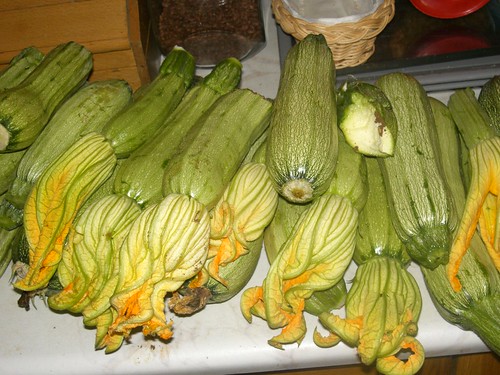
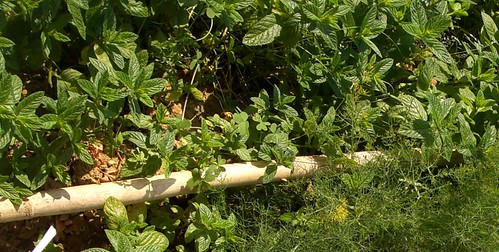
Showing posts with label COURGETTE. Show all posts

Friday, 25 November 2016

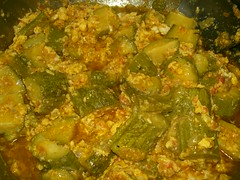
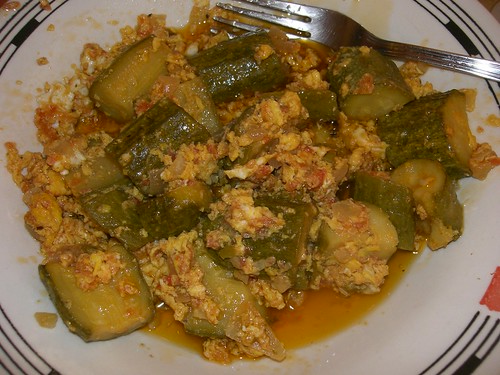
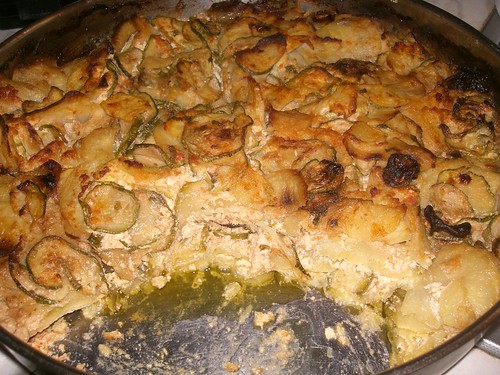
Cheats' Haniotiko Boureki

I ran into a couple of girlfriends in the supermarket the other day. By friends, I mean real friends, not the ad hoc kind we make on facebook. 'Ελα ντε that they are also on facebook and we are friends there too, which explains how they knew what I had been cooking recently.

"What a great boureki you made!" said one girlfriend.
"I wish I'd thought of making it like that!" said the other girlfriend.


Boureki is a very common favorite family recipe in Hania. (See my basic recipe here: http://www.organicallycooked.com/2007/09/boureki-courgette-potato-bake.html) While I was trying to remember how I made the last one we ate, and why it seemed to impress my friends so much, it occurred to me that I 'faked' it a little, by using 'cheap' ingredients.

"Did the family like it?" said one girlfriend.
"Did they notice the difference?" said the other girlfriend.

My husband noticed something different ("I prefer it without the pastry, the way you usually make it"), but my kids actually preferred it to my usual boureki, because it had a crunchier texture. But the family still doesn't know about the substitutions I made to the basic recipe, and they didn't seem to realise that I had made any. I don't intend to tell them, either. The boureki just looked different.

The whole issue could be phrased as a 'man' problem:
"My husband's always complaining that I don't buy mizithra much these days," said one girlfriend.
"When I refuse to mizithra, he goes out and buys it himself - and in bulk! Can you imagine what kind of money he's spending?" said the other girlfriend.

This will probably all sound like not so big a deal to most of my readers, but clearly for me and my girlfriends, it is. We can now draw some conclusions - among the three of us, despite our different age, socio-economic class, occupation and education, the three of us have many shared traits:
1. our families are quintessentially Greek, and their behavioural trends are more or less similar,
2. our husbands have fixed notions of what traditional Greek dishes are supposed to be made of, how they are supposed to look, what they are supposed to taste like,
3. our cooking habits are very similar,
4. we place a similar importance on ensuring that our families eat home-cooked healthy food,
5. our financial situations have changed over the last few years towards the worse.

It is this last point in particular that was really the basis of the conversation. We all know how to make a boureki, but it didn't occur to all of us how we can make it cheaply, without causing a domestic argument over the kitchen table. Differences in taste are immediately spotted by well trained eaters. Some are more open to variations, while others are not. (Look how well trained my family are, for instance: http://www.organicallycooked.com/2008/03/taste-sensation.html ) So you need to use all your powers of deceptiveness if you want to fool them.

It occurs to me that Cretan mizithra is difficult to find both in other parts of Greece and the rest of the world. So my latest version of the recipe for Haniotiko Boureki should prove very useful. Here are some useful tips on faking it:
- when you buy cheap ingredients, make sure to hide them in the fridge where your fussier members of the family can't see them,
- if some family members have a tendency to search the darker corners of the fridge (mine doesn't), then you should take off the packaging material and leave no label visible, repackaging the items in plain plastic bags,
- prepare meals when no one's looking,
- if anyone comments about how the meal feels/tastes/looks different to what it usually looks like, fake it even more by saying that you made it the same way that you usually do, by saying something like: "maybe the zucchini tastes different because it's out of season" (which it almost is at the moment), or "hm, the potatoes must be old" (they don't have a due by date, do they?). Just don't mention the substitutes (cheese in my boureki's case).
- if anyone insists that the boureki was made in a different way even though you say it wasn't, ask them to cook the next meal: you just provide them with the ingredients. This last one always works for me.

All over the western world, everybody's living standards are falling. So in effect, everyone is in crisis these days. Some of us are simply better at coping, like me an' my girlfriends. Just ask them.

I don't have much time these days for blog writing because I am incredibly busy at work (which basically means I am not unemployed, which is a good thing these days). I put up long posts on my facebook profile instead. Come and join me there if you like:  https://www.facebook.com/maria.verivaki 

©All Rights Reserved/Organically cooked. No part of this blog may be reproduced and/or copied by any means without prior consent from Maria Verivaki.

Tuesday, 14 August 2012

Boureki for the freezer (Μπουρέκι για την κατάψυξη)

My most popular posts have remained stable over the years that I have been writing this blog (which is five this month - happy blogoversary to me!): fasolada (bean soup), Roses (a story about the chocolate brand) and how to freeze aubergine (see sidebar on the right-hand side). The latter has become the most popular post this month, given that it's summer and the aubergine season is in full swing.

I freeze everything that grows in our summer garden: eggplant, zucchini, peppers, tomato, beans, corn and herbs (as well as winter garden produce, in season); my biggest forte is freezing a meal that I have made from such produce, at a stage where it is ready to cook without defrosting. My freezing techniques have been learnt by experimentation, mainly borne out of the desire to preserve a great amount of excess produce. Some of my techniques sound quite unusual, and they probably aren't well documented in other sources, because they seem to go against what we take for granted.

Eggplants, like potatoes, turn brown when their peel is removed and their flesh is revealed. You need to work very quickly to stop this from happening when you want to freeze them. If they are left to go brown, they are useless in terms of freezing. The most important aspect of freezing any vegetable is to freeze it at its freshest, in the same form that it will be cooked when it is to be used.

Boureki, a Chania specialty containing potatoes, zucchini and mizithra cheese, with herbs and olive oil added, is a self-crusting pie. I freeze it at the point where it is assembled in the tin with all its ingrdients, except the olive oil, which is poured over the top. Some cooks make boureki with the addition of pastry, but I never do this - it's too time-consuming.


The tins go into the freezer at the ready-to-cook stage - all they need when I decide to cook them is to pour some olive oil over them. Because I freeze a lot of boureki every summer (6-8 family-sized tins), I place them very carefully, one by one, in the freezer. I never freeze one tin on top of another - they will stick together (even when the bottom tin is frozen solid and you place a fresh tin in top). They can be stacked on top of one another once the tins have all frozen. This goes for all my pie-type freezer meals: moussaka, pastitsio and spinach pies.


Sometimes I mix the ingredients together in a large mixing bowl, other times I make the boureki in layers. At any rate, the potatos don't discolour. The thin slices of frozen potato are visible in the photo. To avoid freeze-burn, it's better to keep them in a plastic bag.


When it's time to cook the boureki, I take a tin out of the freezer, pour 1/2 cup of olive oil over it and stick it in the oven - WITHOUT DEFROSTING! That way, the potatoes do not have time to discolour. The boureki cooked from frozen does not need extra water added to it - it will have accumulated enough liquids from the freezing process.

Boureki is always beter the next day, as Laurie says, who made boureki in Alaska with a mixture of feta and ricotta cheese, as mizithra is unavaible there. My frozen boureki is always made to be eaten in this way: I cook it in the evening (last year I was cooking them in the wood-fired oven), and it is left overnight to set. The next day, it comes out of the tin like a piece of pie. It makes a very fresh nourishing meal in the winter when everyone comes home from school or work very tired, and there are other activities to attend to in the evening, leaving no time to cook meals 'from scratch'!

©All Rights Reserved/Organically cooked. No part of this blog may be reproduced and/or copied by any means without prior consent from Maria Verivaki.

Sunday, 12 August 2012

Cheap 'n' Greek 'n' frugal: End of season stew (Χόρτα τσιγαρισατά)

You know autumn is on its way when August temperatures remains 30C the whole day and there's a slight cool breeze blowing, and it gets dark before 8.30pm, ...


... and the fig and grapes are in full swing, ...


... and the zucchini, corn, beans and purslane have come to the end of their growing season.

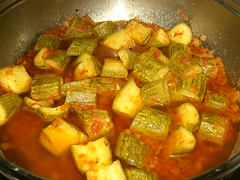
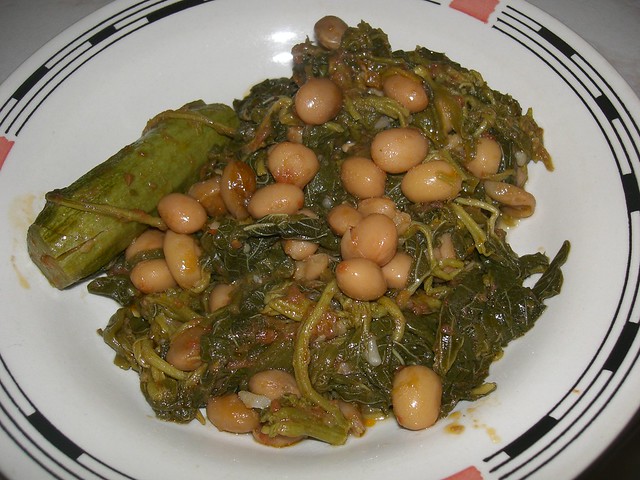
Another end-of summer season meal in a Cretan farmer's household contains the tender tops of the overgrown zucchini bushes, which carry on sprouting. Once you are ready to pull them out, you cut off the only the tenderest shiny green bits, together with any healthy-looking flowers and all the zucchini, even the tiny ones that have just come up close to the top. These are used as a kind of summer horta, and they are cooked in tomato sauce, along with other summer end-of-season greens, like vlita (amaranth), glistrida (purslane), and beans. The are cooked in a similar fashion to the dish I cooked yesterday.


My mother-in-law taught me how to make this dish; the photo below shows her version of it. She's a perfectionist, which is why she cheated in making it: she asked us to buy her some beans, so not everything is from our own garden produce. I like my frugal meals to be literally frugal - all I'm going to buy when I make this meal is the bread to go with it.

tsigariasta horta
Tsigariasta horta - above: my mother in law's version; below: my version (served with roast bifteki and potatos)
Braised greens (Τσιγαριαστά χόρτα)
Boil a bunch of vlita (amaranth greens) and a bunch of zucchini plant tops twice in fresh water (to remove bitterness). Heat half a cup of olive oil, saute a chopped onion and some chopped garlic, add the drained greens, a few zucchini flowers (remove pisitls), some tiny zucchini (from the zucchini plants you topped), a handful of beans and some corn (optional). Toss to coat in oil, then add two cups of fresh pureed tomato (I make my own tomato sauce instead for this), some salt and pepper. Cook for at least an hour on the lowest heat. I served this dish with roast potatoes and biftekia.

Tsigariasta horta (stewed greens in a red sauce) are a bit of an acquired taste. But this dish are also a kind of celebratory meal. You only have it once a year - when you pull out all the zucchini. And then, you know it's time to plant something new.

©All Rights Reserved/Organically cooked. No part of this blog may be reproduced and/or copied by any means without prior consent from Maria Verivaki.

Friday, 10 August 2012

Cheap 'n' Greek 'n' frugal: Eggs with zucchini (Αυγά με κολοκυθάκια)

Here's a very frugal Cretan gardener's summer favorite dish - everything needed to cook it will be found in and around the garden, fresh from the soil. It is a variant of sfouggato. It is also useful in using up overgrown misshapen zucchini.

Cube some zucchini, roughly chop some onions, a couple of coloured bell peppers and crush a little garlic. Add this all to a large shallow frying pan with half a cup of olive oil. Saute till the zucchini is cooked through. Season with salt, add some diced tomato and if you like your meals a little spicy, add a dash of hot pepper (optional). Heat through.

Break three eggs and beat till lightly mixed. pour slowly over the zucchini mixture - do not stir for for five minutes. Then slowly turn the zucchini lying on the bottom of the pan over to the top, so that the eggs are turned over and mixed into the mixture to cook through, like scrambled eggs.

Sourdough bread and wine are all that's needed to complement this amazingly nutritious and delicious meal. 

©All Rights Reserved/Organically cooked. No part of this blog may be reproduced and/or copied by any means without prior consent from Maria Verivaki.

Tuesday, 5 June 2012

Purslane and zucchini salad (Γλιστρίδα)

My uncles never buy vegetables, eating only what they grow themselves. When it's not in season in their garden, they simply do without unless they have frozen it from last season's harvests. They have salads with every meal, which are always picked fresh within the hour that they make them. Their crockery is broken, the handles of their knives are sometimes held together with wire, and they never lay a tablecloth, but their salads always taste so good because they are fresh and organic, with only olive oil to add another taste dimension to them.

Purslane (called glistrida - γλιστρίδα - in Greek) features a lot in my uncles' salads as soon as they get the summer garden going in spring. Glistrida grows unaided as soon as we start irrigating the spring-planted summer garden, usually all around the planted crops. Together with vlita, purslane forms our first free food of the season. Onion forms a staple in all their salads, and they add whatever is available in the garden: one time I saw them add slices of fresh artichokes, another time they added lettuce. In the summer, it's always tomato.

Now that the zucchini has taken off, I've been adding it fresh and raw to many Greek dishes which traditionally take cucumber. It's not a "Greek thing" to add raw zucchini to dishes - my uncles would never eat zucchini raw. They would think I was mad if I were to tell them that I have used grated zucchini in tzatziki instead of the normal cucumber. But ever since I learnt a nice technique to "cook" zucchini without heat, I find that raw zucchini is tastier than cucumber; besides, we are better at growing zucchini than we are at growing cucumber...


You need:
a small fresh zucchini (maximum diameter 3cm)
some fresh purslane (it wilts easily once cut)
an onion
some olives
some feta cheese
lemon juice
olive oil
salt

Wash the zucchini and use a mandolin slicer to cut it into thin slices. Place the zucchini in the juice of the lemon. Set aside and allow to marinate for at least a quarter of an hour. Use only the leaves of the purslane (the stems can be used, but the leaves are much tastier) - this is a tedious process but it is worth your while! Slice the onion into thin rings. Drain the lemon juice out of the zucchini. Mix all the ingredients together in a bowl, crumbling the feta and drizzling the olive oil and salt over them.

All this salad needs is crusty bread and a glass of wine - and a shady balcony to enjoy it on.

©All Rights Reserved/Organically cooked. No part of this blog may be reproduced and/or copied by any means without prior consent from Maria Verivaki.

Saturday, 26 May 2012

500: Boureki

The phone is ringing; the screen lights up with the word 'HOME'.

"Baba, lunch is ready! If you don't come now, we're gonna start without you!"

"What's for lunch?" he asks.

"It's a surprise!" his youngest yells and disconnects.

It's half past twelve, and he has been up since seven today. In total, he has travelled 15 kilometres in his cab. And he has made €11.50 (gross), in a cab that requires €32 to run in expenses (petrol not included) on a daily basis. Should I stay or should I go? plays round in his mind. On hearing his child's voice, he starts up the engine. By the time he returns home, he will have driven 20 kilometres; his takings will stay the same.

He arrives home to find the children setting the table. He takes off his jacket and slings it over the armrest of the sofa. The plasma TV set on the wall above the mahogany kitchen unit is blaring out foreign babble in musical form on MAD TV.

"We couldn't wait any more, Baba!"

"Good thing I came now, then!" he laughs.

Just then, his wife comes out of the bathroom with a fresh load of washing.

"Just let me hang this up and I'll be with you in a minute!" she calls out to him as she makes her way to the master bedroom.

He follows her. She goes out to the balcony to hang the laundry, he goes to the ensuite to wash his face. Summer has come too early, leaving him with a parched skin. He can't sit in the cab all day, but he can't stay out in the sun, either. It's going to be a difficult summer.

As he heads back into the kitchen, he looks out at the garden he planted: to zucchini has already come up, the tomatoes have flowered, the vlita has practically created a lawn. 

 
He joins everyone at the table, which has been set according to the family's daily dietary traditions: there's a little bowl of olives, a plate of feta cheese swimming in olive oil, a leftover sausage from the previous evening's meal (cut up in small pieces for everyone to have their share), and a slice of bread next to each person's plate, which is empty.

"Is that all we're having?" he said, feigning a moan. Just then, his wife came into the dining room holding a large baking tin. He could smell its aroma from where he was sitting.
"Boureki! Where did you find the zucchini? You didn't cut off all the small ones, did you?" he said reproachingly. 
"They're not from our garden. Yiani's plants are already overproducing and I saw him carrying a huge bucketful as I was taking out the trash."

"What do you mean? Was he going to throw them away?"

"No, he was taking them to the chicken coop, and I simply asked him if I could have a few."
Well, he thought, thanks to her resourcefulness, as least we won't starve.
*** *** ***
As a friend of mine noted recently, "Democracy, like social justice, is not handed away, it has to be earned in the hard way, and that's what we are going through now. We are in our learning curve and we are still at the bottom. However, out of this borrowing that we will never pay back, we have infrastucture as a country, investments in tourism and agriculture, nice houses to live in, and cars to last us for another 10-20 years."


©All Rights Reserved/Organically cooked. No part of this blog may be reproduced and/or copied by any means without prior consent from Maria Verivaki.

Wednesday, 29 February 2012

The perfect photo (Η τέλεια φωτογραφία)

I have been blogging for a long enough time now to know that I take crappy photos. For me, a photograph is often like a diary record. It is true that a picture tells a thousand words: in the time taken to press a button and capture a whole scene, I would have had just enough time to jot down no more than a ten-word sentence (in scribbly shorthand). So most of the time, I use my photos as an illustration of what I write, a bit like concrete evidence of a scene (or recipe) I am describing. A photograph added to a post also gives the reader an idea of what I am trying to describe; in other words, the photo is an integral descriptive tool these days - we see faster than we can hear or read.

One of the best Greek food photography blogs would undoubtedly have to be Souvlaki For the Soul. Peter G, the blog author, recently shared some tips on how to make your food photos stand out among the rest. I was amazed at the simplicity of the things he was suggesting, things as basic as determining what scene/mood you are after. It could be as simple as asking yourself if you want a vintage, modern, rustic or simple look (or some kind of combination). Once you've decided what look you want, then you need to find the appropriate props to set the scene.

I was reading Peter G's post while making kolokithokeftedes (zucchini fritters). I felt inspired to try to make not just the food taste good, but the final photo of the food to look good too.

Kolokithokeftedes with cherry tomato, arugula and baby radish salad
As soon as I cooked the fritters, I carefully chose my props, having decided on a rustic style. Out came an old-fashioned knife and fork, and an unused gingham napkin. The scene seemed a little bland: I decided to prepare a salad with brightly coloured ingredients as a contrast to the earthy colours of the zucchini fritters. As I set up the scene of the photo shoot, I suddenly became anxious: the fritters were getting cold, the salad was losing its crispness, and the aroma of the garden herbs in the fritters was smacking my nose - I wanted to eat it. My eagerness to please my eaters had dampened my spirits slightly; I snapped a few photos from different angles, but I could already feel the fritters getting cold.

I realised that to take good food photos, I would need to spend as much time on styling my food as I did on preparing the meal, something I could not afford to do at this stage in my life. Nevertheless, it was fun and the end results of that first photo shoot were very pleasing; my food porn photo speaks for itself. It seems to give off an air of high-quality professionalism that made me feel quite proud.

But seeking perfection in, what was for me, a new field, distracted me from the real task at hand: I had to feed a family. I ended up reheating the by-now cold fritters (gobbling one up there and then), and I had to put the salad in the fridge for a few minutes to cool it. Good food can't wait. Goodness knows how ice-cream photographers cope...

Just another Sunday morning, where everyone's doing their own thing at the same place at the same time...
I find it so much easier to be rough and tumble. My photos are as simple as my food.

Bon appetit!

©All Rights Reserved/Organically cooked. No part of this blog may be reproduced and/or copied by any means without prior consent from Maria Verivaki.
Saturday, 12 June 2010

Boureki (Μπουρέκι)

When I make the first boureki for the summer season, it always seems to turn out extremely good, much better than when I make it at other times. The whole family notices the difference, and tells me to make boureki again in just the same way that I made it the first time for the season, as if I finally got the recipe right this time, and I didn't know it before. I keep reminding them that this is in fact how I make it all the time, but they still think I'm cheating them.

boureki

The first boureki for the season in the Cretan kitchen is made with the freshest courgettes and potatoes in the garden. The light green courgettes are full of water,

zucchini

cretan boureki courgette pie

and the new spring potatoes are practically oozing with their fresh juices.

cretan boureki courgette pie

Mizithra made in the spring is soft and creamy white, not too sour, not too sweet; it has a spreadable but firm quality. Its mild milky aroma bears no relation to the slightly sour taste of winter-made mizithra, when there is not enough fresh feed for the goats and sheep (they are often fed on oranges at this time).


The tender leaves of the fresh mint in my mother-in-law's herb garden have a vibrant green colour.  The light brush of a hand stroke against the stalks of the plant aromatises the area, and the scent lingers in the air for more than a few seconds.

diosmo mint

As the summer progresses, everything starts to dry up in the summer heat. The zucchini gets more fibrous, the potatoes lose their shine, the mint leaves develop tougher stalks, and mizithra tastes sour, yellowing more easily. The last boureki of the season can never compare with the first one.

And so it is with all seasonal produce: fresh tastes best, and the fresher something is in its season, the better.

horta vlita stifno
The first horta of the season make you want to eat them every day forever.

I am a slap-dash cook. I can whip up a meal quickly for unexpected guests. I can prepare a dish in next to no time. There's always a fresh meal on the table most days. The food on our table smacks of freshness. This is why it always tastes so good (despsite its appearance: let's leave plating to the restaurant chefs and not the hectic working mother). But I can't change the seasons, so my cooking depends on what fresh produce is available at the time that I cook. Zucchinis will always be 'fresh' throughout the summer season, but the first zucchini of the season will never compare to the rest of the growing period.

*** *** ***
Boureki can also be frozen:
Assmeble the boureki (with or without filo pastry - I never make it with filo): zucchinislices first, then potato slices, then the cheese and seasonings, then some more zucchini slices, and finally pour some olive oil over the tin. Place the tin in the freezer. When you want to cook it, turn on your oven, take the boureki out of the freezer (do NOT defrost) and place it in the oven to cook, as if it were freshly prepared. The boureki will cook, the potatoes will not brown, and you won't need to add any more liquid to the tin. Just make sure you use the freshest best quality ingredients.

©All Rights Reserved/Organically cooked. No part of this blog may be reproduced and/or copied by any means without prior consent from Maria Verivaki.

Tuesday, 18 August 2009

Fruit and vegetable marble cake (Kέϊκ υγειας)

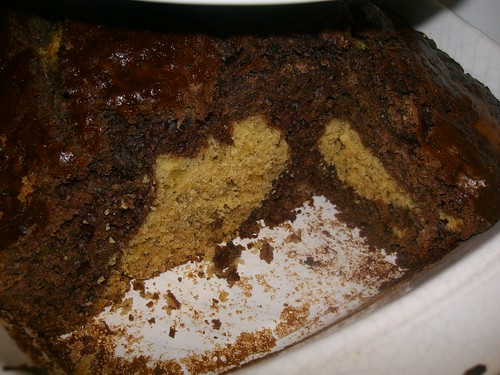
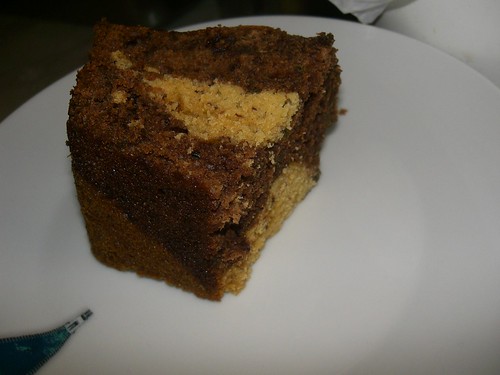
Remember those multi-coloured cakes that looked pretty but tasted bland? Here's a marble cake that will be remembered not just for its appearance, but also for its taste. It's based on my 2009 version of my improved chocolate-zucchini cake.


marble cake

In a large bowl, mix together 2 eggs, 1 1/2 cups sugar, 1/2 teaspoon baking powder, 1/2 teaspoon baking soda, 1 vial vanilla powder, 2/3 cup olive oil , 1 ripe banana mashed and the juice of 1 medium orange.

Pour out half the mixture into another bowl. To the second bowl, add 1/2 teaspoon of instant coffee powder, 3 tablespoons cocoa powder and 1 cup of grated strained zucchini. Mix well.

marble cake

Add 1-1/2 cups plain flour to each mixture, enough to make a thick batter in each bowl, the consistency of sludgy mud. Pour spoonfuls into a prepared baking tin or a bundt (I grease mine with margarine), and cook till done.

You can also be more adventurous with the colours by dividing the initial batter into three equal parts, and adding some grenadine to one of the bowls to colour it pink. Whether you make it bi- or tri-coloured, you can't find a more healthy cake than this one.

©All Rights Reserved/Organically cooked. No part of this blog may be reproduced and/or copied by any means without prior consent from Maria Verivaki.

Friday, 31 July 2009

Lumen accipe et imperti (Λάβετε φως και μοιράσετέ το)

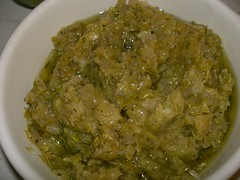
Here's a very summery recipe to use up an over-productive zucchini crop. Zucchini pate is very simple to make and can be used in a variety of ways, as Ruth Pretty notes, whose recipe Michelle led me to.

zucchini paste zucchini paste
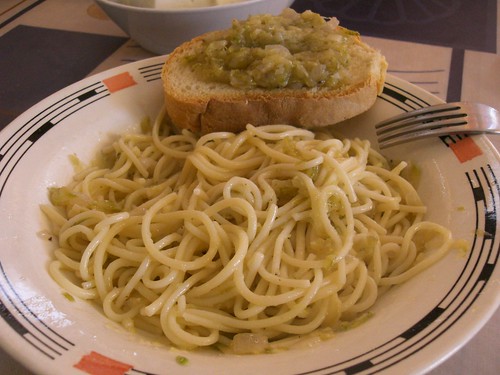
Although I enjoyed the zucchini pasta, I loved this pate spread on bread. I could survive on this throughout the summer.
zucchini paste

Lumen accipe et imperti ("receive the light and pass it on") was the school motto for WGC. Ruth, Michelle and I are all "old girls" of this state school in Wellington. All the schools in Wellington had nicknames, used mainly by pupils of other schools. Ours was "Wellington Grills". Most immigrant Greeks sent their children to state schools, but that's not where their grandchildren are being educated nowadays, a sign of upward mobility in the next generation of Wellington Greeks. Most are now attending private schools that their parents probably made fun of when they were young, places like St Farts and Snots Porridge. They have clearly moved up the ladder in Kiwi society, forming the middle classes of Kiwiland. This is not surprising; Greeks are a remarkably progressive race when they get out of their own country, taking up any opportunities given to them to make good, and instilling similar expectations in their children.


An old girl posing with her parents on Prizegiving Day before the end of the school year, November 1981.

Rachel also recommended the same pate recipe to me, spicing it up with onion and garlic, which is how I made it for a bit of added flavour.

You need:
a quantity of grated zucchini to suit your needs (courgettes and marrow may both be used)
a few tablespoons of olive oil (I used more than a few; zucchini absorbs oil very quickly)
a coarsely chopped onion
1-2 finely chopped cloves of garlic
salt and pepper

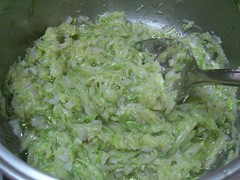
Heat the oil in a saucepan and add the onion and garlic. Cook till the onion has softened. Add the grated zucchini (if the zucchini came with the flower still attached to it, you can also add that chopped in thin strips) and let it stew away until most of the water has evaporated and the mixture looks like a thick paste. Season with salt and pepper, and serve on grilled bruschetta, toast, hot pasta, or even as a dip (alongside tzatziki) with crunchy vegetables.

Michelle tells me that this paste freezes well. All I can say is I'll be glad when I see the end of this year's zucchini crop...

©All Rights Reserved/Organically cooked. No part of this blog may be reproduced and/or copied by any means without prior consent from Maria Verivaki.

Monday, 27 July 2009

To your health! (Στην υγειά σας!)

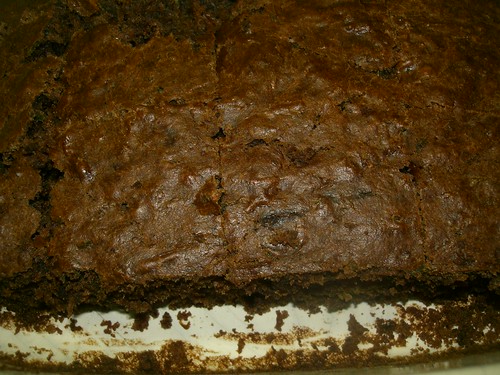
I've been perfecting my chocolate zucchini cake over the summer with this year's zealous zucchini crop, and I think I've hit the jackpot with this recipe. I've made it a zillion times and no one ever gets tired of it. It is very tasty, extremely easy to make, and contains very healthy ingredients. It might even make the menu of Angelina's Kitchen in Historic Downtown Pittsboro in North Carolina.

chocolate zucchini banana cake

You need:
2 1/2 - 3 cups of all-purpose flour
4 - 6 tablespoons of cocoa (the more cocoa, the less visible the zucchini is)
1 teaspoon baking powder
1 teaspoon baking soda
some vanilla essence
2/3 cup olive oil
1 cup white sugar
1/2 cup brown sugar
1 teaspoon instant coffee granules
2 eggs
1 ripe banana
1 oversized courgette (which will yield about 2 cups of grated unpeeled zucchini when the water is squeezed out of it) or a few small ones

an oversized zucchini courgette marketably sized courgette zucchini
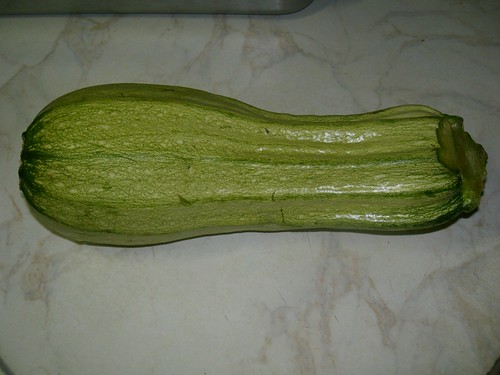
Zucchini can be a nuisance when it becomes extra large. Marketable ones are never large, even though they taste just the same as small ones, but (er-hem) size matters according to the kind of use you want to make of it...

Prepare the zucchini by grating it and adding a heaped teaspoon of salt. Mix this into the zucchini very well. Squeeze the zucchini to start extracting and discarding all its liquid. When it is damp and firm, add the sugars, cocoa, coffee, vanilla, baking soda and baking powder. Mix well to get a uniform mixture.

Then add the eggs, oil and mashed banana, and mix well again. Make sure that the zucchini is all coated in the chocolate mixture and won't be visible when it's cooked (children won't eat green chocolate cake unless they are exceptionally precocious and can estimate the health benefits they will derive from it). Now add the flour cup by cup, beating well after each addition. The batter should be a thick mud consistency.

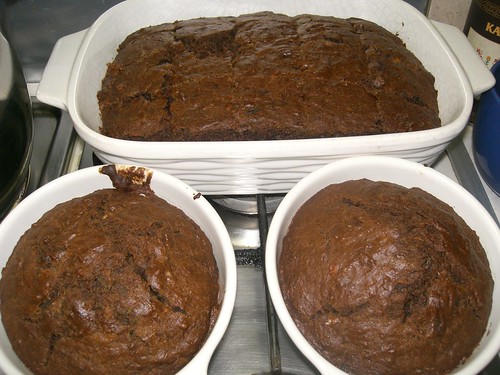
Pour the batter into a greased baking tin. I had only a small one available, so I also used two ramekins and cooked separate cakes which I gifted to the neighbours. Cook for 40 minutes, or until a knife pierced through the cake comes out clean. The olive oil (which can be substituted with other lipids, like 180g margarine) makes the cake very light in texture, and slightly crumbly; the banana gives it a nice aroma. The cake can easily be eased out of the baking tin once it has cooled down; in any case, it is cut in slices and each slice easily lifts out of the tin.

chocolate zucchini banana cakes
One for us and two to give away

Extremely healthy, extremely moist, extremely delicious. To make it more festive (labeit less healthy), a chocolate syrup (like the one mentioned here, minus the egg yolks) can be poured over it. When the cake has cooled down slightly, cut it into diamonds or squares and pour the hot syrup over it. It will taste just like the kind of chocolate cake served at upmarket dessert cafes in the best parts of town.

©All Rights Reserved/Organically cooked. No part of this blog may be reproduced and/or copied by any means without prior consent from Maria Verivaki.

Saturday, 25 July 2009

Sfouggato (Σφουγγάτο)

Sfouggato is a simple one-pot summer dish using eggs and garden vegetables. The word 'sfouggato' is derived from the same word for 'sponge'; the dish sometimes turns out like an omelette, while other times it comes out looking like scrambled eggs, depending on the amount of liquid the final dish contains. This dish also goes by other names, like strapatsada (which means something like 'distorted') or kayana, in various parts of Greece. In Hania, courgettes are usually added to it.

sfouggato kayana strapatsada sfouggato kayana strapatsada
This dish requires little cooking time, and it can also be cooked in two installments. Once the zucchini are done, you can turn off the cooker and come back to add the eggs when you are ready to serve the meal, as this dish tastes its best when served freshly made.

For enough to serve two people, you need:
1/2 cup olive oil (don't be sparing here, you will regret it)
400-500g of small zucchini (they are more tender and cook more quickly)
1 medium onion, finely chopped
1-2 cloves of garlic, finely chopped
2 medium tomatoes, freshly grated
sea salt, freshly ground pepper and oregano
3-4 eggs, yolks and whites beaten together lightly

Wash the zucchini (to make sure they don't have any grit stuck on them) and chop them into large cubes (or small chunks, if the zucchini have almost turned into marrow). Heat the oil in a wide shallow saucepan and saute the onion and garlic. Add the zucchini and coat them with oil. Turn down the heat, add the tomato and seasonings, cover the saucepan and let the zucchini cook to your liking. (Some people prefer them crunchy and underdone, others like them soft.) When the zucchini are ready, add the beaten eggs, but don't stir. When the egg starts cooking (it will start to set), begin to mix it into the sauce, in light folds so that it doesn't turn into a soup, but comes out looking like scrambled eggs.

sfouggato kayana strapatsada
This dish may look a little messy (in Greek, we say something is 'strapatsariasmeno' when it's been distorted, hence 'strapatsada'), but it is pure ambrosia.

Sfouggato really needs to be made with fresh high-quality ingredients. The eggs really do need to be free-range, otherwise they won't have the right colour, they may smell 'eggy' (ie suplphuric) and all this will contribute to the dish smelling off-putting. The tomatoes can't be underripe or green; they need to exude summer in their appearance and aroma. This dish can also be made with fresh aubergine (before its interior becomes too seedy).

Don't forget to have some sourdough bread handy to mop up the sauce (forget about calories when enjoying this dish) and some wine (in Crete, most people have access to home-brewed rosé wine).

In the winter, the same dish can be made with zucchini-like vegetables that keep their shape, such as asparagus. It can even be made simply with onions, like the dish featured recently on the Hungry Bear.

©All Rights Reserved/Organically cooked. No part of this blog may be reproduced and/or copied by any means without prior consent from Maria Verivaki.

Wednesday, 8 July 2009

Tikvitchki (Τικβίτσκι)

It's that time of year again when our garden is starting to produce more than we can eat. I'm talking specifically about those long shiny creamy green vegetables topped with a bright yellow flower on their crown. We've already had zucchini fritters, boureki, boiled courgettes with horta and zucchini chocolate cake, no less than twice this past month. I've also put away no less than four baking tins of boureki in the deep freeze. I won't run out of zucchini this summer, but I may just possibly run out of creative recipes to use them up.

CIMG7985 CIMG8038 CIMG7983 CIMG8041 CIMG8037
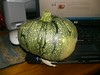
We've graduated to growing kinkier varieties of zucchini, like the round one in the photos (it's not a pumpkin).

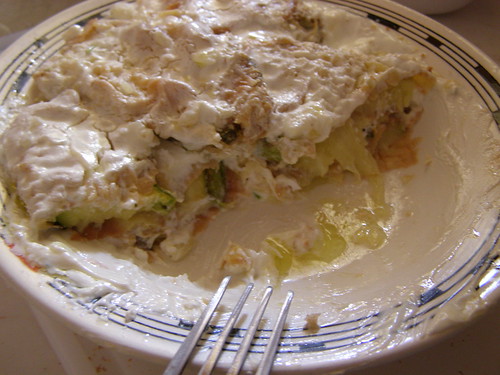
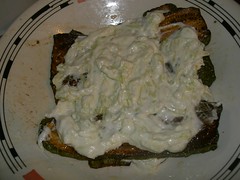
I remembered having Georgia's dish of fried courgettes layered with tzatziki dip, which she had made for us last year while she was looking after my mother-in-law who was recuperating from a broken leg. She came from Bulgaria, and told us that she used to make this dish often back in her home country. At the time, I called it a kind of Bulgarian boureki, as it seemed similar to the Cretan boureki pie consisting of layers of sliced courgettes and curd cheese (instead of yoghurt). With a little research, I even found a name for Georgia's dish: tikvitchki. We had this recently with some pan-fried veal steaks and horta.

bulgarian savoury dish
Georgia's rendition of tikvitchki (above) was creamier than mine; she used plain yoghurt spiced with garlic, while I preferred to use Greek tzatziki.
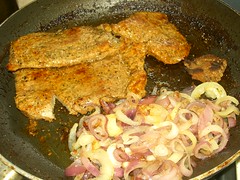
pan grilled veal steaks and onions tikvitchki
Veal is very expensive in Greece, but it is worth buying when you find it; Greek beef is very tough, even when cooked, but this veal took only half an hour to be cooked in the pan.


Bulgarians constitute a major group of economic migrants in Greece, making a major contribution to the workforce. Bulgarian cuisine shares a lot of similarities with Greek cuisine, and no wonder, since the countries neighbour each other and share a similar history from the period of Ottoman rule. Ingredients for traditional Bulgarian recipes can be found easily in Greece. Bulgarian dishes are generally uncomplicated, spiced up with lots of onions and garlic, with heavy use made of seasonal produce.

*** *** ***

Although Bulgarian cuisine hasn't passed into the realms of the commonly known widespread repertoire of international cuisine, I was secretly pleased to see that the Bulgarian economic immigrants of Hania have passed from the status of kitchen hands to taverna owner-operators, as I was passing by the old harbour in Hania on the east side near the marina. That's a positive sign of socio-economic progress in a migrant community, and it reminded me very much of the way my own parents built up their status as Greek immigrants in New Zealand.

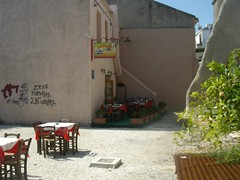
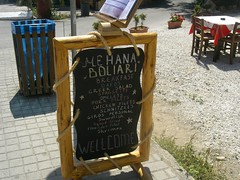
BG eatery Boliari BG eaterie Boliari
In front of Mehana Boliari (the nobles' taverna), there is a large open shadeless courtyard which was being used as a carpark for a long time. The freshly painted walls of the building where the taverna is housed (presumably it operates in winter too) become easy targets for the depravities of graffiti artists. From a brief look at the menu, I noticed some Bulgarian favorites like tarator soup and ovcharska salad, as well Greek standard fare. The whole set up reminds me of my Greek parents who used to cook fish and chips and serve them up to Kiwis. I'll be visiting this place for sure one day - it's bound to tickle my memory of my time in New Zealand.

Economic migrants often undertake the dirtiest, most mundane tasks in their adopted country. While the locals run businesses and manage offices, these people keep the work areas clean and provide them with food. This is all part and parcel of both the country's and the migrant's successful progress. Who says migrants aren't acclimatising into Greek society?

©All Rights Reserved/Organically cooked. No part of this blog may be reproduced and/or copied by any means without prior consent from Maria Verivaki.

Tuesday, 14 October 2008

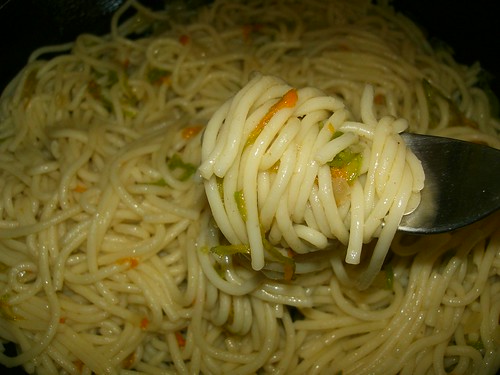
Zucchini flower spaghetti (Μακαρόνια με κολοκυθοανθούς)

I know what my son will be cooking when he is tall enough to stir a pot and use the gas cooker: plain boiled pasta. Most children love this meal in its plainest form. Pasta, at least in my 'fat' way of thinking, is an alternative to bread, which is why I never bring out bread on the table when we're eating pasta. Plain boiled pasta is one of the most uninviting dishes that I can think of. Spaghetti from a packet, tossed into a pot of boiling water, then drained onto a plate, resembling creamy white worms. My son's quite happy to eat pasta like that, without even a sprinkling of cheese on the dish. No oil, no sauce, no flavour (unless you can call plain boiled pasta a kind of flavour). I can't stand watching my children eat such an unappetising plate.

Before the children came home from school, I jazzed up the 'plain pasta' a little. I know my son's going to ask me "What are those orange things stuck on the spaghetti?" He'll probably have something to say about the bright green bits too, and the tiny white cubes. Eventually, he'll start poking his fork into it. He might pick off the coloured bits. I'll have to make an effort not to look at him while he's doing this. But I think he'll eat it in the end. The only thing I won't be telling him is that I added some flowers to his 'plain' pasta.

The seasonal nature of our cooking means that we often use the same ingredients in our daily meals until their growing season is over. This doesn't mean that we have to eat the same meal every day. We simply use the same substance over and over again, cooked in a different way. The pumpkin flower excess in my neighbour's garden is still g(r)owing strong. I pick nearly 20 flowers a day from the vine. This has led me to find ways of using those beauties more creatively. The recipes I have discovered could easily form another '101 ways to use..." book. So far, I've done the following with zucchini flowers:
My recipe sources are often from the internet these days. This is not necessarily the best or only source of information, but I would like to sing its praises; the internet has helped me to broaden my horizons, while living in a small non-English speaking island community. What would my English-language alternative media choices be in this small town if I didn't have the internet? I'd have to buy magazines and newspapers (from a limited range that offers well-known 'groan' titles like Women's Weekly and The Times), go to the second-hand bookshops in the town (we're lucky to have a couple run by English ladies), or order more books from Amazon (no try-before-you-buy browsing there). We do not have English language lending libraries; the best library in town is the children's library, which of course contains a specific range of books given its target audience. So here's to the internet, which came up with the following novel suggestions for different ways to use zucchini flowers:
which I've cooked today, a simple oil-and-garlic sauce with julienned zucca (pumpkin) flowers and a dash of red pepper. The aroma of the sauce cooking away is enough to intoxicate your senses. I've seen the same sauce served up with very thinly sliced green bell pepper instead of the zucca flowers, in case you can't find them, and it really is a very simple sauce to whip up quickly.

zucchini flower pasta

You need
:
half a wine glass of olive oil
1 large onion, finely chopped
3-5 cloves of garlic, finely chopped
12 large (or 18 small) zucchini flowers - if you can't get these, use very thinly sliced bell pepper slivers as an alternative
red pepper flakes (or ground red pepper)
1 courgette, grated (optional)
salt
250g fine spaghetti, boiled al dente

Heat the oil in a saucepan, and add the onion and garlic. Cook till translucent. Add the zucca flowers, and stir them in till just cooked. If you're using the zucchini as well, add this in at this point too. Season the sauce (I used ground red pepper to avoid 'picky eater syndrome'), and add the drained spaghetti into the saucepan, stirring around till the pasta is well oiled. Serve immediately; this dish can't wait!

This is my entry to Kalyn's Weekend Herb Blogging, hosted this week by Amy and Jonny from We Are Never Full.

©All Rights Reserved/Organically cooked. No part of this blog may be reproduced and/or copied by any means without prior consent from Maria Verivaki.
Monday, 22 September 2008

Fried zucchini flowers (Κολοκυθοανθούς α λα ιταλικά)

The weather has cooled down in Hania so much that I find I have more energy to get things done around the house and garden. It is now not so much of a chore to work with the brown soil under my feet, even if it is a little muddy.

(a very confused sky)

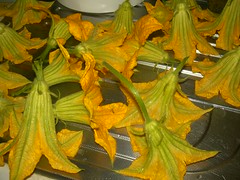
We planted a new group of zucchini plants about a month ago. They have been producing on a regular basis, but I now nip them in the bud rather than letting them become giant marrows. At the same time, I'm collecting more and more zucchini flowers on the stem (not the ones attached to the zucchini themselves), the so-called male flowers, probably because I'm in the garden so frequently and I can see them.

zucchini flowers storing zucchini pumpkin vine flowers

I've also seen these flowers growing over-profusely elsewhere too, in my neighbour's garden, but not on zucchini plants; he grows pumpkin, a not so popular vegetable for human consumption in Greece, but it does apparently make good animal feed, as well as the vine providing shade for other summer garden produce which is growing in an overexposed location.

The variety of squash that my neighbour's planted grows in the same way as do courgette plants, except that pumpkins are always vines, whereas our zucchini plants are more like lateral bushes, much shorter than a vine-growing plant. The flowers they produce are more plentiful, but smaller than those of courgette plants. They look exactly the same as zucchini flowers, and they can be cooked in the same way. It is difficult to tell them apart once they've been cut away from the plants.

pumpkin vine flowers pumpkin vine flowers
(I picked some flowers from this pumpkin vine today and left a few on it to pick later - alas, by the time I returned, the flowers had all closed up again, as they do when the sun stops shining, or it is late in the morning; believe it or not, I had picked all the blossoms the day before! In any case, they'll open up tomorrow...)

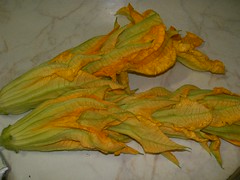
The flowers look fragile, but they are actually very resilient. Pick them from the stalk, cut away the (usually five) spiky bits at the base of the flower, and remove the dusty yellow pistil. Wash them well (well-camouflaged insects are probably hiding inside them). Once they are dry, they can be stored for up to a fortnight, one flower inside the other, in a plastic bag or air-tight container (take care not to squash them), or used in a meal.

The Italians use zucchini flowers in a variety of ways. In Crete, they are mainly turned into dolmadakia rice parcels, but as I have a lot of these flowers at my disposal at the moment, I've decided to use them Italian-style, as a simple fritter.

fried zucchini pumpkin vine flowers

For the batter, you need:
1 egg
3-4 tablespoons of flour
1/2 cup water
salt and pepper to season

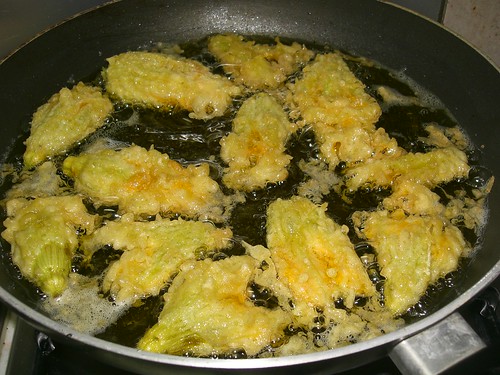
Mix the batter ingredients until the mixture is smooth and runny. This mixture will be enough to fry about 15-18 flowers. Heat some (preferably) olive oil in a saucepan. Make sure it's really hot, then dip the flowers in the batter, one-by-one, drain off the excess batter, and toss them into the very hot oil. Cook them in two batches rather than one, because the temperature of the oil will decrease if you add them altogether, making them oil-soaked rather than dry and crispy. Turn them over once to brown on both sides, then use a slotted spoon to drain them out of the pan. Transfer them to a plate lined with a paper towel to soak up the excess oil. They are best served hot.

fried zucchini pumpkin vine flowers

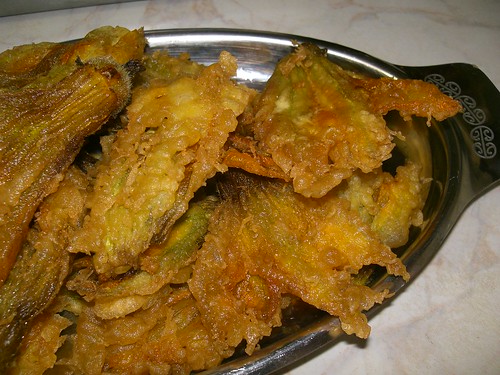
These flowers tasted very much like their parents: fried zucchini. They were accompanied by fried rabbit and an aromatic Greek salad to which I had added some rocket leaves; my summer purslane weed has now given way to autumn rocket in the cooler weather (though I did need to sow it, whereas purslane grows without any help at all).
For a more dramatic look, keep the stalks when frying them, as Laurie did, so that they can be picked up by the stem when eating them. I simply don't have enough room in my fridge to do this.

This post is dedicated to Priscilla, who still found the time to blog and update us on what happened to her home when Ike visited; spare a thought for others like her who have lost their kitchens from the havoc wreaked by nature itself.

This is my entry for Kalyn's Weekend Herb Blogging hosted this week by Haalo from Cook (almost) Anything At Least Once.

©All Rights Reserved/Organically cooked. No part of this blog may be reproduced and/or copied by any means without prior consent from Maria Verivaki.