Showing posts with label WEED. Show all posts

Friday, 23 August 2013

Purslane (Γλυστρίδα)

I posted this photo of purslane on my facebook page without realising it would become an instant hit. I suppose it is the serene look of this wonderful weed and the way it grows wildly and spontaneously, without any help apart from some irrigation. Purslane, Portulaca oleracea (in Greek, αντράκλα - antrakla, or γλυστρίδα - glistrida) is a common edible weed in Greece during the summer months. It has long thick juicy stems and grows around tomato and zucchini plants. For those who are familiar with it, it has a light refreshing taste, and is especially good in tomato and/or potato salads.


Purlsane is an edible weed. The tiny buds produce a small yellow flower. The seeds of the plant are tiny and black - they look like fine dust. You can see them all over the worktop. 

You can use the tenderest parts (like the ones I've cut off on the left) for salad, or you can place the whole (cleaned) plant in a jar of wine vinegar with a little salt sprinkled into it, which can be used in the same way as capers or the kritamos weed (samphire). Even if you don't use it all up by next year, it will remind yo throughout the colder months of winter of the warmer months to come. Since it is renewably annually, you don't need to keep it - you'll just pickle some again more next year.

Pickled capers and pickling purslane

Although purslane grows literally everywhere and anywhere during the summer, for the last 3-4 years, it is being sold at the market these days, a sign that it is quite popular. For me, who lives in a house with a large garden, in a village, it was quite a scary sight. It made me feel that this could possibly be a sign of how busy people seem to be these days, distancing themselves from nature despite being so close to it. Then again, they may not live near a clean source of purslane, and they find it easier to pay 50-60 cents for a cute little bunch of purslane (shipped form Athens). Let's hope, for my judgmental sake, that it is the latter; you know what Greeks say about people who eat a lot of glistrida, don't you? They talk too much.

My favorite recipes for fresh purslane are: orzo pasta salad, artichoke and purslane salad, and cucumber/zucchini and purslane salad. Pickled purslane is good in tomato and potato salad.

©All Rights Reserved/Organically cooked. No part of this blog may be reproduced and/or copied by any means without prior consent from Maria Verivaki.

Sunday, 17 March 2013

Malva sylvestris - Mallow (Μολόχα)

One of the most rampant weeds of our garden is the mallow plant, Malva sylvestris, μολόχα (mo-LO-ha) in Greek. It is a strange plant, growing on a sturdy stem and very tall when it is left untouched, so that it almost looks like a tree when growing out of harm's way. But most of the time, we see it in fields and gardens, growing as a tall large shrub. Its leaves resmble that of the grapevine's and when it blooms at the end of winter, it brings forth pretty pink-purple flowers. It grows literally everywhere on the island.


File:Mallow January 2008-1.jpgThe mallow plant is edible, and has various uses. The flower is often found in dried form, and used as a tea sweetened with honey, which soothes bad coughs. The leaves can be used for bronchial and unrinary disorders, and the roots are used as a poultice for skin inflammations and ulcers.

The flowers are still used in Greece for tea, while the leaves are used in cooking, to make dlomadakia, in the same way as with grapevine leaves. It also helps that the shape of the mallow leaf is similar to the grapevine leaf, so that they are treated in exactly the same way.


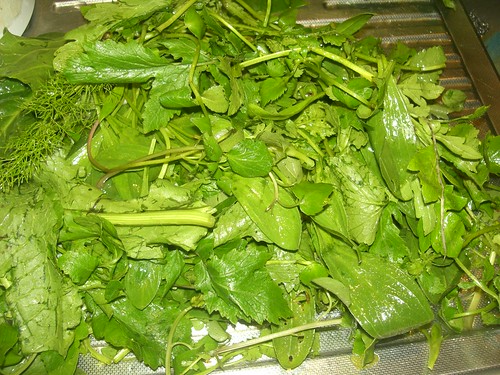
Mallow plants (large pile of leaves, below dock leaves) are washed and blanched before use, to make them more flexible for filling. 

I made some moloho-dolmades recently, before my husband cleared the garden of all the weeds, in preparation for summer planting. The taste of mallow cooked mallow leaves is very peppery.

This extremely frugal dish used a range of leaves found in our garden (mallow, spinach, dock and chard), which were filled (along with some shelled tomatoes frozen from last summer) with rice flavoured with onion, olive oil and garden herbs - fennel weed, parsley and mint.

Mallow leaf parcels give you a taste of what spring has in store - just as they become to fibrous for the grapevine leaves are just starting to sprout.


The Egyptians also use a kind of leaf they call 'molokhiya', which sounds similar to 'mallow'/'moloha'; both these species are from the same family (the Malvaceae, as is the okra plant), but they are quite different species. The Egyptian mallow is one of most commonly cultivated plants, whereas Greek mallow wild in grate abundance.

©All Rights Reserved/Organically cooked. No part of this blog may be reproduced and/or copied by any means without prior consent from Maria Verivaki.

Monday, 23 July 2012

Greece, the weed of Europe (Το ζιζάνιο της Ευρώπης)

When newspapers splatter sensational headlines about Greece on their front pages, to the likes of: 

Euro exit talk risks self-fulfilling prophecy,

or 
as they did today, the writers are ignoring reality. The European continent is sinking further down the drain; detracting attention from the problem in order to turn people against the scapegoat is a show of ignorance. To treat Greece like a weed in the Eurozone that needs to be eradicated is only causing the problem's proliferation. It's already a trying time for most people living in Europe without the need to point the finger at any one country.

Aesop's tale about the vegetable garden is particularly telling at this moment: A gardener was watering his crops when a passer-by asked him why all the weeds looked so fresh and healthy, while the plants he was growing were weak and wilted, or needed support to improve their growth. The gardener answered:

"Earth is mother to the weeds, so they proliferate and thrive on her love and attention, but Earth is only a step-mother to the plants that I am growing. I am burdening her by adding new species. Nourishing her own stock, she causes them to grow faster than the orphans which I plant."

The purslane, amaranth and nightshade spring up on their own every summer and continue to grow well despite being unattended; even when I pull each one out by the root, these weeds are never eradicated. Tomatoes do come up on their own from time to time (the seeds having lain dormant in the soil during the winter), but without man's help (they need training on a support rod and fertilisation), they will not provide crops, unlike the weeds which can be picked as they sprout, and need no help at all to grow.

And so it is with Greece, the weed of Europe. She is stomped on, hindered from growing, and attempts are made to make her disappear. She has been told to sell her islands, to open 'gyros' bank accounts, to leave the eurozone and basically to go to hell. But she doesn't seem to be going anywhere. She's staying put right where she is, seemingly thriving in some ways, even without any support beams.

The moral of Aesop's fable is that a mother is biased towards her own children rather than her foster children, and nobody can replace a real mother, as Gunther Grass warns:
Geistlos verkümmern wirst Du ohne das Land, dessen Geist Dich, Europa, erdachte.
(Deprived of spirit, You will perish without the Land, whose spirit created You, Europe.)

©All Rights Reserved/Organically cooked. No part of this blog may be reproduced and/or copied by any means without prior consent from Maria Verivaki.

Monday, 24 August 2009

Salata Zonianon (Σαλάτα Ζονιανών)

- Hello?
- Oh, how ya doing?
- Nothing much, how about you?
- Yeah, it's really hot here too.
- No, I haven't seen anyone lately, have you?
- Oh, not much really, you know, we just go to the beach, the fields, you know, just the usual stuff.
- Oh, we also went to a taverna the other day, too. Saw cousin George there.
- Yeah, he was there with all the family, they all looked well and happy.
- Well, he told me that he cut the hoses off the taps to our fields.
- No, I don't mean his fields, I mean our fields, you know, the ones our forefathers' ones.
- To stop the fields from being irrigated.
- 'Cos someone's growing some horta up there.
- Green horta. Highly sought after on the market; they fetch a much higher price than olives and oranges.
- Yeah, that's right, salata Zonianon.
- No, I'm not sure, I wouldn't know, but I take it he's probably not lying.
- Well, I don't know if they need to be watered, I've never tried growing the stuff myself! In any case, the place is full of stones, you remember that, so it's completely stoned there, I guess...
- I don't find it funny, either, I'm not laughing!
- I don't know who's doing this, and I don't think I'm going to find out easily.
- Of course I haven't been up there, neither of us know the way!
- With you, when Mum died.
- No, I wouldn't be able to recognise it. Have you ever seen the stuff yourself?!
- See, there you go. In any case, we won't be able to get a good glimpse of it now, cos it's all dried up apparently.
- George told me, who else?
- Absolutely nothing. I don't want my car blown up. Anyway, it's over, I suppose. Maybe they don't want to be seen reconnecting the hose pipes.
- No, that's about it, nothing else. Nothing much happens round here. How are the kids?

If you don't visit your fields very often, you really don't know what might be going on there. You could even be blamed inadvertently for what might be going on there without your knowledge or approval. No photo today - but I would love to have seen it.

©All Rights Reserved/Organically cooked. No part of this blog may be reproduced and/or copied by any means without prior consent from Maria Verivaki.

Wednesday, 27 May 2009

Biodiversity (Βιοποικιλότητα)

I recently saw some very pretty grasses that had flowered growing in the ditch that runs alongside the border of the garden and the cemented pathway next to our house. I had never come across these silvery green sprays with a slight purple tinge to them. Despite their short stature, they stood proudly against the dry brown soil like tiny fir trees; how on earth they managed to escape my husband's notice is a mystery to me, as they had been there for quite some time. He has a knack of meticulously clearing every unwanted scrap of foliage (ie weed) in the garden as he has a great intolerance for anything growing that isn't useful or edible. This is where I differ with my other half in how we view our garden. If he had his own way, he would turn me into a champion weed exterminator; if I had mine, we'd be eating them...
wild grasses wild grasses
The top two grasses are common in our garden...
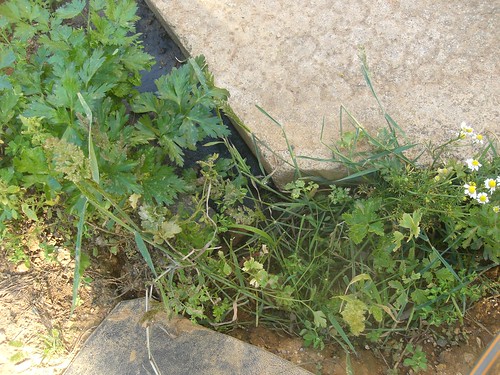
wild grasses among celery growing in the ditch
... but the silvery green one with the purple tinge (only about four samples are visible in this photo) growing amongst the celery had never been there before. Its progenitors probably arrived with the grass cutter and tilling equipment which we had borrowed from a neighbour to prepare the soil for planting our summer vegetables.

I thought about photographing this pretty spray that nature bestowed on us; sooner or later, it would dry up and I wouldn't see it again till next year. I also began noticing many other short flowering grasses growing in clumps here and there in different parts of the garden: in the cracks of the cement pathway, in amongst the artichoke bushes where they are safely guarded by this plant's thorny leaves, and lots of different ones in the ditch where wastewater catches. They all looked common, but every single one was different; no two were even barely alike. There were single ear husks, fern-like sprays, frilly clumps, stalky reeds, bushy tresses, and a myriad other kinds of grasses. None stood out so much as the one that caught my eye in the first place. If they were collected and artistically arranged into a bouquet, they would have made a marvellous backdrop to the most brilliant coloured roses.
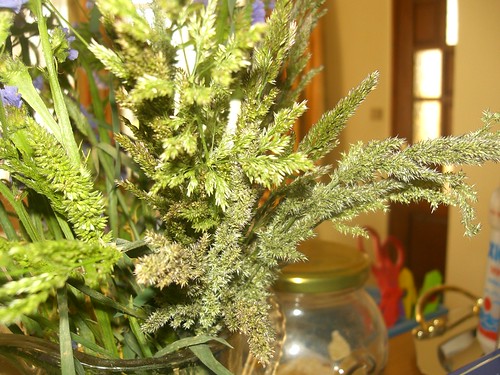
wild grasses
I saved a few of my favorite grasses and put them in a wine pitcher, along with the pretty purple flowers of the maroulides horta.

Alas, I put off photographing them until it was too late, and his roving eyes did eventually catch sight of them. The last time I saw them, they were lying in a heap of unwanted grasses and weeds waiting to be discarded. Into the compost heap, I hear you say, but no, they weren't even given this dignity. "We don't want them seeding next year, too, do we?" was his response.

*** *** ***
Biodiversity is being compromised in the case of some species of grasses and wildflowers, especially the ones that do not have a culinary or medicinal reputation. Their past uses are becoming more and more obscure with the advent of modern technology in both fields, even though nearly all species have some kind of interesting folkloric history.
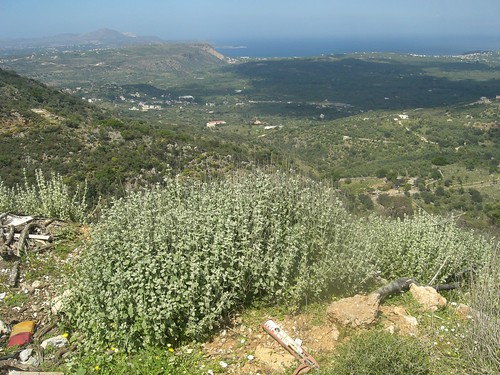
false dittany hiliomoudou hania chania
Kalokoimite in Kiriakoselia found growing in a rubbish heap.

This soft furry plant is known as καλοκοιμιτέ (kalokimoite; Ballota pseudodictamus). It is easily confused with malotira, an endemic Cretan mountain tea. It's a rare plant that is on the list of endangered species. It has little use in modern times, which is probably why it is endangered, but in the past, it served two purposes: its flowers were sought out by honey bees, and shepherds used these bushes as mattresses, to sleep on when they were spending a day in the field looking after grazing sheep. Kalokimite is a smooth furry-leaved plant with no thorns, making it a perfect bush to lie on and catch forty winks, without worrying that you'll wake up with back ache. Nowadays, 'shepherds' use their 4x4 pick-up trucks with reclining seats for this purpose.

Hikers and nature lovers may still find some use for it if they know how to recognise it. Just don't pull it out of the ground - find a shady spot where it is growing, leave it where it is, and lie on it. When you get up, the soft supple stalks will regain their original form, and their flowers and seeds will be able to reproduce in the next season.

agarathia hiliomoudou hania chania
Agarathia in Kiriakoselia


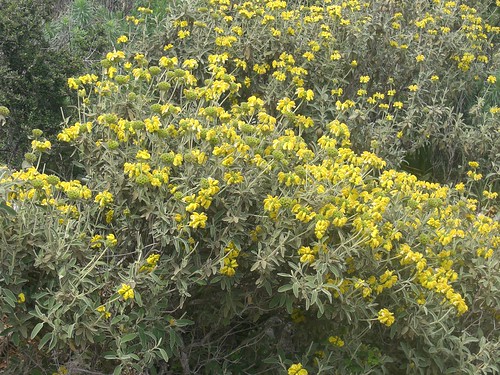
Agarathia (Phlomis fruticosa) is beautiful to look at and soft to touch. It has a woody base, and was often used in the past as a fire starter. It looks like sage - it is also known as Jerusalem sage - but it isn't used for any culinary purposes. Its downy thornless leaves look as though the plant could serve as a soft mattress, just like kalokoimite; if you do just that, you're bound to wake up after your snooze under the warm Mediterranean sky with an eye infection. For this reason, it was regarded as an undignified plant, and was often uprooted when it grew among other more highly regarded ornamental plants such as jasmine, as this old Cretan adage tells us:
Κρίμα σ'εσένα γιασεμί, κρίμα σε σένα ρόδο (Pity on you, jasmine, pity on you rose)
να βάλεις στην αγκάλη σου, τσ'αγκαραθιάς τον κλώνο. (to be found hugging a branch of agarathia)

This is also the reason why it has become an endangered species; it is one of the first shrubs to go when land is being cleared for more purposeful uses. Its brilliant yellow flowers could easily win a flora beauty contest, but another Cretan saying tells us that beauty is only skin deep:
"Μη μου ψηλοπετάς ετσά αγκαραθιάς το κλώνο, (Don't make airs at me, you branch of agarathia)
και βασιλιάς δεν γίνεται αυτός που θα σε πάρει." (the one who marries you doesn't become a king)


Agarathia is regarded as a symbol of hopelessness:
"Έθησαν, άνθισαν οι αγκαραθιές (The agarathies came, they bloomed)
κι'έκανα κολοκύθια." (and they produced zucchinis)


Poor agarathia, the locals have really got it in for them!

aspalarthos hiliomoudou hania chania
Aspalathos in Kiriakoselia

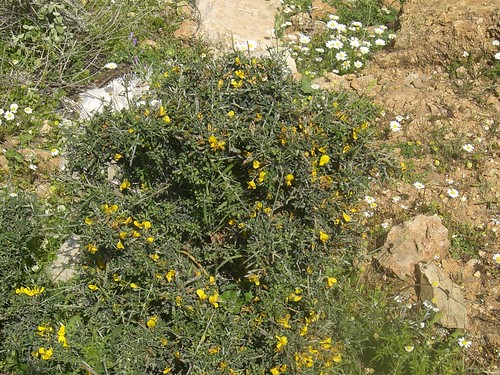
Ασπάλαθος (aspalathos, Calicotome vilosa) is a thorny plant native to Crete. Once all the leaves and flowers dried up and fell off the branches, the locals would collect the thorny remains and turn them into a broom to sweep their yards and floors with; the thorns are tied up in bunches onto a long wooden stick. This plant would also be used as a cover on olive and wine urns (similar to the thorny remains of stamnagathi), to stop insects and other small fauna from crawling into them. In the past when people didn't wear shoes all the time (saving their only pair for special ocassions), the soles of their feet were so hard that it was said they couldn't feel the thorns of the aspalathos even if they were walking on it.

good for hemorrhoids

This shrub has one of the most putrid smells a small tree can have; when the leaves are rubbed between the fingers, it stinks like burning rubber. But it was known to the locals for one thing: the effusion from boiling its leaves can make a soothing remedy for hemorrhoids. This may have been a more common ailment associated with diet in the past. This plant may be one of the herbal remedies listed on this page, but then again it may be something completely different.
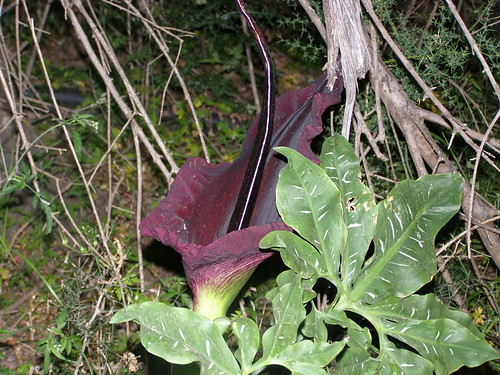
arapis drakontia hania chania
Drakontia, also known as arapis ('the Arab', meaning 'black'), in my neighbourhood

When I first came to Hania, I came across this lily, and fell in love with it immediately. With its deep purple colour and impressively patterned leaves, I thought it would make a beautiful centrepiece. My aunt took one look at it and screamed in horror: "Get it out of here!" I quickly discovered that, despite its unique appearance, drankontia (the dragon flower) is so stinky and toxic that not even animals will touch it, which shows how much cleverer they are than the uninitiated human being. Flies are its pollinators: the flower traps them overnight so that they can perform this job; maybe they serve as temporary fly traps in orchards, allowing the trees to maintain their health.

wildflowers fournes hania chania wildflowers fournes hania chania wildflowers fournes hania chania wildflowers fournes hania chania wildflowers fournes hania chania
It's amazing what will grow back on its own in one patch of soil...
olive grove fournes hania chania
... even after it was totally destroyed by fire.
wildflowers fournes hania chania wildflowers fournes hania crete wildflowers fournes hania crete wildflowers fournes hania crete wildflowers from maroulides horta hania crete

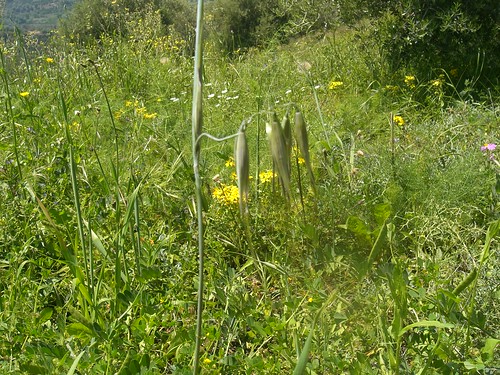
... which brings me to my final point about biodiversity: just leave everything where you find it, as everything has its own place in the order of things. The humble blade of grass is not as simple as it looks: after thousands of years of evolution, it evolved into ears of corn and husks of wheat.
grassy weed
A common grassy weed: an ancient ancestor of corn and wheat

With the passage of time and the rapid rate of technological innovation, biodiversity is being lost due to the lesser perceived usefulness of certain species, which, in fact, given time, might even evolve into something more useful.
vikos vicia sativa fournes hania chania vikos vicia sativa fournes hania chania
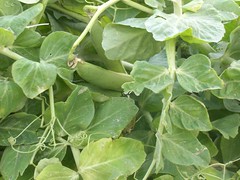
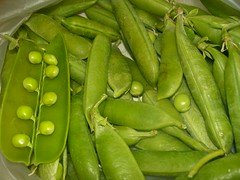
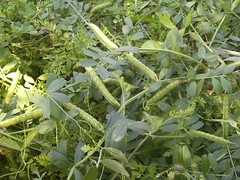
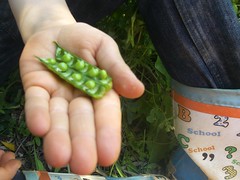
The vikos (Vicia sativa; above) is used as animal feed, but is directly related to the pea (Pisum sativa; below) that we eat; they are both members of the Vicieae (vetch) tribe in the plant kingdom, resulting from the subtle evolutionary differences that distinguish them from one another. The vikos (vetchweed) was found in our field; peas are becoming more and more popular as a simple crop to grow in the garden.

peas vikos pisum sativum galatas hania chania peas vikos pisum sativum galatas hania chania

Human beings use only 20 plant species to provide 90% of their food needs, which is a tiny fraction of the edible plants in the world (Plants for a future, Ken Fern, 2000). In the future world where plants will be grown not only for food but also for fuel, biodiversity may be the key to abundance.

Thanks to the Herbarium at the Mediterranean Agronomic Institute of Chania whose staff assisted me by providing me with advice and pointing me in the right direction of reading material, which I've shared with you in this post.

©All Rights Reserved/Organically cooked. No part of this blog may be reproduced and/or copied by any means without prior consent from Maria Verivaki.

Thursday, 29 January 2009

Wild greens revisited (Και πάλι άγρια χόρτα )

Winter is my favorite season for greens, because this season and on through to spring gives such a wide variety of wild horta. In the summer, vlita (amaranth) greens are readily available, but that's about it. It seems strange that they can grow so prolifically during the hot season - they need a lot of water to remain healthy plants. But in the winter, greens orchestrate a festival of the senses: there is a huge variety available if only you know where to look, and they each have their own appearance, taste, texture and smell. In this season, people all over Greece are getting down to their knees looking for wild greens.

Wild greens, cleaned and ready for use, have just started to appear in the fresh markets - at the hefty price of 6.50 a kilo for a mixture of wild greens. These greens are harvested from the countryside, cleared of grit and dirt (so they only need a good rinse), and sold as a mixture. Despite their weedy looks - they are hardly ever sowed as seeds, but simply grow wildly - most of them are highly aromatic. If you crush a few mixed leaves in your hand and smell them, they enervate you with an uplifting feeling, making you aware of the natural environment with their hands-on effect. Most of these greens are never sold separately, apart from the fennel, which is always sold in small bunches as a herb, in the same way as mint, dill and parsley. In Crete, wild greens are sold by the kilo, all mixed up together, which is also how they are used.

wild mixed greens

The bag I bought (I was able to fill it myself) contained: wild fennel, the Greek-type wild parsley and wild celery, wild leeks, sowthistle, swiss chard, wild mustard, hawksbeard, kafkalithres (known as hartwort, a species of Tordylium) and one or two more leaves which I couldn't identify; this shows how much progress I have made since last year, when I would buy them and never once wondered what their names were. A year on, I have even managed to track down articles in scientific journals concerning their nutrient values:

"The large variety of wildly grown edible greens differ every season ... and [are] eaten fresh in salads with plenty of virgin olive oil, or mixed and cooked with tomatoes, onions, meat or fish. They are also mixed and prepared as pies, thus increasing the daily vitamin and antioxidant intake. Edible wild plants are a common food source for the older generations of the population of Crete and continue today in families which maintain the traditional lifestyle. The Greek Orthodox religion plays an important role in the traditional diet, recommending approximately 180 or more days of fasting from meat, eggs and dairy products per year... The wildly grown Cretan greens are potentially a rich source of antioxidants in the [Cretan] diet... which plays an important role in the health of the elderly and rural population of Crete. ... The wild Cretan greens are rich sources of vitamin C, K, E and carotenoids, and capable of significantly contributing to the RDA needs of the population. In most cases, it was found that the wild greens had higher micronutrient content than those cultivated. ... further studies are required to evaluate the feasibilty of commercially growing some of the wild greens so that non-rural population can also reap the benefits of enriching their diet with traditional greens."

Out of curiosity I tracked down the sources of the wild greens used in the study, and found (to my chagrin) that they were NOT from Hania, but from every other province of Crete: Rethimno, Iraklio and Lasithi; this is simply because the research was based in Iraklio, and Hania was the province most further away to the study centre, the other provinces of Crete neighbouring Iraklio. But the wild greens being harvested and eaten by the local people are the same all over the island.

*** *** ***
The urban population need not worry about how to obtain these greens - it has expensive access to them via the fresh produce counters of the supermarkets and the daily street markets. But there is also a much cheaper source for the same greens, one that is not always feasible because of the restrictions of urban living.

In actual fact, most of these greens are available in the gardens of most village dwellings. A patch of earth from our own garden revealed fennel, mustard, nettles, chickweed, making my purchase of wild greens sound rather expensive, given their availability at my doorstep. Here's the catch: think of the work required to search for these varieties among the clover flowers (which are also edible - the leaves are used in the Middle East in salad dressings when there is a shortage of lemons), clean them (they are collected at a time when the earth is still very muddy and wet), trim, wash and dry them. Now you know why freshly picked wild greens sometimes cost more than meat.

horta at the stadium hania chania horta at the stadium hania chania
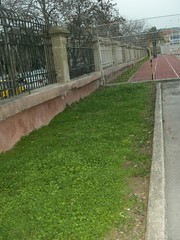
The stadium in the centre of Hania is full of wild greens. They grow around the tarmac used for track and field events, while tsohos (sowthistle) and radiki (dandelion) can be seen growing from a nutrient-packed sewer...

Just how much weed (in the legal sense) is edible all around us? What I found in my home garden alone made me realise just how much we take for granted. I also took a little tour of the peace-inspiring gardens of my workplace, and found a highly developed, sustainable - and highly edible - ecosystem. Susun Weed summarises the most common garden weeds found the world over in Western gardens if you want to find out what's edible in your own patch of earth. The most important consideration when using garden weeds as wild greens is to make sure you have identified them correctly as edible greens. Then you may also want to make sure animals haven't been treading them, because it will also mean that they've been doing other things there too. A forum discusses interesting ways to use dandelion weeds, one of the most popular garden greens growing in abundance in most people's lawns. And don't forget that these greens are probably the most organic carbon-footprint-less food you will eat in your life..

maich gardens maich greens
MAICh gardens: enlarge the photos to see the radiki (dandelion) and tsohous (sowthistle).

I'm not quite sure when I'll bring my own bag to collect the greens I found growing in abundance at MAICh; if my colleagues see me, they may think I've taken to the hills...

*** *** ***

These greens can be served as simple boiled greens dressed with the classic olive oil and lemon juice, accompanied by cheese and boiled eggs. I've also cooked them with rice, like a spanakorizo. In Crete, they are often turned into exotic traditional rustic dishes. They are so versatile that you could easily make a very different dish each day using the same greens.

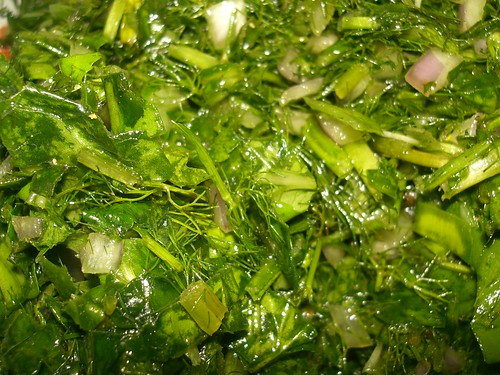
To soften the pungent scents and tastes of the wild greens, I added some tamer greens (spinach) to the wild mixture:
wild greens for marathopites kalitsounia and cheese pasties
For those who like their horta raw, try this mixture (with salt, pepper and olive oil added - soft curd cheese optional) on a piece of toasted bread of any kind.

This mixture was used to create the following dishes:
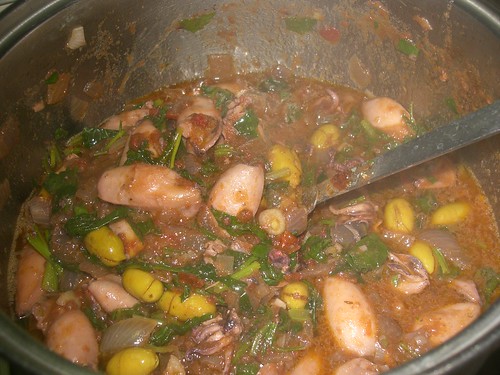
- calamari with wild greens and green olives (kapama) in tomato sauce, served with rice:
calamari kapama
The greens can be used chopped or whole - we prefer them cut up into the sauce. This method of cooking greens (in a tomato sauce) is generally known as 'tsigariasto'; adding frozen calamari and olives turns the dish into 'kapama'.

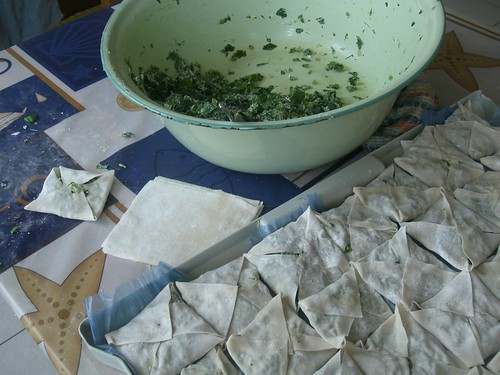
- my latest round of freezing green pies (hortopita; made in the same way as spanakopita) and kalitsounia:
making kalitsounia
This tray of kalitsounia will last us about a month if served on a regular bi-weekly basis.

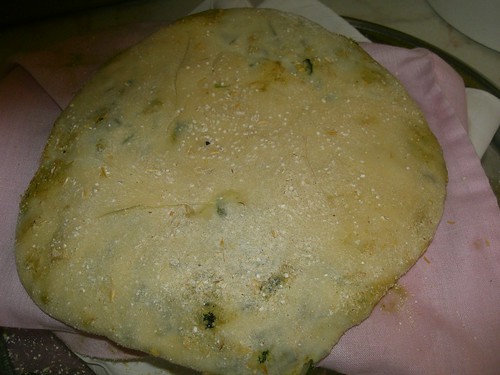
- and marathopites, small vegan pasties, a local specialty in Hania, my all-time favorite pie:
seamless marathopita
This μαραθόπιτα (marathopita - fennel pie) has a seamless look to it. The greens mixture is encased in pastry. This pie is traditionally cooked on a very hot oiled skillet called a 'satsi'. I added more fennel to the mixture for more taste.

This is my entry for Weekend Herb Blogging, hosted this week by Marija from Palachinka.

This one's for Cheryl, who could make a mint by selling wild greens from her own garden.

©All Rights Reserved/Organically cooked. No part of this blog may be reproduced and/or copied by any means without prior consent from Maria Verivaki.

Wednesday, 22 October 2008

Nettles (Τσουκνίδες)

Yesterday I did something that I wouldn't recommend anyone do without thinking of the risks involved first: I added an unidentified plant from the garden to my cooking.

nettles
(a patch of nettles, among other weeds, growing around the celery)

Spurred on by the economic crisis and the fact that only about a fraction of the plant species in the world have been used as food, I decided that there can't be any harm in trying a new one, or at least one which is not commonly used in our cooking, but is prevalent in all the fields and gardens of the province, and is also known to be an edible plant species: nettles.

nettles

Nettles are those nasty stinging plants which cause an itchy sensation wherever they touch human skin. Most people would probably not know that they are edible, although I remember once my father bringing them home in our apartment in Hania, telling me that they are good for lowering blood pressure which he suffered from. (Pity he didn't just stick to eating this instead of getting involved with other blood-pressure lowering activities.) His sister had boiled them, so they resembled green mush. They looked very off-putting, but are apparently very nutritious: "Stinging nettle has a flavor similar to spinach when cooked, and is rich in vitamins A, C, D, iron, potassium, manganese, and calcium."

nettles
(one stings, the other doesn't; they look similar, despite the age difference - the stinging plant looks younger than the non-stinging one)

I knew that they would feel prickly, so I came prepared with some protective gloves to harvest them from the garden. But I was surprised when I couldn't see many thistles on them as I was picking them. I realised that there were two weeds growing side by side that looked exactly the same: one had stinging hairs on the stems and leaves,while the other was completely bald, but the shape of leaves and the general form of the weed seemed no different to each other. I decided to check out all the information available on nettles over the internet.

Wikipedia, usually our first choice for encyclopaedia-style information, tells us that most nettle species "share the property of having stinging hairs, and can be expected to have very similar medicinal uses to the stinging nettle." Possibly, the hairless species I found was also a nettle but not a stinging one. But the question is, are they edible too?

I finally found a reference for this non-stinging variety, but not before I added them to my latest kalitsounia and "spinach" pie making stint. I chopped the nettles in the same way that I would chop spinach and add it to a pie filling. I also tried the pie filling before cooking it, as well as after it came out of the oven. There was no discernible flavour that made the kalitsounia or pie taste different from what my family would normally eat as I cook it. The nettles - with and without sting - did not have any particular flavour in the first place, which makes me wonder whether makers of mass-produced spanakopita, my favorite takeaway, use nettles in their pie-fillings: they are much cheaper than spinach, although they may be harder to work with. But do not despair: blanching nettles removes their sting.

My non-stinging species was probably the wood nettle. Here's what WildManSteveBrill says about them:

stinging nettle; wood nettle
(the wood nettle, top, and the stinging nettle, bottom, against a backdrop of autumn garden )

"Other true nettle species are also edible. You'd think the stinging hairs would make nettle identification easy. Nevertheless, I once ran into some people in the woods who insisted that clearweed (Pilea pumila), a similar-looking, nonpoisonous plant with a translucent stem and no stinging hairs, was stinging nettles. They had been eating this unpalatably inedible nontoxic plant, which I had always rejected as unpalatable, all summer."

Photobucket

The kalitsounia were a complete success with the whole family - the contents of the tin disappeared as soon as I brought it out of the oven (hence no photos!), with no adverse side-effects. I had some remaining mixture which I made into a small pie for the deep freeze, using Laurie's ladenia pizza dough as a base. The family was informed about the nettles after they had eaten. The question is whether I would use nettles again in a meal, to compensate for a lack of organic leafy greens, and the answer is, yes, I would. Nettles don't seem to taste too different from any other grassy leaves; some people claim that they taste like spinach when cooked. When they are mixed into other ingredients such as soft cheese and other herbs (for a hortopita pie filling), they will go by completely unnoticed. However, I don't think I would use them on their own; they are simply too unpalatable-looking...

This is my entry for Kalyn's Weekend Herb Blogging, hosted this week by Laurie from Mediterranean Cooking in Alaska, who's tasted far less conventional greenery than the mere nettle: you should see what she did with spruce and pine tips.

©All Rights Reserved/Organically cooked. No part of this blog may be reproduced and/or copied by any means without prior consent from Maria Verivaki.