Showing posts sorted by relevance for query zucchini. Sort by date Show all posts

Monday, 2 June 2008

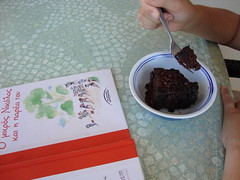
Black forest chocolate and zucchini gateau (Κέικ σοκολάτας με κολοκύθι)

That river of zucchini is still flowing. The fridge has filled up with zucchini, there's zucchini on the kitchen work top, there's zucchini in the garden, we're going to have to start selling the stuff; either that, or give it away by leaving bags full of it at neighbours' doorsteps, with little signs saying: "Cook me", or "Free to a good home".

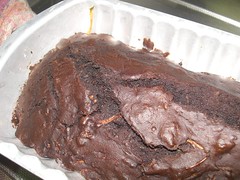
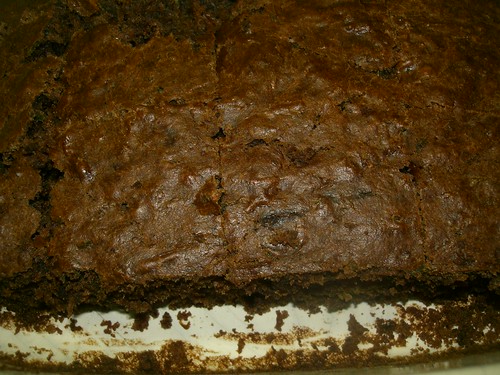
Thank goodness I found Clotilde's chocolate and zucchini cake! I have kept the basic recipe, but made a few changes to it: I used only white flour, not a mixture of brown and white; only cocoa was used, not a mixture of cocoa and chocolate chips; the topping is completely different since I turned the cake into a gateau. It's a shame that no one in my family celebrates their birthday in the summer, because now I know how to make the most moist, vegetable-based chocolate cake ever - and get rid of some of that excess zucchini crop.

grated zucchini courgettechocolate zucchini courgette cakechocolate zucchini courgette cakechocolate zucchini courgette gateau
You need
:
2 cups all-purpose flour (English teacups)
1/2 cup cocoa powder (4-6 tablespoons, according to taste; the more cocoa, the less zucchini is visible)
1 tsp baking soda
1/2 tsp baking powder
1/2 tsp salt
1/2 cup margarine (I'm thinking of substituting olive oil in this as I now do for banana cake)
1 cup light brown sugar
1 tsp vanilla powder
1 tsp instant coffee granules
3 eggs, at room temperature
2 cups of zucchini, unpeeled, grated
Beat the margarine with the sugar, then add the eggs one at a time and mix in well. Now add the salt, vanilla and coffee granules. Mix in the zucchini, making sure it is spread evenly in the mixture. Add the sifted cocoa, flour, baking powder and soda, and mix in till the mixture looks like a thick paste. Pour into a greased tin and cook for 40 minutes in a moderate oven. To check if the cake is done, stick a knife into it to see if it comes out clean.

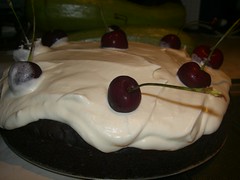
I decided to divide the mixture into two tins: a small loaf tin and a small round tin. The loaf became part of my children's lunchbox, while the round cake, when it had cooled down, was decorated with whipped cream (a leftover from a pasta dish) and cherries, which were 3 euro a kilo today at the supermarket (last week, they were 6 euro a kilo).

Leave it in the refrigerator for an hour before serving, because it is so moist that it may lose its shape when it is cut. For a richer version, slice the cake in the middle into two rounds (or better still, cook two small round cakes), spread whipped cream on one layer, sprinkle a few slices of pitted cherries onto the cream, place the second layer of cake on top, and finally, ice it with more whipped cream and a few whole cherries to make the perfect torte.

This is the kind of cake that I will definitely make again, as well as have a go at turning it into muffins - it is moister than my boiled chocolate cake (which is a very moist cake), and the zucchini simply makes it much healthier. The bold combination of the grass green courgette in a sea of brown chocolate dotted by the crimson cherries is eye-catching. If I could only convince my family that zucchini can be eaten raw, I'd have sprinkled a few courgette skin shavings in between the cherries to highlight the contrastive colours. This is a naturally beautiful cake.

This is my entry for Weekend Herb Blogging, hosted by maninas.

©All Rights Reserved/Organically cooked. No part of this blog may be reproduced and/or copied by any means without prior consent from Maria Verivaki.

Monday, 27 July 2009

To your health! (Στην υγειά σας!)

I've been perfecting my chocolate zucchini cake over the summer with this year's zealous zucchini crop, and I think I've hit the jackpot with this recipe. I've made it a zillion times and no one ever gets tired of it. It is very tasty, extremely easy to make, and contains very healthy ingredients. It might even make the menu of Angelina's Kitchen in Historic Downtown Pittsboro in North Carolina.

chocolate zucchini banana cake

You need:
2 1/2 - 3 cups of all-purpose flour
4 - 6 tablespoons of cocoa (the more cocoa, the less visible the zucchini is)
1 teaspoon baking powder
1 teaspoon baking soda
some vanilla essence
2/3 cup olive oil
1 cup white sugar
1/2 cup brown sugar
1 teaspoon instant coffee granules
2 eggs
1 ripe banana
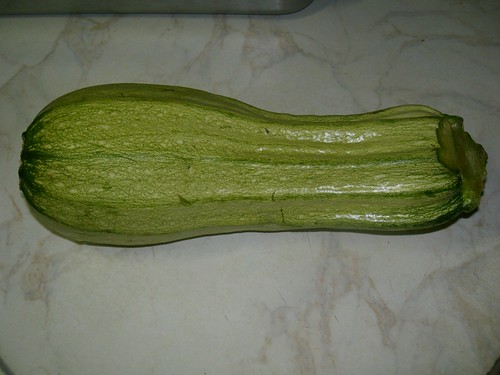
1 oversized courgette (which will yield about 2 cups of grated unpeeled zucchini when the water is squeezed out of it) or a few small ones

an oversized zucchini courgette marketably sized courgette zucchini
Zucchini can be a nuisance when it becomes extra large. Marketable ones are never large, even though they taste just the same as small ones, but (er-hem) size matters according to the kind of use you want to make of it...

Prepare the zucchini by grating it and adding a heaped teaspoon of salt. Mix this into the zucchini very well. Squeeze the zucchini to start extracting and discarding all its liquid. When it is damp and firm, add the sugars, cocoa, coffee, vanilla, baking soda and baking powder. Mix well to get a uniform mixture.

Then add the eggs, oil and mashed banana, and mix well again. Make sure that the zucchini is all coated in the chocolate mixture and won't be visible when it's cooked (children won't eat green chocolate cake unless they are exceptionally precocious and can estimate the health benefits they will derive from it). Now add the flour cup by cup, beating well after each addition. The batter should be a thick mud consistency.

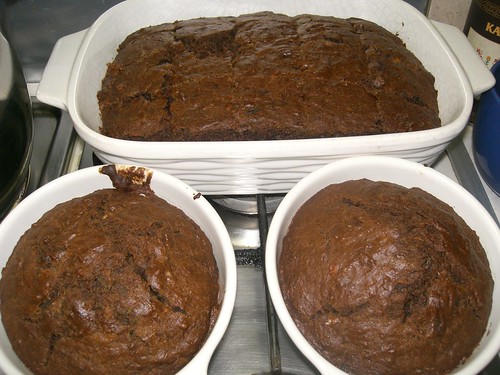
Pour the batter into a greased baking tin. I had only a small one available, so I also used two ramekins and cooked separate cakes which I gifted to the neighbours. Cook for 40 minutes, or until a knife pierced through the cake comes out clean. The olive oil (which can be substituted with other lipids, like 180g margarine) makes the cake very light in texture, and slightly crumbly; the banana gives it a nice aroma. The cake can easily be eased out of the baking tin once it has cooled down; in any case, it is cut in slices and each slice easily lifts out of the tin.

chocolate zucchini banana cakes
One for us and two to give away

Extremely healthy, extremely moist, extremely delicious. To make it more festive (labeit less healthy), a chocolate syrup (like the one mentioned here, minus the egg yolks) can be poured over it. When the cake has cooled down slightly, cut it into diamonds or squares and pour the hot syrup over it. It will taste just like the kind of chocolate cake served at upmarket dessert cafes in the best parts of town.

©All Rights Reserved/Organically cooked. No part of this blog may be reproduced and/or copied by any means without prior consent from Maria Verivaki.
Monday, 22 September 2008

Fried zucchini flowers (Κολοκυθοανθούς α λα ιταλικά)

The weather has cooled down in Hania so much that I find I have more energy to get things done around the house and garden. It is now not so much of a chore to work with the brown soil under my feet, even if it is a little muddy.

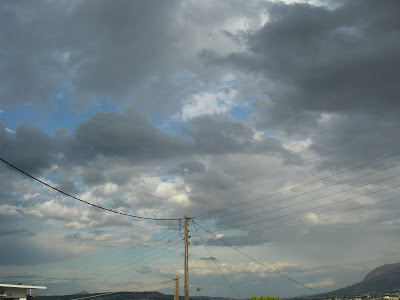
(a very confused sky)

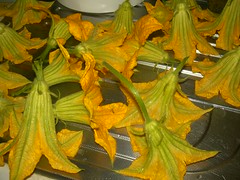
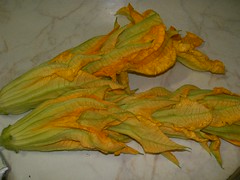
We planted a new group of zucchini plants about a month ago. They have been producing on a regular basis, but I now nip them in the bud rather than letting them become giant marrows. At the same time, I'm collecting more and more zucchini flowers on the stem (not the ones attached to the zucchini themselves), the so-called male flowers, probably because I'm in the garden so frequently and I can see them.

zucchini flowers storing zucchini pumpkin vine flowers

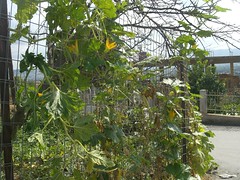
I've also seen these flowers growing over-profusely elsewhere too, in my neighbour's garden, but not on zucchini plants; he grows pumpkin, a not so popular vegetable for human consumption in Greece, but it does apparently make good animal feed, as well as the vine providing shade for other summer garden produce which is growing in an overexposed location.

The variety of squash that my neighbour's planted grows in the same way as do courgette plants, except that pumpkins are always vines, whereas our zucchini plants are more like lateral bushes, much shorter than a vine-growing plant. The flowers they produce are more plentiful, but smaller than those of courgette plants. They look exactly the same as zucchini flowers, and they can be cooked in the same way. It is difficult to tell them apart once they've been cut away from the plants.

pumpkin vine flowers pumpkin vine flowers
(I picked some flowers from this pumpkin vine today and left a few on it to pick later - alas, by the time I returned, the flowers had all closed up again, as they do when the sun stops shining, or it is late in the morning; believe it or not, I had picked all the blossoms the day before! In any case, they'll open up tomorrow...)

The flowers look fragile, but they are actually very resilient. Pick them from the stalk, cut away the (usually five) spiky bits at the base of the flower, and remove the dusty yellow pistil. Wash them well (well-camouflaged insects are probably hiding inside them). Once they are dry, they can be stored for up to a fortnight, one flower inside the other, in a plastic bag or air-tight container (take care not to squash them), or used in a meal.

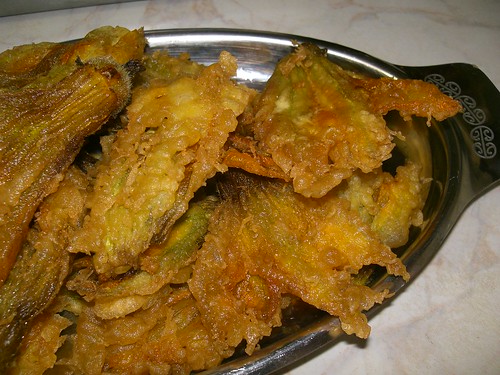
The Italians use zucchini flowers in a variety of ways. In Crete, they are mainly turned into dolmadakia rice parcels, but as I have a lot of these flowers at my disposal at the moment, I've decided to use them Italian-style, as a simple fritter.

fried zucchini pumpkin vine flowers

For the batter, you need:
1 egg
3-4 tablespoons of flour
1/2 cup water
salt and pepper to season

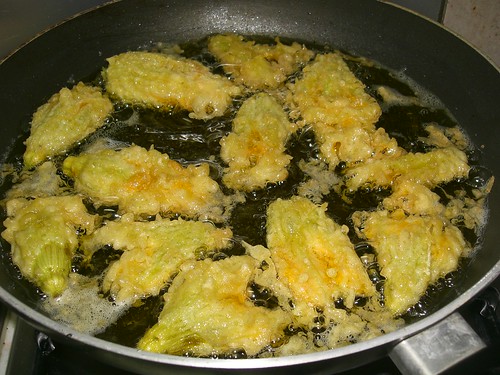
Mix the batter ingredients until the mixture is smooth and runny. This mixture will be enough to fry about 15-18 flowers. Heat some (preferably) olive oil in a saucepan. Make sure it's really hot, then dip the flowers in the batter, one-by-one, drain off the excess batter, and toss them into the very hot oil. Cook them in two batches rather than one, because the temperature of the oil will decrease if you add them altogether, making them oil-soaked rather than dry and crispy. Turn them over once to brown on both sides, then use a slotted spoon to drain them out of the pan. Transfer them to a plate lined with a paper towel to soak up the excess oil. They are best served hot.

fried zucchini pumpkin vine flowers

These flowers tasted very much like their parents: fried zucchini. They were accompanied by fried rabbit and an aromatic Greek salad to which I had added some rocket leaves; my summer purslane weed has now given way to autumn rocket in the cooler weather (though I did need to sow it, whereas purslane grows without any help at all).

For a more dramatic look, keep the stalks when frying them, as Laurie did, so that they can be picked up by the stem when eating them. I simply don't have enough room in my fridge to do this.

This post is dedicated to Priscilla, who still found the time to blog and update us on what happened to her home when Ike visited; spare a thought for others like her who have lost their kitchens from the havoc wreaked by nature itself.

This is my entry for Kalyn's Weekend Herb Blogging hosted this week by Haalo from Cook (almost) Anything At Least Once.

©All Rights Reserved/Organically cooked. No part of this blog may be reproduced and/or copied by any means without prior consent from Maria Verivaki.
Tuesday, 5 June 2012

Purslane and zucchini salad (Γλιστρίδα)

My uncles never buy vegetables, eating only what they grow themselves. When it's not in season in their garden, they simply do without unless they have frozen it from last season's harvests. They have salads with every meal, which are always picked fresh within the hour that they make them. Their crockery is broken, the handles of their knives are sometimes held together with wire, and they never lay a tablecloth, but their salads always taste so good because they are fresh and organic, with only olive oil to add another taste dimension to them.

Purslane (called glistrida - γλιστρίδα - in Greek) features a lot in my uncles' salads as soon as they get the summer garden going in spring. Glistrida grows unaided as soon as we start irrigating the spring-planted summer garden, usually all around the planted crops. Together with vlita, purslane forms our first free food of the season. Onion forms a staple in all their salads, and they add whatever is available in the garden: one time I saw them add slices of fresh artichokes, another time they added lettuce. In the summer, it's always tomato.

Now that the zucchini has taken off, I've been adding it fresh and raw to many Greek dishes which traditionally take cucumber. It's not a "Greek thing" to add raw zucchini to dishes - my uncles would never eat zucchini raw. They would think I was mad if I were to tell them that I have used grated zucchini in tzatziki instead of the normal cucumber. But ever since I learnt a nice technique to "cook" zucchini without heat, I find that raw zucchini is tastier than cucumber; besides, we are better at growing zucchini than we are at growing cucumber...


You need:
a small fresh zucchini (maximum diameter 3cm)
some fresh purslane (it wilts easily once cut)
an onion
some olives
some feta cheese
lemon juice
olive oil
salt

Wash the zucchini and use a mandolin slicer to cut it into thin slices. Place the zucchini in the juice of the lemon. Set aside and allow to marinate for at least a quarter of an hour. Use only the leaves of the purslane (the stems can be used, but the leaves are much tastier) - this is a tedious process but it is worth your while! Slice the onion into thin rings. Drain the lemon juice out of the zucchini. Mix all the ingredients together in a bowl, crumbling the feta and drizzling the olive oil and salt over them.

All this salad needs is crusty bread and a glass of wine - and a shady balcony to enjoy it on.

©All Rights Reserved/Organically cooked. No part of this blog may be reproduced and/or copied by any means without prior consent from Maria Verivaki.
Friday, 31 July 2009

Lumen accipe et imperti (Λάβετε φως και μοιράσετέ το)

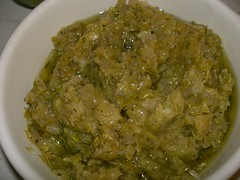
Here's a very summery recipe to use up an over-productive zucchini crop. Zucchini pate is very simple to make and can be used in a variety of ways, as Ruth Pretty notes, whose recipe Michelle led me to.

zucchini paste zucchini paste
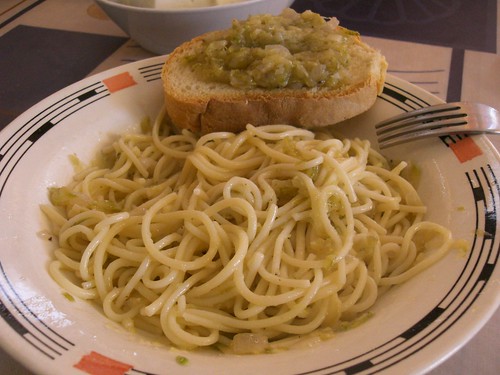
Although I enjoyed the zucchini pasta, I loved this pate spread on bread. I could survive on this throughout the summer.
zucchini paste

Lumen accipe et imperti ("receive the light and pass it on") was the school motto for WGC. Ruth, Michelle and I are all "old girls" of this state school in Wellington. All the schools in Wellington had nicknames, used mainly by pupils of other schools. Ours was "Wellington Grills". Most immigrant Greeks sent their children to state schools, but that's not where their grandchildren are being educated nowadays, a sign of upward mobility in the next generation of Wellington Greeks. Most are now attending private schools that their parents probably made fun of when they were young, places like St Farts and Snots Porridge. They have clearly moved up the ladder in Kiwi society, forming the middle classes of Kiwiland. This is not surprising; Greeks are a remarkably progressive race when they get out of their own country, taking up any opportunities given to them to make good, and instilling similar expectations in their children.


An old girl posing with her parents on Prizegiving Day before the end of the school year, November 1981.

Rachel also recommended the same pate recipe to me, spicing it up with onion and garlic, which is how I made it for a bit of added flavour.

You need:
a quantity of grated zucchini to suit your needs (courgettes and marrow may both be used)
a few tablespoons of olive oil (I used more than a few; zucchini absorbs oil very quickly)
a coarsely chopped onion
1-2 finely chopped cloves of garlic
salt and pepper

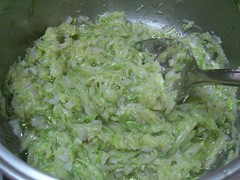
Heat the oil in a saucepan and add the onion and garlic. Cook till the onion has softened. Add the grated zucchini (if the zucchini came with the flower still attached to it, you can also add that chopped in thin strips) and let it stew away until most of the water has evaporated and the mixture looks like a thick paste. Season with salt and pepper, and serve on grilled bruschetta, toast, hot pasta, or even as a dip (alongside tzatziki) with crunchy vegetables.

Michelle tells me that this paste freezes well. All I can say is I'll be glad when I see the end of this year's zucchini crop...

©All Rights Reserved/Organically cooked. No part of this blog may be reproduced and/or copied by any means without prior consent from Maria Verivaki.
Tuesday, 14 October 2008

Zucchini flower spaghetti (Μακαρόνια με κολοκυθοανθούς)

I know what my son will be cooking when he is tall enough to stir a pot and use the gas cooker: plain boiled pasta. Most children love this meal in its plainest form. Pasta, at least in my 'fat' way of thinking, is an alternative to bread, which is why I never bring out bread on the table when we're eating pasta. Plain boiled pasta is one of the most uninviting dishes that I can think of. Spaghetti from a packet, tossed into a pot of boiling water, then drained onto a plate, resembling creamy white worms. My son's quite happy to eat pasta like that, without even a sprinkling of cheese on the dish. No oil, no sauce, no flavour (unless you can call plain boiled pasta a kind of flavour). I can't stand watching my children eat such an unappetising plate.

Before the children came home from school, I jazzed up the 'plain pasta' a little. I know my son's going to ask me "What are those orange things stuck on the spaghetti?" He'll probably have something to say about the bright green bits too, and the tiny white cubes. Eventually, he'll start poking his fork into it. He might pick off the coloured bits. I'll have to make an effort not to look at him while he's doing this. But I think he'll eat it in the end. The only thing I won't be telling him is that I added some flowers to his 'plain' pasta.

The seasonal nature of our cooking means that we often use the same ingredients in our daily meals until their growing season is over. This doesn't mean that we have to eat the same meal every day. We simply use the same substance over and over again, cooked in a different way. The pumpkin flower excess in my neighbour's garden is still g(r)owing strong. I pick nearly 20 flowers a day from the vine. This has led me to find ways of using those beauties more creatively. The recipes I have discovered could easily form another '101 ways to use..." book. So far, I've done the following with zucchini flowers:
My recipe sources are often from the internet these days. This is not necessarily the best or only source of information, but I would like to sing its praises; the internet has helped me to broaden my horizons, while living in a small non-English speaking island community. What would my English-language alternative media choices be in this small town if I didn't have the internet? I'd have to buy magazines and newspapers (from a limited range that offers well-known 'groan' titles like Women's Weekly and The Times), go to the second-hand bookshops in the town (we're lucky to have a couple run by English ladies), or order more books from Amazon (no try-before-you-buy browsing there). We do not have English language lending libraries; the best library in town is the children's library, which of course contains a specific range of books given its target audience. So here's to the internet, which came up with the following novel suggestions for different ways to use zucchini flowers:
which I've cooked today, a simple oil-and-garlic sauce with julienned zucca (pumpkin) flowers and a dash of red pepper. The aroma of the sauce cooking away is enough to intoxicate your senses. I've seen the same sauce served up with very thinly sliced green bell pepper instead of the zucca flowers, in case you can't find them, and it really is a very simple sauce to whip up quickly.

zucchini flower pasta

You need
:
half a wine glass of olive oil
1 large onion, finely chopped
3-5 cloves of garlic, finely chopped
12 large (or 18 small) zucchini flowers - if you can't get these, use very thinly sliced bell pepper slivers as an alternative
red pepper flakes (or ground red pepper)
1 courgette, grated (optional)
salt
250g fine spaghetti, boiled al dente

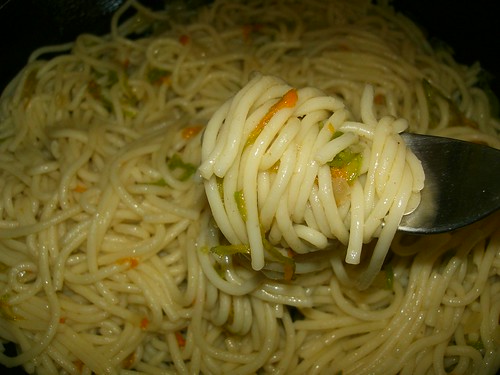
Heat the oil in a saucepan, and add the onion and garlic. Cook till translucent. Add the zucca flowers, and stir them in till just cooked. If you're using the zucchini as well, add this in at this point too. Season the sauce (I used ground red pepper to avoid 'picky eater syndrome'), and add the drained spaghetti into the saucepan, stirring around till the pasta is well oiled. Serve immediately; this dish can't wait!

This is my entry to Kalyn's Weekend Herb Blogging, hosted this week by Amy and Jonny from We Are Never Full.

©All Rights Reserved/Organically cooked. No part of this blog may be reproduced and/or copied by any means without prior consent from Maria Verivaki.
Tuesday, 27 May 2008

Courgette patties - kolokithokeftedes (Κολοκυθοκεφτέδες)

My husband rushed into the kitchen excitedly: "How dja wannit, honey? Long, short, medium, extra large?"

"I'm only used to one size, darling," I replied, "and I'm quite content with that, thank you."

We picked the first of the crop only last week. But we have an over-abundance of zucchini in the fridge, mainly because my uncles' farm is over-producing. In fact, every day, they gather about 10 courgettes about as long as my (please forgive me) arm, and leave them in a crate under a shady hundred-year-old olive tree. When I visit them, they always ask me if I want to pick some zucchini from the garden.

"We've got courgettes for horta, and you'll find a few to make boureki, too." What they mean is that they are the only two ways that they themselves eat zucchini (they're bachelors and cook only traditional Cretan cuisine). The courgettes for horta are picked before they start getting too big, say about as large as a (please forgive me) carrot, while the ones for boureki are as long as my (you've already forgiven me) arm. Size and length are still taboo subjects for some age-groups and classes in Greece.

"What's wrong with the ones in the crate?" I asked them the last time I visited the farm.

"Oh, I was gonna chop 'em up and give 'em to the chickens," one of them told me. They do that with their excess produce, along with the potato peelings and all their vegetable scraps, as well as all the weeds in the garden.

Courgette patties - kolokithokeftedes - can be made from all sizes (do forgive me) of courgette; if the zucchini gets too (I'm sorry) large, just remove the seeds if they seem tough. They are not something you can whip up in a jiffy: courgettes have such a high water content that you need to get rid of it to make firm patties. Some cooks add tomato, others cheese, yet other eggs; I make mine completely lenten. Cheese and eggs can easily be added to this recipe; the egg helps bind all the ingredients, while cheese makes them more crusty. Tomato pulp needs to be strained before being added to the mixture.

To make 20 medium-sized patties, you need:
1 large courgette (or a few small ones)
1 onion, grated finely (I used green onion tops instead; they exude a lighter aroma)
1 clove of garlic, finely chopped (optional; I like the combination of onion and garlic in my food)
a posy's worth of dill, finely chopped (I used fennel, as it's growing like wildfire here; feel free to substitute dill with your favorite herb - a good alternative is mint, parsley, or a combination of these)
1/2 cup of fine breadcrumbs
1/2 cup of flour
salt and pepper

The first step in making courgette patties is to get rid of all excess water in the zucchini. Grate the courgette into a colander and sprinkle salt liberally all over it. Place the colander into another container and allow it to sweat for at about two hours. Fresh zucchini will easily yield a small glass of water. Don't worry if you haven't got enough time to allow the zucchini to sweat it out on its own; in any case, you will help it along by picking up fistfuls of gratings and squeezing them of all excess liquid. To help all the herbs blend in with the zucchini, I usually mix all the gratings along with the herbs (ie, zucchini, onion, garlic, herbs, pepper) and squeeze them dry altogether.

Once you have strained the vegetable mixture well (you will end up with half the original bulk), add the breadcrumbs to the mixture and mix them in well. Then add the flour, mixxing in enough to make a stiff dough. You may need a little more or a little less, depending on how well you strained the zucchini. Shape the mixture into flat patties and dredge them in flour. Drop them into boiling hot oil and let them cook till they turn golden brown in colour, turning them over to cook on the other side. When they are done, place them on absorbent paper to dry.

Courgette patties make a great alternative to meat patties (my I-never-eat-greens son thought he was eating a hamburger when I stuck one of these in a bun) and can be served with a tomato salad, or any bean dish. This is one of the few dishes I make that doesn't freeze well.

This is my entry for Weekend Herb Blogging, hosted by wanderingchopsticks.

©All Rights Reserved/Organically cooked. No part of this blog may be reproduced and/or copied by any means without prior consent from Maria Verivaki.
Friday, 1 June 2012

Cheap 'n' Greek 'n' frugal: Greek-inspired waffles (Βάφλες)

Prices are in euro (valid in Hania). All ingredients are Greek or locally sourced; those marked with * are considered frugal here because they are cheap and/or people have their own supplies.

While we travelled through Northern Europe last month, we tasted our first waffle. I've never made waffles before because, like poffertjes, waffles need special equipment, which is only used to make that specific dish. I'm still not convinced that it's a good idea to buy single-use equipment, but since I invested in a special Dutch pancake tin while I was there, I decided that a waffle maker is something I had to have after all, especially if you have children. Apparently you can make waffle batter into pancakes - but they wouldn't be waffles, woud they? And like poffertjes, waffles are fun to make and easily enjoyed by everyone and they provide happy memories.

I bought a cheap waffle maker in Hania, made in China. It cost €25 with a one-year guarantee. (That's expensive for a cheap import, isn't it? Prices in Hania are always much more expensive than elsewhere in Greece.) The waffle maker doubles up as a toasted sandwich maker too (the irons come out), but since we already have a toasted sandwich maker, it's unlikely that I'll use my new gadget other than as a waffle maker. Such equipment make me feel materialistic, so I look for ways to get the best use out of them.

I've been given a good recipe by my friend Uta for waffles. Uta's original recipe is especially clever in that grated apple is added to it to make the waffles stay moist and juicy until the next day, so you can have them as a dinner treat and then enjoy the remaining for breakfast the next day. By replacing various ingredients in the batter with local ingredients, notably olive oil instead of butter, I've come up with a Greek-inspired waffle recipe.

You need:
125g olive oil* (instead of butter)
70ml orange juice* (instead of milk - or you can use a mixture)
125g flour (I used a mix of white and brown flour - ~25 cents)
1 small teaspoon baking powder*
1 apple, grated (~25 cents), OR: 1 small zucchini, grated (it basically does the same job - it keeps the batter moist - in the autumn, I also use pear)
2 eggs*
2 tablespoons sugar*
vanilla flavouring (I omitted this, since I was using fresh orange juice - you can add orange zest for more flavour)
 

Mix ingredients together to make a thick batter. Heat the waffle iron and bake the waffles until golden brown. The mixture is enough for 6 waffles (or 8 smaller ones, with missing corners).

Waffle batter containing grated apple

Waffle batter can be flavoured or kept moist in many different ways. To avoid buying apples (something we don't grow ourselves), I used fresh zucchini (we cut the first one from the garden on the 15th of May). Grated zucchini is used in sweet treats like zucchini bread and zucchini-chocolate cake. This is a very clever way to keep children eating healthy food.

 
A teddy bear's picnic with Greek toppings - the cream, the organic strawberries and the chocolate topping are all products of Greece.

The first time I cook something new, it's to get the hang of it. The second time I make the same thing is never like the first time I made it. This time, I divided the batter and added grated zucchini in one lot, and grated zucchini with cocoa powder in the second lot. The plain zucchini waffles tasted good with cheese - great for people who aren't too keen on sweet snacks. Savoury waffles make a great meal.

Waffle batter containing grated zucchini and cocoa powder - I added just enough cocoa to give the waffle a rich chocolate colour.

Waffles have very little to do with Greek cuisine, but when made in a healthy way with Greek ingredients, they can be enjoyed as a Greek-inspired twist.

All the different waffles I've made so far have been very successful. The same recipe can be adapted in many ways to ensure that you're not just eating a fatty hi-carb sweet treat.

The waffle batter can be made at night, ready to pour the next day into the waffle maker, so you can start the day off with home-made fruit and veg waffles: before you leave the house, you'll have had a good dose of olive oil, eggs, orange juice and zucchini, topped with some home-made jam and organic fruits from the garden. (I usually halve the recipe when I keep the mixture overnight in the fridge.)


Cost of 8 waffles: about €1, eaten once as an evening snack and the next day for breakfast, among four people. Together with the toppings, each serving costs about 50 cents.

©All Rights Reserved/Organically cooked. No part of this blog may be reproduced and/or copied by any means without prior consent from Maria Verivaki.
Monday, 16 June 2008

Courgette and carrot quiche (Κις - γαλλικό 'μπουρέκι')

It's been a while since I've eaten something foreign. I would dearly love to eat something away from the Greek culinary traditions, but it's that family of mine, too used to one kind of taste, not willing to experiment on their plate. It has to be Greek, and cooked the way a Greek would eat it. The ingredients are Greek, cooked in the Greek way.

To get my children to eat more vegetables than they would normally dare, I baptise foreign foods with the names of familiar Greek favorites. All green pies, whether they include courgettes, vlita or silverbeet, are called 'spanakopita'. All patties, whether meat or zucchini based, are called 'biftekia'. All cheese-based filo parcels are called 'kalitsounia'. My son, who has a serious aversion to anything green in his food, has eaten so much zucchini and heaps of vlita in the last few weeks than he would believe if he were told what each meal he ate actually contained. When we went to Wong Kei's Chinese diner in London, I ordered souvlaki for the children. Souvlaki in a Chinese restaurant in London?

"Why didn't they put any meat in the pita, mama?"

"They don't make it for you in London, you have to roll your own." They both loved the egg pancakes filled with crispy duck.

"I like this spaghetti, mama. Why can't you make makaronia like this in Greece?" Plain Chinese noodles are sometimes served up as fast food in our house.

Carrots are a vegetable I always have in the house, but not often used in many of the meals I cook. They are added to salads and soups, but there is little call for them in Cretan meals, at least if you believe my husband. Mothers puree them into their babies' foods, while my sister adds them to makaronada and lentil stew. We've all heard of spanakopita and karidopita, but have you ever heard a Greek (not a Briton) talk about karotopita? In the winter we make psarosoupa (carrots are included in the ingredients), but do we ever talk about karotosoupa? We often eat lahanosalata (in which you've grated some carrots), but would you ever tell anyone you've just made a karotosalata (in which you've shredded some cabbage)? I'd put everyone off food for a while if I ever did that (the same reasoning behind not telling anyone that there's zucchini in the chocolate cake). It just wouldn't sound acceptable to the average Cretan.

In Crete, carrots are treated as a herb, not a vegetable, however crazy it may sound. We don't add it to our roasts like a potato. Google 'carrot' with 'greek recipe' and see what you get - some very interesting ideas, but nonetheless, not very Greek, even if you did type the word 'greek' in the search:
  • Greek carrot pie using pumpkin and filo pastry - an anonymous cook sent this to a New Zealand food web site: it has a highly unlikely combination of ingredients in Greek terms.
  • carrot soup with fennel bulb and orange - Joanna's very modern approach will not appeal to the average Greek village resident.
  • carrot marmalade - I've had this served at the end of a restaurant meal, but never in someone's home: it generated interest, without anyone clammering for more.
  • boureki with carrot - a lovely English lass living in Crete for many years has added it to her version of the traditional Cretan favorite summer meal: nice idea - I can imagine the riot it would cause in my house (despite my desire to add it when I next make boureki).
  • biftekia with carrot stuffing - biftekia are often stuffed, but the usual stuffing is tomato and cheese; using carrots would be a gourmet restaurant choice.
This does not mean that Greeks can't use carrots at all; GreekRecipe.com lists a few ideas on where to stick carrots in a Greek dish, but that's what carrot is to the average Greek: an addition, not the main ingredient or the star attraction. I'm not knocking carrots, as I love their sweet taste and the beautiful colour they lend to an otherwise very green meal. Even my Cretan husband is keen on carrot sticks dipped in guacomole, but carrots aren't just stuck into any Greek meal. They must serve a role of their own in a particular dish.

So when my uncles gave me some fresh carrots from their farm, I wondered what I could do with them in summer. When I brought them home, my husband took one look at the carrots and said: "Great! We can make a good fasolada out of that!"

Fasolada. In the summer. We had just had fresh fasolakia that week. And now he wants fasolada, a hearty stomach-warming gas-producing bean soup. He reminds me of my uncles who produce boureki zucchini and horta zucchini, without realising that they can produce cake zucchini, rissole zucchini, quiche zucchini, pie zucchini, et al. I decided to make a quiche. Maybe it sounds quite foreign for Crete, but I know just what to call it: quiche is the French version of the Cretan 'boureki'.

vegetable quichevegetable quiche

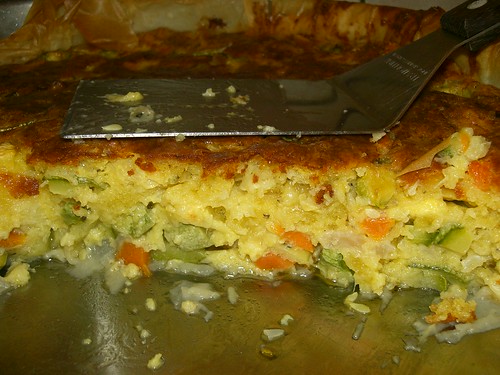
My good friend in New Zealand sent me a recipe for a simple self-crusting quiche using zucchini - another marvellous way to get rid of it - and carrot. I did Greekify it a little, by cooking the vegetables in the olive oil before mixing them into the quiche batter, and adding some filo pastry at the base of the tin; having never made a quiche before, I was worried it would stick to the bottom of the baking tray.

You need:
3 large courgettes, cubed
3 large carrots, cubed
½ onion, chopped finely
1 cup flour
2 teaspoons baking powder
1 cup grated cheese (I used the infamous malaka)
¼ cup olive oil
4 lightly beaten eggs
1 teaspoon sweet basil (I substituted oregano; basil is not often used in Greek cooking)
salt and pepper
2 sheets of thin filo pastry (optional)

Place the vegetables into a bowl. (Saute them lightly, about five minutes, in the olive oil if you so wish, which I did.) Add everything else and mix everything well. Place into a buttered quiche dish. Because I've always been a little wary of food sticking to the pan, I used two sheets of filo pastry (brushed in between with olive oil) to line the oven dish. Cook in a moderate oven (180°C) for about 50 minutes or until it is cooked - when the top is well browned and the batter can be sliced.

vegetable quiche

This quiche was so good, so simple, so healthy, that I wanted to eat the whole tin. It goes really well on its own because it is so filling, but I can imagine how nice it would taste with a spicy sausage. We had it with a simple tomato salad. Bon Appétit! And for a slightly different version of Greek-inspired courgette quiche, check out Peter's kourkouto.

This is my entry for Weekend Herb Blogging, hosted by Joanna.

©All Rights Reserved/Organically cooked. No part of this blog may be reproduced and/or copied by any means without prior consent from Maria Verivaki.
Friday, 20 August 2010

I don't do greens (Όχι πράσινα για μένα)

My son reminds me every now and then, when I offer him a piece of garden fresh cucumber that has been placed in the fridge and is more refreshing than a glass of water on a hot day, or a serving of freshly prepared horta or salad, or a vegetarian zucchini pattie, that he doesn't do greens, or reds, or purples, or yellows for that matter, because when it comes to fruit and vegetables, he is a picky eater. He generally likes his food white: plain servings of rice, bread, pasta and potatoes are his favorite meals, with olive oil and cheese his favorite condiments. Coloured food reminds him of the marker pens he uses when he does drawings. He claims that vegetables have been artificially coloured; nature's colours are more representative of true colour than any hi-tech graphics.

The other day, I was doing some creative cookery for a friend. I recycled some of my old recipes to make some cupcakes. I got the idea of using different cake batters to create an interesting effect, both visually and taste-wise, from some 'hamburger' cupcakes which I had seen on the web. The cupcakes I wanted to make for my friend had to conform to a number of features:
  • they must be easy to make
  • they must contain natural colouring agents
  • they must contain ingredients known in Greek cooking
  • they can be promoted as 'healthy'
  • they must be visually different from the average cupcake
I came up with the idea of using olive oil (a Greek ingredient) instead of margarine or butter, in a basic cupcake mixture (easy to make), using fruit and vegetables (healthy) to give flavour and colour (natural), with the use of layering cake batters to make them visually different.

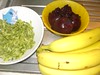
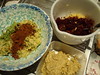
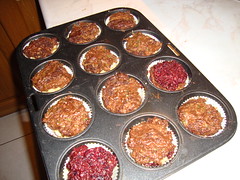
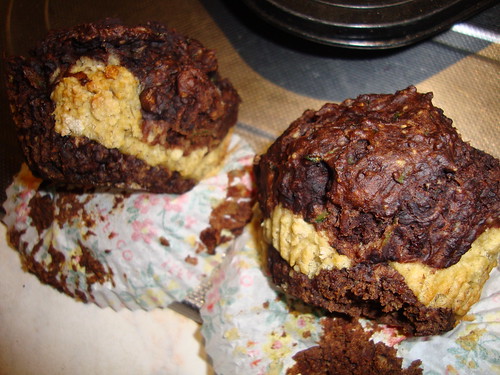
The cupcakes turned out quite dense and filling: for this reason, when I perfect the recipe, I will make them in smaller patty cases. The visual appearance of the cupcake was supposed to show three different coloured layers, but this didn't work out for me, even though the three different cake batters were all made from different ingredients; before the batter was cooked, they each had their own distinct colour: red (cocoa and beetroot), yellow (banana) and brown (cocoa and zucchini).

CIMG9882 muffins for liz muffins for liz muffins for liz muffins for liz
I rarely cook these days without thinking about the health value of the food I will be preparing. Any mother will tell you how difficult it is to ensure that children are eating healthy meals, even if they do not eat outside the home environment, like my own children. A word of advice: don't let the kids watch you making these cupcakes. It's best to keep some things secret.
muffins for liz muffins for liz
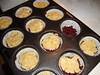
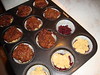
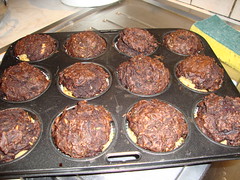
Now you see me, now you don't; the beetroot batter was clearly distinguishable from the zucchini batter before being cooked, but not afterwards - can you spot the beetroot cupcakes among the cooked ones?

I was disappointed: to create something as healthy as I desired, I realised that I would have to risk reducing the amount of cocoa in the vegetable mixtures, so that the colours of the vegetables would be more visible. Apart from the few green shavings of zucchini on the top of the cupcakes that did not manage to remain camouflaged by the cocoa powder, the cooked beetroot and zucchini batters were not distinguishable to the untrained eye.

muffins for liz
Fruit and vegetable cupcakes: the bottom layer has beetroot and cocoa, the middle layer contains banana, and the top layer has zucchini and cocoa.

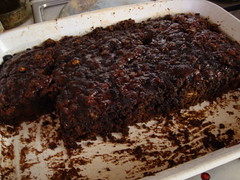
I ended up with a small amount of grated zucchini and beetroot, left over from the different cake batters, so I made another 'chocolate' cake, adding both vegetables to the same batter. From the visual cupcake experience, I decided that there will be little difference in the taste if I threw the beetroot and zucchini mixtures into the same cake batter.

I was right. This cake proved immensely popular this summer with my "I don't do greens" man.

cocoa vegetable cake i dont do greens
"I don't do greens," he insisted. "I know," I assured him.

This kind of cake mixture gives a rather dense batter, using only two eggs. The grated vegetables make it heavier than other cakes. By controlling the amount of baking soda/powder used, the cake will rise accordingly - less for cupcakes, more for a cake. This is important if you don't want to create an overspill effect in the paper patty cases, to give a more professional look to your cupcakes. My only problem with the taste is that this kind of cake does not turn out very sweet; I didn't use more than the stated sugar amount for my chocolate zucchini cake.

Most people will complain that the cake tastes more like a chocolate bread than a cake. This is why this kind of cake makes a good breakfast meal; a piece of cake with a glass of milk or a cup of coffee will keep you going all morning. To make it a little healthier, I added a cup of muesli (which I renamed 'cornflakes' to the children) to the batter, making this cake a truly healthy breakfast meal. This cake replaced the usual 'cocopops in milk' bowl; how many kids do you know that get up in the morning and have a serving of beetroot, zucchini and muesli mixed into their bread?!

If the cake is going to be served as part of an afternoon tea or dessert, it needs to be accompanied by a scoop of vanilla ice-cream or a syrup. I topped it with a chocolate syrup made in the same way (without adding the egg yolks) as for my chocolate boiled cake (hence the slightly glazed look on the top of the cake).

©All Rights Reserved/Organically cooked. No part of this blog may be reproduced and/or copied by any means without prior consent from Maria Verivaki.
Saturday, 25 July 2009

Sfouggato (Σφουγγάτο)

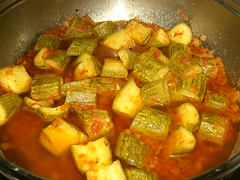
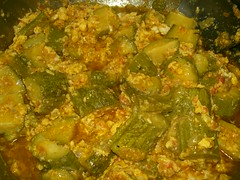
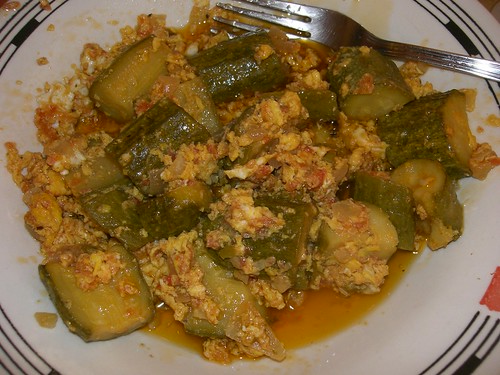
Sfouggato is a simple one-pot summer dish using eggs and garden vegetables. The word 'sfouggato' is derived from the same word for 'sponge'; the dish sometimes turns out like an omelette, while other times it comes out looking like scrambled eggs, depending on the amount of liquid the final dish contains. This dish also goes by other names, like strapatsada (which means something like 'distorted') or kayana, in various parts of Greece. In Hania, courgettes are usually added to it.
sfouggato kayana strapatsada sfouggato kayana strapatsada
This dish requires little cooking time, and it can also be cooked in two installments. Once the zucchini are done, you can turn off the cooker and come back to add the eggs when you are ready to serve the meal, as this dish tastes its best when served freshly made.

For enough to serve two people, you need:
1/2 cup olive oil (don't be sparing here, you will regret it)
400-500g of small zucchini (they are more tender and cook more quickly)
1 medium onion, finely chopped
1-2 cloves of garlic, finely chopped
2 medium tomatoes, freshly grated
sea salt, freshly ground pepper and oregano
3-4 eggs, yolks and whites beaten together lightly

Wash the zucchini (to make sure they don't have any grit stuck on them) and chop them into large cubes (or small chunks, if the zucchini have almost turned into marrow). Heat the oil in a wide shallow saucepan and saute the onion and garlic. Add the zucchini and coat them with oil. Turn down the heat, add the tomato and seasonings, cover the saucepan and let the zucchini cook to your liking. (Some people prefer them crunchy and underdone, others like them soft.) When the zucchini are ready, add the beaten eggs, but don't stir. When the egg starts cooking (it will start to set), begin to mix it into the sauce, in light folds so that it doesn't turn into a soup, but comes out looking like scrambled eggs.

sfouggato kayana strapatsada
This dish may look a little messy (in Greek, we say something is 'strapatsariasmeno' when it's been distorted, hence 'strapatsada'), but it is pure ambrosia.

Sfouggato really needs to be made with fresh high-quality ingredients. The eggs really do need to be free-range, otherwise they won't have the right colour, they may smell 'eggy' (ie suplphuric) and all this will contribute to the dish smelling off-putting. The tomatoes can't be underripe or green; they need to exude summer in their appearance and aroma. This dish can also be made with fresh aubergine (before its interior becomes too seedy).

Don't forget to have some sourdough bread handy to mop up the sauce (forget about calories when enjoying this dish) and some wine (in Crete, most people have access to home-brewed rosé wine).

In the winter, the same dish can be made with zucchini-like vegetables that keep their shape, such as asparagus. It can even be made simply with onions, like the dish featured recently on the Hungry Bear.

©All Rights Reserved/Organically cooked. No part of this blog may be reproduced and/or copied by any means without prior consent from Maria Verivaki.