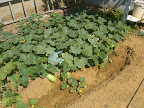
Sunday, 5 August 2007

Tsigariasto (Τσιγαριαστό κρέας - stewed meat)

Use spring lamb or goat for this dish. Chop the meat roughly into large chunks. Wash thoroughly to rid meat of bone shards. Heat a large deep pot with a 0.5cm layer of olive oil. Add some coarsely chopped onion and garlic to your liking, and cook till soft. Then turn down the heat, add the meat and cook on both sides till it loses its red colour (about 10 minutes per side). Pour a glass of wine over the meat, season with salt, oregano and pepper, and cover the pot with a lid. Turn the heat to low. Cook for at least an hour.Take the lid off about every twenty minutes to check if it needs any liquid. If it looks dry, or is sticking to the bottom of the pot, add only enough water to stop it from sticking. The meat is done when it is very, very tender.

Due to its simplicity, this meat makes a good accompaniment to any vegetable dish.

©
All Rights Reserved/Organically cooked. No part of this blog may be reproduced and/or copied by any means without prior consent from Maria Verivaki.

MORE MEAT RECIPES:

Avgolemono stew
Sunday roast
Chicken
Rabbit/Hare
Mince
Curried pork chops
Stir-fry beef
Souvlaki
Yiouvetsi
Pan-fried pork chops

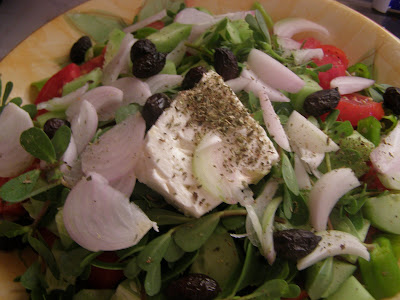
Greek tomato salad (Χωριάτικη σαλάτα - peasant (village) salad)


Greek salad can have all sorts of ingredients added to it these days, but I like to remember the most traditional, which add up to the easy-to-remember number 10. This is my 10-things Greek salad.

Wash two tomatoes and chop into segments. Peel a cucumber and chop into chunky slices. Peel and coarsely slice a big onion. De-seed and chop 4-5 stalk peppers or a bell pepper into rounds. Pour a little vinegar over the ingredients. Add a little salt. Toss in a few olives. Cut a big slice of feta cheese and place it on top of the other ingredients. Sprinkle some oregano on the feta cheese. Pour some olive oil over all the ingredients. Don't mix the salad until it is time to serve it. Serve with traditional village bread. For lenten food, omit the cheese.

A delicious alternative way to serve this salad and make a main meal out of it is to add boiled potatoes cut into chunks and chopped-up boiled eggs.

Pick o' the bunch, as you can see! The cucumbers are a locally grown variety, known as atzouri instead of aggouri, the common Greek word for cucumber. They are firmer and less juicy than the common variety of cucumber.

If you want to turn this into a Cretan village salad, just add mizithra (our local variety of ricotta cheese) to it instead of feta cheese, and sprinkle a few pieces of crumbled dakos rusk over it. Now it becomes an 11-things salad.

©All Rights Reserved/Organically cooked. No part of this blog may be reproduced and/or copied by any means without prior consent from Maria Verivaki.

MORE SALADS
:
Cabbage salad
Lettuce salad
Summer horta
Winter horta
Salad advice
Beetroot salad

Kalitsounia (Κρητικά καλιτσούνια καλοκαιρινά - Cretan summe pasties)

THERE IS AN UPDATED SECTION ON KALITSOUNIA: CLICK THIS LINK FOR THE NEWER POST, which is based on winter kalitsounia.

These delicious kalitsounia (pasties) can be made any time of the year with whatever leafy greens are in season. In the winter, I prefer them with spinach and wild herbs. Now that it's summer, I make them with zucchini and vlita. Here is a recipe for summer pasties. For the winter version, click here.

Grate a large courgette and a large onion together, salt them well and leave in a colander for about an hour to drain away their liquid. Hand-strain them after the hour is passed. Coarsely chop a bunch of well-washed vlita, finely chop a few sprigs of mint, and add them to the vegetables. Then add 100g of grated yellow cheese and 150g of mizithra (the local Cretan variety of ricotta-style cottage cheese). Sprinkle some freshly ground pepper and a fistful of semolina into the mixture. Mix thoroughly. You can also add other herbs to this mixture, such as parsley or dill, in small quantities, so as not to affect the overall taste.
Have the filo (phyllo) pastry ready to cut. I never make the pastry myself; we can buy freshly made thick-filo pastry in Hania, even though most women usually make it themselves using a lasagne maker (I've got one of those, but I still buy the stuff; no flour or mess to clean up afterwards; see how Peter made it himself). Cut the pastry into rounds or squares. Fill and seal them. Lay them on a well-oiled oven sheet, brush them with beaten egg and sprinkle them with sesame seeds. Cook them in a hot oven (190-200C) for about 25-30 minutes.
The pasties can be frozen successfully before the egg-and-sesame stage. They do not need to be defrosted before being cooked. The pasties can also be fried (fresh or frozen) in olive oil in a shallow frying pan, in which case you do not add egg and sesame seed. Instead of cutting the pastry, a pita (pie) can be made instead: Lay a sheet of pastry on the bottom of an oiled baking tray, pour in the mixture to no more than 0.75cm in thickness, close the pie with the edges of the pastry sheet that lie over the tray OR use another pastry sheet. At this stage, the pie can be frozen, or cooked in the same way as the pasties. When you want to cook a frozen pie, don't defrost it completely, otherwise it will go mushy. Brush it with egg and sprinkle some sesame over it as is, and cook till done in the oven.

©All Rights Reserved/Organically cooked. No part of this blog may be reproduced and/or copied by any means without prior consent from Maria Verivaki.

MORE WILD GREENS RECIPES:
Kalitsounia fried
Kalitsounia in the oven
Wild asparagus
Hortopita (spanakopita)
Horta in winter
Horta in summer
Sorrel
Swiss chard (silverbeet)
Eggs with mustard greens
Mountain tea

PASTRY RECIPES:
Kalitsounia fried
Easter kalitsounia
Prasopita
Kalitsounia in the oven
Marathopites
Hortopita (spanakopita)
Tiropitakia
Sfakianes pites
Summer kalitsounia
Spiral pie

Saturday, 4 August 2007

Horta (Καλοκαιρινά χόρτα βλήτα και στίφνο - summer greens)

Horta are a very important part of the Cretan diet in summer (see winter horta for an explanation of the word). We have loads of horta in the garden right throughout the summer, so we often make this green salad. Wash the vlita (leafy amaranth) and stifno (otherwise known as deadly nightshade) meticulously. Keep separate. Boil the vlita for about half an hour (till stalks are soft when pinched). Boil the stifno for about an hour (till stalks are soft when pinched). Boil the potatoes and courgettes separately to your liking.When all is done, pile the amount of your choice of each ingredient onto a soup plate. Add lemon juice, olive oil and salt over the vegetables. Mix in well. The procedure is the same for cooking any wild leafy greens like tsohos (sow thistle) and radikia (chicory, endive or dandelion leaves), which are in season in the winter. Find out more about these wild greens in the age. My absolute favorite winter green is stamnagathi (Chicorum spinosa), which is a kind of chicory that grows among thorns. Serve with toasted village bread, cheese, boiled eggs and any BBQ meat or fried fish. I also use vlita in making hortopites (spanakopita or mixed greens pie) when spinach isn't available. Although I've never done it myself, mixed horta can be parboiled, drained well of all liquids, and frozen for later use, They need to be defrosted in boiling water.

©All Rights Reserved/Organically cooked. No part of this blog may be reproduced and/or copied by any means without prior consent from Maria Verivaki.

MORE WILD GREENS RECIPES:
Kalitsounia fried
Kalitsounia in the oven
Marathopites
Spiral pie
Hortopita (spanakopita)
Stamnagathi
Sorrel
Swiss chard (silverbeet)
Eggs with mustard greens
Mountain tea
Octopus stew
Wild asparagus

MORE SALADS:
Cabbage salad
Lettuce salad
Winter horta
Salad advice
Greek village salad
Cretan salad

Beetroot salad

Eggplant (aubergine) dip (Μελιτζανοσαλάτα )

Eggplant dip is very much like peanut butter: it can take one of three forms - the plain, the extra-smooth and the crunchy versions. Make sure you use unblemished purple eggplants. White eggplants are too sweet for this dish.

Plain melitzanosalata:
Take two or three large purple eggplants and pierce them all over with a fork. Char them in the oven till they are soft and slightly burnt. Take them out of the oven with a fork, and hold them under cold running water while you peel and discard the skins. Alternatively, wait until they have cooled, and scoop out the flesh. Puree the flesh in a mixer with 2-3 cloves of garlic, up to 1/2 cup of olive oil and some salt, pepper, cumin and lemon juice to taste.

Extra-smooth melitzanosalata:
To the recipe above, add some Greek strained yoghurt. Add less than 50g to start with, and adjust for taste. The Middle Eastern version of melitzanosalata also includes 1 large tablespoon of tahini for an extra smooth texture.

Extra-crunchy melitzanosalata:
To the recipe above, add approximately 100g of finely ground walnuts. Adjust the amount according to taste, but don't add too much - you want a savoury, not sweet dip!

Serve with carrot, cucumber and celery sticks, fresh long green stalk peppers, toasted bread fingers, and other savoury snacks and crunchy vegetables that go with dip. Melitzanosalata can be made ahead of time, but it is susceptible to browning, in the same way as guacamole. Cover it with plastic wrap and keep it in the fridge till it is time to serve. This dip makes a healthier alternative to tzatziki, which is rather high in calories when made with full-fat Greek strained yoghurt.

©All Rights Reserved/Organically cooked. No part of this blog may be reproduced and/or copied by any means without prior consent from Maria Verivaki.


MORE AUBERGINE (EGGPLANT) RECIPES:
Papoutsakia
Moussaka
Dog food
Eggplant parmesan
Pastitsio
Spaghetti bolognaise
Yemista in the oven
Yemista in the pot
Eggplant pickle
Freezing aubergine

Friday, 3 August 2007

Our summer garden (Ο καλακαιρινός κήπος)

This was our summer garden in 2007. Click here to see our 2008 garden.

COURGETTE (top left hand corner in photo)

courgette vlita and cheese pie (can be frozen uncooked)
boiled vlita, stifno, courgettes and new potatoes
courgette fritters
courgette patties
courgettes, string beans, potatoes and haricot beans stewed in tomato sauce courgette minced into mincemeat
courgette, potato and Cretan cottage cheese pie (can be frozen uncooked)


AUBERGINE
aubergine fritters
aubergine dip
baked aubergine slices
moussaka (can be frozen cooked)
stuffed aubergines with mince (can be frozen uncooked)
stuffed aubergines with rice (frozen as shells)


STIFNO I remember my mother gathering this (also known as deadly nightshade) in Pirie St park. It is eaten in Turkey, too. The weed growing to the far right of the stifno is purslane, which we know as glistrida in Crete. The small plant in the middle of the stifno and glistrida is a late-growing dandelion.


PEPPER
10-things salad (tomato, pepper, onion, cucumber, olives, feta, olive oil, vinegar, salt, oregano)
stuffed bell peppers with rice


VLITA The Maori of New Zealand call wild greens such as this one puha. It is also known as amaranth.


TOMATO (1-month and 3-month-old) stuffed tomatoes with rice (can be frozen as shells)
fried green tomatoes, salad

tomato puree (can be frozen alone, or with parsely, mint, onion, oregano, cumin, salt and pepper for stuffed vegetables with rice)


CUCUMBER

10-things salad
tzatziki

©All Rights Reserved/Organically cooked. No part of this blog may be reproduced and/or copied by any means without prior consent from Maria Verivaki.

See also:
A winter garden
An autumn garden
A day in the field
The rape of the countryside

An autumn garden
Table olives