Showing posts with label PANCAKE. Show all posts

Wednesday, 4 April 2012

Dutch pancakes - poffertjes (Ολλανδέζικες τηγανίτες)

Comfort food - we all need it at this time of the year.  After reading this post about Amsterdam's culinary delights, I was very tempted to make the pancakes shown in one of the photos. Although strawberries aren't the traditional way to eat these pancakes, now that local ones are back in stock, coupled with the pleasant spring weather we've been having, they seemed a nice way to top these little pancakes and make them look like an exquisite dessert offering from a posh restaurant. Funny I should combine strawberries with this Dutch sweet - when strawberries are not in saeson in Hania, they come from Holland and they sell at around 12 euro per kilo. I don't buy them, naturally, but since they are available throughout the winter in the supermarket, somebody else is obviously buying them.

Poffertjes: icing sugar is the norm in Holland with a dab of butter which melts with sugar; this is a little difficult to achieve when you don't use butter in your cooking. Cretan sheep's milk butter is probably unsuitable for use in this way (it also has a meaty smell to it).

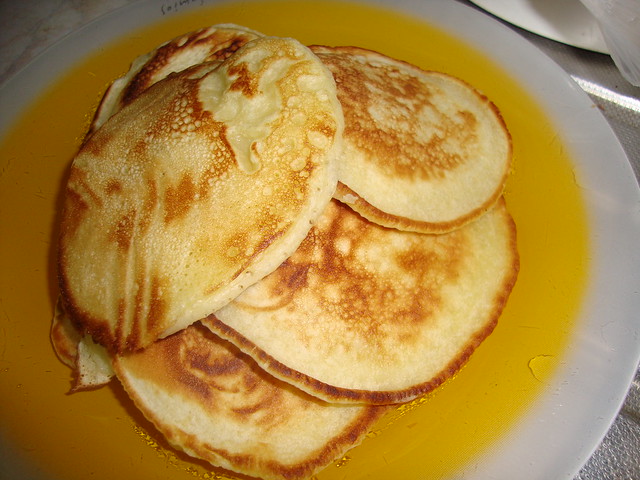
Some recipes for poffertjes use egg while others don't. Yeast is used to make them puffy. They are also cooked in a special pan. I didn't have one of these, so I simply dropped a tablespoon of batter into a pan with olive oil and turned the poffertjes with a fork.. I preferred the blander taste of icing sugar sprinkled over them, but my children decided to top their portions with runny Cretan thyme honey. They are used to the Greek way of eating fried dough, with honey-flavoured syrup. I particularly liked the yeasty aroma of these pancakes, which are quite unlike the NZ-style pancakes I usually make, with baking powder.


The basic recipes on the web for poffertjes don't use sugar in them, so I imagine these can also be eaten as savoury snacks with a cheesy topping. I wonder how they serve them in Holland. Maybe I will have a chance to find out soon.


UPDATE: While holidaying in Holland, I bought a poffertjes pan! 

©All Rights Reserved/Organically cooked. No part of this blog may be reproduced and/or copied by any means without prior consent from Maria Verivaki.

Monday, 5 December 2011

Pancakes (Κρέπες)

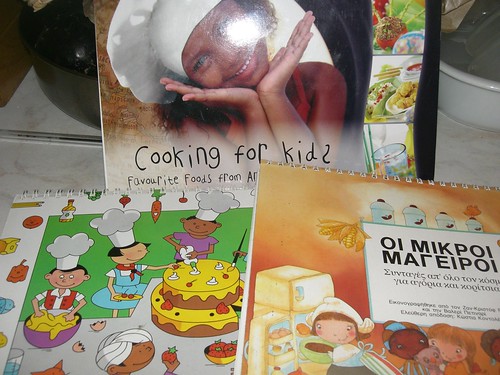
unicef children recipe booksThere are common themes recurrent in my teaching work, which also constantly get attention in the mass media, such as education, pollution, climate change and poverty to name a few. Most Greek children know about UNICEF, and will have taken part in some of their fundraising ventures. Before I became a mother, I was fascinated by UNICEF's range of educational toys and books, and often bought products they sold, even though I didn't have a family of my own, because I could turn them into interesting projects for discussion in an English class. These books ended up becoming a part of my children's book collections, books which I mainly bought at a time when I liked the idea of cooking for multitudes, but did not have any multitudes to feed.

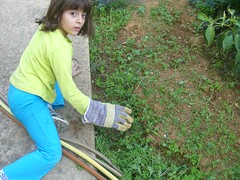
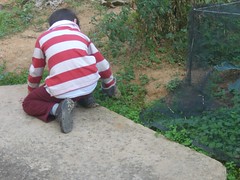
It's a very satisfying feeling when children show an interest in what their parents are doing around the house. No doubt, many parents will agree with me that when children see their parents doing something constructive, creative and interesting, they will happily relinquish their toys, cartoons and games, and ask to join in the 'fun', using 'adult toys'. This is slightly perturbing when they want to hold or use dangerous objects, such as clippers in the garden or knives in the kitchen. They need to be watched the whole time, but it is worth the effort. A rainy Saturday morning is better spent making biscuit dough than watching cartoons the whole day.

garden gnome garden gnome
I think the gloves attracted them more than the weeding...

Since my children discovered these UNICEF recipe books on the bookshelves, they often ask me to let them make something that they (think they will) like out of them.

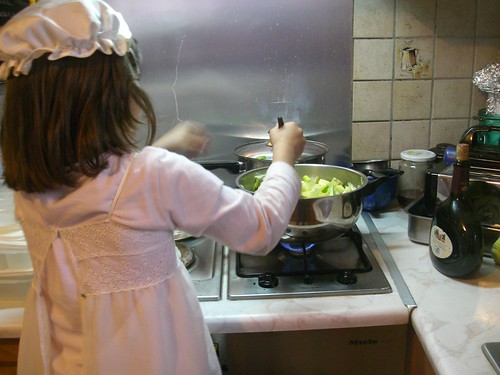
la petite chef soup
My daughter likes to dress the part, but I notice she also has culinary flair.

la petite chef pizza la petite chef crepe

The recipes are organised by country, with a diagrammatic account of the ingredients required, with pictures accompanying the instructions. Each recipe is given an origin. The recipes are simple, while most require minimal cooking. The children usually choose to make chocolate sweets, but there are many savoury recipes included too, using locally grown vegetables; I also encourage the children to help me make the Greek dishes, for obvious reasons. I've made a number of dishes from these books together with the children (the countries named below are given as the origin of the recipe included in the books). Sometimes it convinces them to try the finished meal (eg aubergine dip); other times, they simply enjoyed the process of making the finished product:
  • guacomole (Mexico)
  • aubergine dip (Iran)
  • roast peppers (Greece)
  • hamburger (Canada)
  • brownies (USA)
  • chocolate biscuit balls (UK)
  • 'surprise' cake (Yugoslavia - some of these books are quite old!)
  • pancake fritters (Holland)
  • walnut crepes (Hungary)
  • chocolate tart (Switzerland)
  • hot chocolate (Holland)
By far, their favorite recipe ios the one given for walnut crepes from Hungary - but without the walnuts (since they're cooking, it's their choice)! The printed recipe contained a mistake, which I felt I had to explain to the children by reminding them that we live in the internet age, and can check any information for its validity. But the process of cooking is still fun, and the experience gained is worth the mistakes made along the way.


To make 10 large pancakes, you need:
225g flour
400 ml milk (the initial recipe said 40ml - clearly a typo!)
2 tablespoons water
3 eggs
100 grams sugar
butter/olive oil for greasing the frying pan

My daughter once again surprised me; after cooking all the pancakes herself, she presented me with the tolled up pancakes spread with chocolate and cut in bite-sized pieces.

Mix together the flour, milk, water, eggs, and sugar. Let the mixture rest for an hour. Make sure your mixture is runny. If it isn't, mix in some more milk to make a runny batter. Melt some butter (I use about a teaspoon of olive oil) in a frying pan, and pour two tablespoons of mixture into the pan. Let it spread all over the pan. Cook the pancakes, one by one, by melting a dab of butter in a small pan, and pouring two large tablespoons of the runny egg mixture into the pan. They need a high heat and constant watching over the element so as not to burn. Cook them on both sides (kids love flipping pancakes), take them out of the pan and lay them on a plate, one stacked on top of the other.

We like to serve them with chocolate spread, honey or jam. Pancakes are a simple fun way to get everyone involved in cooking. They are also a winning meal - no one says no to pancakes.
©All Rights Reserved/Organically cooked. No part of this blog may be reproduced and/or copied by any means without prior consent from Maria Verivaki.

Tuesday, 30 November 2010

Pikelets (Τηγανίτες Νέας Ζηλανδίας)

I make these often enough, I'm surprised I haven't presented them to you before. 

One late autumn day when I wasn't at work and the weather had turned quite cold, I decided to make some of my favorite soup, leek and potato potage. As only half the family likes it very much, and another quarter likes it only a little bit (while the remaining quarter refuses to even taste it), there had to be another meal available to them, so I cooked up a boureki which I had prepared and frozen from the summer. In that way, there was something for everyone to pick from for lunch, and there would be something leftover for another meal, kind of like a 2-for-the-price-of-1 deal.

In the early evening, just before my husband took my son to basketball practice, he asked me how many souvlakia he should buy after the session, which ended at 9pm.

"None," I called out to him. "I'm making τηγανίτες." I had already prepared the pikelet batter, and would wait until just before my basketballer was due home to cook them. Pikelets are the down-under take on pancakes. They are smaller and thicker than regular pancakes. They make a tasty sweet supper with some tea or milk.

Later in the evening, I made the pikelets and put them in the oven to keep them warm. My daughter could smell their aroma wafting in the air, which worked up her appetite. She told me she was feeling hungry, and asked me to let her have her share of the pikelets a little earlier than the others. I despise it when one of the family members won't hold out for a few more minutes until another family member comes home, so that there will be at least three (not two) of us having a meal at the same time. In our house, with a great amount of conscious effort, we've managed to hold onto one of the last bastions of family life in this day and age, which is why I don't want to break this tradition; in any case, it will automatically break off once the children fly away from the family nest. It's one more way of making me feel unique in the faster-paced modern globalised world we live in.

"Hold on a few more minutes, sweetie," I said to her, "they'll be home very soon."

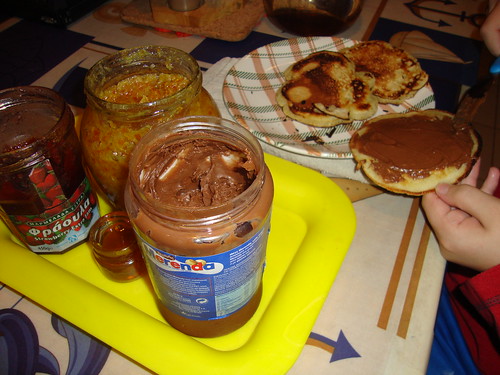
She went back to watching a DVD, but pretty soon, she dropped off to sleep, which made me feel even more guilty. I had to wake her up (not a nice scene at all). I invited her into the kitchen to have her pikelets, while I warmed up some soup for my own supper, just to keep her company. I brought out the tray with the condiments (jam, honey and Merenda chocolate spread), the plates and the butter knives, and laid the table to have it ready for the others' arrival. As we ate, we waited...

... and waited...

... and waited. I kept looking out the window, hoping to see the car lights come gliding up the hilly road.

"Aren't they supposed to be home by now?" my daughter asked me. "They're probably eating souvlakia, Mum." I had the same idea in my mind about my missing men; great minds think alike. "Will they bring me one too?" she asked me.

"But you've just had your supper!" I reminded her. "Surely there's no more room for anything esle  in there, is there?" I added, something I often say to remind them that eating too much has repercussions.

"If they have one, I want one too," she replied, all in the name of fairness.

We had practically finished our dinner when Dad came home with son, carrying with him the familiar plastic bag with the local souvlaki shop's logo. He must have had a craving for some umami, a feeling I can fully understand, because we all crave junkfood every now and then, especially when we over-eat healthy vegetarian meals too often. While everyone got stuck into their souvlaki, I got up to take away the pikelets and condiments, thinking that they would make a nice breakfast the next day.  

"What are you doing, Mum?" asked my son. he had other ideas for the pikelets. "That's dessert!"

pikelets
Pikelets are smaller and thicker than pancakes.

"Surely you won't eat everything tonight?" I fired away my habitual question. Without the souvlakia, the pikelets would have formed the main evening meal for that night, together with a cup of warm milk.

"I think I'll manage," he said.

"And I'll eat one more pikelet after my souvlaki, just so I can have dessert, too," said my daughter, who'd already had three before the souvlakia arrived.

Growing children have growing appetites; my saucepans and pots have suddenly grown overnight.

*** *** ***

Pikelets are easy to make. They're unusual in Cretan cuisine, as this kind of sweet is usually syrup drenched and deep fried. The only trick is to ensure that the heat of your pan is at the right temperature to make sure that your pikelets cook right through as they are browned on both sides. I make my pikelets according to a standard recipe, as given, in my old copy of the iconic Edmonds Cookery Book, which is often the average Kiwi's first guide to basic Kiwi meals and food preparation.

pikelets
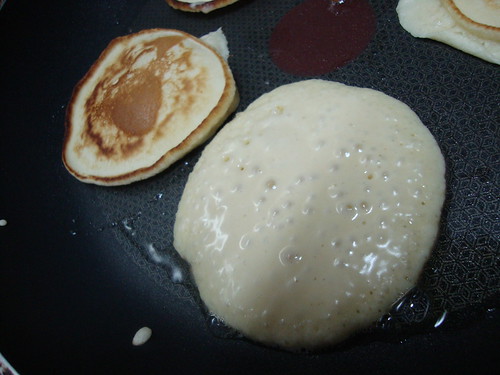
You will know that the pikelets are ready to be turned over when you see bubbles forming on the top of the uncooked batter.

You need:
1 egg
1/4 cup sugar
3/4 cup milk (approximately)
1 cup flour
1 teaspoon baking powder
a pinch of salt
25g melted butter (optional; I always replace this with olive oil)

DSC02188
Pikelets are traditionally topped with jam and cream. But neither are as popular in my house as honey and chocolate spread.

Beat the egg and sugar until thick and add with the milk to the sifted flour, salt and baking powder. Lastly add the melted butter, if using. Mix until smooth. You can let the batter rest at this point and re-mix it when you are ready to cook the pikelets. Cook in spoonfuls on a hot saucepan, turning over once, to brown on both sides.

If there are any left over in the evening, have them for breakfast the next day.

©All Rights Reserved/Organically cooked. No part of this blog may be reproduced and/or copied by any means without prior consent from Maria Verivaki.

Thursday, 24 June 2010

Oreilletes (Γαλλικά ξεροτίγανα)

Our family evening snack food consists of the same kinds of food day in, day out: kalitsounia, dakos, sandwiches, home-made pizza, yoghurt and/or fruit in cooler weather,and the quintessential Greek toasted bread dipped in olive oil. Recently they complained to me that they were bored of eating the same old thing. I found this simple recipe on Alison Parker's site.

Pastry and dough making, like bread, are not really my cup of tea. They take time, and they also create a mess. I usually buy my pastry needs from a specialist shop that makes traditional Greek pastry when I make pies and pasties. I have to be in the mood to make a dough from scratch, like I was recently, when I read about Alison's oreillettes.

oreillettes
Oreillettes

Oreilletes, a kind of sweet pancake, are made by frying small rounds of thinly rolled-out pastry. Alison tells us that they are a French recipe, often made for Mardi Gras. The pastry can be made in the morning (or at night) and left to rest, until you are ready to fry it in the afternoon as a snack (or the next morning for breakfast), a very handy technique for the rushed home cook who doesn't always have the time to prepare and cook a meal in one go, as well as clean up the floury/oily mess afterwards.

oreillettes oreillettes
Making oreillettes

Oreillettes resemble, to a certain extent, the Cretan xerotigano, a fried sweet pastry dough, cooked in rounds, and then dipped in a honey-based syrup.

wedding dessert xerotigano
Xerotigano, a long narrow strip of thinly rolled out pastry, twirled around a stick as it is dipped into boiling hot olive oil; after it is cooked, it is left to cool and then dipped in a honey-based syrup. It is always served at weddings and baptisms in Hania.

In fact, xerotigana, like avgokalamara, beignets and bugnes (also known as angels' wings), are very similar to each other, despite being made by different cultures for different reasons. Sweet fried pastry (similar to funnel cake) is made in dome form or other in most cultures around the world, and is often topped with confectioner's sugar or dipped in syrup (like the Cretan xerotigana). This is why I decided to dip my oreillettes in syrup instead of dusting them with the more traditional confectioner's sugar. Syrup-dipped fried pastry falls within the sweets range that my family is already used to eating, making the French oreillettes seem less of a novelty and more of a twist to a more familiar favorite (in this case, the Cretan xerotigana). I used the leftover syrup from some tangerine spoon sweets that we had bought in Pelion during our recent summer holiday.

sushi
The taste, appearance, ingredients and method of preparation of sushi falls very far away from the Mediterranean food spectrum.

In fact, whenever my creative culinary skills produce international cuisine that falls within the Mediterranean food spectrum, I can safely bet that I can keep the family happy, even if they can't put a name to the food I present to them. But when the appearance, taste, ingredients and method of preparation/cooking fall well beyond the common pool of Mediterranean foods shared by the cultures that inhabit this body of water, then I know that I will be dining solo - as I recently did when I made sushi, using smoked salmon and sheets of seaweed: although the appearance could pass off as a Japanese kind of dolmadaki, the taste of the seaweed, coupled with the appearance of the filling did not convince my family that they would bear any resemblance to a vine-leaf rice parcel...

©All Rights Reserved/Organically cooked. No part of this blog may be reproduced and/or copied by any means without prior consent from Maria Verivaki.

Sunday, 1 February 2009

Mizithropites - Sfakianes pites (Μυζηθρόπιτες - Σφακιανές Πίτες)

Making filo (phyllo) pastry has never been my forte. I don't really need to make it that often because I have my precious filo pastry maker working miracles for all my spanakopita, hortopita and kalitsounia needs:


But filo pastry doesn't work for marathopites, those sensually aromatic seamless fennel pies traditionally made in Hania with wild greens and a lot of fennel, my all-time favorite Greek pita. When I made some marathopites recently, I needed to make the pastry for them myself:

making cretan pastry making cretan pastry
Put some olive oil (no more than 1/3 of a cup) in a bowl, sprinkle a little salt, pour in a shot of tsikoudia, add a cup of water, and slowly mix in a kilo of all-purpose (or strong) flour to get a smooth ball of dough. This pastry can be used for all kinds of pies and pasties: spanakopita, hortopita, kalitsounia, marathopita, mizithropita, among others.
making cretan pastry
Let your pastry ball rest for about half an hour (at room temperature) before using it.

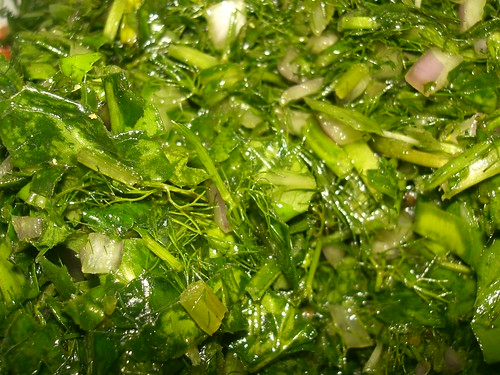
Meanwhile, I prepared the wild greens mixture. I love this sight:
wild greens for marathopites kalitsounia and cheese pasties.

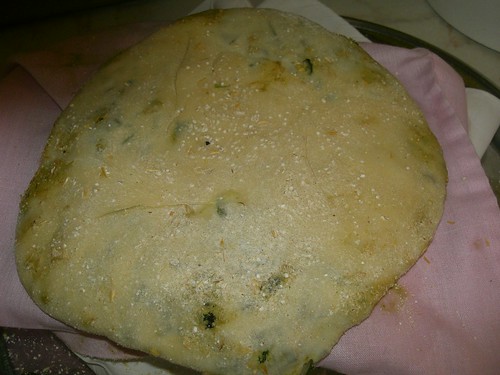
I made a few marathopites, which I piled one by one on top of each other, each layer separated by a cloth. I even managed to roll them out without their popping open and spilling out the filling:
seamless marathopita
I used white flour to make the dough and wholegrain to spread it for the marathopites. Wholegrain flour suits this kind of pie, which contains wild greens and pungent fennel. This savoury pita is made and cooked in exactly the same way as the mizithropita below.

The wild greens mixture ran out before the pastry. Not wanting to waste it, I decided to make some sweet cheese and honey pies, mizithropites as we call them here, otherwise known as Sfakianes pites (meaning "pies from Sfakia") because they have their origins in this part of Hania. These pites are famous all over the island. They are the best pies in the world. I know I also said that about marathopites; maybe I shoud clarify things a little: the best SAVOURY pies in the world are marathopites, while the best SWEET pies in the world are mizithropites.

sfakianes pites sfakianes pites

The pastry method for making marathopites and mizithropites is exactly the same. Shape small balls of dough the size of a lemon. If you're making marathopites, you'll be using a ladle full of greens mixture; if you're making mizithropites, shape the mizithra (similar to ricotta cheese) into balls the same size as the pastry. The cheese must not be too damp or runny. Mix in some semolina or flour to make it firmer. Don't add any more salt than what it originally contains.
sfakianes pites sfakianes pites

Roll out the dough into a small round. Place the filling (mizithra for sfakianes pites, greens for marathopites) into the centre of the pastry round, wrap it up pouch-like and punch the top of the 'pouch' down. You will end up with fat little rounds of dough that will now be spread out and turned into flat pies, filled with cheese or greens, with a seamless look to them. Everyone will be intrigued as to how the mixtures ended up in the pie, a bit like the ship in the bottle...
sfakianes pites

Start spreading out the filled pastry. Use flour to keep the pastry from sticking to your work surface and roll them out VERY LIGHTLY (I can't stress this) with a rolling pin or spread them with your hands. I prefer the rolling pin - can you see where my pastry burst open at the rim?
sfakianes pites after pastry making

Now you know why I don't like making my own pastry - my whole kitchen ends up resembling Alaska. Try clearing up the flour with a cloth; whatever you touch with it will also get coated in flour if it wasn't in the first place. Maybe a damp cloth is better; that will end up looking like sludge. The vacuum cleaner is the most efficient tool here...
sfakianes pites sfakianes pites

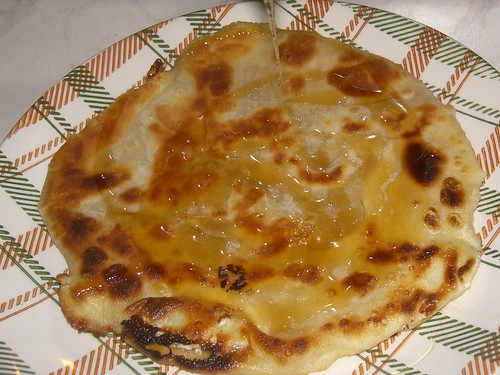
Marathopites and mizithropites can be frozen, one on top of each other, with plastic wrap (I use clean supermarket bags) between each layer. My marathopites went into the deep freeze, but we couldn't resist the mizithropites. They last up to a week in the fridge; you can have them for supper any night of the week. I made a batch of eight (before I ran out of mizithra). Heat up your largest frying pan or a skillet (they were originally cooked on something called a 'satsi' in Greece). Cook them on a hot LIGHTLY OILED pan (too much oil will fry rather than cook them) on both sides till done. When they're ready, pour a HUGE spoonful of honey over them, cut them into quarters and serve.
sfakianes pites


These pites are also made and cooked using the same technique in other parts of the southeast Mediterranean: have a look at Nihal's spinach borek and potato borek. Borek is a kind of Turkish pie. The word 'borek' is also used in Greece, but as Nihal notes for Turkish cuisine, Greek cuisine is not homogeneous: 'boureki' in Crete is quite different to 'boureki' in Northern Greece, although they both refer to some kind of 'pie'.

*** *** ***
I STILL have some dough left (and no mizithra or greens to fill them with). I must find a way to use it up; I'll just have to make some xerotigana...

©All Rights Reserved/Organically cooked. No part of this blog may be reproduced and/or copied by any means without prior consent from Maria Verivaki.

Wednesday, 5 March 2008

Snacks from New Zealand and Crete (Μικροφαγητά)

There are a couple of days in the week, when I am away from home all day. It's important on these days for everyone to find something to eat when they get home. You might say that cooking is not necessarily a woman's job alone. Given the forthcoming global Woman's Day (March 8), I may agree with you, but only for argument's sake. Ask a man to work all day, pick up the children from school, help them with their homework, and cook a meal on top of that; he'll probably cook eggs and chips or plain pasta with grated cheese on a daily basis. There are very few kalofagas types in Crete in the true sense; those who have found one should be very grateful, for they are few and far between. Women's rights activists may not like what I'm saying, but hearing the truth about an issue isn't always easy to digest. I don't actually work many hours outside the home, so it's only natural that the family expects me to provide the meals. I don't mind being expected to do this, I love working with food.

But today is going to be a rather difficult one. After dropping off the children at school, I have to run a couple of errands in town, which is close to my first teaching hour for the day (which starts at 11.30am): a private English lesson at a student's home. He is studying at university, and didn't manage to obtain an English proficiency certificate while he was a school student, so now, in his free time, he is preparing to take an English proficiency test, which he will use in conjunction with his computer engineering degree to make him more marketable for future employment. After that, I have a couple of hours to kill, before my next lesson is due: a three-hour advanced English skills class, with Masters' students from all over the Mediterranean at a European-funded research institute in Hania. These classes are held once or twice a week as a method to improve the students' writing skills, as they must write their Masters' thesis in English at the end of their studies. There will be hour to kill before the final pitstop: another three hours of English proficiency test preparation to high school students at a private language institute for children of all ages. Learning English is compulsory formt he third year of primary school in Greece. Only the basics are taught through the state system, and most children attend a private language institute to gain greater proficiency in the language. Fortunately, in Hania, English is regarded as a vital skill, due to tourism playing a central role in the survival of the island's economy. Without knowledge of a second (and all too often nowadays), third language, one's employment opportunities are greatly reduced.

Luckily, each lesson is located within 5-10 driving minutes away from the previous one, so I don't have to worry about road rage. I suppose you've been counting the number of hours I'll be working, and how many I'll be killing on the road or in an office waiting for my next lesson: I come home at 10.15pm.

In any case, my freezer is always well-stocked for these difficult days, but there are also some other alternatives to deal with this mini-crisis:
  1. Cook a meal on the previous night (which I have no recollection of; either I was too tired, or I was blogging...),
  2. Give them leftovers (the leftover pastitsio went into the children's school lunch; I doubt they would want to eat a third serving of pastitsio over a period of three days this week),
  3. Warn everyone that they have to provide their own meals today, and get them to promise to clean up afterwards (which of course will induce them to order home-delivered pizza or take-out souvlaki).
Neither one of these options suits me today; if anyone would like to enjoy some junk food, I should be entitled to enjoy it with them. Which leads me to the last option:
  • Prepare some healthy snacks for them to peck on all day.
I like this one best because I love snacks myself. Snack food is often associated with bad eating habits, hardly surprising since most snack food these days is bought, mass-produced, fatty, high-calorie junk food. On Monday night (my other long working day), in relation to an article on obesity, I held a discussion with the school students about their eating habits, and here's what I discovered about the group of ten children in the class:
  • only 1 eats crunchy raw vegetables,
  • only 1 student's parents refuse to provide other food if some members of the family are fussy eaters and refuse to eat the main meal provided,
  • 1 child sneaks out to the mini-market in his area to buy chips and chocolates when his parents are having a midday snooze,
  • 1 prefers to eat meat on a daily basis if she can get it,
  • most children said that they never ate fish or beans,
  • a few children refuse to eat any vegetables whatsoever.
On the day I conducted this little survey, not one of the the children in the evening classes had beans for lunch. A few had salads with mainly a spaghetti meal; only one ate green vegetables for lunch. There was a major football match on television that night; most said that they would be eating pizza, souvlaki or pasta for dinner. It is said that Crete is where the Mediterranean diet originated from, but it's obvious that it won't be survived by the Cretans themselves at this rate. It will have the same fate as the Olympic Games; they started and ended in Greece, whereas it took a foreigner's foresight to revive them outside of Greece.

Even though I make a conscious effort to practice what I preach, this is not to say that junk food does not come into our house at all: we keep a few cans of soft drink in the house for visitors (we usually use them past their sell-by date); there are also a couple of packets of potato chips in the pantry (I notice that I bring them out when I'm experiencing a psychological 'downer'; crisps really do make you feel better); we do have chocolate in the house (which I keep away from the sight range of the children, in the highest drawer of the fridge - chocolate melts easily in a sunny Cretan kitchen). When I go to the organic food shop in Hania (GAIA), as I pass the counter to pay for my purchases, I must necessarily pass the chocolate bars, muesli bars, biscuits, cakes, etc by the cash register. If the children are shopping with me, they always ask me if they are allowed to take one. Most times, I let them because they don't get this 'junk' (no matter how organic it may be, it is still junk food).


Today's' snacks are the traditional Cretan dakos salad and a New Zealand teatime favorite: corn fritters. They represent my ambivalent feelings towards cooking and providing meals for the family, a mix of traditional and liberal attitudes prevailing in this household concerning food and lifestyle. These snacks were prepared in a very quick amount of time. They may be kept at room temperature if they are going to be eaten on the same day. They'll be left out on the kitchen benchtop with a cloth covering to keep away UFO's, both animate and inanimate. The benchtop is the most obvious place for snacks, especially the area close to the biscuit tin. Next to the fresh cooked snacks, I will also leave a couple of apples and bananas, a bag of oranges from our trees in the village, and some dried fruits (raisins, almonds and banana chips). That's plenty for everyone to snack on throughout the afternoon. They may not even remember to ask for a glass of warm milk before bedtime, which they like to dunk semi-sweet cheap shop-bought biscuits. The children will be sleeping by the time I come home. If I'm lucky, there'll be some snacks left over for me to eat while I watch the third series of Desperate Housewives...

(9 hours later - 10.15pm)
When I arrive back home, I find that all the fruit has been remained untouched, exactly where I had left it. Next to it, there's an open packet of crisps, and I find another (empty) one in the rubbish bin, along with the packaging from a chocolate bar. A couple of paximadia and corn fritters are missing from the trays; there are also two shot glasses in the sink.
"Where did the chips come from?" I asked my husband.
"Nikos came round to prune the grapevines," he replied.
Oh well, more leftovers.

And if you can't get hold of Cretan rusk to make dakos, here's another healthy alternative: the good old cheese (Cretan gruyere - graviera) and crackers, a favorite of Wallace and Gromit, who we watch a lot of in my house; had we not encountered them on DVD, we wouldn't have given a toss for this old favorite. Now my children love them, too.

©All Rights Reserved/Organically cooked. No part of this blog may be reproduced and/or copied by any means without prior consent from Maria Verivaki.


MORE HEALTHY SNACKS:
Banana cake muffins
Banana lassi
Apple cake
Carrot cake muffins
Chocolate walnut pancakes
Kalitsounia
Ladenia pizza
Marathopites
Prasopita
Fruit crumble
Sfakianes pites
Spanakopita
Tiropitakia

Sunday, 11 November 2007

Freezer clearout (Ξεκαθάρισμα καταψύκτη - Τηγανίτες)


When the deep freeze is over-used, and in our house, so much of summer goodness is used to store winter nutrition, it does suffer from being defrosted infrequently. To speed things up, today's meals - starting from breakfast - were all concocted with a near-future freezer cleanout in mind. We started the day with frozen croissants for breakfasts, something I had bought on impulse from the supermarket, but would never buy again. On being cooked, the croissants were tasteless, and went hard almost as soon as they were cold. They needed 20 minutes cooking time, and as a treat, I cut them open and filled them with the Greek-brand Merenda chocolate-hazelnut cream (the well-known European equivalent of Nutella), which I noticed, had gone quite stiff at the bottom of the jar, a sign of its going bad. It's not just freezer foods that are forgotten about. Apart fromt he freezer, if you look into your larder, pantry, fridge, biscuit tin, breadbox and kitchen benchtop, where you might store little jars of various seasonings, as well as pickled peppers picked from your own garden, you'll find a number of items that need to be eaten or thrown out because they were not used before their expiry date, or they have taken on a stale appearance, making them completely unappetising.


For lunch, we enjoyed a "healthy" fry-up of food that would normally be classified as home-made fast food: stuff we buy from the supermarket to try out and forget to do so, lone frankfurters, stranded sausages, supermarket spring rolls (I won't be buying that brand again) and Cypriot meaty sausages (they were quite tasty), accompanied by a pan of fried potatoes. I added some stuffed aubergines (papoutsakia) that had strayed from their original tin, and pulped a couple of soft garden tomatoes with some olive oil to make a light sauce. The tin went into the oven. We washed this down with a couple of beers and a lettuce salad (from our own garden).


Dinner was more entertaining. I was clearing out the CD and DVD racks on my shelves - newspapers come these days with so much junk in them - when I came across a couple of UNICEF cookbooks for little chefs, and gave them to the kids. They found a recipe in one that showed them (pictorially) how to make chocolate-walnut pancakes (the book stated that the recipe came from Hungary). So they asked to cook it themselves! The pancakes cleared my fridge racks of cooking chocolate, butter and eggs, products whose expiry dates I don't always check on a regular basis, a good excuse to buy some fresh stuff!. To make the pancakes, you need to mix together 225g flour, 40 ml milk, 2 tablespoons water, 3 eggs, and 100 grams sugar. Let the mixture rest for an hour to make smooth pancakes. Now grind 100g walnuts and mix in 50g double cream and 2 tablespoons sugar. I used Greek yoghurt instead of cream. Set this mixture aside.

Cook the pancakes, one by one, by melting a dab of butter in a small pan, and pouring two large tablespoons of the runny egg mixture into the pan. They need a high heat and constant watching over the element so as not to burn. Aftr you cook them on both sides, take them out of the pan, and place a tablespoon of walnut mixture on one side of each pancake. Fold the pancake in half so that it sticks to the other side with the walnut cream. Melt 100 grams of cooking chocolate in 120ml of milk. When the milk and chocolate have blended together well, pour over the finished pancakes. These pancakes can be eaten for breakfast the next day, heated up a little in the microwave (and just how safe that is is anyone's guess).

©All Rights Reserved/Organically cooked. No part of this blog may be reproduced and/or copied by any means without prior consent from Maria Verivaki.
MORE WAYS TO USE LEFTOVERS:
Banana cake
Pizza carbonara
Chicken pie
Cottage pie
Chocolate balls
Kalitsounia
Papoutsakia
Tiropitakia
Taramasalata
Stir-fry noodles
Souvlaki
Dogfood

Friday, 14 September 2007

Corn fritters (Τηγανίτες με καλαμπόκι)

All children will go on as adults to remember one dish that their mother made so well, that they could never eat someone else's version in the same way. My son will always remember my corn fritters. I got this recipe from an old but very good NZ vegetable cookbook by Digby Law. At one point, I read his obituary in a New Zealand newspaper, which referred to his sexual leanings. We often read about the surviving members of one's family in an obituary, but I didn't think that a famous cook's sexuality needed to be revealed in an obituary, especially in a country that practiced political correctness fervently. (I'm sorry, but I can't find the article which contained these 'facts' about Digby Law, so you'll have to take my word for it.)

People's attitudes to corn have come a long way in Greece. When my friend Philippa from New Zealand first arrived in Hania, her Cretan husband told her to prepare a meal for a dinner party. She made a rice salad with corn and other mixed vegetables. She was rather taken aback when one of the guests, who had never been out of the environs of the island, exclaimed in horror that Phillipa was serving them 'chicken-feed'. Corn cobs are a regular part of the Greek menu in the summer; admittedly, when corn has come off the husk, it stops being a part of the traditional Greek diet.

Like many informed citizens around the world, I like to check the labeling on packaged food. You have to be particularly careful with corn. Among the different tins on the shelf at the supermarket, one of them claimed to be a product of the Monsanto company. I know that GMO products are forbidden in the European Union, so what is Monsanto's name doing on our supermarket shelves? I used to buy tinned corn that clearly states it is not GMO - until it stopped bring stocked. I now buy the Green Giant brand, believing it is 'sans GMO' as the other tin used to clearly state on the packaging.

Corn fritters were one of the customers' favorite fritters, along with paua fritters and potato fritters, in my parents' fish shop. In our house, we have them as an evening snack.

You need:
1 egg
salt, cumin and pepper
1/2 teaspoon baking powder
a cup of corn kernels (you can use creamed corn)
1/2 carrot and 1 small onion, finely grated (these are not in the original recipe; I add them because it is one way of getting children to eat their vegetables without realising it)
1 cup of flour
1/2 cup milk
Mix together the egg, salt, cumin, pepper, baking powder and the corn. I like to put them in the blender so that the corn mashes up a little. You can keep the kernels whole, or use creamed corn instead. I use the blender to make these as I find it less messy. At this point, add the extra vegetables if you are using them; I include them to make the corn fritters more healthy. Pour the mixture into a bowl (if you were using the blender to make them), add a cup of flour and 1/2 a cup of milk. Mix well; add more milk if the batter is not runny enough to pour spoonfuls into a pan (ie it is like a dough), OR add flour if it is too runny (it is like oil).

Heat up some oil (enough to cover the base of the pan) on medium heat in a shallow pan and pour spoonfuls into the pan. Turn the fritters over with a spatula when you can see the edges browned, to cook them on the other side. They do not break up easily. My kids eat these as a dinner snack, instead of our usual dacko, kalitsounia or sandwiches. They also get them as a morning snack at school if there were some leftover from the previous evening.

©All Rights Reserved/Organically cooked. No part of this blog may be reproduced and/or copied by any means without prior consent from Maria Verivaki.
MORE HEALTHY SNACKS:
Banana cake muffins
Banana lassi
Apple cake
Carrot cake muffins
Chocolate walnut pancakes
Kalitsounia
Ladenia pizza
Dakos rusk
Marathopites
Prasopita
Fruit crumble
Sfakianes pites
Spanakopita
Tiropitakia