Friday, 20 November 2015

Relating the past with the present: History lesson Γ' Γυμνασιου

(The blue bits are translations from my son's third-year junior-high history textbook.)

Last week, my son asked me to help him with his upcoming history test. He wanted to 'say' the lesson to me, as it was presented in his history book (which you can find here: http://ebooks.edu.gr/modules/ebook/show.php/DSGYM-C105/65/515,2182/).
"I just want you to ask me random questions, to make sure I know it all," he said to me. 
"OK", I said, "which units?"
"5 (Hellenism in the mid 18thC until the beginning of the 19thC), 7 (The Friendly Society and the announcement of the Greek revolution in the Danubian principalities) and 8 (The development of the Greek Revolution of 1821-1827)." 
"Why not 6 (The revolutionary movements of the 18920-1821 period in Europe?)" I asked, which was about ). It starts off like this: "The European people questioned the decisions of the Vienna Congress (1815) by delivering policies and national claims. They projected politically the demands of the concessions of the constitution, establishing parliamentary institutions and the recognition of civil liberties and political rights. On this basis, they formulated three main political currents, which questioned the decisions of the rulers of Europe, each from his own perspective and in his own way: 
- Moderate liberals sought the establishment of constitutional monarchies in which the right to vote was given only to the wealthy, as was the case in England.
- Radical democrats aspired to establish republics that were not dominated by monarchs, which would recognize political rights for every single adult men and protect the weaker social groups.
- The Socialists, who appeared after 1850, considered that the most appropriate form of political organization would be a system of economic and social equality.
National claims arose as a result of the gradual awareness of nations..."
"The teacher didn't set that one for the test."
"But you've studied it in class, haven't you?"
"No." 
I was a little taken aback. "You know that this chapter might have been useful in understanding our present problems?" I asked him. 
"Yes, I've read it." If he had said he hadn't read it, I would have made him do it. 
"OK. Question 1," I said, scanning Unit 5. "Why was knowledge of the Greek language widespread in the mid 18thC to mid-19thC?" 
"Not the blue boxes, Mum." 
"Well, if you know the answer---"
"It's not in the test! I don't have enough time to tell you!"
"OK, ... What was the role of the Orthodox church in Hellenism?" 
"The Orthodox Church, recognized by the Ottoman administration as the leader of all the enslaved Christians, was opposed to the spread of ideas about enlightenment because they believed that a revolution will endanger themselves and Hellenism. This, however, did not prevent some clerics adopting enlightened perceptions and to take some action against the Ottoman domination." 
"And you know that they hold a similar position in the present, don't you? Can you give me some examples?"
"Ah, they want religious studies at school to continue..."
"... which violates the principle of the separation of state and church..."
"... and they aren't being taxed for the property they own...
"... which is bound to change in the long run. Good. Next question: What role did Russia play in the Greek Revolution?"
"Hang on, you didn't ask me the kinds of people that the Greek communities were made of at the time: Phanariots, merchants, ship owners, klephts."
"As their name implies!" (Because I get bored of the obvious. There is never enough time. PS: 'klepht' cf κλέβω = I steal.) 
"So, what role did Russia play in the Greek Revolution?"
"Around the beginning of the 18th century, the Greeks turned to Russia for help, since the Russians had interests in common with the Greeks as well as the same religion. Thus, in 1770, with Russian origins, the Greek revolution centered on the Peloponnese. But the mobilisation of the Greeks was not the desired one, while the small number of Russian warships participating, headed by brothers Orloff, proved insufficient. The revolution, known as the Orlofika, was thus suppressed. A similar fate befell the heroic efforts of the Greek envoy to Russia Lambros Katsonis in arousing the inhabitants of the Aegean islands..."
"And what is our relationship with Russia these days?"
"Um... we still have the same religion..."
"Are we friends with them?"
"Um ... the EU doesn't like Russia."
"But do WE like them?" 
"Um... Yes, I think so." 
"Because?"
"Because... they don't let others tell them what to do."
"OK. Next question. What do we mean by the Greek Enlightenment?"
"Starting with the Greek communities---"
"Where were they located?" 
"Asia Minor, the coastal parts of present-day Turkey and Russia. Starting with the Greek--- " 
"And which other country? 
"Um..."
"Check the map." He goes to the kitchen to check it out. 
"Ukraine"
"And what do we mean by the Pontus?"

Διονύσης Σαββόπουλος & Δόμνα Σαμίου - "Black Sea"
"Μαύρη θάλασσα κλειστή και ψυχή μου χαρισμένη, 
σ' όποιον πολύ σε θέλει"
"Black Sea, a closed space, I give my soul to anyone who wants her"


"That's not in the book, Mum."
"Oh... OK." Another time perhaps.  
"What was the question?"
"What do we mean by the Greek Enlightenment?"
"Starting with the Greek communities, the Greeks came into contact with the ideas of the Enlightenment. Η εκπαίδευση συνδέθηκε με τον αγώνα για ελευθερία. Traders in general and the Greeks who traveled in Europe disseminated those ideas in the Hellenic world. So the notion that was cultivated was that logic can not only explain the world but it can also change it. Education became linked to the struggle for freedom."
"But that doesn't tell me what the meaning of 'Greek Enlightenment' means..."
"But it's not int he book, Mum."
"Maybe the book is not enough. let's look it up." We did a quick Wikipedia search:
"The Greek Enlightenment is an ideological, literary, linguistic and philosophical current that, in a sense, tried to convey the ideas and values ​​of the European Enlightenment, of which it is an offshoot, in the area of ​​the enslaved Greek-language Orthodox peoples in the Ottoman Empire. Constantine Dimaras introduced the term. He meant it to be an indigenous and endogenous phenomenon of Hellenism which concurs with European enlightenment. This influenced him but the original dynamic did not cease to be domestic. In another aspect, Greek Enlightenment has its roots in the 15th century under the influence of European culture systematized to the early 19th century the idea of ​​national identity for people in the erstwhile ancient Greek territories. According to Apostolos Diamantis, the Greek Enlightenment was an intellectual movement seeking the education of the Greeks."
"So the most important element of the Greek enlightenment was?"
"Education. But that's in the next chapter about the Filiki Eteria (the Friendly Society)."
"OK the, tell me about...  the educational aspect of Filiki Eteria."
"Well... it was formed by some Greeks living in Russia, who wanted to revive the idea of a Greek state, and it was mainly aimed at wealthy Greeks so that Filiki Eteria could raise funds for their cause, but the wealthy Greeks didn't want to support them---"
"Which could explain why Greeks find it difficult nowadays to pay taxes, don't you think?"
"Oh, OK. So Filiki Eteria relaxed its policies and turned to the not so rich, but their ideas were still difficult to disseminate, so Filiki Eteria asked Ioannis Kapodistrias to lead them, because he was the Minister of Foreign Affairs in Russia---"
"But why Kapodistrias?"
"Because he was Greek. But Kapodistrias refused the position because he said that the Greek people weren't educated enough to rise up against the Ottomans."
"And that's where education becomes important, because this is still a problem even in our days, isn't it, because..."
"... because...?" He wasn't sure what I was getting at.
"... not enough of us are..." I started.
"Oh. Not enough of us are appropriately educated to stop foreign powers from meddling in our affairs. It's similar to the problems we have now in Greece. And why we are being ruled the way we are being ruled." 
We still had one more lesson (Unit 8) to study. It contained the names of various protagonists related to the Greek revolution. 
"Which European underground train system includes a station named after a Greek war hero?" "That's not mentioned in the lesson!" On a visit to Paris five years ago, I remembered seeing Markou Botsaris' name on the metro map. It pays to be observant; that's a very special skill to develop over time. I asked him a few more questions (for which the answers were in the book!) and finished off by wishing him good luck for the exam.

The next day, when I came home, he told me that the exam was really easy. He passed with a grade of 19/20. 

©All Rights Reserved/Organically cooked. No part of this blog may be reproduced and/or copied by any means without prior consent from Maria Verivaki.

Monday, 9 November 2015

Insanely awesome Balos

I had been to the Balos lagoon a few years ago on a short-cruise ship, which also took us to a fortress built on an islet close to Gramvousa peninsula where Balos is located. But for a long time now, I had also wanted to do the road trip to Balos, which involves taking a very rough drive on a rather stony tract of mountainous rocky road, leading right down to the lagoon area.

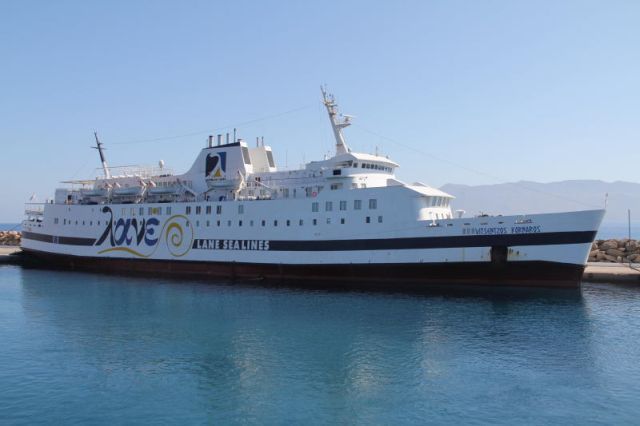
Last weekend's weather was perfect for walking, sunny and windy, but not too cold. The tourist season is over now in Crete, and the area, which was buzzing with cars and people throughout the whole summer, has now returned to its natural peaceful state. We set off via the motorway, which gets you to Kissamos harbour. The cruisers were all tied up at the port, including the ferry boat that goes to the island of Kithira and the Peloponnese.


The harbour is located between the two 'fingers' of Crete, Rodopou and Gramvousa. Continuing west, we entered the first finger, Gramvousa peninsula. Here, we passed field after field of stamnagathi (Cichorium spinosum, spiny chicory). Gramvousa is mainly where this salad green is grown on the island. It used to be very expensive to buy stamnagathi, as it grew only in the wild, selling at anything up to 13 euro a kilo, but since the species began to be cultivated, the price has dropped to 4 euro. Organic stamnagathi  continues to sell at a high price. Apart from stamnagathi, the Gramvousa coastal area is mainly covered in beautifully maintained olive groves and vineyards. The land is flat here, making agricultural work much easier. There were people working in the fields as we passed, picking stamnagathi and harvesting olives, something our summer tourists do not  get a chance to see because all the European flights in and out of the island stopped in the first week of November this year. 


To get to the Balos lagoon, you pass through the very picturesque village of Kaliviani. A few tourist hotels are located here but they are only open during the summer season. Kaliviani village has a very traditional look to it, but it has also been modernised in many ways; tourism symbols are seen all over the place. The aromas emanating from the kitchen of the one restaurant that remained open were very enticing. We decided to stop here after our trip to the lagoon.


At the Grambousa restaurant in Kaliviani, you look for the sign pointing to the road for Balos and follow the rocky road from hereon. After Kaliviani, the road gets kind of lonesome in the winter but you will not be completely alone: there are quite a few goats on the road. The area is actually part of the NATURA protected region and although there are no buildings of any sort (save a church and information centre), signs of human intervention exist with the roughly built shelters for the animals, delapidated cafes, and some unusually positioned old boats that are no longer in use*. The animals are all a part of locals' self-sufficiency: they grow olives for oil, grapes for wine, all manner of vegetables (but not much fruit), and their meat and dairy needs are met by goats (but not sheep due to the rocky terrain). The rugged road is not tarmacked, which is why we preferred to use our pick-up truck, but cars are also able to handle the road conditions. You are basically driving on top of a rocky peninsula, with very beautiful views of the coast. The black outline on the Gramvousa coastline is due to the strong earthquake that took place in 365AD. The earth was literally elevated. Gramvousa is most often the epicentre of earthquakes that take place in Hania, which is a very seismic region.


Balos Lagoon Cape Gramvoussa
The road offers no shade, so I would say it's not very comfortable in the summer. You drive along the narrow rocky road, where you will find a toll gate. During the summer, a small fee of one euro is asked from every driver passing this point. The proceeds of the tolls are used to strengthen the road. The road has in fact been improved over time: I recall people telling me that they suffered flat tyres while trying to traverse the area. In the winter, the gate is left open, as we found it when we visited. When the road stops and you find you can't drive any more, you park your car on a large square. A rough looking (and not very enticing) cafe was open at this point - we were among twenty or so tourists who were visiting Balos at the same time.


From the square, you walk about a quarter of an hour to get to the lagoon which is not immediately visible due to the hilly nature of the terrain. So when you first see it, you are totally overwhelmed by its beauty. At this point, we sat on the low wall of the path, and took in the view. A couple of tourists were approaching the area. We were just two metres away from them when I overheard an American say: "Wow, man, this is insanely awesome." It certainly was. From the viewpoint, on the left you could also see Pontikonisi ('mouse island', due to its shape) behind the 'frying pan' land mass (τηγάνι - ti-GA-ni, as it's often called in Greek). On the right, the fortress on the island of Imeri Gramvousa (it looks like a ship) was also clearly visible - it is only accessible by boat during the summer months. So there really are many good reasons why you need to visit Balos twice, both by road and by ferry.

#crete #oils #salad #potato #kaltsounia #kaluviani #mushrooms #chania #food #peppers #κρητη #καλυβιανη #καλτσουνια #μανιταρια #κρητικη_κουζινα #χωριατικη #γραμβουσα #παραδοσιακο #traditional #greece

We could have walked down to the lagoon itself - there were a couple of people walking along the sand while we were there - but the hike back up the hill deterred us. We were running out of time, and we had those restaurant aromas on our mind. So we went back to Kaliviani and had a really delicious lunch at the Grambousa restaurant, which served a number of locally grown delicacies - mainly meat dishes - including the signature crop of the area, stamnagathi. They also had a really kinky hobbit-house doorway leading to the interior: take a peek here... The Grambousa serves mainly traditional Greek cuisine with a novel twist. For example, my favorite dish of all that we tried was the lamb cooked in honey and wrapped in filo pastry. Heavenly! And for desert, we got fried pastry and a beautifully ripe persimmon.

When we came home, I was about to upload my photos onto the computer, when I pressed 'delete' instead of 'copy'. The photos in the post all came from the internet. Oh well, too bad, I thought, I will just have to go again some time. But I don't think I want to do the road trip in the summer. With so many tourists, Crete is awesomely insane in the summer. It's the winter I look forward to, when it becomes insanely awesome. Come and see it for yourself. A ferry boat leaves Pireas harbour every night for Hania, while there are 3-4 daily flights from Athens.

*Apparently, they have all been demolished: 
http://www.haniotika-nea.gr/katedafisi-afthereton-ston-balo/ 
But the debris remains:
http://www.haniotika-nea.gr/eminan-ta-baza/
And now, the Cretan macho seeks revenge:
http://www.haniotika-nea.gr/anazitisi-enos-atomou-gia-tin-pirpolisi-tis-kantinas-ke-tou-filakiou-sto-balo/

UPDATE 27/1/2016: A record 350,000 people, up by 30%, visited Balos this year. They came from as far as Iraklio to visit it and they were from Central/Eastern Europe. Interestingly, only 9% were from Scandinavia, even though 50% of Hania's tourism is from Scandinavia. (Scandis prefer the notorious AIs - they had everything they need there, I guess). More info here: http://www.haniotika-nea.gr/rekor-episkepsimotitas-ston-balo/

©All Rights Reserved/Organically cooked. No part of this blog may be reproduced and/or copied by any means without prior consent from Maria Verivaki.

Friday, 6 November 2015

Altruism

I've always dreamt of a sewing room in my house. A workshop seems too far-fetched an idea for a home our size. My sewing machine sits in the living room, and goes as far as the kitchen table where I usually work. A recent visitor to our house saw my sewing machine sitting in its corner in the living room and asked me how much it cost. Even though I thought it was an odd question, I still gave her answer: I had paid €280 euro for my SINGER TALENT 2 years ago from a local store. She told me she had bought a sewing machine from a discount supermarket for €99 about a year ago.

"And what do you use it for?" I asked her.

"I haven't used it," she said, not showing any signs of regret. "Do you use yours?"

Another odd question, especially since the sewing machine was surrounded by fabrics and other sewing paraphernalia. Apart from five large quilts, my sewing machine has made countless other items, including many gifts and charity items. I use it at least once a week, if not more. My friend asked me to show her what I make on it. She was surprised by the quilts I had made (quilting and patchwork in the modern sense is not a Greek hobby), but she was particularly intrigued by a small pile of sewn fabric sitting in front of the machine.

"What are these for?" She was genuinely perplexed by my 'mug rugs' (or pot holders and oven mitts, if you prefer, or even wall hangings if you have a special affection for the animal pictured) with a donkey cutout sewn on the top. I explained that I had made these for the Agia Marina Donkey Rescue in Iraklion, as a way of supporting the work the charity does. a charity I support. Charity starts from the home, and for the last few years, especially since the Greek crisis, I have always supported charities based close to my locality. My last lot of rug mugs sold out very quickly; I hope the new batch does too.

I make these donkey mug rugs by hand and finish them off by machine, because when I go into the kitchen to use my sewing machine in the evenings, my family sometimes notices and asks me to come and sit with them in the living room. I take up the offer so they don't think I don't want their company.

My friend stared at me blankly. "You make them for the donkeys?" Oh-mee-gee, I thought, the difficult part has just begun. I have a lot of explaining to do. It's not easy (and not much fun) having to explain everything to people who know very little. Even when you do explain it to them, they cannot understand what you are talking about because they lack the direct 'tangible' experience needed in order to understand certain concepts. I am especially wary of how I explain the part where I mention that I spend time making things without payment for others to raise money from. They really don't get that bit. If they did, they themselves would also probably be donating something to charity (if not time, then money).

If I were asked the same question in Western society, I would be able to look shrewdly at the person and ask: "Where is your altruism?" But you can't do that with people like my friend: you have to explain the meaning of altruism to her if you want an answer. In the Greek language, that is not as easy as it sounds. In Greek, altruism is translated as αλτρουϊσμός (al-troo-is-MOS). But that is simply a transliteration of the English word - in other words, the Greek word entered the language not just as a borrowed word but as a borrowed concept. Another translation of altruism is given in Greek dictionaries: φιλλαληλία (fi-la-li-LI-a): 'true love for other people'. But that is closer in meaning to φιλανθρωπία (fi-lan-thro-PI-a), which is where English gets the word 'philanthropy' from. Wikipedia mentions that altruism can also be called selflessness which is translated into Greek as ανιδιοτέλεια (an-i-di-o-TE-li-a): 'a characteristic of someone whose final actions (τέλη) are not (αν) dictated by self (ιδιο)-interest or personal gain.' But this word does not necessarily encompass the moral sense of altruism as the word is used in English.

Respectful citizen Mr Panteli, by Panos Tzavelas, who was a devoted communist all his life. 
Respectful citizen Mr Panteli (click here for the meaning of this Greek name), you have a shop somewhere here, you sell stuff, you make lots of money, you go to church on Sunday, you have a wife, son and daughter, modern furniture, colour TV, and you eat spiritual food. Respectful citizen Mr Panteli, so what if thousands of  black, white and yellow people die of hunger on this earth, just as long as your son's OK so you can leave him your name and money... Did you know Mr Panteli that others give up their youth and life to make true the dream of a slice of bread, so you can eat too, and what did you give Mr Panteli? Full of fear, irresolute, Mr Bean, you fouled up dreams and souls, an empty skin without breath. Respectful citizens, the young generation, bury those respectful people among the grains, and those who made Mr Panteli, they're useless worms on this Earth!

Hence, to a certain extent, altruism as it is understood in English is still in its nascence in Greek. The many different varieties of crises that the country has been through in such a short period of time have not helped people in thier quest for self-actualisation - but then again, you could easily get through your life without any need to feel altruistic. Take my friend as an example: she can buy a sewing machine even though she doesn't need one, so I suppose she has met her safety, physiological and social needs. But buying a sewing machine when you don't need one shows that she hasn't fulfilled her esteem needs. She still needs to build up her confidence before she moves on to self-actualisation.

Not that altruism is not understood in Greece. Let's take a very close Greek friend of mine who related this to me recently: "We have a severely disabled child, and we love him very much. It wasn't our choice to have this child. But that's the way God made him, and we accept him as he is. But I'm not an altruist like my French friends. They have a son with the same disability as my child. They couldn't have children, so they decided to adopt a child who they could provide a better quality of life to. They chose a severely disabled child, something I would not have done myself. They are the true altruists.".

I did actually wonder why my other friend hadn't used her own sewing machine. She told me she'd always wanted to own a sewing machine and when she saw it at the supermarket, she thought it was the perfect opportunity to buy one, although she admitted that she wasn't sure what she'd do with it. "I thought I might use it to mend or alter something, but it's really quite cheap to buy what we need these days." In many ways, my friend is right. Few designers can compete with the €1 shops in terms of price. Even in a poor country like Greece which has been overrun by deflation, life is still quite cheap these days.

Bonus photo: Thanks to Demetra, Gabe and Joanie for their fabric donations, some of which I used in the donkey mug rugs. I also made this quilt from them.

©All Rights Reserved/Organically cooked. No part of this blog may be reproduced and/or copied by any means without prior consent from Maria Verivaki.

Tuesday, 3 November 2015

Δημοκρατία (Democracy)

(This is a true story, in case you think I'm making it up.)

I recently met up with an old family friend whose husband recently passed away. My father was the godfather of her youngest son; my parents were very close to their godchildren's parents. It was actually this woman's name that bought them even closer together. Even the priest must have changed shades as he dunked her into the baptismal font when he heard the name:
... the Priest turns the Sponsor to the East with lowered hands, and asks the following three times:
- Do you join Christ?
The question is answered three times:
- I do join Him.
Again the Priest asks three times:
- Have you joined Christ?
- I have joined Him.
Again the Priest asks:
- And do you believe in Him?
- I believe in Him as King and as God.
After the completion of the Creed, the Priest asks thrice:
- Have you joined Christ?
- I have joined Him.
Then the Priest says:
- Then bow before Him and worship Him.
The Sponsor) bows down, saying:
- I bow down before the Father, and the Son, and the Holy Spirit; Trinity One in Essence and Undivided.
Following the blessing, the Priest asks the Sponsor what the name of the child will be, and the Sponsor says the name loudly and clearly:
- Dimokratia!

The name came as a surprise not just to the priest but also to Dimokratia's parents. But they knew Stavros was a devout communist, and a vow was a vow: they had asked him to become godfather to their child, and they could not go back on their promise. Back in those days, and in those regions, it was the godparent who chose the child's name, and the parents and godparents rarely met up, The parents in fact did not always attend the service, and would only find out the name of their child once the service was over.

My parents met Dimokratia and her husband while both couples were living and working in New Zealand. My mother remembered that when she was a child, not quite a teenager, one of her second cousins, Stavros (son of Efsevios, first cousin of my maternal grandfather), had left the village where both my mother and Stavros lived to become a godparent to a child in another village far away from the mountains where they lived. When he returned a few days later, he proudly announced that he had chosen a beautiful name for the baby - he had called her Dimokratia. Was this Stavros' goddaughter after all? Indeed it was. Here was Dimokratia herself, standing in front of my mother, while they had both transplanted themselves to another country, very far away from their own homeland.

The EAM anthem: 
Only three letters enlighten the Greek people
and show us the bright way to bring freedom
It is our struggle's light and the people follow faithfully,
young, old, all together they shout, hip hip hooray for EAM
EAM saved us from hunger, it will save us again from slavery
and it has congregationalism in its manifesto, hip hip hooray for EAM
It has united all our people, it includes EPON and ELAS,
and it has congregationalism in its manifesto, hip hip hooray for EAM
My mother and Stavros lived through very confusing political times in Greece. During WW2 when democracy was failing Greek citizens and Greece was under Nazi occupation, EAM, the National Liberation Front, was formed, quite obviously encompassing communism and left-wing nationalism, given the musical score that its anthem was set in (the Russian Katyusha theme). No doubt Stavros was one of EAM's strongest supporters, and he would have addressed Alexis Tsipras as 'comrade' if he were still alive now (although he would probably be turning in his grave now). But even for SYRIZA and Mr Tsipras, democracy has taken many turns. It pays to remember what SYRIZA meant to the world way back in December 2014, which isn't too long ago. Democracy has a variety of meanings for everyone, but it rarely encompasses all people: the fragile meaning of democracy has been debated since ancient times.

And what about Stavros, the godfather? Eventually he married, and after seven years, he and his wife gave up trying to have a child as none had come by that time. They decided to adopt instead. But Stavros himself chose the name he would give to his son: 'Eleftherios', from the Greek ελευθερία, 'e-lef-the-RI-a', meaning 'freedom, liberty'. My aunt related to me the day Lefteri (as his name is abbreviated in Greek) came to the village, when he was also baptised. Lefteris' father was so happy to finally have a child of his own, that he invited all the villagers to the baptism, and he composed a mantinada (μαντινάδα) especially for the occasion:
Ευχαριστώ στους χωριανούς - I thank the local villagers
και όλο αυτό τ' ασκέρι - and this great large assembly
που ήρθε κι' αποδέχτηκε - that came and greeted warmly
το Κάτη, το Λευτέρη. - the new Kati*, Lefteri.
(*Kati is the abbreviated surname of 'Katakis')

And that's not the whole story: Two years after Lefteris joined the family, Stavros and his wife brought Kostantinos into the world by natural birth. The moral of the story: everything happens in its own time, patience is a virtue, and hope dies last.

(The video clip is part of a playlist of politically motivated modern Greek music, composed, written and sung by some of the most famous names in Greek music, many of whom are considered heroes of the various Greek Leftist movements.)

©All Rights Reserved/Organically cooked. No part of this blog may be reproduced and/or copied by any means without prior consent from Maria Verivaki.

Thursday, 29 October 2015

Old age (Γηρατειά)

Can anything stop us from losing our mind?
"Eating a Mediterranean diet rich in fish and vegetables may help prevent your brain shrinking for as long as five years, new research suggests."  http://www.theguardian.com/lifeandstyle/2015/oct/21/mediterranean-diet-may-slow-the-ageing-process-by-five-years
We are seriously wondering about this in our house, as we watched the terrifying consequences of the developments of our 91-year-old yiayia's senile dementia. Up until two months ago, she was cooking her own meals and cleaning her house. She watched TV and read the Saturday local paper. She also pottered around the garden, and kept the front yard immaculately clean.

It was around this time when she also started telling us about the living dead: so-and-so died, she'd say, proceeding to tell us the gory details of their death. As far as we knew, these people were still alive. Sometimes old people confuse things, we'd tell the children. But we got worried, and hired help, a neighbor who was looking for this kind of work, and had experiencing in looking after old people. But imagine what this feels like for someone who had always tried to live independently. The relationship didn't quite work out.

There was also that time when she kept waking up at night and phoning us, to ask why we hadn't woken up yet, because it was time to go to work (it was often in the middle of the night). Checking her kitchen clock, we wondered if perhaps she had simply confused the time: the clock was indeed showing the wrong time. So we set it correctly, and changed the battery just in case. But the clock still kept changing time. So we removed the button that did this, to make sure that the time-changing gremlins didn't strike again. Yiayia then removed the alarm button and popped it onto the pin that had been left on the time-setting button. So we were back to square one. When we removed that button too, yiayia chucked the clock in the bin. "It's broken," she told us. "No, look yiayia," we said, holding it to her ear, "it's still ticking." But she wasn't convinced: "Only barely," she replied. It's just old age, we'd tell the children. But we were worried, so we called in a doctor.

"She's probably suffered a myriad of tiny strokes that were barely noticeable," he told us, and recommended donepezil and some sleeping tablets. It seemed to work, at least when she took it, that is. Yiayia had spent her life not just independently but also without taking any kind of medication whatsoever. All she ever took occasionally was paracetamol for a headache or other minor ailment. It was a shock to her that the doctor was suggesting that she take pills to live. "But there is noting wrong with me!" she kept saying. And she was right. Her blood tests showed no signs of illness. Normal reds, normal whites, normal cholesterol, normal heartbeat: in fact, normal everything. "She's really healthy," we told the kids, but we knew that there was something that was not really right.

She began moving the furniture around the house. She threw things out. We had to go through her rubbish every day: a cup, a plate, a bowl, even the remote control for the TV. And of course, food. "They've all been poisoned," she told us, howling with horror when we showed her what she was throwing out. "Get it out of this house immediately!" she'd cry, hitting her walking frame up and down on the floor. She was having psychoses. "It's a normal part of senile dementia," the doctor explained. "But she needs psychiatric help." At 91, I doubted that she would ever be able to receive help for her condition, not because the Greek health care system is broken, but because she would be unwilling to receive it. By this time, she had stopped taking all the medication she had been prescribed (we were giving it to her). She did not want our own help; how would she accept a change in environment and caregivers?

None of this terrified me personally as much as what was about to ensue, during her last week at home. Believing that we were poisoning all the food brought into the house, she stopped eating. She literally ate nothing all day. I checked her cupboards: apart from a few rusks, some olive oil, sugar, flour, rice and lentils, there was no other food. She had thrown everything else out, and refused to take anything we gave her. When she stopped eating our home-made meals, we brought in all sorts of other store-bought delicacies: she threw those out too, believing that the wrapping they came in was poisonous.

After three days, I insisted that we should take her to the hospital. Knowing that she wouldn't allow anyone to take her out of the house, I asked some big burly black-shirt-wearing relatives to help us coax her out. "You need to disarm her," I told them. "Take away the walking frame."  She had been using it like a deadly weapon, hitting anyone she had stopped trusting when they tried to approach her.

The doctors were very sympathetic. "There doesn't seem to be anything wrong with her", they said to us. "She's just senile." The A&E doctors called the resident psychiatrist who tried to give her some sedatives. But she refused to drink the water that had been laced with drops, nor did she accept to have anything injected in her. "We can't make her do anything," the doctors and nurses said, and we understood them to the tee: we couldn't make her do anything either. Yiayia went home, and continued her diet. For the last week of her life at home, she didn't take one bite of food.

How long can a person live without food before they faint, fall and create bigger problems than what they already have? It was either that, or residential care. State old-age care does exist, but it requires a lot of paperwork. For a start, the person entering state care needs to have thorough medical checkups before being admitted. Yiayia's issues did not allow us to go through this procedure. Private care differs not just in cost but also in terms of what kinds of cases they take on. We eventually chose a unit that is run by someone who has 40 years experience in geriatric care, 35 of which was spent caring for old people in state care.

Apparently, she's eating and has now started taking medication. But she's still not the yiayia we knew. I'm not sure if she will ever be again. The Mediterranean diet no doubt aided in her longevity. But it didn't stop her from the eventual decline that we all go through when we get old.

©All Rights Reserved/Organically cooked. No part of this blog may be reproduced and/or copied by any means without prior consent from Maria Verivaki.

Friday, 16 October 2015

Psychotic dementia (Ψυχωτική άνοια)

While walking around in Berlin three years ago with my family, we came across what looked like an open-air art exhibition containing many grey concrete slabs of various heights.


What do you do when you don't understand something? You look for a logical explanation, which in this case, I thought could be provided by a sign. There was nothing - yes, really, nothing! - around like a sign that could explain it. The slabs - known in the art world as 'stele', from the Greek word 'στύλος' meaning column - stretched for quite a distance across the road.There has to be a sign, we assured ourselves. Where could we find the sign, we wondered? We noticed some people in uniform that seemed to be guarding the area, so we tried to ask them to explain it to us.


We approached one woman who simply pointed to the other side of the block where the slabs ended. I heard her say something like 'information centre'. The walk to the other side of the block did not seem so far away, but something stopped us from entering the area containing the slabs. There were so many of them, they were not all the same height, the ground below them seemed to undulate as did the slabs, and they were not numbered or labelled. It just seemed so easy to get lost in their midst, despite the fact that I could discern the end of the path running through the slabs. After trying to keep up with my two young children who were running riot through them, I decided it was time to call it quits, and we came out of the block of slabs and back onto the pavement, which immediately comforted me from the feelings of confusion that I sensed while I was inside the block. At this point, we still had no idea what this block of slabs was all about.


We eventually learnt from another more polite guard that this was a memorial for the murdered Jews of Europe, and if we walked to the other side of the memorial (the one we'd walked away from due to the less informative guard's disinterest), we would find an underground information centre and find out more about the sculpture. I preferred to wait till I got back to an internet connection to read up about it, as we had already come across other sites in Berlin describing German atrocities, and we had felt rather overwhelmed by the sheer amount of surviving records contained in these places about this act of horror in global history. (Not to mention the fact that we have a number of similar memorial sites in Crete and have passed by many others as we travel around the country.) So we thanked the guard for the information and left the site at that point.


At the time, we couldn't really understand how this memorial could signify anything about the murdered Jews of Europe. When I came home, I looked it up:
"... the stelae are designed to produce an uneasy, confusing atmosphere, and the whole sculpture aims to represent a supposedly ordered system that has lost touch with human reason" (Wikipedia),
Yes, I did find it rather too confusing for my liking. This is what hindered us from understanding the memorial. We don;t live in a state of confusion, and when we feel confused, we always look for a solution that will put an end to the confusion. Even during the Greek crises that have presented themselves over the last six years, we have actually been living in a confused state of order, not an orderly state of confusion. Perhaps there was that one moment of true confusion, during the referendum, when we really did not kow what we would wake up to. But that was short-lived, and in the end, it all came out in the wash. Hence, Berlin's Memorial to the Murdered Jews of Europe was out of my depth. I couldn't really understand the architect's intentions. It remained a mystery to me for a long time, until only very recently.

For the last two months, I've been watching my 91-year-old mother-in-law's slide into the state of senile dementia (it's definitely not Alzheimer's), and it feels pretty much like living in 'an uneasy, confusing atmosphere', amidst 'a supposedly ordered system that has lost touch with human reason'. What she once ate she now labels as poison. What she once regarded as her possessions are now seen as useless items that need throwing away. People she once knew and loved are now whores and bastards.

It's not always like this. Some moments are better than others. But other moments are more terrifying. Our view of normality has been crushed. We don't know what to expect from one moment to the other. All we are left with is to hope that we will live more better moments than terrifying ones. Wishing for a better day is like wishing for a miracle. It's never a full day, just a few moments. We are living in a state of uneasy confusion. That memorial in Berlin describes exactly what we feel like. I now live with the contented feeling that finally, I understand the  confusing memorial I visited three years ago with my family.

(All photos taken at the Memorial to the Murdered Jews of Europe (German: Denkmal für die ermordeten Juden Europas), also known as the Holocaust Memorial (German: Holocaust-Mahnmal), April 2012.)

©All Rights Reserved/Organically cooked. No part of this blog may be reproduced and/or copied by any means without prior consent from Maria Verivaki.

Sunday, 11 October 2015

Greece inside out

American Scott Walters started it with his guide to England after his visit to 'mostly small towns', with his generalisations such as 'People don't seem to be afraid of their neighbours or the government' (see https://www.facebook.com/iScottFL/posts/10207706696650031). His facebook post practically went viral. Then along came Paul Owen's '(very) rough guide to America from an Englishman in New York': 'It’s best to think of the police as a sort of occupying army and avoid them accordingly – particularly if you are not white' (see http://www.theguardian.com/commentisfree/2015/oct/08/america-guide-englishman-new-york). More recently, Madhvi Pankhania gave us 'an English view of Australia': 'Australians can be sensitive – convict jokes will go down like a lead (see http://www.theguardian.com/commentisfree/2015/oct/11/so-long-and-thanks-for-all-the-flat-whites-an-english-view-of-australia).

I'll take a stab at continuing the meme, with my view of Greece, although I won't be writing as a citizen of another nationality. I can no longer genuinely say I'm a New Zelander without feeling like I'm fooling you. I'm describing Greeks as a 'Greek-something' (both an insider and an outsider). I've based my ideas below loosely on the three above quoted posts.
-----------------------------------------------------------------------------------------------------------------------
  1. Greece is a really safe holiday destination. Greek street protests take place in well-defined spaces, and it's very easy to be a bystander watching a protest safely from a short distance.
  2. Greeks are often heard shouting in a group; they are actually having a normal conversation with one another.
  3. Traditional Greek food is really tasty and quite cheap. But it looks rather plain, and not at all refined. That's because Greek tavernas serve the kind of food a mother or grandmother would cook for her family.
  4. If you order some 'toast' in Greece, you'll get a hot ham and cheese sandwich, not dry blackened bread. English toast is generally regarded as something you eat at a hotel breakfast.
  5. Whatever you order in a Greek restaurant, it comes with fried potatoes, including 'toast' (crisps/chips might be served as an alternative to fried potatoes).
  6. Souvlaki (aka yiro, gyro sandwich) is the national takeout meal, eaten at least once a week. Fasolada (bean soup) and fakies (lentil soup) are two other nationally unifying dish - they're each made once or twice a month by all homecooks throughout the year in most parts of Greece.
  7. Greeks eat a lot of junk food but they also eat a lot of home-cooked food; that's why they tend to be chunky/stocky. 
  8. Although organic food is gaining ground in Greece, it's not quite as popular as locally produced fresh seasonal products. To be able to grow your own food is regarded as a source of pride.
  9. Although feta cheese is well known all over the country, all regions produce their own varieties of different kinds of cheese, wine, bread, sausage, cured meats, etc. Places located 50 kilometres away from each other count as 'different' regions - they will each have their own different names for the same product. 
  10. 'Kek' is what the round cake with a hole in it is called (the one Mrs Portokalos calle 'kek' in My Big Fat greek Wedding). All other types of cake are known generically as 'gliko' (sweet). 
  11. The kafeneio is the equivalent of an English pub: it serves both coffee and alcohol, as well as food. Like pubs in small English towns, kafeneia are more like community living rooms. 
  12. The kafeneio is also a political unit. You frequent the kafeneio that expresses your political views. 
  13. Politics is talked about everywhere by everyone. 
  14. The Greek political left is not the same thing as what is regarded globally as the political left. Syriza called itself a centre-left party, when initially it was regarded  as a radical left party by the global press. 
  15. Young Greeks often marry at a municipal office these days. They have a church wedding after the birth of their first child. 
  16. Greeks are on the whole smart casual dressers. 
  17. Greeks are defined by their accents. 
  18. Taxi drivers know all the local gossip, as do hairdressers.
  19. Greeks generally don't drink tea. When they do, they think of it as something used for medicinal purposes only (eg when you feel ill). 
  20. Wherever you are, you can ask for a glass of water and no one will expect you to pay for it. The price of plain bottled water is regulated by the government, and it's very cheap. (In the Athens museum area last summer, a small bottle cost 0.35 eurocents; at most kiosks, this bottle will be sold for no more than 0.50 eurocents.)
  21. The Greek public health system is a shambles, but the doctors are almost universally excellent.
  22. Things don't always happen/start right on the stated time. They may happen/start 5 or 15 or 30 or 45 or 60 or more minutes later.
  23. Greeks are dreadful drivers, but their parking skills is second to none.
  24. Greek roads leave a lot to be desired, but you can actually drive quite safely on them. 
  25. Greek homes are to be envied - most people live in very modern apartments or houses with fitted kitchens, and not the little whitewashed houses often depicted in tourist images of Greece.
  26. Everyone has a washing machine (we don't do laundromats) but driers are rare - that's because there's a lot of sunlight throughout the year in Greece, despite the cold winters.
  27. Contrary to popular belief, it does actually get very cold in Greece in winter.
  28. Apartments for rent usually come unfurnished; Greeks think the idea of sleeping in someone else’s bed is disgusting. 
  29. Contrary to popular belief, the Greek police are very helpful and friendly. This change has come about since the crisis. 
  30. The buses and (sometimes) the trains may not look very flashy, but they do work. The Athens metro is the fastest and cleanest metro I've ever encountered.
  31. It may look all Greek to you initially, but contrary to popular belief, the Greek letters of the alphabet are very easy to learn and there are strict pronunciation rules for letters and combinations of letter (unlike English). 
  32. Everyone seems to have a profession of some sorts. Greeks are often introduced to other people first by their name and then by their profession. Education matters, and this attitude cuts across every social class.
  33. Unlike her European counterparts, the capital city of Greece, Athens, is one of the cheapest cities to live in in Greece. Petrol is cheapest in Athens.
  34. 'Petrelaio' is diesel; unleaded petrol is 'venzini'.
  35. It may seem like Greeks drink a lot of soft drinks, but they do actually prefer their own regional brands. Greek soft drinks have an awesome taste.
  36. Macedonia will always be Greek to the Greeks, even if it's also Macedonian. It's still Greek to them.
  37. Contrary to popular belief, the Greek woman rules the roost. She just lets the man think he wears the trousers.
  38. In general terms, German habits are regarded as a source of derision (in tourist areas, Germans stand out by wearing white socks and sandals); Israelis are regarded as strange people (in tourist areas, Israeli cruise ships are guarded by the local police because they are 'afraid of attacks': attacks from what? See No. 1); Americans and the British are seen seen mainly as idiots, even though Greeks are infatuated by London and the English accent. 
  39. Turkey is regarded as a nice place to go on a short holiday, but only the coastal Mediterranean parts; the Turks are our friends, but Turkey is still the enemy. 
  40. Cypriots are not Greeks - Cypriots will also remind you of this. Some Cypriots speak Greek, which is where the confusion lies - Cyprus is another country, not a Greek island. 
  41. Greeks still throw used toilet paper in a bin and they never flush it in the toilet. Toilets really do block if used TP is flushed down the loo. (On a positive note, Greek beaches rarely get flooded with sewage - now you know why.)
  42. Greeks are not at all as homophobic as they are often depicted in the foreign press. But Greek gay men do not fit the global paradigm of homosexuality. 
  43. Greeks call black-skinned people 'mavri' (mavri = black), not because they are racist, but because they are describing black people's skin colour and they regard them as an ethnic group (however wrong that may be). Greeks aren't as racist as the global press makes them out to be - they are more likely to be intra-racist, ie they may have something negative to say about another Greek person from a different region than their own - it's got to do with feeling superior. 
  44. Graffiti is so ingrained in Greek culture that it is taken for granted. No one ever really talks about it. Except for foreigners. 
  45. Ditto the above for stray cats and dogs. 
  46. Greeks love a good joke. But they don't like/get English humour. They prefer American comedy.
  47. Many motorcycle drivers are seen riding without a helmet. It may not always kill them, but it's generally young males that get killed when they fall off a motorcycle (and in 99% of cases, they weren't wearing a helmet). 
  48. The word 'malaka' may be a term of endearment among in-groups. But if you don't belong to the in-group, it's best not to use it. You'll be asked 'who are you calling a malaka?' instead of getting a friendly welcome.
  49. Queuing is now becoming more orderly in Greece than it used to be. The global media likes to show long queues of Greek people waiting for their turn (especially during the pre- and post-referendum period with the closed banks). But queues are rare outside Athens. 
  50. You don't have to tip. Really. But a tip is always appreciated and you will be thanked profusely for it.
  51. Bargaining is regarded as part of Greek culture, but what most people don't realise is that it's usually the customer who demands to bargain. Greek prices are always pretty much fixed.
  52. If you do want to bargain, you probably won't get a receipt for the product/service you were buying. (Serves you right.)
  53. There seem to be a lot of newspapers for the country's size. Most people buy a Sunday paper mainly for the offers included in it (eg supermarket/petrol vouchers, etc). Internet news sources now abound.
  54. On television news and other shows, one person is rarely talking at one time. Although this seems confusing to most people, it doesn't seem to impede Greeks' understanding of the discussion.
  55. Some olive trees in Greece are older than America.  
  56. Almost everyone in Greece has been through a private language institute where they learnt English. 
  57. Almost everyone in Greece speaks a reasonable level of English. Even the elderly seem to be able to understand what a foreigner is asking them and they are able to point them in the right direction.
  58. Cold coffees in Greece are awesome. My favorite is freddo cappuccino, and it has the same awesome taste wherever I've had it. (Most people like to drink 'frappe' - ice-cold 'beaten' Nescafe.)
  59. Drinking beer on the road from a bottle is regarded as very bad taste. Drinking beer without food is OK as long as you are sitting down and you are at a cafe/bar kind of place. Since beer is always served cold, drinking beer is not really seen as the coolest thing to do in the winter, unless you find yourself in a heated space.
  60. The Acropolis is the most awesome rock in the universe. It's taken by the Greeks for granted only by those for whom it is part of the daily commute scenery (ie Athenians). 
  61. The universal greeting is "yiasou" (or 'yia'. The universal farewell is also "Yiasou" (or 'yia'). 
  62. Greek tomatoes really do taste different from tomatoes from other countries. 
  63. It's generally believed that Greeks are racist against the Roma. It works both ways: the Roma tend to keep themselves apart from the mainstream community. 
  64. Olive oil in Greece is known as 'oil', because that's what most if not all people use on a daily basis in their cooking. We differentiate among seed oils, naming them according to their origin. But olive oil is just oil.
  65. Greeks love their cars. They long for the days to return when they will be able to afford the car they gave up in the crisis due to the high taxes. Cars are regarded as a work of art which is why they don't have bumper stickers because Greeks don't want to dirty them). 
  66. Greeks like having euros. They remember the drachma with nostalgia, but they know it looks like Monopoly money compared to what they've got now. 
  67. Greeks hate winter because it costs them money to keep warm, and because they are outside people, and winter keeps them inside. 
  68. World War 2 is remembered by Greeks in a similar way as the Holocaust is remembered by Jews.
  69. Greeks love to smoke and the smoking ban is broken many times. But they do smoke more cheaply nowadays: they usually roll their own and they also do e-cigs. Nota bene: if you go to a bar/cafe.taverna and expect other patrons not to smoke, you are the crazy person, not the smokers. I know this rule well: that's why I rarely go to these places. I hate cigarette smoke. 
  70. Greece is changing. Every Greek knows this, and regrets it in some ways, but also understands that this has to happen. 
 Thanks to Chris Murphy and Frances McKenzie for their input.

©All Rights Reserved/Organically cooked. No part of this blog may be reproduced and/or copied by any means without prior consent from Maria Verivaki.

Tuesday, 29 September 2015

Refugee crisis

Humans of New York (HONY) is presently doing a series on the refugee crisis in Europe, showing photos of refugees who have passed through Greece:
“My husband and I sold everything we had to afford the journey. We worked 15 hours a day in Turkey until we had enough money to leave. The smuggler put 152 of us on a boat. Once we saw the boat, many of us wanted to go back, but he told us that anyone who turned back would not get a refund. We had no choice. Both the lower compartment and the deck were filled with people. Waves began to come into the boat so the captain told everyone to throw their baggage into the sea. In the ocean we hit a rock, but the captain told us not to worry. Water began to come into the boat, but again he told us not to worry. We were in the lower compartment and it began to fill with water. It was too tight to move. Everyone began to scream. We were the last ones to get out alive. My husband pulled me out of the window. In the ocean, he took off his life jacket and gave it to a woman. We swam for as long as possible. After several hours he told me he that he was too tired to swim and that he was going to float on his back and rest. It was so dark we could not see. The waves were high. I could hear him calling me but he got further and further away. Eventually a boat found me. They never found my husband.” (Kos, Greece). https://www.facebook.com/humansofnewyork/photos/a.102107073196735.4429.102099916530784/1097477253659707/?type=3&fref=nf

Greek people also have stories to tell; they don't just take pictures, they take action. Here is one such story, told by a Cretan reporter who lives in Athens. He lived through a rainy evening in Plateia Victorias (Victoria Square) in Athens, trying to help refugees who had parked themselves at the entrance of his apartment block during the rain (the original write up appeared yesterday and refers to this past weekend):
Last night we returned home from a Saturday night out for a drink at about 1 a.m. It was pouring with rain. you could hardly see in front of you. Below the microscopic canvas awning of the open-air greengrocer's, about 50 refugees had gathered, among them many mothers with babies in their arms.The front door to the apartment was opened, a quick nod was made, and the refugees came inside. 50 people on the stairs, from the door to the mezzanine floor. Outside our door, a family with babies: the little one had a temperature of 37.4. We gave her depon syrup [paracetemol for children] and bananas, Demetra made toasted sandwiches and Peggy from next door washed some grapes, we gave them blankets and pillows.We went to bed, but we didn't sleep. 
Around 2:30am we saw the lump that was a police squad car illuminating the road and we went to see what was going on. A hipster, not more than 30 years old, from the 4th floor had called the police to get them out. We were surprised to hear police officers requesting him to show some understanding and to let them sleep through the night at the entrance telling him "There are mothers with children, they aren't here to rob you, we ask you to withdraw your complaint and if you're afraid, just lock your door twice ''. He insisted: it wasn't his problem. I came down, and we argued. He left when the refugees left. Just two or three families remained on our doorstep. 
The night had not ended: at the square there arrived an EΘΕΛ bus to pick up the refugees and take them somewhere safe, but without permission from the administration. Apostolis was driving it: "The head of the administration is a fascist, he never gave me permission to move the bus. I took it myself and I came. He issued an arrest order. First I'll take the refugees somewhere to sleep and then let them arrest me". More negotiations. A couple of cops insisted that there's an arrest order and they had to arrest him, the rest tried to find a compromise. The refugees who were persecuted by the apartment entrance scattered their sleeping-bags in the rain or resorted to using chairs from the cafes. 
From phone calls, the transport minister suddenly appears. There isn't a bad thing to say: he asked us what we propose, he made calls and he got Victoria station [the underground] opened for the refugees to enter. He stays there until they get the refugees in. We took Apostoli and left. The 'rambo' who wanted to arrest him left looking pissed off, another cop approached us apologetically: '' We're not MAT. We want to help, the good thing is that the orders are to see this in a humanitarian way and to force others to adjust to it''.<br />We stay at home with Apostoli and have coffee until 6am. He tells us how the Autonomous Nationalists got postings in the Association and ΕΘΕΛ and how they face them. What happens with the headhunters coming to prowl for fines and tickets. That the bus depot is at Elliniko [suburb] and is up for privatisation. He leaves and we sleep. 
When we wake up, it is almost noon. We open the door. The refugees who slept outside our door are gone. Before they left they took care of everything: glasses, pillows, blankets, whatever we gave them was outside our door, folded away. 
 
When this great story with the refugees at Victoria Square finishes, I want to write something about everyone. I want to write about the disabled man from Galatsi [suburb of Athens] who came with his son and his friends to deliver pizzas, who were then rammed by Kaklamanis' thugs [Kaklamanis is a centre-right politician] by the ' Commission'' of Saint Panteleimon [an area known for Golden Dawn support]. I want to write about the girl, who was no more than 1.60m tall, who rushed at the head thug and screamed at the top of her voice "Get out of here, get away from Greece, let us give them food". I want to write about the baker that came every other day and leaves behind dozens of loaves of bread. About the Assembly of Victoria which arranges the soup kitchens and brings the doctors. About the doctors who searched me out because I wrote something here and they asked me where they could go and help. About the people who bring what they can. About Rousa, Stelios and Panos who bring their toys. About the woman who recognized me and asked me to announce on the radio to get the municipality to bring in chemical toilets. About Demetra who made toasted sandwiches and shouted "let the people stay, shame on you" to the rat who called the police. About Peggy who opened her door to let the refugees have access to the bathroom. About Efi, who went to the far-right greengrocer at Victoria Square and demanded that she only wants good quality fruit and at a lower price because it's for the refugees. About Apostoli that took the bus by force from the depot and came to pick up refugees who were sitting in the rain and "allowed" himself to be arrested. 
But most of all, I want to write about the woman from Afghanistan, with the child who had a fever in the rain, as I watched her holding her child outside my door, and when she woke up this morning, she still felt it necessary to put the blankets and pillows in order and to leave them behind for us to take them back. 
I wonder what kind of cretin the hipster of the 4th floor must be to think that society is in danger from this woman and not from the man himself. 
But I don't wonder too much. Because throughout these days it has been confirmed that our world is full of great people, who will eventually change it. http://www.facebook.com/photo.php?fbid=1670444283168506&set=a.1379388452274092.1073741828.100006088505839&type=3&permPage=1
It take all sorts to make the world. We're not all the same. Most of us are actually good people. It's just those few that stuff it up for the majority.

Bonus story: If you want to read more stories like this, you can see Adriani's picture post: she took some refugees from Victoria Square to her home last week:http://www.facebook.com/ariadni23athens/media_set?set=a.10207756784946032.1073741843.1485911484&type=3 
and Poly Ioannidou's picture post about the refugees at Eidomeni on the Greek border: http://www.facebook.com/poly.ioannidou/media_set?set=a.10204611230635094.1073741865.1664534357&type=3&pnref=story&hc_location=ufi
There are many others, too numerous to list.

©All Rights Reserved/Organically cooked. No part of this blog may be reproduced and/or copied by any means without prior consent from Maria Verivaki.

Sunday, 27 September 2015

The Greek Collection: Agia Marina Donkey Rescue mug rugs

The Agia Marina Donkey Rescue is a registered Greek non-profit organisation which is run purely on donations and TLC, by the Doulyerakis family of South Crete since 2004. It is a haven in the sunshine for aged, abused and unwanted working donkeys. If you can make a donation to the donkey sanctuary, please contact Barbara through the site's facebook page: https://www.facebook.com/pages/Agia-Marina-Donkey-Rescue/225542274129832
You can also check the sanctuary's webpage: http://www.agia-marina-donkeyrescue.com/new.html

In my fabric work, I don't let anything go to waste. I find a use for all my fabric scraps. Having recently tried out the log cabin patchwork design, I found myself with a bunch of log cabin blocks which I had no use for, as I had no project in mind when I started making them.

Then I came across the mug rug through a pinterest search. The mug rug is becoming increasingly popular in patchwork circles. It's a kind of nano-quilt, perfect for using as a large coaster which can also fit a biscuit, spoon or other culinary tool/comestible in its space. The mug rug could also be used as a pot holder.


My mug rugs, like practically all my creations, are made with reused, repurposed, recycled fabric and old spools of thread, which have all been upcycled. Nothing has been bought specifically for making them. Such creations are a sustainable way of reusing resources, creating something out of nothing, and ensuring that nothing goes to waste. It's not just the environmentally conscious that get satisfaction out of this. In these kinds of times that we are living in, I feel a sense of relief that I don't need to spend money that doesn't come so easily on my hobby work.


A lovely way to distribute this kind of creation is to make them for charity. I recently made some donkey purses for the Agia Marina Donkey Rescue, a charity I really believe in. Greece is full of abandoned abused donkeys, who are utterly helpless, crisis or no crisis. Thanks to the Agia Marina Donkey Rescue, some of those donkeys are being looked after, spending the remainder of their lives in loving care and comfort. I visited the donkey sanctuary last April and was overwhelmed by their presence:
"What do you do with a donkey you no longer want or need? You can give it away, or sell it, but this is difficult in our times, when the traditional use for donkeys is no longer needed. Some people set them free to roam, which sounds kind, but this is not really the case. A donkey that is set free by its owners will wander away and run into trouble. While it may find enough food to eat, it will probably not find enough water, so in the summer, it will die of thirst. They may also be run over by cars on the road: if they were used to being led by their owner, they will not sense the danger of passing vehicles. Other owners just tie them up to a pole and leave them to their own fate, which is certain death." http://www.organicallycooked.com/2015/04/agia-marina-donkey-rescue.html
In the mug rug, I have overlaid the Agia Marina Donkey Rescue emblem - a black silhouette of a donkey - on a patchwork block. The mug rugs are being sold at Agia Marina Donkey Rescue's Donk-E shop.

Our Donk-E-Shop is filling up with lot's of very colourful & exciting new stock !!...Everything sold in our shop goes to...
Posted by Agia Marina Donkey Rescue on Monday, 14 September 2015

All proceeds go to the donkey sanctuary. To buy an Agia Marina Donkey Rescue mug rug, please contact Barbara at donkeyrescue at hotmail dot com. 

Please support the Agia Marina Donkey Rescue through my charity venture and the Agia Marina Donkey Rescue Donk-E shop. You will be helping the truly helpless of Greece, animals that are unable to fend for themselves.
Please share this article so that the Agia Marina Donkey Rescue may benefit in any way. 

The Agia Marina Donkey Rescue is a registered Greek non-profit organisation which is runs purely on donations and TLC, by the Doulyerakis family of South Crete since 2004. It is a haven in the sunshine for aged, abused and unwanted working donkeys. If you can make a donation to the donkey sanctuary, please contact Barbara through the site's facebook page: https://www.facebook.com/pages/Agia-Marina-Donkey-Rescue/225542274129832
You can also check the sanctuary's webpage: http://www.agia-marina-donkeyrescue.com/new.html

©All Rights Reserved/Organically cooked. No part of this blog may be reproduced and/or copied by any means without prior consent from Maria Verivaki.