Thursday, 24 October 2013

Pomegranates (Ρόδια)

After the children had left for school, after she had finished her coffee, and after she had had the first cigarette of the day, Varvara took off her nightdress and put on her garden trousers and shirt, which she washed every two weeks - when she couldn't stand the smell any more - and her gumboots, and the heavy jacket to keep the cold off her back. Despite the sunny weather, the village was freezing at that time of the morning. She did these things in routine fashion, like she did every morning when she went to the chicken coop, to drop off some feed, pour some fresh water into the pans and see if there were any eggs to be picked, because these days the hens were not laying, due to the cooler weather.

Her first thoughts of the day were always with the weather in mind. The deceptive sun, coming out full blast in the early hours of the morning, despite the foggy frost that hung low in the valley between the mountains where the village was located, had fooled her last winter, which ended up for her in a stay in hospital with suspected pneumonia. When she pleaded with the doctor to allow her to let her have her treatment at home so that she could at least be near her family, the doctor refused. (Unbeknownst to Varvara, her husband had explained to the doctor that they had no heating, so it would be best - and would work out more cheaply - if Varvara stayed at the hospital rather than risk exacerbating what was already a critical condition.) He reprimanded her for smoking which he said was the main cause of the advanced stage of her illness, even though Varvara could see where he kept his own cigarettes (in his shirt pocket under his doctor's jacket). She couldn't stand the thought of leaving the family in this way again, so she snuggled up in one of her husband's heavy jackets as she made the ten-minute walk to the chicken coop there and back.

Her second thought that day was that she wished she had feathers. Before she approached the coop, she could see the chickens snuggled together, and she felt the warmth they shared with each other. Their tiny heads were cocooned into their necks, which extended when they realised it was their carer who was approaching. They slowly made their way towards her as she unlocked the gate. She kicked her legs in the air, dancing like Zorba, like she did every morning (and afternoon) when she moved among them and they got too close to her legs, not out of fear of being pecked, but because she was worried she might step on them, clumsy things. This time, she stopped to stare at them a little longer, wondering which one she would slaughter at the end of the week for the party on the occasion of her son's nameday. None seemed to stand out. She checked the coop for eggs, but there weren't any. The hopeful bowl she was carrying would be going back home empty.

On the way back to the house, Varvara stopped to talk to the neighbours, like she did on most sunny mornings, most of whom were awake by now, and airing their houses. For some reason, even if she were five minutes out of her daily routine, Fofi was always just opening the shutters when she was returning home in the morning. "Hey Varvara, no eggs today, huh? Mine aren't laying, either." Misery needs company, she thought. Fofi made a little bit of pocket money here and there with sewing repairs which she did in her home. Fofi and Varvar often spent time in each other's house in the evening, coffee and a chat, when Fofi couldn't work due to the lack of natural light. Although she had little in common with Varvara, the two women shared the camaraderie of mothers and wives; such routines rarely changed no matter what teh circumstances a woman lived in.

Then Io shouted out her customary "Kalimera" and not much else, as Io was not much of a conversationalist. Io was up early today, Varvara noted; she normally didn't catch sight of Io in the mornings, only on the afternoon chicken run. Io had finished working as a hotel chamber maid last week, with the end of the tourist season - she was one of the lucky ones who had had some work during the summer. This morning, Varvara found her dressed up, which meant she was probably going to catch the bus and go into town.

Finally, she came across Bia who was sweeping her yard of the falling leaves of the grapevine which had now turned autumnal. Brown leaves were crumbled all over it; last night's wind had swept them up into the pomegranate tree that stood in one corner of the yard, full of fruit that was rarely picked on time before it fell - splat! - onto the ground, each piece of fruit spilling out its contents over the cement. On seeing this very often in the last month, Varvara had asked Bia to give her some of the fruit - she wouldn't have cared if it were picked up from the ground - but Bia told her that it was her daughter's favorite fruit, and there wouldn't be enough of it to send her up north where she was studying if she gave it away. Varvara was taken aback by this as she could clearly see pomegranate seeds - and grapes - squashed on the ground, but she let it pass. It was none of her business what Bia did with her possessions. She continued to smile and greet Bia every morning, and she still gave Bia an egg or two when she asked for it occasionally, to add to a cake or whatever she was making, which was probably going to be sent up north to that daughter of hers.

They chatted about nothing in particular, like they did most mornings: what they were planning to cook (Varvara had some green beans in the freezer that she intended to use up), how the kids were doing at school (only Varvara's - Bia's daughter was not under surveillance any longer, and at any rate, she had done what was expected of her, which was to finish school and get into university), how work was going (their husbands' jobs, as they were both unemployed), and how chilly it was in the mornings these days. By this time, the heavy coat was making Barbara sweat, but she dared not take it off, because her house was located at the end of the road in a dark no-exit lane, which did not often get much sunlight. She could not forget the trembling chills she felt when she initially fell ill.
Neither was the episode with the pomegranates so easy to forget because the pomegranate tree reminded her of her parents' home, and her own village roots before she left as a bride. The yard was similar to Bia's, covered in a vineyard in the summer, with a pomegranate in one corner. In those days, she ate as many pomegranates as she could manage, and grapes for that matter. Her father would cover each grape cluster with plastic bags to protect it against the autumn weather, and they would cut off bunches to eat as needed. There was also a walnut tree in the field across from the house where the family kept sheep, sandwiched between a fig tree and a prickly pear plant. There was never any shortage of fruit in her family home. In fact, there was so much fruit that their neighbours would come and pick their fair share of it too. It had been a long time since she had last visited her parents when the pomegranates were ripe; this summer, they hardly had enough money to cover the petrol costs to go to the beach, let alone visit her parents two hours away. And of course, pomegranates don't come in the community grocery's monthly handouts, only dry staples.

She opened the door to her house, which she never locked when she left it, because there was nothing to steal in it, and the dogs in the neighbourhood - including Giselle, her own little cocker spaniel - would bark so loudly that everyone would run out to see what was going on if ever anyone approached their rented home. They had recently moved to it, after they decided to move out of the previous home they rented in the same village, because they could not afford the heating costs in the winter. The landlord refused to allow them to install a wood fire because it would mean cutting holes into the wall. So they felt lucky to find the house they were now living in, since it came with the wood fire heater, and they didn't need to buy one.

But they didn't count on the tactics of the new landlord - a banker who lived in the town; he inherited the house from his late mother, who lived in it till he moved her out to live with him, so he could rent it. If a day went past and the rent was due and not deposited into his bank account, he'd call them up. And if another day passed, he'd call them up again and remind them that there are other people out there who want to rent the house and can afford to pay him. They lived under these threats throughout the summer when Varvara's husband was out of work off and on, being called to work one day in the aluminum factory in a week, and then no days the nest week, and then two or three days the week after that, whatever the boss said, whenever there was work. They had survived on the honey sales, her husband's sideline, which brought in whatever little money it could, to tide them through the summer, until the winter brought forth more work at the factory. She had sent the children to her parents then, so they could take them to the beach close to her seaside village. She had spent most of the summer in the house, looking longingly at the wood fire heater, which would once again start working in the colder months, cooking all her meals, so she could save on electricity and gas.

As she entered the house, she found Raki, the tiny black labrador her husband had recently adopted (he had lost his hunting dog and needed a replacement), hanging around by the door. This was unusual, as Raki knew her and never bothered to approach her when she entered, to sniff her out in case she were a stranger. Anxiety overcame her - had someone else entered the house? The door was closed, but it had been left unlocked...

And then she caught sight of the pomegranates in the plastic bag. They were huge, much bigger than any she'd seen on Bia's tree. The burglar must have left them behind by accident. Who on earth could have left them? She picked up the bag to take one out - it was bigger than her hand. And then, she saw the plastic bag full of empty honey jars, and felt relieved. She must have just missed Maria. She would recognise the jars anywhere - Varvara had been filling them herself for the last decade. Maria must have dropped the children off at school and Varvara had just missed her. She wished that she had come back earlier and not bothered today with Bia's selfish world. The pomegranates had made her day though. It would be easier to get through the day with them for company.

©All Rights Reserved/Organically cooked. No part of this blog may be reproduced and/or copied by any means without prior consent from Maria Verivaki.

Wednesday, 23 October 2013

The remains of the day (Τα απομεινάρια μιας μέρας)

Yesterday's lunch ...

... yielded these leftovers ...

... which went into a baked macaroni dish.

The remains of our days often end up woven into the next day, providing continuity and posterity. The evenings are always the best part of the day.

©All Rights Reserved/Organically cooked. No part of this blog may be reproduced and/or copied by any means without prior consent from Maria Verivaki.

Tuesday, 22 October 2013

Food bank - Community grocery (Δημοτικό παντωπολείο)

At the first parent-teacher meeting at the junior high school, the first person to take the floor was a local town councillor, who explained the desperate need of the local municipality to procure πρώτης ανάγκης food items (ie food considered  basic and essential) to stock the community grocery needs for the area. In Greece, most of these organisations are run by state bodies at a local level so they aren't really food banks - they don't operate by charities, they aren't privately run, and they nearly always operate on behalf of the state.

In the rather messy world that I live in, my kids' school belongs to a different municipality from the one that I live in. I sensed a tone of desperation in the representative's pleas: councils' state funds have now been reduced given the times we live in, but municipalities are still obliged to have a community grocery (a very new crisis-related concept in Greece) to look after the needs of - in this particular municipality - 84 families in the area, approximately 220 people in total, in a region with a population of approximately 18,000. The woman explained that if each family (not each child) with children in the school could bring just one packet of an essential food item per month (eg flour, sugar, coffee, pasta, rice, beans, tomato paste), that would be a huge saving for the council, who would have to buy these foods to hand out (I think monthly, for a period of 6 months, to eligible families meeting the criteria, which I do not know).

Food constitutes the biggest expense in our house at the moment. Gone are those summer days when all we did was pick a zucchini and tomato from the garden, and add some farm-fresh eggs to it (even the hens where I got my freebies from have stopped producing now with the cooler weather), or pick a bunch of fresh beans and vlita greens, and call that food. We buy most of our food needs now (those brassica aren't quite ready yet, and they won't be until it gets chilly).

2L soya oil – 3.45 (olive oil was more expensive)
250g filter coffee – 1.50

820g tinned peaches – 1.09
300g bacon – 1.99
380g Gouda cheese 20 slices – 3.00
160g ham (8 slices) – 1.00
200g fresh cheese – 1.00
180g Greek coffee – 1.39
800g canned mushrooms – 1.85
500g salt – 0.19
410g tomato paste – 1.02
3x85g crushed tuna – 2.75
4 x 410g canned milk – 0.60x4 = 2.40
2kg rice – 2.36
1kg flour – 0.69
1kg sugar – 0.98
3+1 semi-sweet biscuits – 3.29
500g spaghetti – 0.45 
3x300g canned corn niblets – 1.95
5x72g rusk slices – 1.14
500g dried yellow split peas – 0.97
500g dried black-eyed beans – 0.95
500g dried lentils – 0.75
500g dried wheat grains – 0.57
500g dried beans – 0.94
TOTAL: approximately 39 euro (all bought from Carrefour Marinopoulos)
I am imagining the things IU would cook with these foods. My only regret is not adding some chocolate powder to the donations: if the parents are drinking coffee, the kids could at least be adding a tablespoon of chocolate powder to their milk. Some items are not essential, but they are not so expensive that we cannot enjoy them.

In Greece, basic food need not be expensive. Basic essential 'primary' ingredients (ie stuff you can't eat as they are, but which become edible when they are cooked) can be found very cheaply in supermarkets. By essentials, I mean ingredients that you can use to cook something from scratch: oil, beans, rice, pasta, flour, milk, tomato paste, sugar, etc. Food banks in Greece stock mainly this kind of very basic stuff; we are a nation of cooks. Greek food banks generally do not stock things like tinned soup, pasta sauces, rice pudding and sponge pudding (they are not in our culinary culture). What is considered an essential item in one country may not be seen in the same way in another country. This also applies on an individual basis. Sugar is a controversial example; but if you are cooking most of your food needs 'from scratch', you will need sugar to make plain biscuits or a simple cake, for example. The morning starts off better if you can have a cup of tea or coffee with sugar if you take it sweet. I don't use sugar myself in my hot drinks, but I'm one of those who needs a spot of milk in them. I will simply not have any if I don't have milk on hand, and I suspect that those who like their hot drinks sweet will also not bother to have any if they are out of sugar. I remember my poorer days when I was renting in Athens - making instant coffee the way I liked it was one of my luxuries.

Most supermarket chains (which are found everywhere) are always running some kind of special on basic items. Pasta is a classic example; there always seems to be a pasta special going at all chains. You will also find cheap rice, beans and flour sold under private labels, which most Greeks have turned to these days, having shunned them for a long time until the crisis hit them. Tomato paste is also very cheap - and most of the time, it's made in Greece - and a little goes a long way. Sugar, while relatively cheap, is rarely sold under a private label in Crete these days - this is because the national sugar manufacturer was sold and since then, most sugar that enters the country is imported. Although you can find cheap food in Greece, it should be noted that there is no way that you will be able to eat on 1-2 euros a day if you don't produce some of the food yourself. Our supermarkets never ever EVER sell food cheaply in the way that you can find heavily discounted items in UK supermarkets. (I recall a bin close to a cashier at Tesco's in Lewisham where I often shopped when I was staying with freinds - there were all sorts of packaged items in it - I even saw a loaf of sliced bread in it once - being sold for as little 15p.) Then there are also some foods that, however cheap they can be procured, would never be regarded as essential food - or even 'real' food - in Greece: glancing at the home page of this discounted food website, I can imagine a public outcry in this if this were being given out at a food bank in Greece.

Food banks/community groceries accept only dry goods. This is because they don't have cold storage facilities (which have running costs), fresh goods have a short lifespan, and deliveries to the eligible needy are not made frequently. For this reason, I could not donate any fresh food (I bought some private label bacon, ham and cheese, but had to take them out of the packet when I delivered them to the food bank). But I did include some canned corn, mushrooms and peaches (to substitute for fresh fruit and vegetables), and some canned milk and tuna which have a long shelf life. Meat is a little difficult to organise for a food bank - I thought about adding a packet of soya chunks/mince, but the price for fresh pork was cheaper...

I comfort myself with the knowledge that the municipality concerned is mainly rural which means that there are fresh products available, and most people are able to harvest something located close by to them. They are also probably being supplied fresh food by friendly neighbours, and they are also growing some of it themselves. So they are probably not going completely hungry. The food problem is mainly a low-income problem: after paying the bills, the people concerned will not have enough money left over for other basic needs, such as ingredients that are needed to cook with the fresh foods that are available to them. People in this area do not have the same kind of food crisis that urban people have. The word 'poor' does not denote the concept well - poverty standards are different according to landscape differences.

What troubled me most was when I visited the council to donate the goods. The food bank was closed, but I could peer through the window, where I made out a shabby arrangement of packaged goods. There was really not much in it, and the premises looked dusty. The main council offices were located across the road: large rooms, freshly painted walls, new furniture... and hardly anyone in the building. Many of these buildings were being built/refurbished at a time when the small regional councils were about to be merged into larger units (in an attempt to stand their own ground, according to the conspiracy theory) - and then everything was thrown up in the air when the crisis came along: bad management all the way. Now there is no money to employ people to fill up the vast empty spaces, while some former employees will be/have been made redundant. As our ancient ruins remind us of our glorious past, these buildings now stand as relics of unfulfilled dreams, the crumbled remains of a future that never took place.

The westernisation of Greece didn't happen overnight, but we still can't cope with Western 'urban diseases', which did seem to creep in overnight to some extent. Nevertheless, Greeks do show compassion to the poor by sharing thier food. For the last two years now, there are trolleys placed in prominent positions at most chain supermarkets where shoppers can place packets that they've bought which they wish to donate to food banks/community groceries. I recently read that this is about to start soon in the UK - so Greece is well ahead on this one.

I left my donation as anonymously as I could, which was easy, because, for a start, I am not from the area. An employee told me to sit and wait until she came back to take down my details, by which time I had disappeared. I won't be going back there too soon; I don't want to be faced with the same sight again: it hurts to see the shambolic state of the last remaining threads of a system fighting to stay upright. For now, I've done my bit for the food bank for the year all at once. Give a man fish and he will eat, but he needs to learn how to fish to eat forever, and there is little of that kind of eduation going on at the moment in the state the council is in. My donation will help this particular food bank to keep ahead of their needs: I wouldn't want to be down to my last packet of pasta myself.

As for that teacher's meeting, it took place last week, a month after the school opened since the end of the summer holidays. Only yesterday (nearly six weeks after term started), the children got their daily timetable to tell them what they are doing from one day to the next - all information before that was handed out by word of mouth. The headmaster had some 'good excuses' for this: there were strikes (!) and not all the required staff had been assigned to the school (apparently, he was waiting for some more teachers) to be assigned by the state authorities for his school. He complained that first year junior high schoolers were very immature, not obeying instructions, showing little heed for the teachers, and being unable to organise their studies. Why is he so surprised that the kids seem so disorganised? The school was not much better!

©All Rights Reserved/Organically cooked. No part of this blog may be reproduced and/or copied by any means without prior consent from Maria Verivaki.

Monday, 21 October 2013

Wheat berry salad (Σαλάτα με στάρι)

My son has recently become a mature eater: he is now willing to try anything, and even though he won't eat everything, he will still attempt to finish his plate, just to show that he has tried something, even if it's not ti his liking. I notice that he likes to eat something new on its own, perhaps to get a full feel of a new taste. Only after that is he willing to eat it in combination with other food items.
I think he likes beany dishes, especially when the beans are served in a very transparent way (ie plain). He is fond of kernel-sized food, so he is happy with peas, corn, lentils, kidney beans... basically anything small and round. This includes wheat berries, the main ingredient in koliva, a memorial dish for the dead, served after a religious service. But the truth is that wheat berries are an unusual ingredient in Greek cuisine - they are hardly ever anywhere used except in koliva; they remind Greeks too much of death.

The chef at MAICh uses wheat berries a lot in his salads, in combinatin with corn, peas, carrots, lentils and an array of beans. When my son has lunch with me at work, he always goes for these dishes. I decided to make one of these salads myself. Wheat berries need a bit of preparation - it's best if you boil them overnight, dry them on a flat surface, and then use them the next day in the salad. When storing cooked wheat berries, always keep them in the fridge.

For 1 salad that serves up as a main meal, or a salad for 2 served with another main meal, you need:
100g wheat berries, already boiled and dried on a cloth on a flat surface, stored in the fridge.
50g corn niblets (I used canned)
25g baby carrots (I bought some canned ones for the first time - they were on sale)
25g red kidney beans (I used canned - this is generally the only way red kidney beans are sold in Greece)
1 tablespoon of chopped fresh parsley
1/4 green fresh bell pepper, cut into strips
2 cups of freshly shredded cabbage
a pinch of salt
a tablespoon of extra virgin olive oil
some beetroot, for garnish

Salt the cabbage, and mix in the olive oil. Place it on a wide oval plate. Mix the wheat berries, corn, carrots and kidney beans and place them on top of the cabbage. Sprinkle the strips of  pepper and chopped parsley over them. garnish the plate wiht some beetroot. I added some onion slices to this salad as an afterthought, but I don't think it really needed it when served with a piquant meal.


We had this delicious salad yesterday with pork chops and some baked orzo pasta rice among which I had roasted a lamb's head. There was something for everyone in this colourful meal, and I'm glad to say that only a small serving of orzo has remained - the rest was razed.

©All Rights Reserved/Organically cooked. No part of this blog may be reproduced and/or copied by any means without prior consent from Maria Verivaki.

Sunday, 20 October 2013

Past experiences (Εμπειρίες από το παρελθόν)

In some people's minds, yesterday's post showed me up to be racist and prejudiced against Roma, which is, of course, not what I was trying to say in the first place, but that is what some may conclude after reading a one-A4-page summary of an episode in a stranger's life, which in actual fact lasted more than three years. The pictures of the girl were used to illustrate the post as a way to tie it in with international current affiars, as the Roma girl's plight has become a major European story at the moment. I would never have bothered to bring up the Roma episode in my own life through this blog had the girl's story not come up in the press in this way. But I'm glad it did, because these are the stories I want to make sure go down in my history. The stories I tell in this blog are not meant as sensational block-buster material for strangers' reading - they are real stories that my children may never learn about because when the time comes to learn about them, their parents might be dead, and they may never get the chance to hear these stories which will shed light on their own upbringing.

Through this blog, I have met a number of people who now regret that the only thing they knew about their ancestors was their name - and even that name had been changed when they migrated, so their offspring and grandchildren could not find any more information about them: all the information stopped at the Ellis Island records in New York, because it didn't match up with any records of the same people before they got to Ellis Island. We still see the same situation repeated by today's economic migrants, some of whom are dying in the earth's oceans, their undocumented status wiping out their traces. Even the magic tool of the millenium, the internet, still does not hold the stories that the moving people of the world grew up with, stories that may haunt or excite us, which would be interesting for later generations to know about if only they had the chance to discover them. 

I view this as especially important given that I live in a country where I was not born, and came at a late stage in my life, so that I do not have any connections with the local people (bar through blood ties, which is a different thing from friendships) through my young years, the time when people start forming freindships: primary school, high school, university. I did that elsewhere, and my connections with my previous homeland were severed after my mother's early death and my late father's departure from that country. Hence, my past is less tangible to my offspring than, say their father's past, which is all based in his present - and no doubt - future homeland.. 

Imagine moving around in an environment where no one knows you on the street: they can only judge you by what they see of you, not what they know about you, because few people actually know me in this town, and I like to keep things that way because it gives me the privilege to be able to hide away in my own little world and be a fly on the wall whenever I want. We learn so much more about ourselves from those flies on the wall, people who are not members of our own society and tell us things about ourselves that we never knew. We can choose to identify with what others say about us, or we can challenge their speculations. It is generally our choice what we do with this extra knowledge. But if we choose to take the easy option - to dismiss their descriptions of ourselves or our society - we will probably be missing out on a chance to understand ourselves better: 
"It is impossible to absorb a new or foreign reality unless you first comprehend well whatever is around you." (from an interview with the late Yannis Tsarouhis, whose life and works are being exhibited at the Benaki Museum in Athens)
The liberal world, as it has been shaped in modern times, has made us all feel aware of alternative lifestyles and opinions that we may not share. The ideal world is one where everyone is equal, but in the real world, this could never happen. There will always be rich and poor, educated and unedcated, black and white people. These divisions cause prejudices which the liberal world wants to try to wipe out - but they can never wipe out the divisions, which then raises the issue of being trapped in a vicious circle: on the one hand, everyone is equal, while at the same time equality doesn't exist. Rather than fight these forces, I prefer to live with the divisions. It's much easier for me to live with them, because I don't live in a country where people believe anyone can be Prime Minister (not in Greece at the moment, that's for sure).
 
But even though not everyone can be Prime Minister, I am pretty sure everyone can be who they want to be in this country, if only they knew who they want to be in the first place. We all tend to live with prejudices that we believe are formed by our experiences. I like to remind myself of this when I think of my cab driver husband. Not being a driver until my older age, I had been in a lot of cabs (but never his) before I met him. Most of my cab experiences were generally not good ones because I was always on my guard against being ripped off, as most people believe that Greek taxi drivers are rip-off artists. I also associated taxi drivers with smoking, because most cab drivers (used to) smoke in their car and do not ask the customer if this bothers them. And I rarely took a cab on my own at night, because my tidy dress style and accent always gave off an image to others that I was a well-to-do foreigner, which was bound to bring up a conversation about why I was in Greece, what I was doing here and if I am in a relationship. If a taxi driver is taking you home, that's the last thing you want to discuss, in case he decides to pass by your home regularly. 

Despite my prejudices against cabbies, I still married one, and am still happily married to one. My husband does not rip off customers, he does not smoke and he shares all his interesting daily stories in the cab with his whole family, be they stories of young girls who ask him if he has a condom to spare, priests who hold on to his knee for extra support, or stories that make him think about how he is raising his own family. 

Unfortunately though, we know plenty of cab drivers among us who rip customers off (our former co-driver was caught in the act, and received a hefty fine), do not take customers' preferences into account (while we travel abroad, the taxi reeks of smoke when we hire other drivers who do not take into account the fact that their filthy habits spoil it for many other people), and use the cab as a way to meet up with people they are having illicit affairs with, and I don't just mean romantic connections: we recently heard of a case where a cab driver - not a cab owner - was ferrying Pakistanis who were selling cigarettes ontained through illegal channels (the cab, which is now tied up at a police station, had been under surveillance for six months before the police pounced). 

"Egypt was charming... [Fielding] reembarked at Alexandria - bright blue sky, constant wind, clean low coastline, as against the intricacies of Bombay. Crete welcomed him next with the long snowy ridge of its mountains, and then came Venice... The buildings of Venice, like the mountains of Crete and the fileds of Egypt, stood in the right place... (A Passage to India, EM Forster, 1924)

I only very recently read A Passage to India, which describes the inherent racism of the English towards the Indians when they were governing them, how they swayed events to turn out the way they wanted without any justification, and how they ostracised their own kind when English people sided with Indians.  This story should remind us all that even though in theory we all want to be friends in our liberal world, we cannot always be, at least, not yet, to repeat the famous last lines of the book: 
'Why can't we be friends now?' said [Fielding, the Englishman]... 'It's what I want, it's what you want.' But the horses didn't want it - they swerved apart; the [Indian] earth didn't want it, sending up rocks through which riders must pass single-file; the temples, the tank, the jail, the palace, the birds, the carrion, the Guest House, that came into view as they issued from the gap and saw Mau beneath: they didn't want it, they said in their hundred voices, 'No, not yet,' and the sky said, 'No, not there'. A Passage to India, EM Forster, 1924. 
It takes us a long time to get over unexplained prejudices, but even when we think we have got over them, one tiny episode in a sea of incidents can easily break the balance that we strove for. For this reason, I never bother these days to make myself think that 'WE' are not all like 'THEM'. Instead, I tell myself that most people are not like me. I find that thought much easier to live with, as well as much easier to explain to my kids, who will eventually realise one day that they were not being raised in an average Greek household, in a similar way to Dr Aziz in A Passage to India, who did not view himself as an average Indian, but he eventually admitted to himself that he had to show some loyalty for his motherland.

©All Rights Reserved/Organically cooked. No part of this blog may be reproduced and/or copied by any means without prior consent from Maria Verivaki.

Saturday, 19 October 2013

Roma (Ρομά)

Before the sensible polite hard-working very poor Albanian couple rented my home and made it theirs, I had a Roma family living in it. When they asked to rent the property, I decided to overlook their Roma background, and I signed a renatl agreement, in the full belief that they would be nice to me because I would be nice to them. That's what happens when you are raised in a liberal melting-pot background like I was in New Zealand. You never judge people by thier background, you never accuse them of being something just because of their background, and you always treat them fairly. (I believe this has changed somewhat in New Zealand since the influx of foreign migrants - covert racism exists everywhere at any rate).

Everyone around me told me that I was making a BIG mistake, but I didn't believe them. First and foremost, I had to be a nice person, and I believed - and still do - that you can lead by example. So I put Kosta and Venetia into my house, and their five children: Maria, Lemonia, Carolina, Georgia and Kostaki, the baby boy who was the last to be born, before Venetia had her uterus removed. "We needed a boy," she told me. "Only boys look after the parents in their old age. Girls are for other houses."

I gave Kosta a bank account number, and he said he would deposit the rent in it. The first month, no money went into the account. "What did you expect, Maria?" my husband said. "They are Roma. They never pay anyone." I called him up, and he wouldn't answer his telephone (which he did while he was trying to work out how to rent my house, and he had to chase me up because I reminded him that I couldn't sign a lease until I got the rent in advance - he was hoping he could pay in arrears).

So I trotted off to the house and found his mother and father there. I asekd when Kosta would be back, and she told me he was away on business in Italy. Then she asked me if I could install a phone in the house. Of course, I couldn't, and I didn't, but she kept asking me the same thing. I explained that she had to go to OTE and ask for a line, but she kept telling me that she couldn't read.

Eventually I caught up with Kosta, and he explained to me in that pseudo-polite way that Romas have when they want to pull a fat one over you that he lost his phone and he still hasn't got round to buying a new one. I gues he was paying off the plasma TV that was in the room where I talked to him. All around the house, there was chaos, but then it is none of my business to ask why they don't slpee on beds (they had no chair or beds or tables in the house). I picked up the rent and left.

Naturally, I had to return to the house every month to pick up the rent, because, as Kosta later told me, he couldn't read either, and nor could Venetia, and this depsite seeing the children's names scrawled on the outside walls of the house, spelt correctly in Greek letters. The chasing up of rent money went on for over two years. Sometimes when I visited, the house was full of strangers, sometimes it was full of children and no adutls, and some other times, it was empty. During the summer, they never lived in it. This made me think in the first summer that they had left and deicded not to tell me to abscond from paying the rent. This was the only time I entered the garden area of the house. It was filty, with human excrement lying under the two mandarin trees in the yard. Lice-filled combs were found in various corners; interestingly ,tehre was no actual damage to the house.

I decided to hire a lawyer that first summer to see what I can do about the situation, but just before I did, the miracle happened. The Roma returned. I was given the rent I was owed, at the same time as getting an earful from the neighbours who told me that I should never have allowed these pigs to rent my house, but I decided that it was none of their business anyway, and I did nothing else about it. If you are picking up the rent, you can't really do much about evicting them. You can only do that when yo do not pick up the rent.

After two years of being harassed in this way by these ungrateful Roma, I decided that I had had enough. This was exacerbated when the local council told me that I owed a lot of money on water usage. At the time, I could not change the name of the water user on the property, so it was still in my name. The Roma owed over 800 euro on water use, and I knew in my heart that no amount of niceness would help me get back my money. I decided to evict the Roma, so I hired a lawyer to take the case to court.

(Nor were they paying the electric bills, but the disconnection in such cases was swift, so they could never owe too much at one time; but cutting off water supply is seen as a holier need than electricity, which is why the council was a little lax about cutting it off, until I told them that if they didn't do it, then I would take THEM to court, too).

I finally decided to do what the law entitled me to do since I wasn't collecting any rent in that third summer of having to put up with their little games. While they were away, I never made any contact with them. I simply got the legal proceedings started as early as possible. For my good luck (as the lawyer said, not everyone is as lucky as I am), the court proceedings were not being delayed that year, the lawyers' union had not called so many strikes as they used to in the past, and the Roma did not even try to make contact with me, not once suspecting that I might have been up to something. How thick of them; how much they underestimated me; how dare them!

In three months after the proceedings started, the eviction was passed. The Roma never appeared in court, they never bothered to follow up the bailiff's orders, who would spy on them while they were completely unaware of what was going on, at the laiki (street market), and they never opened the mail that was addressed to them ("we are illiterate", they would lie to us). They were evicted due to their absence in court, not even sending someone to represent them. I was told that I could enter the house only after the eviction was passed and the eviction sign was posted for a certain period of time (I can't remember the details now).

The last day before they eviction could take place and I could enter the hosue, the Roma called up my husband on his phone. (Kosta had stopped calling me a long time before this, because, as he said, it was not in his culture to have business dealings with women. What a wanker.) I was with my husband on that day and I heard the dialogue: "How could you do this to me? What have I done to you? I always paid the rent! Come and take whatever I owe right now! You know I always paid my dues!"
"Maybe you recognise this child?"
Lies, lies, lies. In three days, they had removed eery single item they owned in the house. Unfortuinately, they house had suffered some minor damages - possibly due to the 20 or so people living in it at the same time at different periods - and the water and electric bills had not been paid. I ended up paying all the costs, including the lawyer and the bailiff. I have no regrets though: I gave them a chance to be nice, and they did not take it. I couldn't take any more more abuse, and I simply demanded my rights. The house was left uninhabited because I could not afford to repair it. The Albania couple who live there now begged me to let them repair it themselves. Seven years later, even when they cannot afford to pay me the rent, they always phone me first to let me know. And in the end, they never owe me anything because they have too much pride to sink so low.
Has this episode in my life changed the way I think about Roma? Not really. I always had the subconscious feeling that they were not above board, but I was simply in denial, because that's what a good New Zealander would be thinking like: innocent until proven guilty. And throughout this discussion, note how I avoided using the word 'gypsy'.

©All Rights Reserved/Organically cooked. No part of this blog may be reproduced and/or copied by any means without prior consent from Maria Verivaki.

Friday, 18 October 2013

Soul (Ψυχή)

How do you view your soul?
Is it confined in a space?
Or is it a floating mass that you pull along wherever you move?

A Greek filmmaker, and animation and digital artist based in London, Katerina Athanasopoulou, has been awarded the Lumen Prize, for her film 'Apodemy':
Apodemy is an experimental piece on emigration created by Athanasopoulou for a 2012 group art project at the Akadimia Platonos park, the central Athens site whether the ancient philosopher Plato is believed to have taught... "I thought it fitting to work with Plato’s hypothesis of the human soul as a birdcage, where knowledge is birds flying. I was fascinated by the ornithological term ‘zugunruhe’ which is the turbulent behavior of birds about to migrate, whether free or caged." http://www.ekathimerini.com/4dcgi/_w_articles_wsite4_1_15/10/2013_523237
Katerina's describes the film as follows:
A flock of birds circles and moves a cage vehicle, seeking escape from a city half finished and abandoned, with roads interrupted by fragments of fallen statues. Those hands are simultaneously the pursuit of knowledge and also the heroes/leaders of the past that we have rejected but are still haunting us. In a time when Europe seems to be imploding, this is my portrait of Athens. http://www.kineticat.co.uk/Apodemy
We are shaped by our surroundings. Personally, I don't view my soul as caged. It's more like a dispersed cloud around me, that fills with the knowledge gained my surroundings: the trees, their habitat and the beings that make their home there. As I move around within my environment, I pull my soul along, leaving traces of my knowledge. It falls like the seeds of the sower in the parable:
... some fell by the way side, and the birds of the air came and devoured it up. And some fell on stony ground, where it had not much earth; and immediately it sprang up, because it had no depth of earth: But when the sun was up, it was scorched; and because it had no root, it withered away. And some fell among thorns, the thorns grew up, and choked it, and it yielded no fruit. And other fell on good ground, did yield fruit that sprang up and increased... http://en.wikipedia.org/wiki/Parable_of_the_Sower
The lucky parts that fell on good ground are those that, rather than haunting me, give me hope:
- Know your past, 
to plan your future,
in the present. 

©All Rights Reserved/Organically cooked. No part of this blog may be reproduced and/or copied by any means without prior consent from Maria Verivaki.

Thursday, 17 October 2013

Discounted items

When the kids go on school trips, I buy them packaged food because it's easy to carry.

This is the closest we get to expired food sold in supermarkets: food that is close to its sell by date is sold on discount. These items had an end-of-October 2013 expiry date, so they have been discounted. Once they are past their expiry date, they won't be seen on the shelves if they are not sold before that date.

Our cultural perceptions influence our food choices: selling 'expired' food is still considered taboo in Greece. But in the above two cases, it is highly unlikely that anything worse will happen to you if you decide to eat these particular food items after their expiry date, than what could happen to you if you ate them in their pre-expired date.

I bought out the store's stock in these two items (6 crisps and 4 oreos), thinking that I would mete them out one by one when needed over the next few months. Alas, my stock was discovered - last time I checked the cupboards, I found one more packet of each.

"I'm keeping track, you know," I reminded the guilty parties...

©All Rights Reserved/Organically cooked. No part of this blog may be reproduced and/or copied by any means without prior consent from Maria Verivaki.

Wednesday, 16 October 2013

Dinner

Last night's dinner:

Fasolada and a slice of bread, with some white wine.

I never eat my bean soups with a spoon. I prefer the fork - the bread mops up all the sauces. Fasolada never feels like a soup to me anyway - there's much more bite in it than slurp.

©All Rights Reserved/Organically cooked. No part of this blog may be reproduced and/or copied by any means without prior consent from Maria Verivaki.

Tuesday, 15 October 2013

Grape must (Μούστος)

Must (μούστος in Greek) is what wine is called before it is turned into wine.


Harvesting the grapes from the vine, transporting them to the πατητήρι (pa-ti-TI-ri: the wine-making press that many old village houses have for the purpose of making wine), mashing them (by stomping on them with your legs, of course!), transferring the grape must to the various storage urns according to the use it is to be made, and then putting aside the στράφυλα (strafila: the skin, seeds and stalks of the grapes) for later use to make ρακί/τσικουδιά (raki/tsikoudia: Greek/Cretan fire-water) are time-old activities, forming a ritual that has been passed on from one generation to another.


A grape harvesting session is an integral part of the Mediterranean Diet in Greece, in the way that it exhibits the Mediterranean lifestyle. It involves a group of people - never one sole individual or even just one nuclear family - who all play their own role in ensuring that a seasonal procedure goes according to plan. From the soil to the plate (or from the farm to the table, if you prefer to see it that way), each stage is followed, and a stage cannot be omitted. Omitting any stage in the process can sometimes be the cause of misunderstanding. But slight deviations from it are acceptable - this is how traditions take on new forms and continue to exist in their newly edited versions in the modern world.

One patitiri may be owned by a number of individuals in the same extended family, so each family member takes turns to use it. In our case, our friend had harvested the grapes from his part of the inherited vineyards on Friday to be ready on Saturday to make the must. On that day, his brother was also in the village harvesting his share of the vineyard inheritance, which he intended to make must with on Sunday (he arrived at the patitiri to join us for the communal meal).
The reason why the brothers do not harvest their grapes and make must together is manifold. For a start, the volume and quality from their share may be different, depending on the work put into the vineyard by each respective owner. But just as importantly, the must-making session involves the stage of congregation - each brother invites his own friends and relatives (which include their wives' families, work colleagues, koumbari) to join in the gathering, which is nothing short of a celebration, since all such events finish with a communal meal cooked by the hosts.
These seasonal events take such a hold over the participants, that they shut off any other worries or thoughts that may be gnawing away in their minds at the time, and they focus on the task at hand. Throughout the must-making event, there will be a lot of laughing, cheering and joke-making.
That is, in fact, how the grape harvest we were invited to was played out. Only when it started raining did we remember the real world. The rain started falling while we were mid-way through our open-air meal. A λινάτσα was fastened under the grapevine that shaded us while we were eating, but that was placed there mainly to stop drying leaves, grape juices and insects from falling onto the table. When the rain came, it slowly seeped through the cloth, with the thick heavy droplets falling onto our plates and heads. The water gradually dampened our conviviality as we began to move the platters and glasses and wine (2x1.5L PET bottles, produced last year from the previous grape harvest) indoors.
But the rain had done more damage than just to spoil the open-air meal - it subdued both our hunger and our thirst. We sat indoors glumly, listening to the pipes draining, and hoping that it would end soon. Even when it did, we did not continue to eat. The moans and groans took hold: "It wasn't supposed to come now, not today!" The children became edgy: "When are we going home?" The women thought of their chores: "I left a load of washing out - I wonder if it's raining in Hania." The men remembered that the final phase of the grape harvest was not finished yet: "The barrel is open! Cover it so that the rain doesn't seep into the must!" There is always a Plan B for when things don't go to plan, so that the ritual's offering is not wasted.
The event finished a little earlier than had been hoped, but not before the job at the patitiri was finished. The continuation of the tradition took place in my house. I took home 3x4L plastic canisters of grape must and turned into seasonal offerings. Must has multiple uses before it is made into wine. Greeks use it to make a dessert with the addition of flour and nuts (moustalevria); they also make biscuits out of it (moustokouloura) and grape syrup (petimezi). The latter is considered a wonder cure for coughs and colds, and a preventive for winter ailments, as well as a vitamin supplement for the young, old and infirm. It can also be added to foods for flavour, to give them a sweet-sour taste. Grape must can also be used to make vinegar.
Fresh must doesn't keep long - it begins to ferment and may even cause an explosion. So I spent half the next day using it, turning it into moustalevria, moustokouloura and petimezi.

Most people in Greece no longer see a grape harvest, especially those living in the cities. Most of us will be lucky if we have seen one or two in our lifetime. The threat of the demise of such events is not based in the demise of the grapevines or the lack of people willing to continue this tradition; it is in the lack of appropriate education and training of the younger generations in how to maintain these traditions in a constantly changing world.
Local children taking part in a recent educational public session on the grape harvest in Souda. 
This is what UNESCO is trying to protect when it labels the Mediterranean Diet as Intangible Heritage: the traditions associated with a lifestyle that centres around the production of food from its source (nature) to the mouth of the eater.

©All Rights Reserved/Organically cooked. No part of this blog may be reproduced and/or copied by any means without prior consent from Maria Verivaki.

Monday, 14 October 2013

Red, blue and purple food: berry sauce for meat and fish

A freind of mine recently asked me where I found the berries I used to make chocllate berry pots. She likes red, blue and black berries, like me, but they are not easy to find in Crete; we can only find wild-growing blackberries, which are a great pain to harvest because they grow on very wild thorny plants. What's more, these berries are never sold on the market as local products - you can sometimes fidn them imported from Mexico or Holland, but they are also sold at ridiculous prices, as are out-of-season strawberries imported from Holland - let's not mention the number of miles they have done to get to my location: was it really worth the effort int he first place?!
 When I decided to put my mind to experimenting with red foods, I was surprised to find so many in the house: apart from standard Greek items like tomato, pomegranate, beetroot, grapes and red wine, we can now also get goji berries, dried blueberries, caramelised hibiscus flowers )all pictured below), cranberries and frozen berries, all at very reasonable prices. Most of these fruits can (and in some places, are, for the specialty market) be grown in Greece - 'watch this space'...
Red foods are often known as superfoods due to their high antioxidant content and their anti-bacterial properties; some red/blue/purple foods have been investigated for their special properties, eg blueberry is now considered as helping against eye disease. Berries are now more readily available in Hania, mainly imported, but at very affordable prices: LIDL for example sells frozen berries (raspberries, blackberries and fruit of the wood mixtures) at very reasonable prices. What was once considered exotic and expensive is now common and cheap. This could be considered a crisis aftermath, but the reality is that this was probably the way the Greek world was heading in anyway.

Incorporating berries into Greek cooking is really difficult. We simply don't use such food in our regular cuisine, as do other cultures eg in Sweden, lingon berry is served with meatballs. Apart from fresh, and in sweets, berries can also be used in savoury sauces. I recall being served lamb with raspberry sauce in New Zealand and I loved it. But I admit it's an acquired taste in Crete to pair fruit with meat. Apart from quince with pork, I can't think of anything particularly fruity in savoury dishes, which are commonly cooked by home cooks. Such dishes are often associated with modern meals made for special occassions, although adding pomegranate and walnuts to salads is now very common. Pomegranate 
In my first attempt at making this sauce (which I used with tsigariasto lamb), I added grated tomato which made the sauce too savoury and disguised berry flavours. I also added goji berries as a garnish, which didn't really seem to bring out any special taste to the sauce. In my second attempt, I omitted the tomato and added pomegranate - the sauce tasted good, but the pomegranate seeds didn't excite me much either. The additions were to sweeten the taste, as these berries can taste rather sour. 

Now that berries are easy and cheap to get hold of in frozen form, I decided to experiment with them ot make a saucy topping for meat and fish. A sauce of this type should be thick enough to stick on the meat, as well as be just enough runny to 'dip' and 'swirl' the meat around it on the plate, to catch its flavour. And above all, it needs to be tasty. To create an appropriate flavour with the use of berries, I thought about how I make tomato sauce for pasta and meat dishes. It took me three attempts to get the flavour I wanted. 

 For approximately a cup of sauce, you need: 
1-2 cloves of garlic, finely minced
2-3 tablespoons of extra virgin olive oil 
3/4 cup of frozen mixed berries (you could experiment with just one berry type, but this was the easiest option in my case)
1-2 tablespoons of red wine
1-2 tablespoons of balsamic vinegar
1 tablespoon of demerara sugar
a pinch of salt
1 tablespoon of finely minced mint (this is the magic ingredient that added the right flavour to the sauce)
1 tablespoon of cornflour
3-6 tablespoons of water
some berries and/or mint leaves, for garnish
The sauce here is a little thick, but it can be thinned by adding liquids to it eg, water or even beetroot juice for an added colour effect. Maybe I used too many berries for garnish, but I admit to being enamoured with berries. The sauce was just under perfect for taste (too many berries made it sour, which may be too sour for some people's taste. 

Heat the oil and add the garlic over medium heat. Cook lightly, being careful not to burn it. Add the berries, and let them soften over medium heat. Mash them lightly, leaving some chunkier, for the texture effect. Mix in the wine, vinegar, sugar, mint and salt. Add just enough cornflour to bind the sauce, ie just to thicken it. Add the mint. Let cook for 5 minutes or so, for the flavours to blend. Add just enough to water to get the consistency you prefer. 
In this version, the sauce is runnier (served with roast chicken). A clever way to get the most out of the addition of superfood is to add more of them to a salad, eg pomegranate with lettuce salad, served with the meat and berry sauce.  The final texture of the sauce is just visible in the bowl next to the plate.

The first time I used this sauce, it was freshly made, served on a fillet of salmon, decorating the plate with more red food items for added antioxidant content, as well as some greenery for colour contrast. When I heated the sauce the next day to use it over roast chicken, I found that it had congealed, and I mixed in some more water to make it runny. That was the perfect texture for me - thick, but with a soft flow over the meat. I would be tempted to try this sauce again with the addition of a small square of chocolate to replace the sugar, allowed to melt into the hot sauce...

I've created this dish for the TGI Fridays recipe competition, which you can find out more about on the Greek Food Blogs site.

©All Rights Reserved/Organically cooked. No part of this blog may be reproduced and/or copied by any means without prior consent from Maria Verivaki.

Sunday, 13 October 2013

The Big One

I was having a mother and daughter day yesterday, as my son was away all day playing competition sport. It was a chance for us to indulge in activities where men are considered nuisances. And what a day it was: 30 degrees Celsius, in mid-October. Earthquake weather, I remember my parents calling humid muggy unseasonal weather.
It may have been 30C out there, but the trees know it's autumn.
The plan was to go to the beach in the afternoon, but first things first: shopping! Among our favorite moments were when we spotted the perfect new curtain for her room - just €10 from the laiki (street market). We also found a reasonably-priced bolero-style denim jacket. "Can you imagine Daddy being here?" I said to her. "He'd tell you to wait until you go to Primark again to pick one up, a year away...". We had a good laugh over that one.

During our meanders, we came across a wine cellar which were selling wine that I had sampled at a wine tasting session (more on that when I write the post) so I bought a bottle of 2 MAZI (€10) to go with today's lunch (fresh fried sardines, at €4.59 /kg). Finally, we came home and made a fancy salad with supermarket lettuce which my husband complains is full of toxic pesticides (so we didn't leave any for him). I began frying the sardines which I'd bought at the supermarket (they have a fresh fish counter). 

"Dad wouldn't eat that either, would he, he says the ones sold at the fishmongers are fresher." 

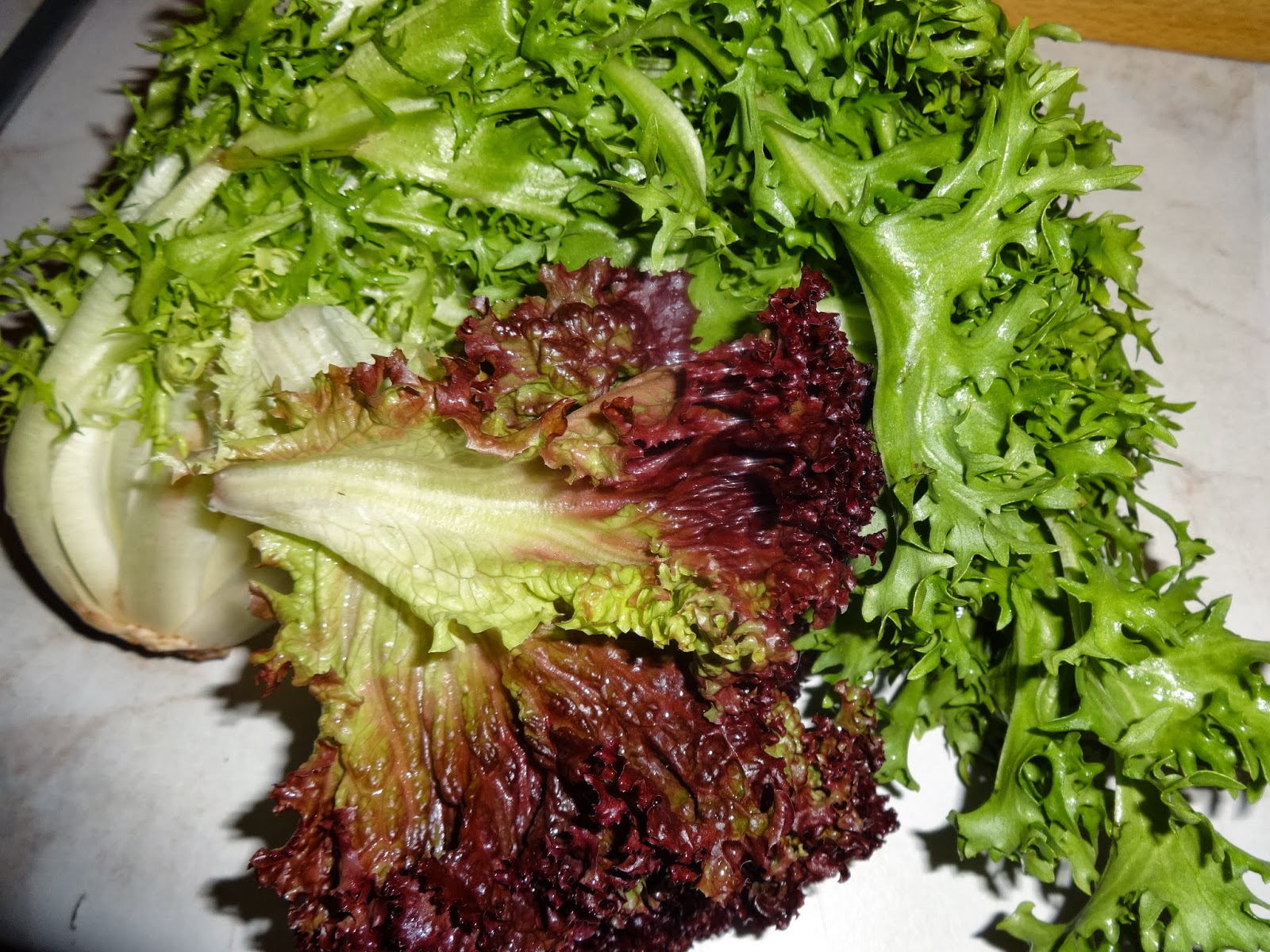
When I first came to Crete, there was little in the way of lettuce available apart from Cos lettuce. Now, you can get pretty much any lettuce, and they are all being grown in Greece.

"Oh, that's because he can't force himself to admit that they all come from the same sea, and they are simply sold at different prices (the fishmonger is always more expensive) according to the amount a store purchases." ("And no need to tell him where you bought them from, either - they will taste the same either way.") Just as we were about to sit down and eat, I heard a weird sound coming from all parts of the house that seemed to come with a lot of vibration. It sounded a bit like this: "took-took-took-took-took-took-took-took", like a train that was trying to brake suddenly, and it just kept going.
No major damage was reported, but plenty of things dropping (like in this supermarket, whose upper level was closed due to earthquake damage), especially stones and rocks on the narrow roads next to gorges, and many stores needed to do a bit of cleaning up afterwards. The roads have since been cleared. A old man also jumped from his urban apartment balcony (he obviously remembered the advice he was given when a youth in his village: "Run out of the house into a field") and landed on on the roof of a car, which now has a nasty bump.
"Σεισμός!" said my daughter, and I told her to get up and come with me, as we made our way out of the house through the kitchen back door. We stood near the door frame on the balcony hugging each other, waiting for the earthquake to stop. That was a really big one, approximately 6.4 on the Richter scale. A friend described it as a viloently shaking jelly - and it seemed to last a long time... 

Thankfully, the earthquake's epicentre was in the sea, thankfully also at great depth. Although Crete, as well as Greece, is prone to earthquakes, the ones that occur in Hania don't seem to do great damage. This is because of the fortunate location of the prefecture, explained in this link. The epicentre of yesterday's earthquake was close to Gramvousa, whose landscape changed abruptly when a serious earthquake raised the peninsula by 4 metres many centuries ago. 
This rock simply rose out of the sea after an earthquake that happened nearly 2000 years ago - the black part used to be below sea level. (More photos here: http://www.organicallycooked.com/2012/08/gramvousa-and-balos.html) 
I never feel the aftershocks (there were at least a dozen), only the biggie. All's well that ends well. My favorite part of the earthquake (if you can have a favorite part in an earthquake) was when I could hear all the neighbours come out of their houses asking each other what was going on; it's a nice feeling to know you will be heard and helped, and thankfully, the damages were really minor for such a violent shake. Naturally, we did not go to the beach as we feared a possible tsunami effect. But the hot muggy unseasonal weather is set to continue today - there's still time to get an October swim in.

©All Rights Reserved/Organically cooked. No part of this blog may be reproduced and/or copied by any means without prior consent from Maria Verivaki.