Wednesday, 25 March 2015

The Greek Collection: Shabby chic Greek flag for Independence Day

It's an Independence Day bank holiday today for people of Greek heritage all over the world. The origins of the formation of the modern Greek state has its beginnings in March, 1821. Yanis is due to spend it in Hania. (If the parades turn into a musical feast, you might even get to dance with him.)

A funny story related to Greek Independence took place just this week at my workplace. My non-profit institute's finances are monitored by the various organisations that fund it, which includes the Greek government. Checks are performed even on our library acquisitions: we were recently asked to justify why an institute with an agronomic nature such as ours, which uses English as the main working language of the institute, bought a book about the Greek revolution of 1821, in Greek, to add to our library. I wrote the following justification to our funders:
"Greek and English language lessons are offered to students, both during the academic year, and the summer school period. The Greek-language book about the Greek Revolution of 1821 is of great value for students studying the Greek language, who wish to gain an understanding of Greek history from the Greek point of view, as most material that Greek-language learners will most likely read about Greek history is in another language, and therefore the Greek point of view may not be expressed."
HIstory is open to interpretation. Library acquisitions have wider readership than just the acquisitioning library: our acquisitions can be shared through the institute's interloan system, which is connected with other institutes in the wider region of Crete, for the needs of university students. In this way. such material has a greater audience, and the knowledge that they contain can thus be shared among more people. 

A sky full of Greek flags will be flapping in our springtime breeze today, sporting the traditional blue and white stripes. We rarely see less traditional flag designs based on the Greek flag, so I wonder what people will think of my shabby chic patchwork creations. Greeks are not really into the shabby chic design - they prefer more modern lines. 


Shabby chic: a form of interior design where furniture and furnishings are chosen for their appearance of age and signs of wear and tear or where new items are distressed to achieve the appearance of an antique. (Wikipedia)

Bonus information - The book about the Greek revolution is not the only book we had to justify:  
"The Gatekeepers of Galatas (by Brian Taafe, in English) is based on the history of the wider region of Chania. It is written by a New Zealand academic living in Australia, whose father was stationed in the region during WWII. The local history detailed in the book - the battle that took place in Galatas, Chania, in an area known by the allied soldiers at the time as Pink Hill - has had little mention in contemporary writings about WWII. The usefulness of this book as a resource to students is in its descriptive value of rural life in Chania during WWII, with which students can make direct comparisons with their own experiences of the region."
Mentioning the war - that war - is bordering on the taboo these days. But just what was village life like in Hania during WWII? The book's descriptions of Galatas, a village only 5 kilometres out of Hania, show that, despite its proximity to the main town, the village was typical of many other villages further inland: simple houses, lime-washed stone walls, earth floors, long stone ledges to serve as seats, beds covered by rough woven blankets, very few bits of furniture in the houses, consisting primarily of a dowry-type chest full of linen, a weaving loom, an oil lamp, an icon, and πύθοι (earthenware urns) for water and oil. People ate fairly frugal, yet healthy diets, made up of pulses and other vegetables, herbs and wild greens, olives, village bread, paximadi (dry hard rusk), goat cheese, snails and, on a very seldom basis, meat. This was supplemented by olive oil, honey, fruit and berries, and washed down by wine and raki. The village roads were lined with pollarded mulberry trees, whitewashed against insect attack, some flowerpots and other trees, and the houses were covered by maze-like vines that provided shade. Life was not as hard as in the mountains, but it was hard nonetheless, wrote the author. There also seemed to be a shortage of food, according to the author's father; the villagers were very generous, but there was little available to buy. 

Compare all this to the situation nowadays - we've come a long way, and there's no going back.

©All Rights Reserved/Maria Verivaki/The Greek Collection/Organically Cooked. No part of this blog may be reproduced and/or copied by any means without prior consent from Maria Verivaki.

Monday, 23 March 2015

The Greek Collection: Greek fabric designs

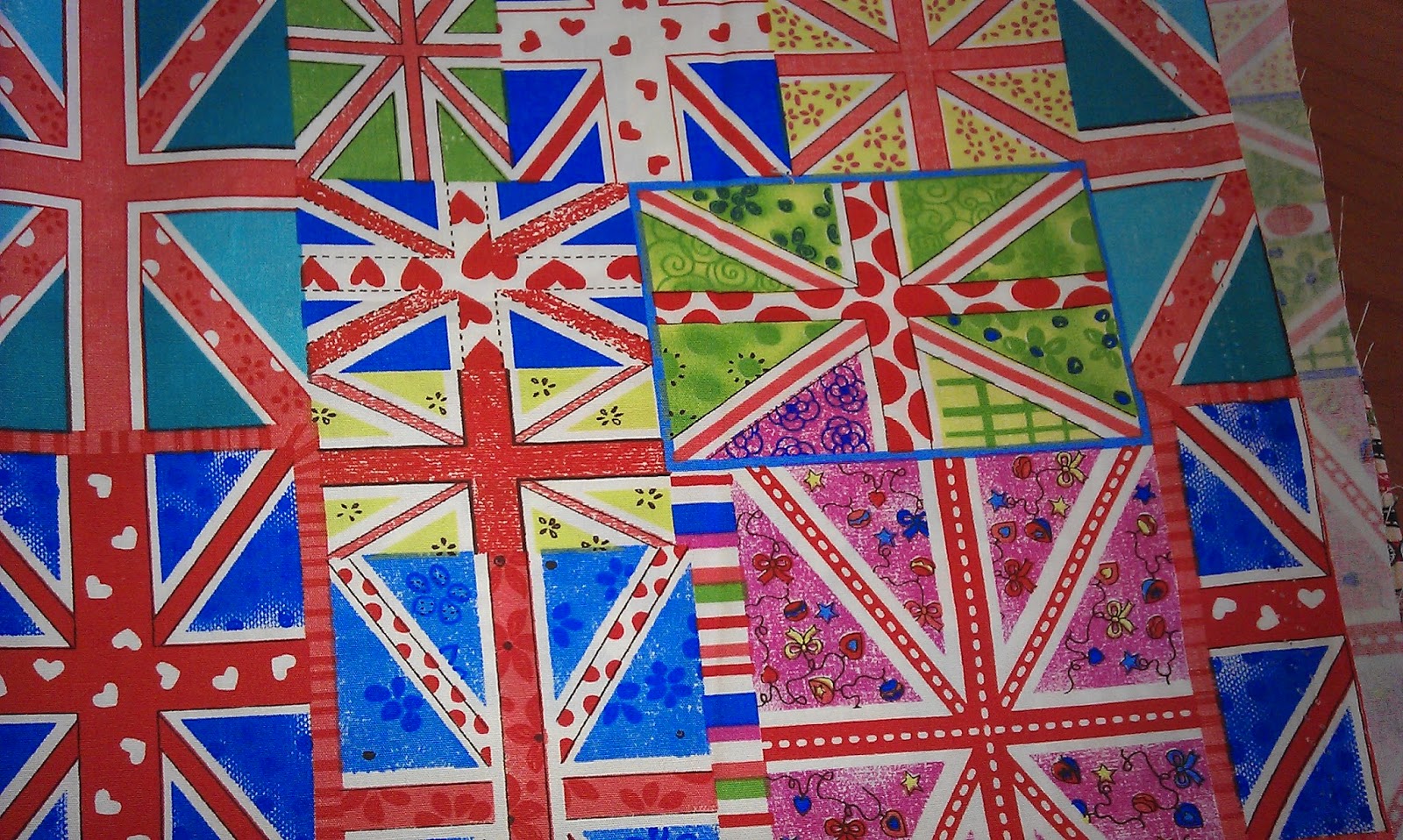
I've been collecting fabrics of all kinds for many years now. My special interest fabrics are those that can convey a sense of identity, especially Greek, in a similar way to the clothing, accessories and upholstery designs associated with the UK and US: namely, their iconic cities - London and New York - which, along with Paris, are the only cities to feature in international designs, and their flags - the Union Jack and the Stars and Stripes - which happen to be the only flags that feature in those same international designs.

The UK/US flag is also redesigned in many ways, using fabric ideas such as patchwork, 'shabby chic' and colour alterations, among others, especially for the purposes of patchwork and applique sewing techniques, and design in general. Patchwork is a common hobby among fabric enthusiasts all over the Anglo-Saxon world, and the actual designs of these two flags lend themselves well enough to such alterations. So does the design of the Greek flag, with its cross and many lines. But the international fashion market is dominated by the UK/US flags; ξενομανία (cf. ξένος - KSE-nos = 'stranger', and μανία - ma-NI-a = 'mania') has also ruled the Greek market to a great extent. So there is no such corresponding market in Greek fabrics or Greek flag designs, showcasing Greek identity in common everyday-use objects in this way.

My grandmother's patchwork rug:
it's all hand-sewn.
Patchwork is not really a homecrafts tradition in Greece, although rags and scraps of fabric were never thrown out in pre-industrial days: they were re-used, including patchwork-style, as part of the frugal lifestyle. I still have a patchwork rug, made by my grandmother in the log cabin style: some of the fabric has worn away, but some is definitely still distinct and can be traced as vintage early 20th century fabric. The Greek kourelou tradition also uses scrap rags woven to make a rug.

While on a visit to New Zealand over a decade ago, I was intrigued to come across fabrics with designs associated with New Zealand. Such fabrics are very idiosyncratic, and would not be understood by anyone outside New Zealand without an explanation: flora such as kowhai, pohutukawa, the fern; fauna like the kiwi, the pukeko and the shell of the paua, and Maori artwork. They would not have a great appeal, apart from among New Zealand patchworkers, and perhaps the tourist trade. The fact that such fabrics exist is perhaps based on the idea of a collective national pride, things that New Zealanders, no matter their differences, share with each other. The same that I bought so many years ago are still being sold in New Zealand, and they remain particular to the country - you would only use them in a genuine Kiwi design, because they don't lend themselves well to be added elsewhere.

I have just started using these fabrics in a patchwork quilt. The quilt design I've chosen looks quite ambitious, but with a sewing machine, a rotary fabric cutter and some μεράκι, this kind of work doesn't take a long time to finish. 

Although patchwork, in the US/UK meaning, is not a tradition in Greece (I myself picked it up while living in New Zealand), there are now patchwork groups in Greece - this is not necessarily a post-crisis thing: foreigners living in Greece have introduced the locals to this fabric art. But the crisis has certainly helped make people more aware of patchwork, both as a hobby and as a way to re-use something frugally in a creative way, and there are now web-based Greek patchwork groups.

It's very hard to find Greek-based images on fabric, but I did manage to come across this gem - a Greek island motif - at the street market. 

The absence of Greek-based fabric designs is a tricky issue to interpret. I sometimes see it as a lack of interest in collective identity: Greeks tend to be τοπικιστές. The concept of nationality-based fabric designs is also an Anglo-Saxon one, extending to its colonies. Tourist shops sell clothing with Greek-based fabric designs. The meander is the most often-used design in tourist-related products, labelled 'Greek key'. But that is more closely associated with Ancient Greece, not the modern present-day country. It's also often used in American college designs with the Greek alphabet (try googling images for just the word 'Greek'). There are also many Greek fabric souvenirs (eg towels, kitchen gloves, tablecloths, etc) that bear summertime Greek motifs depicting island scenery, the sun, the olive, etc. But they also tend to have a big fat placename (eg Athens, Greece, Crete, etc) printed over them, which makes them clearly destined for the tourist market: this kind of fabric is not the same kind as that used in patchwork. The low quality fabric and its kitsch design value, as well as its mass production, hints that it is most likely all made in China.

This leads to the question of what kind of Greek iconic images would be used in the concept of Greek fabric design if (or more likely, when) they come onto the Greek market. We all have collective iconic images of Greece in the sub-conscious, but they may be different according to the individual: Tourists might mention things to do with summertime Greek island scenery and the Acropolis (google images for just the word 'Greece'). But what would a Greek person living in Greece first put in their mind? Maybe they would not have given it much thought in the first place: Greeks tend to take their surroundings for granted in this respect... Whatever these instantly recognisable iconic Greek timeless images are, they need to be separated from 'touristy Greece'.

If I could design such fabric myself, I would want to see things that remind me of the Greece I am living in now, modern Greece, not ancient Greece. Try googling the images for 'traditional Greek symbols': the icons that come up depict ancient Greece - and they are most often non-Greeks' ideas of what constitutes a Greek symbol.

©All Rights Reserved/Maria Verivaki/The Greek Collection/Organically Cooked. No part of this blog may be reproduced and/or copied by any means without prior consent from Maria Verivaki.

Monday, 16 March 2015

Recipe certification and copyright

I've just been asked by (someone important) to do some research (for someone else more important) on the topic of 'certification of traditional Greek recipes' eg pastitsio, soutzoukakia Smirnis, etc. While I applaud interest in this kind of research - as a way of showcasing Greek identity in a positive way - as a long time food blogger, I know how pointless such research would be, as you would constantly be going nowhere while running around in circles. For this reason (and because I know that I would never get any credit whatsoever for research which will prove fruitless), I gave them a very concise reply:

"Certification of traditional recipes is not really possible. Recipes are not the same as food products; they are simply instructions on how to make a food product. A food product can be certified, but a recipe cannot. For example:
- We can have a certain health body certifying a recipe for its benefits (eg recipes certified by the American Heart Association)
- We can have products certified for their features (eg organic, PDO, PGI)  
- We can have restaurants that are certified for using specific products - but not for the recipe they use to make those products (eg Ntounias in Drakona, Hania is certified for serving Cretan cuisine 
etc

We can readily find discussions about the certification of traditional products but they always concern finished products; the recipe used is not certified in any way - the product that a recipe uses is what is certified, ie the finished product. 

Certification is different to copyright. Many recipe authors copyright their recipes, but this does not mean that their recipe cannot be reproduced by anyone else. You only need to change one ingredient, and a recipe is different. Instructions can also be changed just slightly, and again you have a new recipe: 
Mere listings of ingredients as in recipes, formulas, compounds, or prescriptions are not subject to copyright protection. However, when a recipe or formula is accompanied by substantial literary expression in the form of an explanation or directions, or when there is a combination of recipes, as in a cookbook, there may be a basis for copyright protection. Copyright protects only the particular manner of an author's expression in literary, artistic, or musical form. Copyright protection does not extend to names, titles, short phrases, ideas, systems, or methods. http://opensourcecook.com/recipes-copyright-law 
We cannot simply copyright a well-known recipe, either. This has been settled pre-internet (!):
The most definitive case on this issue was Publications International, Ltd. v. Meredith Corp. (88 F.3d 473 (7th Cir. 1996)). This case involves the fascinating subject of a book of Dannon yogurt recipes. Meredith had in 1988 published a book called “Discover Dannon – 50 Fabulous Recipes With Yogurt.” In the case, Meredith alleged that Publications International, Ltd. (we’ll call them PIL) copied many of the recipes from their Dannon book and printed in them in various publications (some of them copying up to 22 recipes). How similar were the recipes? Well, although not identical, the court (rather humorously for judges) stated: “it doesn’t take Julia Child or Jeff Smith to figure out that the PIL recipes will produce substantially the same final products as many of those described in DISCOVER DANNON.” http://paleomagazine.com/recipe-copyright/#history
There are cases where someone tries to 'sell' the idea of the certified recipe, eg making certified Neapolitan pizza. According to the link, the person in question is not really certifying the product - he is trying to certify the process, namely because he lives and works far away from the place where the product he is trying to certify originates, and he wants to market his product as 'the real thing'. There are EU-funded projects going on where people are involved in writing up 'specifications for traditional Greek recipes' ("συγκεκριμενοποίηση συνταγών") where they describe the exact quantity and origin of each ingredient in a recipe, but that in no way certifies a recipe. Someone else somewhere else will be cooking the 'same' recipe in a different way."

As a long-time food blogger, this kind of reply was not difficult for me to write.

"But that's not enough," I was told, "I want to provide (that more important person) with a solution!"

A solution? Really?! Some people can't take no for an answer. If there were one, it wouldn't be provided by the simple food blogger. It would be given by a team of experts who have been funded to work long term on such a project, backed up by legal representation who will irrefutably, once and for all, decide what a traditional recipe is. I think it would be much easier to find that needle hiding somewhere in the haystack.

©All Rights Reserved/Organically cooked. No part of this blog may be reproduced and/or copied by any means without prior consent from Maria Verivaki

Monday, 9 March 2015

Climate change (Κλιματική αλλαγή)

I haven't been to the Omalos plateau for a long time. In the summer we usually spend our time by the coast, and in the winter, I personally prefer to avoid Omalos because I don't really like snow. (It's nice to look at it, but not to have to wade through it. I'm sure most of North-East America agrees with me.) But the spring weather seemed nice enough yesterday for a daytrip to Omalos, so off we set on a clear fine day, making a quick trip to (one of) our orange orchards on the way, ...


... enjoying the sights of the yellow and white carpets of clover and daisies that had magically sprung up under the olive groves...

... only to find fog as thick as soup while we were driving up the mountain.


We've had a very strange winter this year: from last year's summer drought, we had not one, not two, but at least three huge thunderstorms, so big that they blew up our internet routers (twice) and my mother-in-law ended up with no phone for a whole month. Neither of these things have ever happened to us before. It's little things like this that remind us how difficult it is to live in harsh weather and terrain conditions. We all treasure our creature comforts.

While we were at Omalos, my daughter met up with her friend who often complains about the time she has to spend away from home at the weekend.


Her parents work in a restaurant that is open all year round on the Omalos plateau, which receives visitors from all over the world: during the summer season, avid walkers come to walk through the Samaria Gorge, while in the winter, the area becomes a favoured day trip for locals wishing to get away from urban life, especially when it snows, as the area gets covered in the white stuff.

Seasonal pond on the Omalos plateau

This year, during the Christmas period when Omalos is transformed into a winter wonderland, the snow was fell so often and so thickly that her friend was stuck at Omalos until the roads were cleared. And just think: they only live 30 minutes away from the plateau on lower ground just a few kilometres away from the main town!

Life at Omalos

I've been following the Guardian series on climate change, and there's a lot of interesting talk about developed nations' governments getting together and talking about how their economic policies can be tailored for a sustainable environment, but what all discussions about climate change lack (and Naomi Klein is seriously guilty of this too, as she enjoys her first-class globalised lifestyle) is the desire by the individual to turn back their own pace of life. Living in developed countries means living a more artificial life, whether you like this or not. Changing your lifestyle to a more sustainable one when you live in a developed country will ostracise you from mainstream society.

People never really lived all year round on the Omalos plateau. If they did, they were nomadic. Olives do not grow at this height, but apples and pears do. There are also lots of horta (stamnagathi - Chicorium spinosum). A lot of meat is raised here, and this is reflected in the restaurants of the area (see my food photos below).

And anyway: Who really wants to grow their own food? Most people can't be bothered growing herbs in small pots on their windowsill, and they prefer see floral inedibles to 'victory gardens'. Who really wants to go to the lengths - and the expense! - required to use natural energy sources? Greeks know this better than most others in the developed world - they can tell you how much they miss the simple act of pushing a button to heat themselves. How likely is it that 'New World' citizens will stop travelling abroad and just holiday in their own countries to save on fossil fuel? Also ask the Greeks about "getting less and less in the public sphere... defended in the name of austerity": the Greeks want more and more in the public sphere, without any austerity and no real plan about who is going to fund this (except that they will not pay for it themselves - it will always be someone else).


Tsigariasto (goat slow-cooked in olive oil and herbs)

Braised lamb with stamnagathi

Staka (a cream-based dip)

Pancetta

Lamb chops

Grape hyancinth bulbs, cured in vinegar (they aren't poisonous - plain hyancinth bulbs are!)
Kalitsounia fried in olive oil and topped with honey

If you were to try to sell, to the Greeks, the idea of a more sustainable lifestyle while making even more sacrifices, I'm sure they would reply in words to the effect of: "Γύρνα πίσω στο χωριό σου" (Go back to your village"). If you still have one, you are very lucky. But in the name of progress, you can't even do that. If you do stay in your village, to a certain extent you need to forget the progressive lifestyle. No amount of money will change that, even in present-day Greece. In Crete's relatively medieval past, living in mountain villages was a clear sign of a life under threat (of invasions by  foreigners). Once that threat subsided, people slowly left the mountains and fearlessly moved (back) to the lower coastal regions, where the weather is better, the terrain is easier to conquer and life is more social.

We enjoyed the Omalos plateau as much as we could that day. I know I won't be coming back too soon, even if my home is located just half an hour away. I covet the rural lifestyle, but I also like to living close to a town, like my daughter's friend. Isn't it better to live near more people than more animals?!

©All Rights Reserved/Organically cooked. No part of this blog may be reproduced and/or copied by any means without prior consent from Maria Verivaki

Monday, 23 February 2015

Koulouma (Κούλουμα)

It's the start of Great Lent, and the holiday allowed me to make the most of the day. Traditional food marking this event in the religious calendar includes shellfish - no meat or animal protein is eaten on this day.


First things first, taramosalata, using a salty cod roe, freshly processed breadcrumbs from stale bread, lemon juice, vinegar and olive oil.


As bloodless seafood is a mainstay of the day, I cooked some shrimps, in the easiest way possible to let me enjoy the day:  Take some headless shrimp, deveined and frozen. Wash them to get rid of most of the ice, then place in a shallow frying pan with minced onion and a good sprinkling of fresh aromatic herbs (I used Cretan wild greens picked up from my recent shopping trip to the Saturday street market, at the λαϊκή). Heat the pan and cook, straining off the liquids and adding a little lemon juice, a little red wine and some olive oil (and salt) to taste. Cook till the skin is crispy - you will be able to eat the skin too.


The rest of the meal consisted of fresh vegetables prepared as hot or cold salad: freshly boiled beetroot (with the leaves, which Greeks love to prepare as a hot salad), freshly prepared shredded cabbage salad, sliced avocado, freshly boiled potatoes, and some pickled vegetables.


The bread of the day is flat lagana. We buy two differnt kinds, to last us throughout the week. It was the case in the past that this bread went stale quickly, but times have changed - bakers have changed their recipe, and lagana stays fresh longer...


Although the weather looked promising in the morning, by lunchtime it was raining and remained so throughout the day, which cancelled our plans for a walk to the Ayious Apostolous beach which is popular on this day for kite flying. Many people were more daring than us: the beach area was full of kite-flyers.

The meal was finished off with some store-bought halva. The total cost of the meal is much more than what a home-made lunch meal usually costs, the most costly items being 800g shrimps 12€, 150g cod roe 4€, and lagana at 6€ a piece. As we say, it's only once a year.

Kali Sarakosti!

©All Rights Reserved/Organically cooked. No part of this blog may be reproduced and/or copied by any means without prior consent from Maria Verivaki

Thursday, 19 February 2015

Staying in control (while others panic)

You've probably heard me say the same things before, about three years ago when Greece faced another Grexit crisis. We're experienced in these things now. 

"In central bank circles it was discussed why the Greek government had not yet introduced capital controls. The Governing Council and the Governing banking supervisors would feel better if there were capital controls to prevent bleeding of the banks." (Translated from this German link).

I'm no longer worried about when Greece runs out of money, as this is already a well established fact about Greece, a country so desperate to find money from anywhere it can, that it's practically begging (non)tax payers to pay their taxes, by allowing people with unpaid tax dues up to 31.12.2103 to pay just 50% of what they owe if they pay half what they owe up front (or: they can pay whatever they can, and the same amount will be forgiven, while the remainder can be paid in small amounts over a long period of time). As for those who paid all their tax dues on time, like myself, well, they can revel in the knowledge that they simply don't owe anything, it's that simple. (So if you are the 'paying' kind of person, you are the true loser; if you were a true believer of the ΔΕΝ ΠΛΗΡΩΝΩ movement, you  have just been vindicated.)

I wish Greece had introduced capital controls ages ago as it only seems sensible. (My husband says that the reason it hasn't is because we live in a very democratic country - there is no other explanation.) I no longer care if I run out of money - I just don't want to run out of food; it's time for me to stock up on pantry basics. Voting in a new government has resulted in people being irresponsible about how to handle money, and we often hear them blaming Germany for everything that went wrong in Greece. It's hard for me to like the new government when I am surrounded by spoilt-brat behaviour and misled rhetoric.

Our wood supply is protected from the
weather with all sorts of bricabrac
.
As long as no one takes the food
out of our mouth, we shall never starve.
Let's take a moment to imagine that capital controls to stop people taking money out of the bank are finally put in place overnight, just before the upcoming three-day weekend celebrating Kathara Deftera (Clean Monday, the first day of Great Lent before Christian Orthodox Easter):

We buy onions
every summer
in braids which
last nearly all year.
Don't look at the brown
bits on the cauliflower.
Boiling water blanches
them.
I've got plenty of beans in the pantry, some sorry-looking (due to the weather) broccoli, cauliflower and spinach that needs to be picked, plenty of onions, garlic and spices for flavour, and enough pasta and rice for bulk. I'm running out of flour, which is very important for me as I make a pie every week. I've just stocked up on some protein (from the German discounter supermarket chain LIDL, who gives Greeks what they want: apart from cheap imported food, they also sell cheap made-in-Greece food), and I also remembered to buy some petfood - our dog and cat have to eat too! There's plenty of wood for the heater till this temporary freeze goes away. I may not be able to buy petrol for the car if I can't use my credit card, which means that I will have to work from home, or simply take time off work. I've been wanting to do that for a long time.

Work at home is the same as in the office.
But I'm definitely not stocking up on cash. I hate cash. I can't stand the idea of taking money out of the bank just to make myself vulnerable to burglary, attacks, etc, which has already happened to others: a couple was robbed of 60,000 euro in mainland Greece, and only last weekend an elderly couple was murdered in a remote village in Hania, all because they were known to be keeping large stashes of cash in their house.

Reduced and non-reduced chicken wings.
It's not a war with starvation, blood and bullets, but it's definitely a war, and I know I'm one of the innocent victims, along with many other ordinary people like myself. Take for example the Bulgarian man in the supermarket who saw me picking up the last two sticker-special packets of chicken wings. He asked me if there were any more with a 30% reduction sticker, and when we realised that there weren't, I gave him one of the packets, so we could share the savings, and when he wasn't watching, I picked up another packet of chicken wings at the full price. That's what I call solidarity. I could have made another early morning trip to the supermarket to see if there were any more discounted chicken wings, but who wants to fight through the last-minute shopping rush before Clean Monday?

Clean Monday?! Oh gawd, the shellfish. I may not feel the need to buy or eat it myself (the family doesn't call me Merkel for nothing), but the rest of the brood won't be too happy to hear that we will be eating beans again. Another shopping trip is in order after all, in order to contain the masses, and maintain an appearance of being in control. Now, where do I find cheap seafood and halva*?

*LIDL sells cheap halva and seafood, but we are used to higher quality in this line of goods, since we rarely buy them.

©All Rights Reserved/Organically cooked. No part of this blog may be reproduced and/or copied by any means without prior consent from Maria Verivaki

Tuesday, 17 February 2015

Hoxha the Greek

After the fall of the Berlin Wall, communism declined all over Europe, and people from communist countries were able to move freely. At this point, many citizens of former communist countries entered Greece, whose borders never really needed controlling during the communist era: Greece was surrounded by the sea in the south which created a natural border that was difficult to navigate, with Turkey in the East and Italy in the West, countries whose politics never targeted Greece from the migration aspect, and finally the communist countries in the north, who guarded their own borders for their own purposes. But when communism began to lose favour and free movement was granted, Greece was an obvious choice for Eastern Europeans (as we often label the citizens of former communist countries), and since 1990, many Eastern Europeans, primarily Albanians, are a permanent fixture of Greek demographics. But a whole generation has passed since then, and immigrants' children have been born/raised in Greece: the Albanian in Greece is now a Greek Albanian.

I've written before about Albanian people in Crete. 25 years down the track, we are talking about a second generation of Albanians who have been born and/or educated here, and they are now creating the third generation of Greek Albanians. Despite being born in Greece though, their citizenship status still creates problems for them in terms of official documents, and they remain a kind of Hellenic alien. The previous government was set to recognise some rights of second generation immigrants, but this is now being vetoed by the present government's coalition partner (who says that it may show preference in recognising the third generation - and so the chase goes on).

The second and third immigrant generation has essentially grown up and been educated in Greece. They speak Greek perfectly, without an accent, and they do not stand out among the general population, given that Greeks come in similar shapes, colours and sizes as they do. Despite the subtle differences between Greeks and Albanians in terms of their appearance (they tend to be shorter, paler and slimmer than Greeks, and they sometimes dress differently), Greek Albanians are thoroughly assimilated, and can be found in all sectors of society, save one: the public service, which in Greece is still reserved for 'real' Greeks.

The way that Albanians have assimilated in Greek society reveals a lot about Greek society itself. I'll use a few examples of Albanian people I know and have contact with, who show 'typical' Greek societal traits. My Albanian contacts are simply copying society:

1. My daughter recently came home feeling rather grumpy, after we told her that she couldn't stay longer than 9pm at a Sunday night party at a friend's house. "But the party hasn't even started!" she complained. The next day was a school day and the start of a new working week. Didn't her Albanian friend's parents know this? I'm sure they did. But this is just how the average Greek in their neighbourhood holds parties.

2. An Albanian friend recently told me that he is no longer sure about his legal status in Greece. He had a resident's permit, but during one of the least stable political periods of Greece in 2012, he stopped paying his social welfare contributions - like many Greeks - given the lack of monitoring. But now that the system has caught up the non-payers, he owes a lot of money - like many Greeks - and if he doesn't pay it, he will be asked to leave the country - unlike his Greek counterparts, because they are living in their own country.

3. My husband recently picked up an Albanian from the police station, where he had spent two nights in a cell. His crime: driving without having a driver's licence. Driving without a licence was quite common in Greece, up until the law came down harder on unlicensed drivers, albeit relatively recently, and now the general rule is that people will not risk it. This man has been living in Crete for more than a decade, is married and has three children. He had no legal status in Greece. but this was not a problem when the law was lenient, and he was just doing what other Greek citizens were also doing. Now that it's harsher, he finds himself in great difficulty, much greater than the average Greek: legalising his status in this country will require a lot of money.


The crisis is said to have taken its toll on all residents of Greece, irrespective of their background, and many Greek Albanians have had to reassess their existence, in the same way as other Greeks, in their country of birth. For many Albanians born in Greece, Greece remains their homeland in most senses, even food-wise, as can be seen from the highly authentic looking Greek food, prepared, cooked and sold in North London, by Albanian-Greeks.

The arrangement of the food in this cosy-looking takeaway restaurant has little to differentiate it from the typical Greek mayirio found all over the country. In fact, it felt like I was looking at the dishes on display in the Agora of my own hometown. The reviews of the restaurant attest to its Greek authenticity - but the facebook site is quite telling of a different story. The names in the likes and comments are not at all Greek.


©All Rights Reserved/Organically cooked. No part of this blog may be reproduced and/or copied by any means without prior consent from Maria Verivaki