Tuesday, 17 January 2012

What day is it today? (Tί μέρα είναι σήμερα;)

Titika rises and goes into her kitchen. It is still dark, but she cannot sleep any longer. She never sleeps past this hour. She is used to getting up at so early. She moves towards the kitchen, the warmest part of the house, where the wood-fire may still be burning, if she is lucky, and indeed, today she is. The embers are visible through the glass pane on the oven door. There is still a little life left in them.

She makes her way to the calendar on the wall, a present from her grandson. When he stays with her at the weekends, he likes to peel the pages off for her. She lets him read the day's story on the back of each page. But today is a weekday, and he's at school in the town where he lives. She carefully lifts yesterday's page to reveal the new date, laying the old page on the table.

page-a-day calendarShe must be ready at the first light. What time does the sun rise today? she wonders. Although she is used to moving around in the dark conditions of the three rooms of her village home, she turns on the electric light to read the sunrise time written on the calendar: 7.39. Dawn will be coming in an hour, she thinks, as she goes back to the switch and turns off the light. The sheep need to be milked before being taken out to graze.

The pot of μαλοτίρα had been left on the wood-fired stove from the previous evening, so that it will be warm to drink as soon as she wakes up. As she pours out the tea through a strainer, she cups her hands around the glass, warming them up in the icy chill of the early morning. Her throat welcomes the warm liquid, comforting her as it flows through her body.

She stokes the previous night's fire to keep it going and pushes the early morning ashes close to the centre so that they will pass through the grate and not choke the flames. Then she adds another log and watches it through the glass as the brittle splinters flicker alight and the log slowly catches fire, starting from the middle outwards. 

According to the calendar, the moon is still in the last quarter, so there is plenty of time left to till the land lying fallow, now that it would be at its most frothy. As she drinks her tea, she hopes it will not start to rain, as this would mar her plans after milking the sheep. There is still a lot of tilling to do to get the land ready for the next sowing cycle. 

Although she knows it is Tuesday, she checks the calendar once again to verify this. The letters are large and she does not need the light on to see them. The country GP will be coming today. He comes to the village every Tuesday. She needs to get a prescription filled for her osteoporosis tablets, so she will have to spend an hour or two at the former school building to get this done. Doctors are busy people - they can never be prompt. But this queuing gives her a chance to while her time away with the other villagers, the few that are left; despite the problems that the world finds itself in today, not many people care to return to this one.  Tuesday is a time when her sparsely scattered neighbours come together to find out what everyone else is up to. They will talk about their children and grandchildren, the weather, the olive harvest, the price of olive oil and the general state of the economy. Everyone will add their bit to the conversation, and even after each person leaves the queue and takes their turn with the country GP, they will still linger until everyone has finished their work here, just to make sure that they have all seen each other and missed no one. Even the kafeneio will be open today. Although Titika will not order anything there, she will take a seat with the other village women just to catch up with each other's lives.

page-a-day calendar
She looks up at the calendar. TUESDAY... 17... January... She mulls over the 17. It reminds her of something. She looks below the number: "Antonia". Antonia? Yes! It's her sister's nameday! She thinks quickly: It's morning here... so it's evening there. This is her way of remembering time differences between continents. She knows that this formula works for morning and evening, but she isn't sure about the middle of the day (the middle of the night is insignificant as she herself is bound to be sleeping). But it's still dark here too, which makes her hesitate. Talking on the telephone so early in the morning still feels unnatural to her, even though she knows her sister will not be sleeping at that hour. She may even be waiting for her call. At this moment, she also reminds herself that it's not a day of fast, so she can cook what she likes. As it's her sister's nameday, she knows this information off by heart and does not need to check it on the calendar page.

She dunks a piece of stale bread into the tea and lets it soak just enough to soften it. She then drains it over the cup before lowering her head to take a bite, taking care not to move the rusk away from the teacup; it was still dripping randomly. She watches the flames leaping and listens to the wood crackling away, as she looks at the empty pot next to the oven.

Dawn is breaking. A beam of light streams in through the window at the point where the curtains are drawn but do not meet. Every time she looks at that gap, she remembers the day she stitched them. When she hung them up, she could see at once that they needed to be amended slightly - she had sewn the hem about half a centimetre too inwards on one of them. But she never did take them down. The curtains have been there for a long time, and they will not be coming down soon. The colour of the room now lightens, as it fills with the first light of the new day.

What shall I fill that pot with today? she wonders. Even though she is a widow and lives alone, she never fails to eat a cooked meal every day. She remembers the leftover braised cauliflower in the fridge which she left for the chickens. They need to be fed too, but she will do that after lunch. The days are still too short, so that all the chores are crammed in tightly. She begins to organise her day's work in her head.

By now, there is enough light to read yesterday's calendar page. This year, instead of the calendar she was used to getting with a μαντινάδα written on the back of each page, her daughter-in-law had bought her a calendar with a recipe for each day. She thought it was quite a novel idea. At any rate, she had tired of the μαντινάδες. Ever since her husband had died, she found it difficult to laugh by herself, all alone in her house, even though she might have found something that she was reading or watching on TV to be very funny.

page-a-day calendarShe picks up yesterday's page and turns it over: Σπλήνα γεμιστή. Filled spleen! Where would she find an animal's spleen at this time of the year, she wondered, smiling. At that moment, she did actually want to laugh, but the image of her husband came into her mind, and sadness overcame her. Were he still alive, if she expressed an interest in cooking spleen that day, he would have gone to all lengths to find it for her.

She has finished drinking her tea, and now there is enough light in the house for her to move about her kitchen with ease. It's now or never, she thinks. Titika makes her way to the phone. The address book sits under it on a small round table in the corner of the hallway. She flicks through it to find her sister's phone number. It's complicated to remember it, so many zeros at the beginning, so many numbers to dial. It looks strange, in the same way that the name of the country her sister lives in sounds strange: Ne-a Zi-la-thia.

She dials the numbers slowly, pressing each one deliberately and listening to the beep that each one makes as she dials it. She waits to hear the ring tone, which sounds different from the one she is used to hearing at her end.

"Bring-bring... bring-bring... bring-bring..." It's ringing. "Bring-bring... bring-bring... bring-bring..." But no one is answering. She lets the phone ring a little while longer, and imagines what her sister's family may be doing now. Perhaps they are out. It's summer, and they may be returning from the beach. Antonia has told her that they live near the sea. The weather will be sunny and pleasant. Perhaps they may have decided to stay out at a nice taverna for an outdoor meal. Maybe--

"Hello?" Someone is home.

"Ποιός είναι;" She feels it is only right to ask who it is that answered the phone (and in the only language she knows), as she only speaks to her sister. Only her sister will understand her, as no one else speaks Greek in her sister's house.

"Ma," she hears a girl's voice saying, along with some other words she does not understand. The scuffling sound is heard of the phone changing hands.

"Τιτίκα!" Her sister's voice booms over the line. She was expecting her to call.

"Αντωνία μου!" Titkika sheds a tear as she utters her sister's name, trying to keep her voice smooth. This happens every time she phones her for her nameday; she phones her only on this day. "Χρόνια πολλά, αδελφούλα μου!" Now Titika is crying. She has not seen Antonia for thirty years, and Titika has never made a return trip to the village since she left. The sisters have a twenty-year age difference, but this has not waned Antonia's affection for her youngest sibling. She was more like her daughter than her sister as their mother had died in childbirth, and Titika raised Antonia amidst her own two children who were older than her own sister. She can never forget the day Antonia left the family home after falling in love with a tourist. She wrote letters for the first five or six years, but the letters lessened over time. Now Titika looked forward to receiving a Christmas card at the end of each year. When she received it, she felt relieved, as it allowed her to believe that all was well with Antonia, her baby.

The sisters made some small talk for a few minutes, asking each other questions about everyday life in their respective homes: what time is it there, how old's your grandson/daughter now, how are my brothers/your husband?


"What's the weather like there now, Antonia? It's very very cold here," Titika said.

"Oh, it's cold here too!" Antonia replied.

"But it's summer over there!"

"Oh, Titika, it's never that hot here. Now it's very windy and the sun is hidden in the clouds."

"Oh." Titika found all conversations concerning the weather in Nea Zilathia very confusing. 

"Well, I don't want the clock to run up too many units, so I won't keep you any longer." Five minutes. It seemed to pass very quickly. But it was only five minutes. Titika could see the kitchen clock from where the phone was. Antonia always had her mind on the time.

"Νά 'σαι καλά αδελφούλα μου!" Titika spoke exuberantly. She was happy to hear her sister's voice once again, and for a moment, she forgot her sadness about knowing that she would not hear it for another year. She sounds happy, Titika thought. It never crossed her mind that Antonia could be unhappy. She had a husband, a daughter and a home. The ξενιτειά has done her good. Although she felt it was a cruel blow to her when Antonia left the family home, she knew it had to happen for Antonia's good, and she was happy for that. It saddened her that she could not communicate with Titika's daughter or husband; it never occurred to her that they did not want to communicate with her. Antonia was well. And now, Titika will have something to tell the other villagers at the school as she waits for her turn to see the country doctor.

Satisfied with herself that she had completed her first task of the day, she began to bundle herself up for the cold outdoors, as the first rays of the sun began to appear. In the short days of winter, the day would pass quickly. Before night falls, she will be sitting on the sofa by the wood fire again, watching television until she nods off to sleep. What a pity the calendar contained only bible readings and not the TV guide!

*** *** ***
Of course, Titika did not have a spleen on standby to cook with that day, as the recipe stated on the back of the page for Monday 16 January, but even people living in villages desire to eat something different from the routine Greek meals. I imagine that her spirits may have lifted after speaking with her sister that day, and she might have used this recipe as a base for something more creative in her kitchen. I've translated the recipe as I read it on the page, but my photos show how I changed it to suit the ingredients I had at home.

You need:
2 beef spleens, opened from one side (if Titika had cauliflower growing in her garden, no doubt she would have had some cabbage too, so I used cabbage leaves)

DSC01247 DSC01250 DSC01251
Titika's meal is a frugal cheap and Greek one. To some people, it may look poor because it uses very cheap ingredients. But I doubt that many people living in an urban area can enjoy a recipe like this one, because the ingredients and the cooking method that they will use will not be as fresh or natural as Titika's. It's hard for me to describe in words how tastythis meal was. But it smelt heavenly, and it tasted delicious. I would liken it to meat stuffing of the highest quality.
bread cheese stuffed cabbage cooked in wood fired oven bread cheese stuffed cabbage bread cheese stuffed cabbage

For the filling, you need
1 cup of feta, crumbled (if Titika is Cretan, no doubt she would use her own production of mizithra)
2 cloves of garlic
1 cup of soft breadcrumbs from stale bread
1/2 cup of butter (if Titika is Cretan, she'd use olive oil)
some finely chopped parsley
pepper

For the sauce, you need:
1/2 cup olive oil
1 glass of red wine
1/2 cup of tomato juice (I used fresh pureed tomato)
1 cup of stock or water ( I used the latter)
a bay leaf
some thyme
salt

Clean and open the spleens from one side (if using cabbage leaves, boil a few large ones till soft and pliable). Mix together the ingredients for the filling. Fill the spleens (or cabbage leaves) and sew them up (if using cabbage leaves, just make them into a parcel). Place them on a baking dish, and pour over the oil and seasonings.

Heat up the wine with the tomato juice and water or stock. Pour over the parcels and cook for one and a half hours at 175C (or less if using cabbage leaves - the stuffing doesn't need a long time to cook).

©All Rights Reserved/Organically cooked. No part of this blog may be reproduced and/or copied by any means without prior consent from Maria Verivaki.

Monday, 16 January 2012

The way we were: Down and out in Paris, not London (Ελληνίδα στο Παρίσι)

Next stop for the Greek girl who went to London is Paris, the first place down-unders usually headed to from London when they began their continental travels. But it's a totally different world across the ditch, especially when you're a SWF.

 Thursday, 6/7/91 - 4pm Like another planet on the other side of the Channel. Got off the ferry boat on time, then got onto the train for Paris. Didn't leave on time. It's really really slow. Stops at every station and stays there for ages. Still on it. Best thing I've seen all day is the white cliffs of Dover. Hope it's not going to be pitch dark when I arrive in Paris.

paris march 2010
On stepping outside Gare du Nord (Paris's Eurostar connection), you will be greeted with pollution, congestion and filth, together with the masses of emigres that congregate here. It's quite a different picture from London's St Pancras Eurostar station.

Friday, 5/7/91 - 6.05pm Haven't hit it off well with Paris at all. Probably due to the fact that big cities everywhere around the world are plagued with pollution, emigre workers, a fast pace, and impersonal charcater. None of this interests me. I can see right through their tourist traps. If you don't go and see them, there's not much else to 'see' in the city without a local showing you around. London would have been the same kind of tourist trap for me if it weren't for Q. 

paris march 2010
Screevers, pavement artists, at Centre Pompidou, Paris: "The derivation of ‘screever’ is mysterious. It must come ultimately from scribo, but there has been no similar word in English for the past hundred and fifty years; nor can it have come directly from the French, for pavement artists are unknown in France." (George Orwell, 1933, Down and Out in Paris and London)

Almost ended up not getting a room. The North African at the accommodation help desk singled out the first five people in the queue and then closed the window  - I was one of the five. He gave us the address of a hotel that had five beds free, gave us directions for the metro (en francais, of course) and then left us at God's will. We took the train to Poissonerie. My friends were luckier than me - they all had small change for the train ticket. The cow at the ticket counter was screeching her head off when I gave her a large note. She wouldn't give me the right change, even when I explained that I didn't have any other money. I was ripped off. As we all walked to the platform barriers, a man ran past us a the speed of lightning. I thought he was a pickpocket or something and got a little scared. He jumped straight over the turnstile barrier.

paris march 2010paris march 2010paris march 2010paris march 2010paris march 2010paris march 2010
Motorcyclists protesting about their rights on Paris roads - we all need to vent at times; interestingly, this lot vented at the weekend - it's less disruptive that way (Greek strikes always take place on a weekday - that way, protesters and strikers can enjoy their weekends).

Sharing a room with two sisters. The two boys among us got the other room. They were all from the US. The landlord spoke to us in French. He explained the use of the bathroom, that it was on another floor, but if we stayed more than one night, then we could use the bathroom on the same floor as the room. He asked us if we understood what he was saying, and we all nodded. Then he asked us in English to translate everything he said into English. The Americans looked at each other shitting themselves. I was the only one who understood. He complimented me on my French. TG for Mrs Goddard. 

sacre coeur
As we climbed the steps to Sacre Coeur, we instructed the children (in Greek) not to be noisy while we were in the church. No sooner had we spoken than we heard someone who was kneeling near the entrance whispering "Vo-i-tia parakalo" ("Help, please" in Greek) as we passed him.

Walked to Sacre Coeur this morning. Taking photographs can be controversial. An artist spat 'merde' at me when I took a photo of the view from the church. I wasn't even taking him! Visited the Montmartre cemetery. Full of tourists. Feel like hiding, but I can't because I'm one of them myself. What the hell was I doing in a cemetery anyway? Weather's better than London, but the sky looks covered in smoke. View from top of the hill not clear at all. So different to Wellington, when it's not raining. The parks aren't as nice as in London. People aren't as nice either - was served badly at a restaurant (why did I bother to tip?!) and was given wrong directions. Finally got back to hotel and had a short rest - the atmosphere is so stuffy in the city! Or maybe I was exhausted. Later visited Arc de Triomphe. Let's Go tells me the view's worth it - couldn't see anything different from what I saw at Sacre Coeur! Walked over the Seine. The bridges are really romantic.

 View of the Champs Elysses from the Arc de Triomphe: it all looks better from up high; the beggars, mendicants, supplicants, tramps and other transients aren't visible from this point. 

Walking around all day makes you tired, but I can't get any decent sleep because the beds don't have proper pillows, just long thin hard ones that make your neck sore. Ended up throwing it off the bed. 115F B&B, 100F lunch and dinner.

Saturday, 6/7/91 - 7.00pm Began using my Eurail pass today. Took me ages to get it validated. French prats sent me from one office to the other. Then it took another eon to get to the right train platform. Went to Fontainebleau. Glad to get out of smoggy stuffy Paris. The palace was a bit wasted on me. I expected to see something ancient, but got gold-tinted furniture instead. Spent most of the time wandering around the park and forest areas. Came across a couple of weddings taking place in the grounds. No need to go to Versailles now. I think I've seen it all. 

raclette aux epices, camembert and cured meats 
Bread, cheese and cured meats: these items created lasting happy memories of our trip to Paris.

115F B$B, 13F palace, 100F food which should last a few days - bread, lettuce, cheese, fruit. The landlord was really friendly. I think he appreciated that I spoke French. He said most tourists say they speak French but don't understand when spoken to.

Sunday, 7/7/91 - 7:00pm What a day! Went to church this morning, rue la Ferriere. Arrived too early because I thought the service would start as early as in the London churches. Mixture of peasanty-urbane Greeks. Most are French-speaking. Didn't talk to anyone because no one showed the slightest interest in talking to a foreigner. The priest was the worst of the lot. He wanted to leave the church as soon as possible after the service because he was going on holidays.

paris march 2010
 "S'il vous plait monsieur, merci monsieur." There were a lot of Roma gypsy women hanging around outside Notre Dame. Interestingly, these women looked different and dressed differently from the ones we see in Greece.

Strolled around Ile de la Cite. More cemeteries, a lot of people gawking over JM's grave. Took the metro just before dusk to cross over to the Eiffel Tower, just to see it lit up. While I was browsing through the postcards stand, a man approached me. I caught the words "prendre du cafe" before I walked off. At least that one looked clean-shaven. As I was walking up the Tower, an grubby-looking porky middle-aged man with a hairy chest tried to pick me up. Kept asking me if I was 'romantique'. Can't have been French, had a strong accent. I was walking faster than him, so he lost me eventually once I got into the cinema. Great little film on the history of the tower over the ages. Glad I went to the Eiffel Tower after Sacre Coeur and Arc de Triomphe. No need to go right to the top - saw it all before.

paris march 2010
The gorilla wouldn't go away until we took a photo of him (and paid him his dues, naturally).

More station crap - took me 1 1/2 hours to book a ticket to Luxembourg because the silly girl at the counter didn't know how to do it. Metro is great for people-watching. Everyone here is over-sexed. They're all doing it  in public - young, old, parents, etc. That's probably why men view me as attractive. They can see that I'm completely alone. Most people around me aren't.

Monday, 8/7/91 AM  Getting to Gare de L'Est was an experience in itself. So many beggars all over the place. Weird experience on the metro: nearly all the people were black on the Pere Lachaise line. A lot of women begging, even children. They call out to you ('Madame'), then they show you a card which says something like 'Spare the change' en francais. Lots of people checking bins. No wonder - tourists throw out a lot of stuff. On my way to Luxembourg. 

paris march 2010 paris march 2010 paris march 2010
Monday, 8/7/91 - 10.00pm Finally, a clean city! Ultra-friendly people, both French and German spoken. No room at the YHA tonight, so had to find a room elsewhere. VERY expensive. Can't believe how much one city changes from the other in so little time. Language, attitude, services, everything. Paris seems so inhospitable compared to Luxembourg. Can't wait to get to Athens to start writing up all these notes more formally* - so much changes so quickly every few kilometres.

*** *** ***
When you're alone, the megapolis can be rather daunting. The story depicts what I saw when I visited Paris for the first time in July 1991; the photos were taken nearly two decades later (March 2010) during a family holiday.

paris march 2010
The way I like to remember Paris. It doesn't seem to have changed so much from George Orwell's time: the down-and-outs are still surviving, but screevers have also appeared.

(to be continued)

 *I can't believe I actually wrote this in my diary, but since it's my own handwriting, I suppose I really did.

*** *** ***

The above excerpts are based on the diary I kept of my travels, while the photos all come from my second trip to Paris with my family, two decades later. It was quite a cultural adventure for the Greek girl left who left antipodean Wellington in mid-June, passing through subservient tourist Bangkok, swinging London and romantic Paris, before arriving in Athens three months later. By the time I left Paris, I was a globetrotter rather than a Greek girl.

©All Rights Reserved/Organically cooked. No part of this blog may be reproduced and/or copied by any means without prior consent from Maria Verivaki.

Sunday, 15 January 2012

Cooking in the wood-fired heater (Ξυλόσομπα)

Our new wood-fired heater has been in use for just over a fortnight. It heats the house very well, at the same time as keeping the interior walls warm. The outcome is a warmer house all day, with less heat loss than using liquid energy powered radiators. The downside is that a slight smell of wood smoke is discernible in the open spaces where it escapes to, even from those few seconds that it takes to open the heater door, stoke the fire and add another log.


The biggest bonus of this heating system for me came a week after we installed it, when I started using the oven compartment. The trick with this kind of cooking device is that you have to maintain the temperature at a constant level. There is a temperature gauge on the oven, although it isn't exact; this isn't really an issue as I never use exact cooking temperatures or times even with a conventional oven. An experienced cook tends to know how hot an oven is by the heat of the air that punches their face as the oven door is opened, or by placing their hand in the oven. What I had to learn to do was to pile the appropriate number of logs in the correct way onto the already burning embers, so that the fire wouldn't choke or go out, and it would give me the heat that I wanted.


The oven compartment is smaller than my conventional oven. Luckily, I had appropriately-sized baking tins and trays, otherwise, it would have meant buying new accessories (more money).


My first experiment involved cooking lunch. I make papoutsakia in the summer with fresh aubergine and mince. These filled aubergine shells were taken straight out of the freezer and placed in a roasting pan with potatoes, with some tomato sauce, olive oil, water and seasonings. The meal took about an hour to cook - this is less time than what I usually need when I use the conventional oven! The potatoes came out very tender, but not as golden as I'm used to getting in a conventional oven. Practice makes perfect.


While lunch was cooking, I mixed up a batch of ladokouloura. As soon as our lunch was ready, in went the olive oil biscuits - so much value for so little cost. But the piece de resistance was the leek and onion pie made with home-made filo. I felt like my grandmother at that moment - yiayia's food really was the best. My yiayia is more likely to have made kalitsounia, something I always make in large culinary sessions and store in the deep freeze. In a hot wood-fired oven, they only need about 15 minutes to cook - that's really fast!


The wood-fired oven has given my family a chance to experience the past.

©All Rights Reserved/Organically cooked. No part of this blog may be reproduced and/or copied by any means without prior consent from Maria Verivaki.

Saturday, 14 January 2012

The way we are: the Greek identity in transition (Όπως είμαστε τώρα)

Since the realisation that the economic crisis was a global one and not just a Greek one, there was a decline in Greek news stories being posted in the major web-dailies. Until something absolutely sensational comes along and puts Greece back into the front-page headlines, like this one:
"Greece's financial crisis has made some families so desperate they are giving up the most precious thing of all - their children." (BBC, 9 January, 2012); mentioned on the news front-page headlines).
I won't argue about the quality of truth in the statement, suffice it to say that this kind of problem is a global one predominant in large urban centres, and it is not confined to Greece. Googling the Greek words 'αφήνουν παιδιά' (= they leave kids) will bring up a few links that originally date back to 4 January, 2012, and they all (including the BBC article) mention the SOS Village, a privately funded refuge for children in abusive relationships. Impoverished Greeks are now asking to leave their children there because they feel they can't take care of them. (SOS prefers not to take them because they are already over the limit in terms of children they can care for, and their existence serves a different purpose.) Such reports follow another article published in the Guardian (28 December, 2011) about a father of ten who wanted to give up four of his children (NB: the current average birth rate in Greece is something like 1.5).

The truth is that reports of this type question what has been believed about the traditional values of Greek society. The recent crisis has fuelled such changes, and provided food for thought about the altering nature of the Greek identity. It's disturbing to think that this situation may turn Greek people into the monsters they are being depicted. But I don't think that will happen.

The crisis is 'supposedly' a transitional phase which the world must eventually get out of in some way, kind of like a war. The crisis is actually a form of WWIII, but few people are prepared to put this into writing. Most people think of war involving weapons and ammunition, which is why references to WWIII mention nuclear war (with Iran and North Korea regarded as leading the way), but the lessons learnt from WWII are enough to ensure that such mass destruction could never be allowed to take place. Imaagine what will happen to most Westerners' food supplies if this were to happen: could they go back to rationing? (And the answer is 'No'.) The current crisis is just like a war: in this one, the weapon is economics and the ammunition is money.

In the previous great war (WWII), Greek people were also forced to question their values. In Crete, they sliced up oranges, sprinkled salt on them and poured a little olive oil over them, and called that salad. They ground up carob pods for flour to make bread. Both practices are now used in artisan-style Western nouveau cuisine. But did Cretans who were probably some of the first regular consumers of such creations adopt them into their food culture? No. As soon as things improved, people went back to their traditional diet. Athenians simply watched their children starve to death:
"... when there was no food available, coupons were useless and so was money. At one point, people were not just hungry; they were starving, a situation which forces the victim to turn his back on civilised behaviour and resort to any means just to stay alive." http://www.organicallycooked.com/2010/02/war.html
Instead of administering to their children's bodies the last rites (ie a burial), many deaths were not announced to the authorities. The relatives of the dead hid their bodies in public cemeteries at night, in order to maintain their food rations. Sometimes they buried them in hastily dug unmarked graves. Eventually the municipal services collected hundreds of anonymous corpses, so that these do not appear in official data. Did this make Greeks question the value or need for religion in their society? No. As soon as things improved, not only did people once again go back to their former practices, but they have remained, to a certain extent, a religiously monocultural nation, where politics is still influcenced by the church and vice-versa.

I'm not arguing that this new situation is not a detrimental sign in Greek society. I'm just saying, this is a transitional phase. Horror stories like the above-mentioned are simply a clear sign that we are in a state of war. Just like with the previous war, nobody knows when it's going to end. And when normality returns, Greeks will remember who they are (not just were), and we're bound to see a return to most things Greeks were well known for.

©All Rights Reserved/Organically cooked. No part of this blog may be reproduced and/or copied by any means without prior consent from Maria Verivaki.

Friday, 13 January 2012

Cheap 'n' Greek 'n' frugal: Pastitsio (Οικονομικό παστίτσιο)

Every Friday, it's cheap 'n' Greek 'n' frugal Friday.

Prices are in euro (valid in Hania). All ingredients are Greek or locally sourced; those marked with * are considered frugal here because they are cheap and/or people have their own supplies. 

Classic Greek pastitsio (the Greek version of lasagne) involves cooking in three different pots. Beef mince (in Hania, over 10 euro a kilo) is cooked in a red spicy sauce, then poured over boiled pasta, topped with bechamel sauce and sometimes grated cheese. I recently made a successful one using just one sausage instead of mince. It's quick to cook and can be made with some of your leftovers.

Very frugal pastitsio (serves 4)
1 medium-sized onion, finely chopped* 
1 fat clove of garlic, finely chopped*
1 medium-sized sausage of your choice, chopped small (~1 euro)
~200g tomato sauce* (half a store-bought tin costs about ~50 cents)
300-350g tubular pasta (there is always a pasta deal at the supermarket; LIDL sells 500g packets of 100% Greek pasta for 50 cents)
a punnet of Greek yoghurt (~75 cents; I had some left over from a tub which no one wanted to eat)
2 heaped tablespoons of flour*
200ml milk (25 cents)
a few glugs of olive oil*
no salt and pepper needed (a spicy sausage will have enough of this in it)


Heat some oil in a small saucepan. Add the onion, garlic and sausage and let brown for a few minutes. Add the tomato sauce and stir. Cook on low heat for another 5 minutes.

Boil the pasta in a large pot and drain well. Place the pasta in a baking tin and pour over the sauce. In the same saucepan where you cooked the sausage, place the yoghurt, milk and a glug or two of olive oil. Heat and stir, to blend liquify the yoghurt. Add the flour and stir constantly over medium heat until the sauce thickens. Pour this over the pasta. Place the baking tin in a moderate and cook until golden, about 35-40 minutes. Take the cooked pastitsio out of the oven and let it solidify a few minutes before cutting to serve.


We had it with a tomato salad (the tomatoes under the 'greenhouse' are doing well despite the cold) and some home-brewed wine. A slice of bread to dip into the extra virgin olive oil salad dressing makes this meal a very filling one.


Total cost of meal: about 3 euro; less than 1 euro per person.

©All Rights Reserved/Organically cooked. No part of this blog may be reproduced and/or copied by any means without prior consent from Maria Verivaki.

Thursday, 12 January 2012

Olive oil based choux pastry filled with Cretan tastes (Κρητικές γεύσεις)

A friend's son was celebrating his birthday last week and my children were invited. We have very little money to spend now on presents, so I decided to make some party food. I made some olive-oil based choux balls, and decided to fill them with a savoury filling.

The choux balls were made according to this recipe, but the butter was replaced by olive oil, which yielded a softer texture. Olive oil can replace butter in any recipe, but it must be good quality, otherwise the taste could easily be spoiled. Most olive oils sold by major supermarkets under their own private label wouldn't be good choices for this sort of thing.


The cream filling contained a mixture of mizithra (local curd cheese) and Greek strained yoghurt (to make it into a smooth paste), with some finely grated carrot and just a little finely grated garlic to give the taste of tzatziki. After spooning the filling into the choux balls, I added a sliver of finely sliced apaki, traditional Cretan smoked pork. For extra effect, I chopped up some parsley super finely, and sprinkled it over the finished pile.

These choux balls are very versatile; even as savouries, they could be made into a croquembouche.

©All Rights Reserved/Organically cooked. No part of this blog may be reproduced and/or copied by any means without prior consent from Maria Verivaki.

Wednesday, 11 January 2012

Sweetie (Αγαπούλα)

A series of 25-35 second ads that embody all aspects of the current political and economic situation in Greece has recently been given an in-depth analysis on TV's weekend breakfast talk shows due to the impact that they have made. The 'αγαπούλα' ads ('agapoula' = sweetie) represent the stereotype of the neo-rich Greek, the kind of person who is now most likely in financial trouble, and who has possibly now entered the world of the neo-poor, quite a different world to the one inhabited by people who have been poor all their lives.

The President insists that Antoniou is going to play in the next match.
Glossary: agapoula - 'sweetie'; amola - 'be off'; pes tou - 'tell him'.
The President: "Tell him the kid's got a great pair of legs."
The coach: "Tell him, if the kid's got great legs, he should advertise stockings."
The President: "Tell him the kid shoots goals that kill."
The coach: "Tell him that's something woodcocks and pigeons know very well."
The President: "Tell him the kid sells T-shirts."
The coach: "Oh, I didn't know he was in the underwear trade."
The President: "Tell him that Antoniou looks in one direction and passes in another."
The coach: "Finally, we agree on something."

In the end, the coach agrees that in 1-2 games, "the kid's gonna become a legend" (the President had just warned him that he'll be sending him to another field, something like pasture land).

By watching these ads, you will get a good insight into what has happened in Greece, and more importantly, why it happened. What is being said or implied through them is the kind of thing that journalists are too afraid to mention for fear of libel. Just this weekend, Makis Psomiadis filed a defamation lawsuit against the company that produced the ads, saying that they make a mockery of his persona. Considering the ads are centred around the shenanigans of a football club president who smokes cigars, is involved in match-fixing and ends up in jail, it is easy to see the resmeblance...

The use of the word 'agapoula' comes from its common usage by mafia-like underworld bosses (especially football - Makis Psomiadis himself has probably used it on amny occasions) and other neo-rich folk (how they became wealthy is no significance here) when calling out to their subordinates to get their attention.

So Antoniou did end up playing in the next match.
Glossary: doulia sou - 'get back to work'; ethniki - 'national' (road/club); kelebiah (slang) - 'arab'.
The President: "Tell him that after his appearance, all the major clubs are asking for him."
The coach: "Have they run out of porters? Or DJs?"
The President: "Tell him that in a month's time, the kid's gonna be playing in the national."
The coach: "Tell me at which point I can find him so I can throw a few gardenias."

The language barrier leads to the best parts of a non-English speaking culture's identity being kept secret from mainstream Western society. Greeks have long taken agapoula-like figures for granted, at the same time as showering attention on the bigshots; few would have dared to speak out about them in the past. It's only in recent times that such taboos have broken down, spurred on by the crisis  which has demanded greater transparency and a greater incination to state the obvious.

The President has found some interested buyers.
Glossary: petreleopigi - 'oil source'; mihanaki - 'motorbike'; bambouini - 'monkeys'; poula - 'sell'.
The President: "Tell him that the team is like an oil source."
The Arab: "Tell him that with an oil source like that one, we can't even fill a motorbike."
The President: "Tell him that the bambouini are gonna love that team."
The translator: "Tell him that they're called 'bedouini'."
The President: "Tell him that Antoniou is in the team."
The Arab: "Tell him, what use is a coat in the desert?"

The easiest way to make a mockery of the lack of transparency in certain sectors of society is with cryptic jokes, which the agapoula ads have succeeded in doing, so well in fact, that the product this series of TV spots advertises is now insignificant compared to the impact the ads themselves have made on the TV viewers. What the viewers will remember of these brilliant commercials for the WIND cellphone company is not the Free2Go call packages, but the mafia-like face of the football club president who fell on hard times.

The President's been charged with match-fixing.
Glossary: tis kakias oras - 'hopeless'; hasodiki - 'bad lawyer'; koukoula - 'hood'
The President: "Tell that ham lawyer that I'm paying him to get me out, not to put the others in."
The lawyer: "Tell him that all his sing-songs on the phone fill more cassettes than Parios'."
The President:"Can't he find me a little window?"
The lawyer: "That man doesn't fit through a balcony door, let alone a little window."
The President:"Tell that case-loser to cut out the bullshit and tell me exactly what I have to do!"
The lawyer: "Tell him to give me five or six or seven names."
The President:"Is that what he said? Agapoula, get the hood*."

It has been a difficult past year in Greece in general, but no way have Greeks lost their sense of humour, as these tragi-comic scenes reveal. Greeks are in fact laughing with the 'President', and not at him. As Takis Spiridakis, the actor who plays the President, said in a breakfast talk show: "Η Ελλάδα τα τελευταία χρόνια είχε όλο αγαπούλες" (= Greece in recent times was full of 'agapoules').

*hood - During WW2, informers pointed out their victims to the Nazis while wearing a hood so as not to be recognised (the victims would have been fellow villagers of the informer). 

UPDATE: 21 June - Agapoula is back from 'Europe'.

©All Rights Reserved/Organically cooked. No part of this blog may be reproduced and/or copied by any means without prior consent from Maria Verivaki.

Tuesday, 10 January 2012

Olive pips (Κουκούτσια)

When I was living in New Zealand (I was very young; I remember sitting in the old kitchen before the renovations), my parents bought olives from the Italian market in Mt Victoria, Wellington. The olives were placed in a bowl, in the centre of the table, and we all picked them from there. One day, my mother noticed that the pips that I carefully stored on the side of my plate. 

"How many olives did you eat with your meal, Maria?"

I was quite young, but I already understood that for my mother to ask me how many olives I had eaten when she could plainly see for herself the pips at the side of my plate, she was going to scold me. I was also being raised in a Greek home where irreverence to one's parents was not tolerated.
"Seven," I gulped.

"Seven?" she repeated. "That's too many! You only need to eat three or four!"

To this day, I still remember this little episode. Since then, I never ate more than three or four (or five at the most). Olives were an imported - and expensive - product in New Zealand.

Now that I live in Crete, I don't have this problem, even when we don't cure our own. At 5-6 euro a kilo, they still aren't cheap to buy - no locally produced food really is - but there is a plentiful supply.

Olive pips on a plate - my own creation


Olive pips are used to produce low-grade olive oil (πηρυνέλαιο) while their by-product is still used as fuel for radiators.


©All Rights Reserved/Organically cooked. No part of this blog may be reproduced and/or copied by any means without prior consent from Maria Verivaki.

Monday, 9 January 2012

The way we were: Greek girl in London (Όπως ήμασταν παλιά: Ελληνίδα στο Λονδίνο)

On reflection, I find that my ideas concerning food, travel and identity have remained quite stable over the years. So has my sense of humour. Some of the places mentioned below don't exist any more. As for the people (all names have been changed), I don't know where they are these days or what they're up to.

Thursday, 13/6/91 - 7.00am The flight from Bangkok to Amsterdam was OK, but Amsterdam-London was rather turbulent. Q met me at the airport, right after I passed through all the Zone B shit. God help those without EEC passports. Lovely vegetarian meal at an Indian restaurant. The tube was eventful - at one point, I realised that no one else was speaking except for me. Q looked relieved when I shut up. Brixton is colourful, to use Q's description, but if I had a choice, this isn't where I'd set up home in the long-term. Q says she's tired of it. She initially came to the area because it felt cool.

The bathroom in this house is on the top floor. No shower, just a bath. It's got huge windows with no curtains. Felt like the whole of London could see me naked. There's a windowless WC on the lower floor.

Friday, 14/6/91 - 8.50pm Went to a karaoke bar last night with Q. Disgusting. Q lost her purse there. Got home zonked*.

Had my first encounter with London Greeks, except that they weren't Greeks. They made it quite clear they were Cypriots. Took the tube to Haringey. Walked a fair bit because my travelcard doesnt extend to Zone 3. Strolled through Greek Cypriot territory. Greek shop signs, kafeneia, food stores, music, the lot! Talked to Barbara and another two Greek Cypriots in a bakery where I bought a flaouna (80p). Kept walking along Green Lanes. Not the most inspiring of places. Just as I was about to return up the road and leave the area, I saw a house with Greek Orthodox icons on the window. Out of curiosity, I approached it to check out the sign. At that point, somebody opened the door. He asked me if I was looking for anything in particular. Turned out to be a Romanian, and there was also a Greek priest in the room. The place was a bookstore selling Greek religious material (nothing in English, interestingly enough). They served me coffee with a kourmabie over a short chat. 

haringay june 1991I must have been day-dreaming after I left the bookshop - I got lost in the maze of streets with similar-looking houses. At one point, I decided to take a photo of all those narrow little boxes resembling toy soldiers lined up on the road in a straight line. As I put away my camera, to my horror, I saw a whole lot of Greek men staring at me - I was standing right outside a kafeneio window! Yuk!

Attended Taize prayer group with Q. Very new-age. Shut your eyes, sway to the rhythm, peace be with you,  we are all one. Groovy. It's probably more sensual to be in a group and meditate together with others than it is to stay at home and try to do this on your own. I much prefer the latter.

Saturday, 15/6/91 - 9.30am Got up this morning to find Evan in the kitchen, making his boyfriend's breakfast. Evan's a theology student. Had a chat about the Greek Orthodox church. A few minutes later, James walks in and sits at the table. Evan brought him scrambled eggs on a plate and sat it right before him. John then joined into the religion discussion. (Q told me this one's not gay.) Says he's really well versed on the Greek church. I never expected I'd be sharing a flat in London with English men who know as much about the Greek Orthodox church as I do - I haven't even been here for a week. I thought about inviting them all to come with me to a Greek Orthodox church service tomorrow, but decided against it for fear of sounding too bold. I'm supposed to be a transit flatmate. 

london june 1991Everyone here seems to do their own thing. They come in and out of the house as they please. They stay in their rooms unless they come to the living room to watch TV. They label their food in the fridge and cupboards. I bought some bread and cheese from the supermarket, but I can't bring myself to start labelling it. I just hid the cheese behind a jar that looked as though it hadn't been used in a long time. The jam had congealed around the rim. 

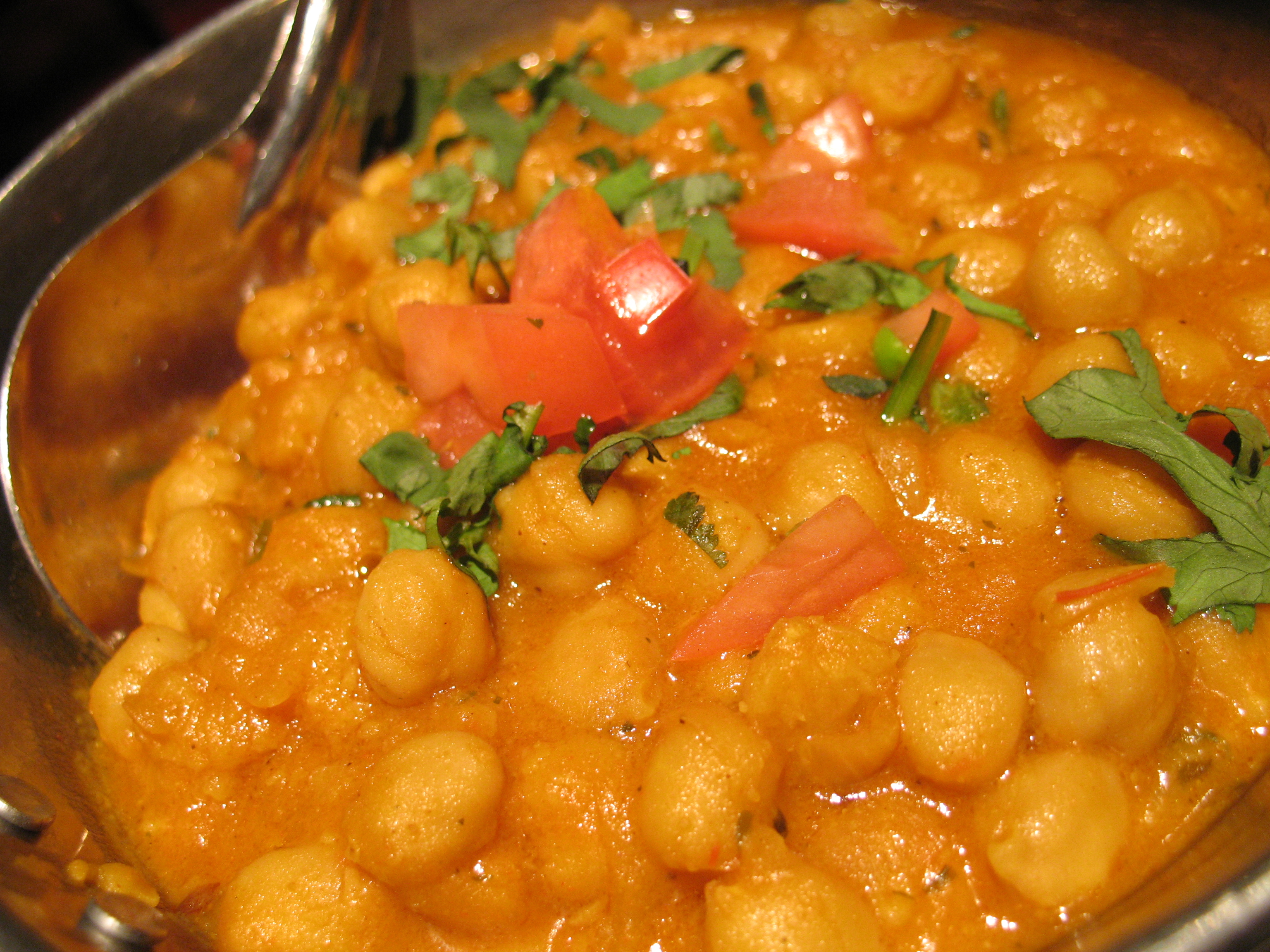
File:Chana masala.jpg
Saturday, 15/6/91 - 7.25pm Took a bus out to Covent Garden with Q. She wanted to go to a church fair. Browsed through a lot of bric-a-brac, as well as a nice array of food. Had some chickpea chana masala, and bought a sponge scrubber for the flat. I really don't think that brush they use gets rid of everything. The fair was held near a YHA office where there were some camper shops. Want to buy an immersion heater before I set off for Europe. 

Went to Campion House at Osterley in the afternoon. Had lunch there (very filling) and a coffee in the common room. Met up with Q's friends, Giovanni and Victor. Q seems to have a lot of gay friends. She probably thinks they're exotic. Spent the rest of the day with them at the Butterfly House in Syon Park.

Sunday, 16/6/91 - 9.00pm Had originally planned to go to the Greek Cathedral, but decided to go instead to the church in Leyton. Attended Orthos, then Liturgy, and had a cup of coffee after the service. I was given directions for the monastery near Colchester, a telephone number and contact person. Before I left, the priest gave me a loaf of prosforo. Headed back to the tube where I came across Garfunkel's. Decided to have a meal there - £4.95 (service NOT included - what a laugh!!) for the salad bar. Sounds cheap, but not if you have to pay this kind of money for each meal. It's eat all you want - I made sure to eat enough for lunch and dinner. It all tasted quite good, but it was all cold. I hate cold food on a cold day. It's rained nearly every day I've been here. Middle of June and still winter. P tells me it's definitely summer in Greece now.
Got home and did a thorough cleaning of the dishes. No one ever scrubs the inside of a mug here - they're all stained with brown rings. Don't they know about sponge scrubbers??

Monday, 17/6/91 - 8.30pm Left the house with Q. Took the tube and got off at Covent Garden. Decided to walk around the city. Ended up at St James Park, bought some sandwiches and picnicked with the pigeons. Visited Harrods - wanted to buy something from there as a souvenir, but the prices shocked me to the grave. Had a coffee in their cafe just to get a feel for the atmosphere (I miss Espressoholic's cappuccinos). 


Saw a man peeing against the wall as I walked to the house after getting off at Brixton. He smiled at me as I passed him and said 'Sorry' in a sing-song accent (I guess he was Carribean). Q says this sort of thing happens all the time. 


oxford june 1991
Tuesday, 18/6/91 - 6.30pm Q's asked me to go out with her tonight. Just a quick note to remind myself of the places I visited today at Oxford: museum, St Mary's church, botanical gardens, Christ Church, Bodleian library. Liked the college grounds most of all. Students wear gowns to classes! Must be quite an achievement getting into one of the university's colleges in the first place. They need to stick out above the rest.

Wednesday, 19/6/91 - 11.15am Last night was a really late one - spent the morning sleeping it off. Eddie is coming back home tomorrow to his room, so I cleaned it up and then moved into Q's room. Did a bit of washing. Then went out with Q to her friend's house for a Twin Peaks evening. I had this idea that we'd be visiting an English person's house, but they turned out to be Australian lesbians and Cypriot bisexuals. I'm sure now that she thinks gays are exotic. I suppose it's image-boosting: "Many of my friends are gay." Having said this, Evan and James are a nice couple. They seem to be much easier to talk to than this lot. They're all gay in their own way, but the English ones appear to be more down to earth, less confused about who they are.


Wednesday, 19/6/91 - 6.40pm Decided to do my food shopping at Tony's today instead of Tesco's. The shop assistant gave me the mint for free because it was on its last legs. Also found some fennel. Brixton's shops sell nearly any food you want. The vine leaves were a little pricey. Made dolmades with cabbage for everyone. They all seem to love food with exotic names. 
lahanodolmades
  I probably didn't make lahanodolmades as good as this back then...

trafalgar square june 1991
Thursday, 20/6/91 - 11.45pm Packed day today. Visited a number of tourist sites. Walked around Trafalgar Square, visited St Paul's. You have to PAY here to see churches!?! Museum of London (free) - very interesting. Museum of Mankind - the Palestinian costumes were more appealing than the human shrunken skulls. Tower of London - outrageously expensive, something like $20NZ to enter. We've just come back from the Phoenix Theatre: Dancing with Lughnasa.

Friday, 21/6/91 - 7.15pm Decided to be Greek for the day and visited the Archbishop. He sounded only too pleased to have me as a guest in his office. Told me not many Greeks come to see him just out of interest. I tried to explain the make-up of the Greek Community in Wellington, but I think I lost him a bit there. He couldn't understand what I meant by Greek-Romanians. I was invited to the dance held by St Sophia's church at the end of the month. The Archbishop said he'll pass on my name and number to one of the organisers.

Just as I was leaving the Archbishopric, a Greek priest from K______ came to the office. Apparently, he's in London for an eye operation and comes to the Archbishopric every day to be fed. I couldn't work out if he was begging, or just genuinely poor. The way he spoke sounded a little melodramatic, like I was watching an old black and white Greek film. Stopped off at McDonalds for a meal. Don't remember McDonalds salads in Wellingon tasting so revolting. 

Q's off this evening. Thinks she's got something going with Paolo (all her boyfriends have foreign-sounding names), so she doesn't want to waste any chances. I won't see her until after the weekend. James suggested a walk in Brockwell Park to celebrate Solstice Day, the longest day of the year. It made me a little homesick - Mum and Dad just experienced the shortest night of the year, all alone. Must remember to give them a call very soon. James was at Eton, he's visited Mt Athos, and dabbled with Orthodoxy when he got back to the UK, which is how he met Evan. He's been around a lot of men most of his life. Weird that they don't live together. Something to do with wanting to be independent from what I understood. He really liked my exotic-sounding dolmades - he ate all the leftovers when we got back to the house. It's a nice feeling knowing your food's been appreciated. 

Saturday 22/6/91 - 7.30pm Visited Greenwich today. Docklands was supposed to be on the agenda too, but the monorail wasn't working - no trains at the weekend. Had to take the bus. I prefer them because they're slower than trains and you see more from a bus window. Even the way people walk on the street looks different to me. Greenwich market is fascinating: so many goods, colours, people. Bought a pair of cullotes, even though I constantly worry about my financial s
ituation. I don't want to overspend, but I don't want to feel like I'm bludging either.

I feel so alone today. The gays are away, but John and Eddie are both in the house. Eddie keeps to his room, John moves from his room to the TV room. I feel like I'm intruding, so I just stayed in Q's room. Maybe a youth hostel would provide more solace than this. Packing a day bag to go to the monastery tomorrow.

monastery essex june 1991Sunday 23/6/91 Arrived at the monastery - not without problems! Underground was slow, missed the 8am train to K______, couldn't find a taxi at T______, couldn't even make a public phone call from the one and only phone box. A grocery was open so I asked the nice looking blond shop assistant if he could help me out. He told me the monastery wasn't really within walking distance, so he called up a taxi for me. I asked him how much the call cost but he didn't ask for money. And they say the Brits save up their coppers! Love the English countryside - so different to urban London.  It looks like a much simpler place to live in. Most people are trapped in their urban routine though.

The service was long, the church was full. Quite a few converts - Sister X told me there's an equal ratio of converts to Orthodox-born. Some people overdid the religious routines here. Reminded me of Kiria D______; they make her look benign. Also some glamour girls coming in the latest fashion - a little inappropriate for a monastery. When I told them I was from NZ, they asked me 'Are there other Greeks there?' Attending Greek church is definitely an identity thing, sticking to your own kind. They reminded me of Mum's intermarriage fears. Cyprus is only four hours away if they wanted to find spouses for their sons and  daughters, so I can't understand what their problem is. Interestingly, I found more Greeks here rather than Cypriots. The meal afterwards was completely lenten. I was allowed to stay overnight, and shared a room with two other girls, one Cypriot (English accent), the other Greek (Greek accent). They wanted to keep their conversations private, and treated me like I wasn't in the room. Apparently, they come here often, so they're used to treating stranger-visitors like myself as invisible. I was exhausted anyway, so I had a lie-down, but I couldn't help overhearing them. Caught on that the Cypriot was recently divorced from an Englishman and has a sister who's a nun in Greece. He probably got tired of too much religious mumbo-jumbo. They thought I couldn't understand their conversation in Greek because I told them I was from New Zealand. The Cypriot girl asked me what language we speak there!?! The Greek girl wasn't even interested. I think they think I'm a New Zealander, not a Greek. 

Was in for a treat - first decent shower I've had since I arrived in the UK.  

monastery essex januray 1991
Monday 24/6/91 Today's much quieter, with all the picnickers and bride- or groom-seekers gone. Apart from church services, the nuns and monks go about duties like cooking, gardening, cleaning, reading. After breakfast, I took a walk with one of the nuns in the fields. She's a convert. Told me she lived a totally unholy life before coming here and finding inner peace. We spoke about a lot of things, all basically to do with making life choices. I kept thinking of Maslow's needs theory as I talked to her: when you've got most of the basic problems in life sorted out for you, you've got plenty of time to think about sorting out your priorities. The monks and nuns seem to like to do the talking here. I think they're trying to pass on messages, and maybe their words are more important then mine. She gave me a book as a present. It's got some nice ideas in it for Sunday School. 

Also met J, a very young-looking Greek girl who wants to be accepted as a nun and is currently undergoing training of some sort. She was due to start a PhD when she decided to come here instead. I can't believe she's doing this to herself; she still wears drainpipe jeans under her tunic.

Tuesday 25/6/91 - 7.00pm Arrived back at the house with a feeling of fullfilment which I didn't have before I went to the monastery. Everything looks strange and distant outside the Greek environment. Would like to return for a second visit. Wellington Greeks need this kind of group because it gives them a more coherent identity. 

Nikos (Cypriot) called me about the dance, church service and bible class. Interestingly, he said he was at the monastery the day before I arrived. These people are regular followers, but something drives them back to London. In or out?

Never going to those Taize groups again. The Jesus Prayer works so much better. 

swansea? june 1991
Wednesday 26/6/91 - 1pm It's pouring today. Feeling like a drowned rat. Tried the Jesus prayer last night. Managed to make it last ten minutes before I got distracted. It was much easier to read the nun's book. Just about to board the bus to Swansea. 

Thursday 27/6/91 - 3.30pm Recognized G's parents immediately. They picked me up from the station and had a lunch ready for me: lasagne, salad, jelly and peaches. Feels like home! Then G's friends took me out to the Rock and Fountain where G used to work. Met up with their mates there and I had two bacardi-and-cokes. Not that I wanted the bacardi - I just felt I had to drink it, because they expected me to do so! TG they all go home early - all I wanted was to be vertical for a few hours.  

G's father showed me the office he keeps in the attic. A bit precarious allowing him to climb up that ladder at his age! Caught a glimpse of the morning paper - the headline was about a Thai butler and a dead family in Athens. OMG. Went out to Roshili, then Oxwich in the Gower peninsula. G's parents treated me to the best meal I've had out so far: a pub lunch! We came home with the rain. J and S have invited me to Mumbles on Friday night. More alcohol, I suppose.

Friday 28/6/91 - 8.10pm Too many distractions for prayers. I've only just remembered them, now that I look back on my diary notes. G's mum cooked up a large lunch today for G's cousin's arrival. Then G's cousin took me out for a drive to Mumbles - the romance of a summertime beach holiday is somewhat drenched out by the drizzle! Passed by a grocer's - intriguing array of fruit and veg. G's cousin picked up a lettuce for G's mum. As she was paying for it, I noticed the price: 5p. Back home for dinner. I do feel sorry for G's mum: she prepared another meal for us, her husband was drunk and her niece buys her a 5p present.

Monday 1/7/91 - 1.00am Can't sleep, so I'll just fill in the last few days' events. Friday night: Mumbles pub with J and S - more bacardi cokes. Felt a bit like Coronoation St coming alive. G's friends love a good gossip - they weren't surprised at all about the 5p lettuce! Saturday: took a leisurely stroll around G's village. What a delightful place. She must love coming back here. I can understand why she needed to leave in the first place. It's just too small. Took the bus back to London in the afternoon. Sunday morning: St Sophia's - very Anglo-Orthodox feeling in that church. The choir chants Byzantine verses using Anglican organ tunes! Nikos found me after the service (how on earth did he recognise me?) and suggested I stay for bible class - that went on until the early afternoon. Not even any mention of lunch! Then off to a fete in Wood Green; got a peek into a Cypriot-English wedding, and finally The Dance. Sat at a table with Andrew and his parents, who were obviously hawking around innocent young Greek girls in the churches to save their son from intermarriage. Dances finish early here so everyone can catch a train before midnight. No one even asked to chaperone me back to the station! Changed carriages to avoid a nutter in the one I got into first. Felt a little scary walking back home on my own at midnight. This is London, after all.

Monday 1/7/91 - 10.45pm Thinking of leaving London for Europe. Everyone goes to Paris, so I suppose I'll go there. Just returned from another young people's bible class that Nikos' friends had invited me to. Except that there was no bible class = it was more of a complaints session. They have similar church/priests/parish problems as we do back home. One group is obviously more educated than the other; each group sticks to their own kind. They don't see eye to eye. While there, I met up with Father D, KP's uncle - small world! He asked how she was doing. I didn't divulge what I knew about her, but he spilled the beans anyway. Apparently, he knows all about KP's problems with Dirty Den, who was supposedly a VIP during his time in London. He gets by purely on charm. 

Had a heart-to-heart chat with the priest. He told me straight out that he was angry with the youth group about hiring a Greek band to play at a concert for £350, all for just a 40-person turnout. Bad organisation all round. The way they explained it to me, I felt that they'd done nothing to promote the concert, hence the bad ticket sales. I wanted to tell them all about how we planned Wellington's Greek Week, but I was waiting for the bible class to start. Hung around for at least an hour, but nothing. Decided to head back home. Good example of their organisational skills - they run on Greek time!

Bought some chips on the way home at a shop run by Greek Cypriots. These guys looked really shady - ponytails and dark eyes. The Egyptian assistant was more approachable. Q's due home tomorrow.

oxford st june 1991
Tuesday 2/7/91 - 10.45pm Charing Cross Road has great bookshops - particularly liked Sister Moon. Spent the morning reading - feels nice to get back into this habit. But I can't buy anything, because it will really be too much to carry in a backpack round Europe.

Went to see Where Angels Fear to Tread in the evening with Q - £5.50 for the cheap seats. Now I know what John Lennon meant by 'rattle your jewellery'. After the film, we decided on dinner at a Chinese restaurant. Went to Wong Kei's where we were abused, so we left and went to another Chinese restaurant in the same area. The waiter asked Q for her name, address and number. She didn't oblige, so he then asked me. I didn't oblige either. Think I'll stick to Indian restaurants from now on. TG they're all gay or attached at the house. I've never seen John and Eddie's girlfriends, but supposedly, they do have one.

Captain Peacock: Mr. Humphries, are you free?
Mr. Humphries: I'm just pricing my ties, Captain Peacock.
Captain Peacock: The gentleman wishes to try on a dress.
Mr. Wilberforce Clayborne Humphries: I'm free!
Customer: It's for a fancy dress party.
Mr. Humphries: Oh yes. Thats what they all say.
Are you being served? Excerpt (12:00) from Season 3, Episode 3 

brixton june 1991Wednesday 3/7/91 Was excited to get a postcard from Richard. It's a good feeling to know that I now have some direction in my travels with a fixed destination in mind. Will make my way to Nurnberg. Prepared a meal for all the housemates. Q and I are at the point of clashing. It's true what they say: best friends should never live together. Making plans to leave asap. 

Thursday 4/7/91 - 10.15am Left Brixton (hooray) for Paris. On train to Dover. Got a Scot and a Russian for company.  (to be continued)

*** *** ***

In June 1991, I left my home of 25 years to do my big OE, the customary work-and-leisure travel that most New Zealanders undertake at some point in their lives to experience life beyond their country's borders. In those days, most Kiwis headed for Europe via London, and often ended up in Asia before (if indeed) returning home. I bought a one-way ticket to London where I stayed for three weeks, before embarking on my continental travels through Europe over a period of two months, eventually arriving in Athens in September. I had thought about travelling through Asia on my return to NZ, but that never ended up happening because, as most followers of this blog know, I ended up staying in Europe. Maybe (probably) I ended up in Greece through a process of self-discovery - the above-mentioned 'more coherent identity' - which I found here.

Although I had kept a diary before that (albeit at irregular intervals), this was the first time I felt the need to keep one systematically. For this reason, that particular diary was the only one I ever kept. The diary sat, for many years, on the bookshelf of whichever house I was living in at the time. The notes I kept show my first glimpses of London as I saw it 21 years ago. All the excerpts above have been taken from this diary, in a slightly edited form. My photographs were taken between June 1991 and January 1992. The youtube video reveals some background to my informal education on London life and homosexuality.

*Honest to God, I don't remember ANY of this.  

Thank you to all those who read this before I posted it.

©All Rights Reserved/Organically cooked. No part of this blog may be reproduced and/or copied by any means without prior consent from Maria Verivaki.