You may be a budding story teller, but you don't know it. Today's story has been written by Stella Yeung, a friend I made via facebook. Stella and I met up at the island of Kithira just last Easter, and she told me about her little adventure during a previous trip to the island. Here is her story, in her own words.
It all began when our baby grandson gave my husband a kick right under his ribs on his right-hand side in the morning of the first day of our second holiday week on the island of Kythira two years ago. In the beginning it caused him just a little pain. He didn’t seem to pay much attention to it. Later on we went to the village of Potamos to buy some groceries with our daughter. Hubby went back to the car as we continued shopping.
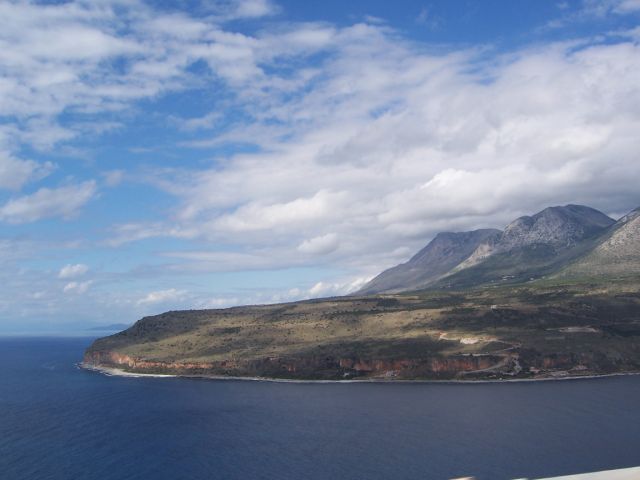
If I hadn't met Stella through facebook, I would never have visited Kithira, a beautiful Greek island only a few hours away from my own home. This amazing waterfall is just one of the places I visited while I was with Stella on the island.
We thought he got bored because we spent quite some time in the supermarket, but when we came back to the car we found him sitting on the back seat with big drops of sweat on his forhead, and a pale face, looking deathly sick from the pain. We immediately took him to the island’s hospital in Potamos. Thank God they have a hospital on a small island like Kythira, thanks to the Kithirian migrants of Australia. I called Frank, the host from the travel company, who was a great help to us.
Even though I speak Greek very well, I still needed his help because I was feeling totally stressed out in the world of medical terms. My husband was examined by a doctor who hurried to hide her box of cigarettes as soon as we entered her office. She sent us for an echogram, X-rays and blood tests. It was clear to everyone that there was a gall stone causing trouble and a serious gall bladder inflammation, so he had to stay in hospital. They put him on a drip and antibiotics. That was the last time he ate anything for almost a week.
When my husband was brought to the ward, he looked a lot more at peace. The pain had subsided, and so did my fears. I asked the doctor if there was anything that I could do for them before I went back to the apartment. They said there wasn’t, so we returned to our apartment in Agia Pelagia, after leaving my Chinese husband in a hospital on a small Greek island where hardly anyone spoke English and no one spoke Chinese.
It was already quite late in the evening. My daughter ran me a long warm bath, which made me feel very relaxed after all the stress. Only five minutes after I entered the bathtub, Frank called to tell me that the doctor was afraid my husband might have appendicitis, and she didn’t want to take any risks if he needed to be operated on, so she insisted on sending him immediately to a bigger hospital on the mainland, in Sparti. I had to pack some clothes and stuff for a few days, not knowing when or if I’d be coming back to Kythira. In five minutes, I was standing outside the apartment; the boat that would be taking us to Peloponessos was already waiting for us!
From Agia Pelagia in Kithira, you can see Peloponesos quite clearly n the distance
I can’t tell you how it feels to go from being totally relaxed to totally stressed. The owners of the apartment made me panic even more because they showed their anxiety by asking me why I was leaving the island via the old and disused port of Agia Pelagia, which is now only used for pleasure craft and as a marina for local fishermen! They also couldn’t imagine that there was a ferry boat being sent specially to pick up my husband. They began to offer me a ride to Diakofti, the main port of Kythira. But Frank had told me that he would come to pick me up and take me to Ayia Pelagia. Who are you supposed to believe in times of crisis?!
I began to wonder if I was living in a dream, which was quickly turning into a nightmare, and that I didn’t have any part in this chaos, but I knew this wasn’t a dream, because when I pinched myself, it hurt!
I said goodbye to my daughter and her family and hoped to see them again in Kalamata at the airport by the end of the week.
Frank picked me up in his car and we followed the ambulance to the port of Agia Pelagia. It was very dark, and a storm had just set in. The wind was 7 on the Beaufort scale, and the sea was rough, waves riding the ocean, and crashing onto the port. I don’t know how long it took to reach Neapolis on the other side. I was told it was an hour's journey from Kithira, but it seemed like ages to me. My husband was lying down inside the boat, while the doctor and I were standing upright inside. There was nowhere to sit. On the deck was the fisherman, the owner of the boat, who was holding the drip bottle high up in the air with one hand, while with his other hand, he held himself upright.
The boat that took Stella and her sick husband to Peloponesos
Inside the boat it was hot and muggy. The waves became higher and higher and we were thrown from one side to the other, as one wave after another crashed onto the boat. It felt like a game of volleyball; the boat was the ball. I began to feel dizzy, and I got dizzier and dizzier. I seemed to have turned a green colour, which only the doctor noticed, so he told me to lie down in the front part of the boat. I remember thinking that I wouldn’t mind drowning at this very moment, because I felt so sick and the weather was so inclement, and I really couldn’t believe that the boat wasn’t going to sink in the turbulent waters. At this point, my husband was feeling much better than me.
When we finally arrived on the other side, I stood up to disembark, but I felt like vomiting. Unfortunately, I couldn’t get out of the boat quickly enough, because they were helping my husband off first, along with his drip bottle. I noticed a small basin on the boat. It was filled with nets and fishing hooks, which I grabbed and threw out onto the deck, and instantly began throwing up in it. At the same time, I was feeling embarassed and sorry for the fisherman who was going to clean up after me.
When I got out of the boat, there were no steps to get on to the quay. I was told to wait for the next high wave to lift us up and stretch my arms high, then someone would grab me and pull me onto the quay. And so it happened. There was an ambulance waiting for us at the quay with another doctor. I remember I had to sit in reverse at the back of the ambulance and try to keep a squint eye on my husband. We were driving right into the mountains; the bends in the road and the cover of darkness made me feel even more sick.
Finally we arrived at the hospital. It was about 2:30a.m. and I had to tell the whole story again to another doctor there, who was forcefully pressing my hubby’s belly, all the while wearing a huge grin on his face as he asked him:
"Pain here?"
“YEEEEEES!!! Ouuuuch!!!”
“Pain there?”
“YEEEEEEES!!! Ouuuuch!”,
The doctors soon concluded that there was no fear of appendicitis so they put him on a new drip with new antibiotics. Then they began asking questions about his medical history. Again, I felt uncomfortable speaking Greek because I don’t know these words in Greek: my Greek is limited to talking about everyday things. So I said a few things in Latin, which I remembered from the internet, thanks to Google. I was describing my hubby’s condition like a quizmaster, and the doctor was the test-taker.
Thankfully he seemed to be understanding what I was telling him, and once he was assured of all the right answers to his questions, we were brought to a dark room with six beds. Five beds were occupied and the empty one in the corner was for my hubby. There were shadows like phantoms lying on the beds and sitting on the chairs; no one spoke a word, only the nurses who whispered questions. Some of the shadows shuffled in the dark, and one came very near to have a look at us without saying a word. Others were moaning in pain.
When the nurses left, I was so exhausted that I lay down on the same bed with my husband, thinking about the adventure we had just landed in. We didn't even know where on earth we were! When one of the phantoms in one of the beds suddenly started shouting : “πατάτες , ντομάτες, σαλάτες” (= potatoes, tomatoes, salads) in the middle of the night, we felt like we were starring in
One Flew Over the Cuckoo's Nest.
When morning came, the shadows turned into humans with voices and faces, and after the first “Καλημέρα” (= Good morning), they started talking and asking us questions. This may have been the first time they had ever seen a Κινέζο (= Chinaman), and they probably thought we had just landed on earth flying on a UFO when they realized we didn’t know where we were.
“Is this Sparti?” I asked them.
“No,” they answered, “you’re in the hospital in Molaous.” I’d never heard of Molaous before.
The view from the hospital ward
When the curtains of the room were drawn, we saw an unbelievably beautiful scene: a valley full of olive trees. Later in the morning, kind and helpful Frank called to tell me he had booked a
hotel room for me, the only hotel in Molaous. He urged me to go there, to take a shower and a good rest, otherwise I would not be able to help my husband.
The view from Stella's hotel room
The doctors came to examine him. An orderly came to pick him up in his stretcher bed and I accompanied him to take some more X-ray photos. A nurse drew some blood for tests, and he was told that food and drink was strictly forbidden for the next few days; only the drip was allowed! Eventually the diagnosis came through – an acute case of gall stones. The doctors informed us that they could operate on him straight away, but they imagined that my husband would prefer to have the operation in his own country, so their plan was to stop the inflammation and get him ready to fly back to Holland. We agreed with them; it sounded sensible to go back home and undergo major surgery, where we felt safe and comfortable, where we could talk to the doctors in our own language and be understood.
The road leading from the hospital to the hotel
At siesta time, I went up the little hill close to the hospital to find my hotel. It was quite an exercise because I was exhausted from the stress and I was feeling so very, very tired. The hotel manager and his mother were very friendly people, and since Frank had already told them the whole story, they were waiting for me like a family member who was supposed to come home and bring them good news about my sorry predicament. They did everything to make me feel comfortable. It was so good to have a shower and a clean bed and finally find some peace and silence, but I felt so lonely in that hotel room, wondering how my hubby was doing in a hospital surrounded by Greeks who spoke only just a little bit English.
The days passed with more examinations, tests and X-rays. We had the chance to talk a lot together (mostly about food) with all those lovely strange patients and their family members. They offered us boxes filled with tarts which were brought in by visitors and shared with everyone in the room, except for my hubby who wasn’t allowed to eat or drink anything. But he was feeling much much better as the days passed, apart from feeling more and more hungry. He spent some time on the balcony every day smoking cigarettes, absorbing the wonderful views with the other patients and learning about olives, olive trees and olive oil.
Some of the men in the ward had been sailors at one time in their life, and they had been to Hong Kong and China, so there were plenty of subjects that they could share opinions over. From time to time the waitress of the nearby café brought over frappe, Greek coffee and sandwiches which were ordered by other patients, family members, doctors and nurses. There was a huge tv in the room which was playing until midnight but no one seemed to bother watching it. Everyone was absorbed with their own matters. Every night the volume was turned on to high by an autistic patient. That was the only time we saw him smiling. Otherwise, he never spoke a word all those days that we spent at the hospital.
Every day Γιωργάκι (= little George), a handsome young nurse, came to take blood from the patients and every day he made a big bloody mess of it, because he just couldn’t find people’s veins. The poor autistic patient had to undergo this every day and as soon as he saw Γιωργάκι, he lay down on his bed without moving, without making any sound, just staring at the ceiling and waiting till the job was done.
When the doctors came round, they always asked my husband: “How are you feeling today?”
"Very good! But also very hungry" he would answer.
And the doctors always answered: “NO FOOD YET!!!!”
One of them pointed to his drip bottle once: “Look at this! This is meat, potatoes and salad, accompanied by wine, all in one!” We all started laughing.
The senile old man was allowed to go home while we were there, but he was replaced by another one. This old man had run away from his home and was lost for some days just when it had started raining and getting colder. The whole village had been searching for him. There had even been a missing report about him on TV, and after some days the mayor found him 200 metres from his home under some bushes. He was brought to the hospital and had to stay there for a few days for observation. The problem was that he always wanted to run away. So in the middle of the night he started fighting with the αποκλειστική (= private nurse) who was hired to take care of him.
When I came back to the hospital one morning, one of people there told me that he wanted to escape again last night and he had pulled out all the tubes in his arm. Then they called in a nurse called Nionio (after a famous greek actor) who looked like Popeye (she had only one tooth). She started screaming at him. Everyone became silent and no one dared to say anything anymore, not even the old man. But as soon as the nurse left, they all burst out laughing.
I spent my days running down the hill towards the hospital in the mornings and afternoons and creeping up the hill back to the hotel at midday and in the evening, making phone calls to the insurance company in Holland every day because they wanted an update everyday, translating everything between the doctors and hubby, washing and nursing him and walking around in Molaous, taking pictures of the town and doing some shopping. I found a plant shop and was very happy to find some chicory and amaranth seeds. In a bookshop I browsed through, I found an interesting Greek book, “Το νησί” (
The Island)

without even knowing what a hit it was! Almost everyday, I had lunch in the cafe next to the hospital where I fell in love with frappe coffee, cheese pie sand chocolate filled croissants. In this place, people got to know each other after only one day. We chatted every day; they asked me how my husband was doing and they made me feel less lonely.
One of my husband’s room mates was a kind, but very over-sensitive man. He had a swollen leg which caused him a lot of pain and he often acted like a big baby for his poor wife. She sat on the chair next to him day and night, helping him to drink water, feeding him, cutting his nails while he got angry with her for cutting them too short and making everything even worse and more painful. She looked so tired and I whispered to her that as soon as he fell asleep at night she should lie down in an empty bed in the ward to get some rest too! My husband told me the next morning that indeed she did try to lie down on the bed, but after 15 minutes the big baby woke up and commanded her to come back and sit on her chair again… and so she did.
Day and night he was screaming “αχ, ουχ, οχ!!!!”. One day, when the doctors came round to check the patients, one of them got so angry with him and suddenly started kneading his leg with force while shouting: “Ελληνες άντρες δεν είμαστε ;;;!!! Τέλος επιτέλους με τα αχ και ουχ! Σαν μεγάλο μωρό είσαι ρε!!! Το πόδι σου είναι τόσο καλύτερα τώρα, κοίτα ρε!!! Ετσι είσαι και στο σπίτι σου; Λυπάμαι την κακομοίρα την γυναίκα σου!!!”
His wife silently nodding that indeed at home he was like that too and we all did our best not to start laughing out too loud. But after this, we never heard him make any sound again!
During my daily walks in the town I noticed many interesting things in this rural area. I particularly liked to look at the chimneys which were shaped like birds of prey. The view from my hotel room was not as amazing as my husband’s view but still very beautiful.
Greek chimney decorations
Greek spring weather isn't always sunny. When there is a lot of rain, there is also a lot of thunder and lightning. On one particular day, it felt like the heavens had opened. The street near the hospital had turned into a river so the hotel manager called me a taxi to take me to the hospital. The taxi driver,
Apostolis, was a very nice young guy. I asked him how much it would cost to drive to the airport of Kalamata if my husband would be allowed to fly home as planned, which was the coming Monday. We weren’t sure what was going to happen, because it would depend on the test results and the situation concerning the inflammation of the gallbladder. He told me he would make an estimate of the cost leave a message in the hotel.
Molaous in the rain
On that rainy day the doctors decided to send my hubby to Sparti for a CT scan just to make sure that he only had a gallbladder problem and that just gall stones were causing the problems, and not anything else.
This news came so early in the morning as soon as I had just arrived at the hospital and I had to rush to the cafe to buy him 2 litres of water which he had to drink in 1 hour. Then we were hurried into the ambulance for a ride through the mountains to Sparti. In the middle of the mountains we had to make a pee-stop because of all that water and I still remember the sight of my husband standing there in the pouring rain adding to the streaming rivers that the skies had created.
We were surprised to see the modern medical centre of Sparti where they make scans of all kinds. Primary school memories came to my mind of the history lessons about ancient Sparta – the old times when sick and weak people were killed to create a healthy and strong Spartan nation; fortunately things have changed immensely and Spartans show great mercy and compassion these days.
When I returned to the hotel that night, I found the taxi driver's note with the hotel owners about the price of the taxi ride to Kalamata. The next morning, I was in for a surprise: the sun had finally come out. That day's walk was like magic, after all that rain. The road was quite slippery but the view of the olive yards was a wondrously beautiful sight!
By the end of the week, my husband had lost several kilos and felt more and more hungry. On Saturday the doctors took pity on his hungry stomach and allowed him to eat two small φρυγανιές (= rusks made of dried bread). He showed great pleasure eating them, as though they were topped with caviar.
Apostoli then called me to ask if we still wanted the taxi ride on Sunday. But I had to tell him we still were not sure whether my husband would be released from the hospital or not. I could call him any time I needed him, as he said he would accept only short rides on Sunday just in case we might need him, so he could be at hand.
Fortunately thanks to the good care of the two surgeons, my husband was allowed to fly back to Holland on Monday. We said goodbye to the doctors and all the people in the room, and when my husband shook hands with the autistic man, the man replied “Goodbye my friend!” It was the first and last thing we heard him say. The big baby invited us for a meal of φασολάδα (= bean soup) made by himself (!) the next time we came to Greece. The doctors asked me to keep in contact with them because they were really interested in my husband's condition and his health.
Then we called Apostolis to come and pick us up. Never have I had such a grand welcome in a taxi before! It was like being a guest in someone’s home! We could even watch films on a small screen, but we thought that might not be a good idea, because we could get nauseous, and I didn’t want to think about getting sick again too quickly. Before we set off for the airport, Apostolis had to pass by his auntie’s house to give her the carnation flower which was lying on the seat next to him. It was so nice to see how happy his aunt was by his gesture and she gave him a big heartfelt hug.
Next he told us that we could choose three routes. Two were roads going through the Taygetos mountains, the two shortest routes, but with very many bends in both roads, so that after a while, you don’t know if you’re going up or down the mountain. He also told us that most of his passengers get sick on these roads. The third option was the route through Mani, along the sea, the touristic route with great panoramic views. It was also Apostolis’ favourite route. It would take one hour more than the mountain roads.
Mani
After 6 days in hospital we chose the Mani route. We were grateful to Apostolis for recommending this. It was so very, very beautiful! He told us many interesting things about all the places we saw and because we had enough time, he drove off the beaten track at different places to show us some special nature spots and picturesque parts of the little towns we passed by. It was the most pleasant and enjoyable taxi ride we have ever had. Apostolis drove us safely in a relaxed cruisy style, without hurrying or feeling stressed. We chatted about Kythira, Mani, Molaous, Holland and China.
When we arrived in Kalamata we even felt sorry to say goodbye to him. The meter of his taxi showed a much higher price than what he had written down for me some days before. He refused to accept the higher price so we had to force him to take it and gave him an extra tip for his super service. We told him that thanks to his pleasant driving and outlook on life, he made us so enthusiastic about Mani, that we definitely would come back for a holiday here in the future!
The next day we left for the airport. We were so happy to finally meet up with our daughter, son-in-law and grandson once again. Other guests came to greet us too, because my husband’s adventure had become ‘hot news’ on Kythira!
*** *** ***
Back in Holland, another adventure started for us: the fight to get my husband into a hospital, begging doctors and assistants to please, please, please hurry the process a little bit and give my husband priority on the 3-month waiting list because he really had to get the operation done within one month, just as the two Greek surgeons said.
Anger, disappointment, annoyance followed from my side. When I showed them his Greek test results, I was told by the hospital staff that they didn’t want to see them because they hadn’t been done in Holland, and even when they did them all over again, they diagnosed that it wasn't necessary to prioritize his operation to within one month. Such arrogance!!! I was forced to do some “shopping around” at several hospitals to find the shortest waiting list. Even then, it still took me two months before I could finally get my husband into a hospital.
Hospitals and hygiene are at a high level in Holland; there are nurses to take care of the patients and to wash them, but we are like “numbers” on waiting lists and all the times we went to the hospital for X-rays, echograms, tests and checkups, we never saw the same doctors twice. So many doctors, all working part time, which resulted in my telling the same story again and again, and checking up on whether the doctors had written everything down correctly because when so many different people are involved in one case, it often results in mistakes being made somewhere along the line.
In Greece we saw the same surgeons almost every day, several times a day. I had to take care of my own husband, but I found it such a relief to take care of him, knowing that he was alright and I was there for him whenever he needed me. I washed him, talked to him and was generally there for him, supporting him in whatever way I could. The social life in the room with the other people, helping each other whenever necessary, made us feel like human beings instead of numbers.
After all the trouble I had in Holland, my experience of Greek hospitals made everything look so simple. I bought postcards to send to some people in Kythira and Molaous, to thank them for everything they did for us. I apologised to the fisherman for vomiting on his boat, and thanked Apostolis for his special taxi ride. I also wrote to the two surgeons at Molaous, and I told them that ,if, in the future, it were ever to happen again that a Dutch tourist might need an operation performed while on holiday, well, in that case: please just do it and don’t ask questions because you’ll save him from long, long waiting lists in Holland!
Back home my husband started to crave the same bread rusks as the ones he had been given in the hospital, just to keep the memories of his adventure alive! We often talk about this adventure and still laugh about all the things that happened. And what a surpise we got when we heard a year and a half later when we received a card from Apostolis with a beautiful wedding picture and a letter in which he told us that he and his wife were going to China for their honeymoon!!!
Thank you Stella, for being my guest today. Maybe one day, I'll meet up with you in Holland or even Hong Kong!
©All Rights Reserved/Organically cooked/Stella Yeung. No part of this blog may be reproduced and/or copied by any means without prior consent from Maria Verivaki.
 The image of summertime Greece has been shattered with the developments in my country. The economic crisis has bought on a new shame to my homeland. "The true Greek spirit left Greece many years ago with the diaspora," says a diaspora Greek, reminding us of the old-fashioned notion that diaspora Greeks have of their mother country - that she should not change, that she should be the same country she was when they left (the last large immigration wave - before the present one - was in the 60s-70s), that Greek society's evolution into a more demanding and less ignorant one somehow does not match their image of Greece, that Greece should show a more stoical acceptance of her suffering, and once again become the 'filipina' of the modern world. Worse still, even the ξένοι have realised that Greek people aren't who they used to be: "It’s crazy; Greece is the only country in the world where Greeks don’t behave like Greeks. Their welfare state, financed by Euro-oil, has bred it out of them," says Thomas Friedman. The crisis signals an end to old Greece, and the start of a new one. But where are all the good Greek people? Gone to greener pastures, Paul Whitefield says: "... all the hardworking, frugal, responsible Greeks left and came to America," he tells us. Cry, the beloved country!