Friday, 24 June 2011

Skoufos and Oinos: The Beret and Wine (Σκούφος και Οίνος)

I was recently persuaded by a student to take up an offer on Groupon: 35 euro for 5 shampoo/formula/styling sessions (original cost 145 euro). It sounded like a good bargain, and I can say it met my expectations. I was disappointed only when it finished (I was then charged 17 euro for the same session, minus the formula). In any case, I received many more offers through the mail for all sorts of other Groupon offers, including holidays to Greek islands, sunglasses, swimwear, automobile spare parts, feng shui fountains, Chardonnay 6-packs, among others, such as which make up the consumer culture that the whole world is being forced to live by the few handfuls that create global trends and direct world markets.

 προσφορά για Σκούφος και Οίνος Χανιά
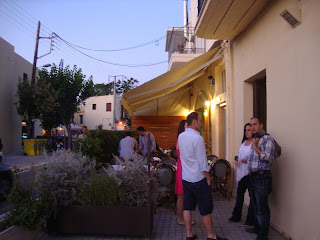
Skoufos kai Oinos prides itself on its authentic French bistro atmosphere.

Among those offers, I received one for a discounted fine dining experience: a meal for two at a restaurant by the Venetian port of Hania, at Skoufos kai Oinos. Dining a la carte, at a restaurant where equal emphasis is placed on all aspects of the dining experience, where the food is just as important as the decor and service is quite different from my regular dining experiences in Hania. Even in our London and Paris travels as a family, the places we chose to eat out at never fitted within this general frame. The last time I ate out in this way was probably over two decades ago, in another continent. I decided to take up this offer to treat my children to a novel experience. Here's how the evening turned out for us.

*** *** ***
We arrived at Skoufos kai Oinos at our booking time of 7.30pm, which is actually quite early for dining out in Hania. That explains why we were the ony customers for a while. The place got busy just as we were getting ready to leave, and even then, darkness had not enveloped the sky!

The restaurant is located in the yard of a private house. Limited outside seating poses problems in the summer (in Crete, we simply don't eat indoors then). As the restaurant is located on the road running parallel to the Venetian port of Hania, there's no view of the sea. Despite this, it was very heartening to see both tourists and locals coming and going, just as we were leaving. Even though the area is considered touristy due to the immensely significant architectural sights (the Venetian-built shipyards are located here, the backs of which you can see in the photo), the area has been left to the elements, probably because it's found on the eastern side of the harbour, an area that has always been associated with the lower socio-economic strata of Hania (the western side of the port is more developed).

 
A waiter welcomed and guided us to the table of our choice, which was laid with a simple fabric placemat. The discount offer had a set menu for two: prawns, salad, salmon and stuffed tenderloin. We were dining a la tre, so we all got menu cards to 'help' our 'extra' diner choose his meal. This was when the first 'shock' was felt. 

 The table setting can be easily replicated by any taverna; it really is time to get rid of the plastic-lined paper tablecloth! The menu card was also available in English (and most likely other languages, since tourists also use the restaurant).

"There's nothing in this menu that I like, Mum," my son said. I've always given the children a menu card to pore over wherever we go. Greek taverna menus contain standard fare, arranged in a standard way; this restaurant menu did not resemble them in any way at all!


"But if I order the chicken, I also have to have salad!" he moaned. It took a little time for my son to be convinced that he didn't actually need to eat the salad (mainly because there were two other vegetarian-friendly diners at the table). The special offer did not include drinks, so I decided to add a bottle of San Pellegrino* to the experience.

oinos kai skoufos restaurant
When the level of service is this high for a bottle of mineral water, it really does endless good in setting the mood.

The salad came first, accompanied by some very French-looking bread and highly scented olive oil (full of aromatic fresh minced peppers). This was immediately followed by the prawns. We really didn't take very long to devour them all.


oinos kai skoufos restaurant oinos kai skoufos restaurant
The salad was dressed in a light vinaigrette, which gave it a moreish taste and eradicated the desire to mop up the excess dressing as we usually do with Greek salads. As for the prawns, I really need to find a recipe that replicates this dish as closely as possible; the mastic flavour of the sauce was very subtle. It masked the fishy scent and lent the meaty prawns a sweet flavour. Note the small servings - this meal was created to savour the tastes, not to fill the gut.  
oinos kai skoufos restaurant
I'm pretty sure I know the baker, whose baguette shaping skills single him out in Hania (see above photo). The olive-oil-and-bread proved an immense hit among my kids, the only truly recognisable Cretan part of the meal. As you can see, my daughter is a very good eater. Among the appetisers, my son found the bacon bits in the salad 'yummy', especially in combination with the olive oil and bread, and the water ("plain, no bubbles, please") 'exquisite'.
oinos kai skoufos restaurant oinos kai skoufos restaurant

The mains were beautifully presented: chicken fillet with fresh salad, lightly grilled salmon with basmati risotto and the most popular dish (by unanimous vote after we all tried each others' dishes), tenderloin stuffed with mozzarella and basil served on a bed of sauteed julienned vegetables. which was also the most intricate: the salmon and chicken were just that, but that pork had been changed beyond the initial meat cut.  The waiter had previously explained the changes that had been made to the menu due to seasonal variations, and he also asked me how I'd like the salmon cooked. Greeks generally like their meat/fish well-cooked, something which goes against fine dining trends by Western standards; for the question to be posed to the diner shows that there have been problems with past diners who thought the fish was cooked too rare for them. This should be interpreted as a cultural culinary preference, not a sign of ignorance.

oinos kai skoufos restaurant
oinos kai skoufos restaurant oinos kai skoufos restaurant
The 'wandering fork' syndrome is de rigueur in Crete. It also gave my fussiest eater a chance to try new food. After this experience, he can safely say that he really does not like fish.
oinos kai skoufos restaurant

Normally, we don't order dessert (and it wasn't included in the special offer, either), but the meal was quite special today, so we decided to go for the full Monty: strawberry cheesecake and fruit tart.

oinos kai skoufos restaurant oinos kai skoufos restaurant
Initially, two servings of cheesecake were brought to the table, even though we ordered two different desserts. In a formal setting such as this one, it's important to remember the customer's right to point out a mistake on the part of the waiting staff (or simply to complain).

All in all, the meal lived up to our expectations, and it provided that breath of fresh air needed to lift our spirits** in a country run by lame politicians, thwarted by global politics, and stigmatised by self-interests. Price of the meal (with a discount coupon) at Skoufos kai Oinos: 46.50 euro.

*** *** ***

My reservations on the food side of the meal mainly involve food safety and imported produce. Salmon is an imported product, used in a similar way to locally fished swordfish. It probably wasn't necessary to have a juicy fat blackberry (most likely from Mexico) in the tart when we are now in the midst of the local stone fruit season. The huge raw mushrooms (probably from Poland) in the salad reminded me of the recent E.coli outbreak. One possible reason why we don't suffer from food recalls or tainted food products in Greece is probably because in Greek cuisine, food is cooked really well, which is what you would be led to understand by the waiter's comment concerning the salmon. This is something that Western culture doesn't do so much with vegetables - it's looked down on to boil vegetables because they 'lose their nutrients' - and the same goes for meat: a Cretan cook would never serve his/her guests undercooked meat. If it's not falling off the bone, then it's deemed undercooked. It's simply not part of our culinary culture and it isn't a sound principle in a world where processed industrialised food creates new food safety risks. Coincidentally, my daughter tried one of the mushrooms but she didnt like it: 'it tastes a little like plastic, Mum'. Had it been cooked along with the bacon in the salad, I am sure she would have liked it.

The menu had been changed slightly from the previous season's, and the menu card showed a fixed printed menu which means that it can't vary unless an extra printed menu is presented to reflect the changes. This will probably raise costs and effort on the owners' part; the restaurant was quite small but it was also busy looking (nice to see of course - they must have done their fair share of advertising and marketing). Costs are going to factor markedly in the coming year, when restaurants (from September 2011) will be required to add 23% VAT to meals (at the moment, it's 13%). This will inevitably sound the death knell for restaurants - either that, or Greeks will simply learn to be obedient and diligent Europeans who don't go out often for a meal and like to cook cheap processed food bought from LIDL, like the hard-working German, the trade-oriented Dutchman or the stiff-upper-lip Englishman (something we know full well will never happen; the Greek state may have gone down the toilet, but the Greek identity has no intention of going down with it).

What makes Skoufos and Oinos special is that it is different among the Cretan food scene, and it does answer to the needs of a group of more discerning diners. These people are mainly the younger generation (apparently, females find it more alluring than males, according to the facebook page created for the restaurant), people who want more than just an old-fashioned steak and fries, the kind usually served up at tavernas with very little difference among eateries. The servings were relatively moderate compared to the servings at a traditional taverna - but the complete meal was very filling, and it contained a good variety of items. If the servings were larger, it would have been difficult to finish, plus, there is no reason why the plates must be full to the brim anyway. Who does this appeal to again? Young people of course, the future of Greece, because they are tired of being served the same old meals, through the same old regime and the same old politicians. Their menu choices reflect their desire for a radical change to the whole system.


*Wine would have been much more appropriate, but I thought about the implications: first to my wallet, and then to my driving abilities.  
** Some people believe that children don't understand the full implications of the economic crisis. My kids knew about the discout coupon, and they know why we can't have experiences like this one again too soon.

©All Rights Reserved/Organically cooked. No part of this blog may be reproduced and/or copied by any means without prior consent from Maria Verivaki.

Saturday, 18 June 2011

The Chinaman who found himself in Molaous (Ο Κινέζος που βρέθηκε στους Μολάους)

You may be a budding story teller, but you don't know it. Today's story has been written by Stella Yeung, a friend I made via facebook. Stella and I met up at the island of Kithira just last Easter, and she told me about her little adventure during a previous trip to the island. Here is her story, in her own words.

It all began when our baby grandson gave my husband a kick right under his ribs on his right-hand side in the morning of the first day of our second holiday week on the island of Kythira two years ago. In the beginning it caused him just a little pain. He didn’t seem to pay much attention to it. Later on we went to the village of Potamos to buy some groceries with our daughter. Hubby went back to the car as we continued shopping.

 If I hadn't met Stella through facebook, I would never have visited Kithira, a beautiful Greek island only a few hours away from my own home. This amazing waterfall is just one of the places I visited while I was with Stella on the island.

We thought he got bored because we spent quite some time in the supermarket, but when we came back to the car we found him sitting on the back seat with big drops of sweat on his forhead, and a pale face, looking deathly sick from the pain. We immediately took him to the island’s hospital in Potamos. Thank God they have a hospital on a small island like Kythira, thanks to the Kithirian migrants of Australia. I called Frank, the host from the travel company, who was a great help to us.

Even though I speak Greek very well, I still needed his help because I was feeling totally stressed out in the world of medical terms. My husband was examined by a doctor who hurried to hide her box of cigarettes as soon as we entered her office. She sent us for an echogram, X-rays and blood tests. It was clear to everyone that there was a gall stone causing trouble and a serious gall bladder inflammation, so he had to stay in hospital. They put him on a drip and antibiotics. That was the last time he ate anything for almost a week.

When my husband was brought to the ward, he looked a lot more at peace. The pain had subsided, and so did my fears. I asked the doctor if there was anything that I could do for them before I went back to the apartment. They said there wasn’t, so we returned to our apartment in Agia Pelagia, after leaving my Chinese husband in a hospital on a small Greek island where hardly anyone spoke English and no one spoke Chinese.

It was already quite late in the evening. My daughter ran me a long warm bath, which made me feel very relaxed after all the stress. Only five minutes after I entered the bathtub, Frank called to tell me that the doctor was afraid my husband might have appendicitis, and she didn’t want to take any risks if he needed to be operated on, so she insisted on sending him immediately to a bigger hospital on the mainland, in Sparti. I had to pack some clothes and stuff for a few days, not knowing when or if I’d be coming back to Kythira. In five minutes, I was standing outside the apartment; the boat that would be taking us to Peloponessos was already waiting for us!

From Agia Pelagia in Kithira, you can see Peloponesos quite clearly n the distance

I can’t tell you how it feels to go from being totally relaxed to totally stressed. The owners of the apartment made me panic even more because they showed their anxiety by asking me why I was leaving the island via the old and disused port of Agia Pelagia, which is now only used for pleasure craft and as a marina for local fishermen! They also couldn’t imagine that there was a ferry boat being sent specially to pick up my husband. They began to offer me a ride to Diakofti, the main port of Kythira. But Frank had told me that he would come to pick me up and take me to Ayia Pelagia. Who are you supposed to believe in times of crisis?!

I began to wonder if I was living in a dream, which was quickly turning into a nightmare, and that I didn’t have any part in this chaos, but I knew this wasn’t a dream, because when I pinched myself, it hurt!
I said goodbye to my daughter and her family and hoped to see them again in Kalamata at the airport by the end of the week.

Frank picked me up in his car and we followed the ambulance to the port of Agia Pelagia. It was very dark, and a storm had just set in. The wind was 7 on the Beaufort scale, and the sea was rough, waves riding the ocean, and crashing onto the port. I don’t know how long it took to reach Neapolis on the other side. I was told it was an hour's journey from Kithira, but it seemed like ages to me. My husband was lying down inside the boat, while the doctor and I were standing upright inside. There was nowhere to sit. On the deck was the fisherman, the owner of the boat, who was holding the drip bottle high up in the air with one hand, while with his other hand, he held himself upright.

 The boat that took Stella and her sick husband to Peloponesos

Inside the boat it was hot and muggy. The waves became higher and higher and we were thrown from one side to the other, as one wave after another crashed onto the boat. It felt like a game of volleyball; the boat was the ball. I began to feel dizzy, and I got dizzier and dizzier. I seemed to have turned a green colour, which only the doctor noticed, so he told me to lie down in the front part of the boat. I remember thinking that I wouldn’t mind drowning at this very moment, because I felt so sick and the weather was so inclement, and I really couldn’t believe that the boat wasn’t going to sink in the turbulent waters. At this point, my husband was feeling much better than me.

When we finally arrived on the other side, I stood up to disembark, but I felt like vomiting. Unfortunately, I couldn’t get out of the boat quickly enough, because they were helping my husband off first, along with his drip bottle. I noticed a small basin on the boat. It was filled with nets and fishing hooks, which I grabbed and threw out onto the deck, and instantly began throwing up in it. At the same time, I was feeling embarassed and sorry for the fisherman who was going to clean up after me.

When I got out of the boat, there were no steps to get on to the quay. I was told to wait for the next high wave to lift us up and stretch my arms high, then someone would grab me and pull me onto the quay. And so it happened. There was an ambulance waiting for us at the quay with another doctor. I remember I had to sit in reverse at the back of the ambulance and try to keep a squint eye on my husband. We were driving right into the mountains; the bends in the road and the cover of darkness made me feel even more sick.
Finally we arrived at the hospital. It was about 2:30a.m. and I had to tell the whole story again to another doctor there, who was forcefully pressing my hubby’s belly, all the while wearing a huge grin on his face as he asked him:

"Pain here?"

“YEEEEEES!!! Ouuuuch!!!”

“Pain there?”

“YEEEEEEES!!! Ouuuuch!”,

The doctors soon concluded that there was no fear of appendicitis so they put him on a new drip with new antibiotics. Then they began asking questions about his medical history. Again, I felt uncomfortable speaking Greek because I don’t know these words in Greek: my Greek is limited to talking about everyday things. So I said a few things in Latin, which I remembered from the internet, thanks to Google. I was describing my hubby’s condition like a quizmaster, and the doctor was the test-taker.

Thankfully he seemed to be understanding what I was telling him, and once he was assured of all the right answers to his questions, we were brought to a dark room with six beds. Five beds were occupied and the empty one in the corner was for my hubby. There were shadows like phantoms lying on the beds and sitting on the chairs; no one spoke a word, only the nurses who whispered questions. Some of the shadows shuffled in the dark, and one came very near to have a look at us without saying a word. Others were moaning in pain.

When the nurses left, I was so exhausted that I lay down on the same bed with my husband, thinking about the adventure we had just landed in. We didn't even know where on earth we were! When one of the phantoms in one of the beds suddenly started shouting : “πατάτες , ντομάτες, σαλάτες” (= potatoes, tomatoes, salads) in the middle of the night, we felt like we were starring in One Flew Over the Cuckoo's Nest.

When morning came, the shadows turned into humans with voices and faces, and after the first “Καλημέρα” (= Good morning), they started talking and asking us questions. This may have been the first time they had ever seen a Κινέζο (= Chinaman), and they probably thought we had just landed on earth flying on a UFO when they realized we didn’t know where we were.

“Is this Sparti?” I asked them.

“No,” they answered, “you’re in the hospital in Molaous.” I’d never heard of Molaous before.

 The view from the hospital ward

When the curtains of the room were drawn, we saw an unbelievably beautiful scene: a valley full of olive trees. Later in the morning, kind and helpful Frank called to tell me he had booked a hotel room for me, the only hotel in Molaous. He urged me to go there, to take a shower and a good rest, otherwise I would not be able to help my husband.

 The view from Stella's hotel room

The doctors came to examine him. An orderly came to pick him up in his stretcher bed and I accompanied him to take some more X-ray photos. A nurse drew some blood for tests, and he was told that food and drink was strictly forbidden for the next few days; only the drip was allowed! Eventually the diagnosis came through – an acute case of gall stones. The doctors informed us that they could operate on him straight away, but they imagined that my husband would prefer to have the operation in his own country, so their plan was to stop the inflammation and get him ready to fly back to Holland. We agreed with them; it sounded sensible to go back home and undergo major surgery, where we felt safe and comfortable, where we could talk to the doctors in our own language and be understood.

The road leading from the hospital to the hotel

At siesta time, I went up the little hill close to the hospital to find my hotel. It was quite an exercise because I was exhausted from the stress and I was feeling so very, very tired. The hotel manager and his mother were very friendly people, and since Frank had already told them the whole story, they were waiting for me like a family member who was supposed to come home and bring them good news about my sorry predicament. They did everything to make me feel comfortable. It was so good to have a shower and a clean bed and finally find some peace and silence, but I felt so lonely in that hotel room, wondering how my hubby was doing in a hospital surrounded by Greeks who spoke only just a little bit English.

The days passed with more examinations, tests and X-rays. We had the chance to talk a lot together (mostly about food) with all those lovely strange patients and their family members. They offered us boxes filled with tarts which were brought in by visitors and shared with everyone in the room, except for my hubby who wasn’t allowed to eat or drink anything. But he was feeling much much better as the days passed, apart from feeling more and more hungry. He spent some time on the balcony every day smoking cigarettes, absorbing the wonderful views with the other patients and learning about olives, olive trees and olive oil.

Some of the men in the ward had been sailors at one time in their life, and they had been to Hong Kong and China, so there were plenty of subjects that they could share opinions over. From time to time the waitress of the nearby café brought over frappe, Greek coffee and sandwiches which were ordered by other patients, family members, doctors and nurses. There was a huge tv in the room which was playing until midnight but no one seemed to bother watching it. Everyone was absorbed with their own matters. Every night the volume was turned on to high by an autistic patient. That was the only time we saw him smiling. Otherwise, he never spoke a word all those days that we spent at the hospital.

Every day Γιωργάκι (= little George), a handsome young nurse, came to take blood from the patients and every day he made a big bloody mess of it, because he just couldn’t find people’s veins. The poor autistic patient had to undergo this every day and as soon as he saw Γιωργάκι, he lay down on his bed without moving, without making any sound, just staring at the ceiling and waiting till the job was done.

When the doctors came round, they always asked my husband: “How are you feeling today?”

"Very good! But also very hungry" he would answer.

And the doctors always answered: “NO FOOD YET!!!!”

One of them pointed to his drip bottle once: “Look at this! This is meat, potatoes and salad, accompanied by wine, all in one!” We all started laughing.

The senile old man was allowed to go home while we were there, but he was replaced by another one. This old man had run away from his home and was lost for some days just when it had started raining and getting colder. The whole village had been searching for him. There had even been a missing report about him on TV, and after some days the mayor found him 200 metres from his home under some bushes. He was brought to the hospital and had to stay there for a few days for observation. The problem was that he always wanted to run away. So in the middle of the night he started fighting with the αποκλειστική (= private nurse) who was hired to take care of him.

When I came back to the hospital one morning, one of people there told me that he wanted to escape again last night and he had pulled out all the tubes in his arm. Then they called in a nurse called Nionio (after a famous greek actor) who looked like Popeye (she had only one tooth). She started screaming at him. Everyone became silent and no one dared to say anything anymore, not even the old man. But as soon as the nurse left, they all burst out laughing.

I spent my days running down the hill towards the hospital in the mornings and afternoons and creeping up the hill back to the hotel at midday and in the evening, making phone calls to the insurance company in Holland every day because they wanted an update everyday, translating everything between the doctors and hubby, washing and nursing him and walking around in Molaous, taking pictures of the town and doing some shopping. I found a plant shop and was very happy to find some chicory and amaranth seeds. In a bookshop I browsed through, I found an interesting Greek book, “Το νησί” (The Island) without even knowing what a hit it was! Almost everyday, I had lunch in the cafe next to the hospital where I fell in love with frappe coffee, cheese pie sand chocolate filled croissants. In this place, people got to know each other after only one day. We chatted every day; they asked me how my husband was doing and they made me feel less lonely.

One of my husband’s room mates was a kind, but very over-sensitive man. He had a swollen leg which caused him a lot of pain and he often acted like a big baby for his poor wife. She sat on the chair next to him day and night, helping him to drink water, feeding him, cutting his nails while he got angry with her for cutting them too short and making everything even worse and more painful. She looked so tired and I whispered to her that as soon as he fell asleep at night she should lie down in an empty bed in the ward to get some rest too! My husband told me the next morning that indeed she did try to lie down on the bed, but after 15 minutes the big baby woke up and commanded her to come back and sit on her chair again… and so she did.

Day and night he was screaming “αχ, ουχ, οχ!!!!”. One day, when the doctors came round to check the patients, one of them got so angry with him and suddenly started kneading his leg with force while shouting: “Ελληνες άντρες δεν είμαστε ;;;!!! Τέλος επιτέλους με τα αχ και ουχ! Σαν μεγάλο μωρό είσαι ρε!!! Το πόδι σου είναι τόσο καλύτερα τώρα, κοίτα ρε!!! Ετσι είσαι και στο σπίτι σου; Λυπάμαι την κακομοίρα την γυναίκα σου!!!”

His wife silently nodding that indeed at home he was like that too and we all did our best not to start laughing out too loud. But after this, we never heard him make any sound again!

During my daily walks in the town I noticed many interesting things in this rural area. I particularly liked to look at the chimneys which were shaped like birds of prey. The view from my hotel room was not as amazing as my husband’s view but still very beautiful.

 Greek chimney decorations

Greek spring weather isn't always sunny. When there is a lot of rain, there is also a lot of thunder and lightning. On one particular day, it felt like the heavens had opened. The street near the hospital had turned into a river so the hotel manager called me a taxi to take me to the hospital. The taxi driver, Apostolis, was a very nice young guy. I asked him how much it would cost to drive to the airport of Kalamata if my husband would be allowed to fly home as planned, which was the coming Monday. We weren’t sure what was going to happen, because it would depend on the test results and the situation concerning the inflammation of the gallbladder. He told me he would make an estimate of the cost leave a message in the hotel.

 Molaous in the rain

On that rainy day the doctors decided to send my hubby to Sparti for a CT scan just to make sure that he only had a gallbladder problem and that just gall stones were causing the problems, and not anything else.
This news came so early in the morning as soon as I had just arrived at the hospital and I had to rush to the cafe to buy him 2 litres of water which he had to drink in 1 hour. Then we were hurried into the ambulance for a ride through the mountains to Sparti. In the middle of the mountains we had to make a pee-stop because of all that water and I still remember the sight of my husband standing there in the pouring rain adding to the streaming rivers that the skies had created.

We were surprised to see the modern medical centre of Sparti where they make scans of all kinds. Primary school memories came to my mind of the history lessons about ancient Sparta – the old times when sick and weak people were killed to create a healthy and strong Spartan nation; fortunately things have changed immensely and Spartans show great mercy and compassion these days.

When I returned to the hotel that night, I found the taxi driver's note with the hotel owners about the price of the taxi ride to Kalamata. The next morning, I was in for a surprise: the sun had finally come out. That day's walk was like magic, after all that rain. The road was quite slippery but the view of the olive yards was a wondrously beautiful sight!


By the end of the week, my husband had lost several kilos and felt more and more hungry. On Saturday the doctors took pity on his hungry stomach and allowed him to eat two small φρυγανιές (= rusks made of dried bread). He showed great pleasure eating them, as though they were topped with caviar.

Apostoli then called me to ask if we still wanted the taxi ride on Sunday. But I had to tell him we still were not sure whether my husband would be released from the hospital or not. I could call him any time I needed him, as he said he would accept only short rides on Sunday just in case we might need him, so he could be at hand.

Fortunately thanks to the good care of the two surgeons, my husband was allowed to fly back to Holland on Monday. We said goodbye to the doctors and all the people in the room, and when my husband shook hands with the autistic man, the man replied “Goodbye my friend!” It was the first and last thing we heard him say. The big baby invited us for a meal of φασολάδα (= bean soup) made by himself (!) the next time we came to Greece. The doctors asked me to keep in contact with them because they were really interested in my husband's condition and his health.


Then we called Apostolis to come and pick us up. Never have I had such a grand welcome in a taxi before! It was like being a guest in someone’s home! We could even watch films on a small screen, but we thought that might not be a good idea, because we could get nauseous, and I didn’t want to think about getting sick again too quickly. Before we set off for the airport, Apostolis had to pass by his auntie’s house to give her the carnation flower which was lying on the seat next to him. It was so nice to see how happy his aunt was by his gesture and she gave him a big heartfelt hug.

Next he told us that we could choose three routes. Two were roads going through the Taygetos mountains, the two shortest routes, but with very many bends in both roads, so that after a while, you don’t know if you’re going up or down the mountain. He also told us that most of his passengers get sick on these roads. The third option was the route through Mani, along the sea, the touristic route with great panoramic views. It was also Apostolis’ favourite route. It would take one hour more than the mountain roads.

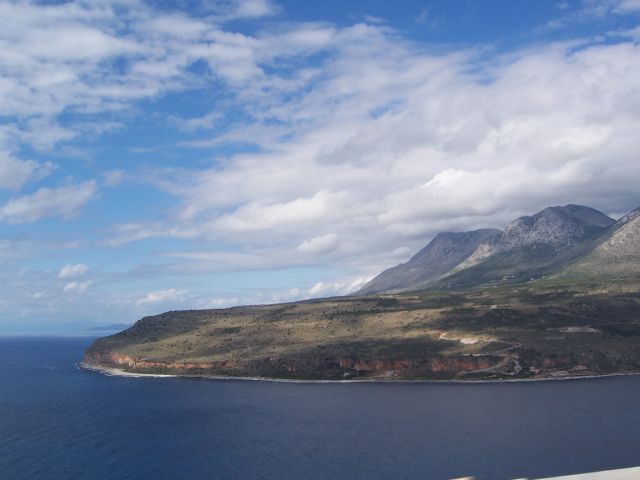
 Mani

After 6 days in hospital we chose the Mani route. We were grateful to Apostolis for recommending this. It was so very, very beautiful! He told us many interesting things about all the places we saw and because we had enough time, he drove off the beaten track at different places to show us some special nature spots and picturesque parts of the little towns we passed by. It was the most pleasant and enjoyable taxi ride we have ever had. Apostolis drove us safely in a relaxed cruisy style, without hurrying or feeling stressed. We chatted about Kythira, Mani, Molaous, Holland and China.

When we arrived in Kalamata we even felt sorry to say goodbye to him. The meter of his taxi showed a much higher price than what he had written down for me some days before. He refused to accept the higher price so we had to force him to take it and gave him an extra tip for his super service. We told him that thanks to his pleasant driving and outlook on life, he made us so enthusiastic about Mani, that we definitely would come back for a holiday here in the future!

The next day we left for the airport. We were so happy to finally meet up with our daughter, son-in-law and grandson once again. Other guests came to greet us too, because my husband’s adventure had become ‘hot news’ on Kythira!

*** *** ***

Back in Holland, another adventure started for us: the fight to get my husband into a hospital, begging doctors and assistants to please, please, please hurry the process a little bit and give my husband priority on the 3-month waiting list because he really had to get the operation done within one month, just as the two Greek surgeons said.

Anger, disappointment, annoyance followed from my side. When I showed them his Greek test results, I was told by the hospital staff that they didn’t want to see them because they hadn’t been done in Holland, and even when they did them all over again, they diagnosed that it wasn't necessary to prioritize his operation to within one month. Such arrogance!!! I was forced to do some “shopping around” at several hospitals to find the shortest waiting list. Even then, it still took me two months before I could finally get my husband into a hospital.

Hospitals and hygiene are at a high level in Holland; there are nurses to take care of the patients and to wash them, but we are like “numbers” on waiting lists and all the times we went to the hospital for X-rays, echograms, tests and checkups, we never saw the same doctors twice. So many doctors, all working part time, which resulted in my telling the same story again and again, and checking up on whether the doctors had written everything down correctly because when so many different people are involved in one case, it often results in mistakes being made somewhere along the line.

In Greece we saw the same surgeons almost every day, several times a day. I had to take care of my own husband, but I found it such a relief to take care of him, knowing that he was alright and I was there for him whenever he needed me. I washed him, talked to him and was generally there for him, supporting him in whatever way I could. The social life in the room with the other people, helping each other whenever necessary, made us feel like human beings instead of numbers.

After all the trouble I had in Holland, my experience of Greek hospitals made everything look so simple. I bought postcards to send to some people in Kythira and Molaous, to thank them for everything they did for us. I apologised to the fisherman for vomiting on his boat, and thanked Apostolis for his special taxi ride. I also wrote to the two surgeons at Molaous, and I told them that ,if, in the future, it were ever to happen again that a Dutch tourist might need an operation performed while on holiday, well, in that case: please just do it and don’t ask questions because you’ll save him from long, long waiting lists in Holland!

Back home my husband started to crave the same bread rusks as the ones he had been given in the hospital, just to keep the memories of his adventure alive! We often talk about this adventure and still laugh about all the things that happened. And what a surpise we got when we heard a year and a half later when we received a card from Apostolis with a beautiful wedding picture and a letter in which he told us that he and his wife were going to China for their honeymoon!!!

Thank you Stella, for being my guest today. Maybe one day, I'll meet up with you in Holland or even Hong Kong!

©All Rights Reserved/Organically cooked/Stella Yeung. No part of this blog may be reproduced and/or copied by any means without prior consent from Maria Verivaki.

Friday, 10 June 2011

Winners! (Νικητές!)

Cretan Cookery: Mum's 200 RecipesToday is the day I announce the winner for the cookbook I offered in my last post: Cretan Cookery: Mum's 200 Recipes. Thanks to all the participants, who were able to comment as often as they wanted to in order to gain a greater advantage when I made the draw for the winner. Thanks, too, for the flattering comments I often get about writing my own cookbook and getting it published. But writing a book - any book - is a huge undertaking. Judging from my published friends who spent many sleepless nights writing, rewriting, arranging, rearranging, collating and editing their work - not to mention the patience they had to show once they finished the job and waited to see the final finished product on the bookshelves - I know that writing a book would divert a huge amount of my attention away from life's daily duties, most of which, in my case, have to do with looking after my family. Already I am finding it difficult to find time to write for the blog; this is going to be the most recent post for a long time...

That's not to say that I wouldn't like to write a book that I believe my readers would enjoy. But I've promised myself that it can't be a simple Cretan cookbook. Why should it be a cookbook in the first place? I've already written that: the blog acts as a complete cookbook, full of basic Cretan recipes, all with my own twist. It's generally very searchable, and I've also discovered (to my great delight) that a large number of basic common Greek dishes and nearly all the dishes of Western Crete appear on the first page of a Google.com or Google.co.uk search using just a simple search string with the name of the dish written in either English or Greek. The online world is pretty much an English one, so my English-language recipes are accessible to nearly everyone.

cretan cookbooksThe market for Cretan cookbooks is highly saturated (in Greece, they are generally sold as part of the range in 'travel' books); regional cookbooks, by nature, have a very limited readership. Despite the greater global awareness of the health attributes of the Mediterranean diet and the role Cretan cuisine plays in it, books based solely on Cretan cuisine are still not considered 'exotic' enough to be found in bookshops for the world market. Not only that, but there are many Cretan cookbooks already on the market which contain recipes that are pretty much the same as mine! A new Cretan cookbook would have to be unique. Because I write in English, the book would not be popular in Greece without some special marketing strategies being used. In fact, most of my readers (about 75%) don't live in the country where I write from. This book would have to be marketed for an audience away from my home.

But there's always self-publishing, you say. Nice idea, except that books are now going out of fashion due to electronic publishing. From my own experience, I know I don't like to acquire yet another book which needs more storage space which I can't afford. An e-book reader is so much more convenient - and research shows that people are more willing to pay for e-books when they are available at a good price than a new book. At any rate, both these options have their disadvantages. Self-publishing is not cheap; I worked out that a 100-page book would cost close to 20 euro a piece to produce and sell, and there is no guarantee of becoming sold out (most of those books would end up being given away). A friend of mine didn't expect the shock of seeing the mountain his self-published books created in his home - he needed half a room to store the copies he had ordered! So e-books sound like a great way to get round this - but they are very easy to pirate, just like CDs and DVDs. Before I bought my e-book reader, I bought The Help in print form. A few months later, I discovered that this book was one of the most pirated e-books on the market! Writing a blog easily wins me over: it's easy to write something short on a regular basis, it costs next to nothing, and although it doesn't make breakfast, it gives me a certain level of satisfaction to see good daily ratings and first-page mentions in search engines.

I also like to write fiction that often has a food base. This food distraction usually masks the main focus of my stories, which is to depict daily life in Crete, mixing both past and present experiences. Food readily lends itself to good stories because personality traits can be described through food attributes, and food is hardly ever missing from a Greek gathering. So food provides a natural setting for a good Greek story. But the people interested in my recipes are not all interested in my stories; there's only a very small overlap. I think there are more stories to tell than there are new recipes, and they are what could be turned into a unique book. When I think of that unique book idea (or rather, execute it), whether it's a recipe book, or a story book, or a combination, that's when the book will come out.

One thing for sure is that Cretans like nothing better than to share their food, even with strangers. Tony Edler's comment about the time he spent in Crete illustrates this point particularly well:
what cretan athenians crave
"He laughed a deep rumble similar to an earthquake –– his name was Francesko. He then yelled, which startled me. He was a Cretan and I was an U.S. Air Force member from the base near Iraklion. We met because he liked motorcycles and I had a Honda... the first 4-cylinder Honda in the world. His yell was a command for his 8-year old daughter to come to him, and she did. He pulled a three-foot long silky-black hair from her head causing her to duck, and run. He held the hair between his two hands and pushed it down through the warm and barely firm mizithra* cheese. The slice gently fell off to the side. He poured some spiced honey over the warm cheese and offered it to me. It was the best food I ever tasted!"
Through this book offer, I have had the pleasure to read many heart-warming comments about people's experiences in Crete, how they have embraced Cretan culture, and what endears them to my own homeland. I also realised that, although I don't know all my readers personally, I felt that I have actually gotten to know many of the commentators well over the number of years that I've been corresponding with them online. This made me think that it would be wrong to choose only one person as the winner of Cretan Cookery: Mum's 200 Recipes, a book that sounds cheap and easily available for purchase in Crete, but as it turns out, is very difficult to source at the right price if you live outside the country.


Ideally, I would have liked to give each one of the 40 or so participants in the draw a copy of this book, but it isn't really easy for me to do this. For this reason, I contacted the publishers of the book, Mediterraneo Editions, who very graciously offered me a special discount. Through the author of the book, Stella Kalogeraki, I was able to secure 20 copies of Cretan Cookery: Mum's 200 Recipes to allow for more winners. In this way, I feel I am sharing my food with as many people as possible, and maybe inspiring potential tourists to visit my island and experience the place and its people for themselves.

I made up the following list, according to the comments left on this post and my facebook page, where I posted news about the draw a number of times:
Commentators from the post:
1. Demetra
2. Jude
3. Peter M
4. Magda
5. Stamatia
6. Kaye
7. Maya
8. Mia Maria
9. Heather
10. Mia Xara
11. Stamatia
12. Claudia
13. Heidi
14. Tony
15. Maria DP
16. Dill
17. Kiki
18. Katbat
19. Cheryl
Comments from my facebook page:
20. Natalia Romero
21. Sharon Ger Carlsson
22. Hugh Morton
23. Darren Brown
24. Deirdre Smith
25. Elisabeth Pappafloratos-Pestsakos
26. Global Greek World
27. Manolia Margaris
28. Stella Xiaobaiyang
29. Demetra Lambros
30. Liz Drummond
31. Laurene Lambertino Urquizo
32. Fidanka Trajkova
33. Moaz and Christina Mediouni
34. Sherrie Papayanopoulos
35. Sherrie Papayanopoulos
36. Eva Barnas
37. Hugh Morton
38. Lizzy Karras
39. Darren Brown
40. Darren Brown
41. Darren Brown
42. Susan Crabtree-Stanley
43. Natalia Romero
44 Linda Sunderland
45. Eva Barnas
46. Lnda Sunderland  
47. Linda Sunderland 
48. Linda Sunderland
49. Stamatia Eliakis
50. Patricia Aivalikli
51. Stamatia Eliakis
52. Stamatia Eliakis
53. Stamatia Eliakis
54. Hugh Morton
55. Hugh Morton
56. Hugh Morton
57. Laurene Lambertino Urquizo
58. Anni Katsji
59. Stella Xiaobaiyang
60. Susan Crabtree-Stanley
61. Demetra Lambros 
62. Gina Fitzmartin 
63. Katherine Bournelis Batalov 
64. Darren Brown
65. Martina Sowinski 
66. Darren Brown
67. Panayiota McFeely 
68. Johnnie Patronis

The random sequence generator at random.org yielded the following results:

Random Sequence Generator

Here is your sequence:
17  30   2  39  31  12  54
60  11  61  21  10  63  28
13  40  27   4   9  14  68
52   8  19  58  49  62  20
22  66  56  53  59  47  26
67  25  38  34  32  18  45
65  64  16  42   6   3  37
41  46  33  36  55  23  48
15   7   5  43  57  29  44
24  35  50  51   1  
Timestamp: 2011-06-11 05:55:55 UTC
Note: The numbers are generated left to right, i.e., across columns (not rows).

I chose the first twenty different names in this list (not the first twenty numbers, due to the multiple entries, which meant that some people won the book more than once). Hence, the following people are the lucky book prize winners:
17 Kiki
30 Liz Drummond
2 Jude
39 Darren Brown
31 Laurene Lambertino Urquizo
12 Claudia
54 Hugh Morton
60 Susan Crabtree-Stanley
11 Stamatia
61 Demetra Lambros
21 Sharon Ger Carlsson
10 Mia Xara
63 Katherine Bournelis Batalov
28 Stella Xiaobaiyang
13 Heidi
40 (invalid - same as 39)
27 Manolia Margaris
4 Magda
9 Heather
14 Tony
68 Johnnie Patronis

As I look through the winners' list, I am relishing the thought that a book about Cretan food is going to make its way all over the world. Now all I need is an email from the winners (mverivaki at hotmail dot com or through facebook) for your address. It would also be a real treat for me to eventually see a photo of your Cretan cooking exploits using this book. For those who weren't lucky enough to win a copy, you can order it through Mediterraneo Editions at a very reasonable price.

Happy summer cooking to you all!

* 'mizithra' in Hania (Western Crete) refers to curd (but not firm) cheese; 'mizithra' in Iraklio (Eastern Crete) refers to a more solid form of soft cheese that can be sliced; PDO mizithra refers to the former, made in Rethimno (Western Crete) with a slightly acidic taste; 150 kilometres makes a big difference in food labelling in Crete!

©All Rights Reserved/Organically cooked. No part of this blog may be reproduced and/or copied by any means without prior consent from Maria Verivaki.

Friday, 27 May 2011

Cretan cuisine (Κρητική κουζίνα)

Here's what a book reviewer writes about why she likes Greek food:
"If you love [Greek food], it is surely because you have been lucky enough to eat in a Greek home, where ingredients are fresh that day, where the eggs are from the hens at the end of the garden, where the tomatoes and the courgettes were still warm from the sun when they went into the pan, and the cheese is from the nanny goat chewing thoughtfully under the fig tree."
This writer is talking about Cretan cuisine. In fact, I think she's summarised what I like about my local food and the way I myself like to cook. When I think about the way I prepare our meals and the food I eat at the cheap tavernas we choose to go to, I feel that I am eating similar meals in both places. 

One of the simple thrills in the daily life of a Cretan cook is to be complemented on their cooking. When people tell me how good a meal that I've cooked tastes, I always remind them that the quality of the ingredients are just as important as the cook's skill. Although our food contains many staples that are now prepared industrially (like pasta and bread) or grown en masse (rice and potatoes), many fresh seasonal local products are often incorporated into it, as well as food that we have preserved from the more bountiful months in the year. I think that's why my cooking seems to have a special taste to it that non-Cretans in particular immediately detect. It can't be the special technique I use when I cook - I don't use any, apart from the skills learnt from doing something over and over again (ie experience).

Due to the advantageous aspects of the geographical position of the island, mainly the climate and the richness of the soil, the food of the first people to live on the island was based mainly on fresh, local, seasonal food. Horta (wild greens) have always formed a part of the Cretan cuisine, while the cultivation of olive trees provides the basis of our main cooking fat. The rich taste and scent of the food grown on the island is often ascribed to its freshness and seasonality, combined with the scents and aromas that people associate with Crete, from the many aromatic herbs that grow wild in the countryside, where the majority of the population still reside. The many laborious tasks required to maintain agricultural land also ensure that economic migrants also move to the countryside rather than look for work only in the urban areas of the island, which generally helps to maintain a balance in the declining rural population.

Cretan Cookery: Mum's 200 RecipesThis book contains 200 recipes that are commonly cooked in Cretan homes. On average, each recipe contains just 6.6 ingredients (excluding water, salt and pepper), which I should know, because I counted them all! The most ingredients (12-13) were found in recipes that required baking (eg pies) or the use of a lot of herbs (eg stuffed vegetables). The recipes all use raw ingredients , apart from just a handful that use pasta, filo pastry and breadcrumbs (which were produced from other raw material, mainly flour). No recipes in the book use tinned goods (apart from tomato paste). The meat and vegetables are usually fresh, although they may be substituted with frozen ones. The fresh ingredients are mixed with common household staples such as olive oil, rice, sugar, salt and pepper, among others, to make the finished dishes. Nothing could be more simple...

The island's move away from farming to tourism and other urban jobs was inevitable; primary goods in the food culture of Crete are now being cultivated or raised industrially. Globalisation aside, Cretan cuisine remains relatively true to its origins, while locals are deeply conservative when it comes to food. The evolving nature of any cuisine means that change is inevitable as times move on; in Cretan cuisine, it is mainly based on health concerns, such as the use of fewer fats and lipids, and the creative use of the wider range of fruits and vegetables now available. Due to the plentiful opportunities for self-production and the popularity of daily street markets, Crete also displays a markedly different food retail environment compared to other parts of Greece.

I cook a lot according to the season, according to locally available items, and according to what's present in our garden, which manages to provide us with fresh ingredients year-round. Some seasons are more bountiful than others, but there is always something growing there, even in the dearth of winter (aromatic herbs), and the sparseness of spring (artichokes and vine leaves), just before the earth is about to be tilled and the summer garden planted. This may sound limiting to most cooks, but if you have a good knowledge of the local food products available, then you can easily replace ingredients called for in a recipe with local items. Sometimes it takes a certain amount of experience to do this: like me, you will learn as you go.

A good way to illustrate the simplicity of Cretan cuisine is by the fact that local recipes do not use many ingredients for each meal. In fact, if you remove the water, salt and pepper from a recipe, the ingredients list for any Cretan recipe is bound to be a single-figure digit! The recipes that call for the most ingredients are usually those that use herbs (eg stuffed vegetables) or a more complex cooking process (eg pies), but if you don't have all the herbs available at your disposal as stated in a recipe, you will still be able to make it!

As a token gesture of my appreciation to my readers (who upped my blog hits during the Easter period to more than 20,000 in one month), I would like to offer you the chance to be in the draw to win Cretan Cookery: Mum's 200 Recipes, a book filled with Cretan recipes, inspired by both the creativity and tradition that shapes Cretan cuisine. The recipes are similar to the ones on my own blog, but the new photos and the slightly different approach to the recipe descriptions are bound to inspire you to look at Cretan cuisine in a different light. All the recipes are able to be made outside the island (or even the country as a whole), by substituting ingredients found more commonly in your local markets (or freezers), which will also help to reduce the costs of your food. And you know where to ask if you need any help...

Fresh produce from Crete, especially her wild greens and cheeses, isn't very well known in other parts of the world, but that never stopped my own immigrant mother in New Zealand from cooking for her family in the way that she had been brought up to eat. And if you follow the modern culinary trends, you will realise that one of the more popular cooking fads of the day is based on locavorism, making use of the resources around you, something that Cretan cuisine has always done.

Cretan cuisine is not the same as Greek cooking in general. If it were, then you would be able to equate it with generic taverna foods and foreign-based Greek restaurants. If you've had the pleasure to be served a Cretan meal in someone's home, you will know how far apart home and restaurant cooking styles are. This book will give you a chance to experience this in your own home without having to go in search of a Cretan restaurant.

I chose this book prize (which is published in a range of 'tourist' languages, including English) because of its title: Cretan Cookery: Mum's 200 Recipes. I hope one day that my own children will also find such a book useful, even if they don't want to cook in the same way as their mother on a daily basis. Chances are that they will not, but like every Greek, wherever they may find themselves, every now and then (and especially during cultural or religious festive periods), they will nostalgically recall their family's food and try to recreate a meal that their mother made just for old times' sake.

If you would like to be in the draw to win this book, just leave a comment on this post (or on my facebook page), and let your friends know about it if you think they may be interested. I will keep this post up for the next two weeks (which will give me a bit of rest from blogging), after which I will randomly select a comment using random.org. PS: If you can't comment on the post for some reason, then feel free to send me an email: mverivaki at hotmail dot com.


©All Rights Reserved/Organically cooked. No part of this blog may be reproduced and/or copied by any means without prior consent from Maria Verivaki.

Sunday, 22 May 2011

Urban neighbourhood (H γειτονιά στην πόλη)

My first home in Crete was in the middle of town, a small two-bedroomed apartment on Sfakion St where I lived with my father.


Sfakion St begins off a very busy road clogged with traffic most hours of the day in the centre of town; this same busy road leads you straight to the most well-known landmark of the town, the Agora. North of Sfakion St is Tzanakaki St, where the trendy fashion shops are located; on its southern side is Apokoronou St, which has always been home to a category of shops belonging to the more functional class, although it has undergone some gentrification relatively recently, with businesses formerly located in the more expensive rental areas moving here since the economic crisis. The streets are lined with businesses on the gound floor and offices and doctors' surgeries in the apartment blocks above them. Sfakion St stands out as an exception among them. 

DSC03534 DSC03533
There are many good reasons why people would choose to shop from the cheese shop, butcher, bakery, grocery and cookie shop on Sfakion St instead of walking to the Agora which is in essence a hop, skip and a jump away from this area: the shop owners have built a relationship of trust with their regular customers, ensuring that they sell only high quality products. Not only that, but it's easier for most people to carry their groceries back home rather than walk twice the distance from the Agora.

Sfakion St holds a unique position in Hania; it forms an island of mainly residential properties, combined with a few stores that cater especially for the residents of this unique neighbourhood, located in the heart of Hania in one of the most urban areas of the town, and all this, despite being nestled between two of the busiest and most commercial streets in town. Office workers may share apartment blocks with permanent residents, while the ground levels of most of the buildings house stores, or private parking space. The stores all help to lend an air of self-sufficiency to the self-contained residential urban islet.

 DSC03390 DSC03389
These photos were taken at 4pm on a Saturday afternoon; the shops are closed and the street becomes deserted. Cafes located on Sfakion St primarily serve the needs of the office workers in the area.

It may occur to the average reader that when you live so centrally, you won't need to drive much. It's generally the case that most of the residents of Sfakion St don't need to drive around in the town, but they may still be car owners, which they would use mainly at weekends. Once you remove your car from the narrow road (only one side of the street is used as parking), don't expect to find a place to park again so easily! Sfakion St is one of the few places left in the centre of town which isn't plagued (yet) by pay-to-park or resident parking schemes. Cars are lined up bumper-to-bumper during business hours and ply down the one-way road most of the day; there is literally no place to double-park, even if you wanted to try this!

 DSC03543 sfakion style
Towards the top end of Sfakion St, the buildings are used mainly as residential properties.

The first formidable-looking functional apartment blocks in the street came up during the building boom after the late 1970s, replacing the houses originally built on each site: detached single-family dwellings with spacious gardens, serving the needs of an extended family that included aging parents and sprightly grandchildren. A few of these charming houses remain on the street, some on better shape than others. But the area is considered as prime land in a tight property market: houses are often demolished to make way primarily for for modern office blocks.

sfakion old hous sfakion st
A mish-mash of architectural styles characterises the area, without detracting from its primarily urban appearance.

Sfakion St can be noisy, but only during the day. After a week of living there, I eventually got used to the garbage trucks stopping outside my apartment building early in the morning, beepers ringing loudly (imagine summertime when most people keep their windows open and their shutters closed) to warn passing motorists of their temporary stop. But once the shops close, and the commercial centre shuts down for the day, and especially at weekends, Sfakion St quietens down and almost becomes pleasant.

  sfakion st sfakion old house
The old sits side-by-side...

Mid-town apartments are highly sought after because of their central location, especially by young people who like the facilities that urban settings offer them, as well as doctors, lawyers, accountants and architects who need urban office space. But there are also a number of older citizens living in Sfakion St, people who had invested in a city apartment during the building boom after the 1970s, and had moved there from a village. Most of them would be retired office workers, their state salaries and pensions possibly creating the crisis that Greece finds itself in at the moment. These people will tell you that they are Haniotes. They feel at home in their urban setting, even though they may still have ties to a village in the prefecture of Hania.

  sfakion apartment sfakion office block 
... with the new - and not so new.

There are still quite a few houses on the street that have escaped demolition and continue to be used as private residences. Some of them are in what looks like good condition, while others have seen better days. They are often rented out to immigrants; the original owners probably died and left the property to their children who have moved out of the area. I was never a grat fan of living in the middle of the town. It felt unnatural to be surrounded by cement, glass and steel. At the same time, my father and I were luckier than most residents in the area, because our apartment windows weren't located directly across from someone else's windows: our balcony view looked on to the municipal park, popularly known as Kipos (meaning 'garden'). Good thing too: my father suffered from claustrophobia and was always thankful that he never felt so confined in his last home on earth...

©All Rights Reserved/Organically cooked. No part of this blog may be reproduced and/or copied by any means without prior consent from Maria Verivaki.