In honour of the first Greek food blogger camp, I am reposting my first Greek language post. The translation is found here, if you find this post all Greek to you.
The idea for this post came from a set of photos depicting a meal that a friend of mine had in a restaurant in Wellington, New Zealand. This event coincided with the screening of the Greek version of the reality cooking show MASTERCHEF. I wrote this post in Greek because that's how it came to me at the time - some of the ideas expressed in it could not be written in English in the first instance. Just before I finished writing this story, the Paul Henry incident broke out, so I rewrote some parts to include some of the ideas that generated from his remarks, which reminded me of some of my experiences during my last visit to the country that I was born in (2004). This post also reminded me of an incident that occurred to me during the summer: I phoned up a New Zealand-born friend of mine of Greek origin who was visiting Crete. She told me I was always a New Zealander at heart. This came as quite a surprise to me, because I’ve been living in Greece for nearly two decades, and for a long time, I have had very little direct contact with the country I was born in; if it weren’t for Facebook, I probably wouldn’t have any at all.
Που να τον πάω, σκεφτόμουν μέρα νύχτα, για να φάει "καλό φαγητό", όπως μού 'λεγε ότι είχε ΄πιθυμήσει. Ένα μήνα στη ξενιτειά και δε βρήκε πράμα που του άρεσε. Έτρωγε ότι μαγείρευα, άλλα τού 'λειπαν τ' αρώματα κ' οι γεύσεις που είχε συνηθίσει απ' το σπίτι του. Εγώ το καταλάβαινα απ' τον τρόπο που βολόσερνε το πιρούνι του στο πιάτο. Σα νά 'λειπε κάτι, και δε μπορούσε να τελειώσει την τελευταία μπουκιά. Πως να του πω ότι μού 'λειπαν πολλές φορές τα χρώματα κι αρώματα των φαγητών που ήξερα απ' τα παλιά μου, αλλά δεν είχα και που να τα βρω κι εγώ εδώ κοντά μου; Πως να του εξηγήσω πως τ' αρνάκια εδώ μεγαλώνουν με το χορτάρι, και τα σφάζουν όταν έχουν γίνει στο μέγεθος του χοίρου; Πως να τον κάνω να καταλάβει ότι εδώ οι ντομάτες μεγάλωναν με την βροχή, όι τον ήλιο, πού 'βγαινε πότε πότε το καλοκαίρι και καθόλου τον χειμώνα; Και γιατί το ελαιόλαδο που αγοράζαμε απ' το
Μο Ουίλσον μου καθόταν στο λαιμό και το ένιωθα σα νταγκωμένο;
The classic fish and chips meal, wrapped up in (unprinted) newsprint paper. Fish and chip shop menus have not changed much since I was living in Wellington (Photos: Sophia Economou).
"Μα που πάει ο κόσμος όταν θέλει να βγει;" με ρώτησε μια μέρα. "Δεν υπάρχουν ταβέρνες με σπιτικά φαγητά, παρά μόνο κινέζικα;" Στα κινέζικα δεν είχα πάει ποτέ, εγώ μόνο φισεντσίπς ήξερα πως τρώγανε. Του φέραμε
πάουα φρίτα απ' το μαγαζί, και μού 'πε πως μυρίζει. Του φέραμε
σπρινγκεκάρι ρολ και κόντεψε να πνιγεί από την κάψα. Μόνο το ψάρι του άρεσε - δεν είχε δει τόσο μεγάλα φρέσκα ψάρια ποτέ στη ζωή του. "Σαν το μπούτι μοιάζει το κάθε φιλέτο," μας έλεγε. Πράγματι, το ψάρι ήταν το κάτι άλλο. Πολλές φορές έπαιρνα ένα φιλέτο στο σπίτι και το μαγείρευα πλακί, στο φούρνο με πατάτες. Του δείξαμε όλα τα άλλα φαγητά που πουλούσαμε στο μαγαζί, αλλά δε του έκανε τίποτα μεγάλη εντύπωση. Όλο μας ρωτούσε τη προέλευση είχαν. Και που να ξέραμε κι 'μείς; Τί θαρρούσε, πως κοιτάζαμε τι ταμπέλα; Και αν τη βλέπαμε, δε ξέραμε ειντά 'γραφε, αφού ήταν όλα στ' Αγγλικά και δεν κατέχαμε κι 'εμείς να διαβάζουμε. Ο κόσμος πού αγόραζε φισεντσίπς ήθελε ένα γρήγορο φαγητό να φάει, όι μια ανάλυση της προέλευσής του.
Γι' αυτό λοιπόν, μια μέρα, έβαλα τα παιδιά να τον πάνε στο
Μακντόναλ κοντά στο σπίτι μας, για να δει κι' αυτός κάτι καινούργιο. Τα φαγητά δεν ήταν της προκοπής, αλλά εμένα μου φαινόταν καθαρά, και τα μπιφτέκια ήταν πάντα μυρωδάτα. Καμιά φορά, όταν γυρίζαμ' απ' τη δουλειά και θέλαμε να ξεκουραστούμε Κυριακή το βράδυ, αγοράζαμ' ένα
Μπιγκ Μακ απ' το ντράιβι, έτσι για ν' αλλάξουμε κι εμείς τη ρουτίνα μας, γιατί εδώ η ζωή τελικά μόνο ρουτίνα ήταν, αλλά δε το συζητούσαμε και πολύ το θέμα, μη μας πιάσει ο καημός.
"Ε μη μου πεις ότι αυτό 'ναι φαγητό!" μού 'πε γελώντας όταν όλοι γύρισαν στο σπίτι. ¨Καλά, ένα μαγειρευτό φαγητό, κάνα κρεατικό, με τη σάλτσα και τα μυρωδικά του, δε το μαγειρεύουν οι ντόπιοι;"
"Τι να πω, ντα κατέω κι 'γώ είντα τρών' αυτοί οι άνθρωποι, αδερφέ μου;" του απαντώ, με την σκέψη ότι έγινα ρεζίλι που τον έστειλα εκειδά στα φτηνά και όι αλλού που πληρώνεις χοντρά λεφτά με πολύ ντεκόρ. Μα που αλλού τρώει ο κόσμος, αφού κι εγώ η ίδια δε πήγαινα πουθενά αλλού, και όλη μέρα τηγάνιζα ψάρια και πατάτες στο φισεντζίδικο. Όλη μέρα μαγείρευα για άλλους, και το βράδυ όταν ερχόμουνα σπίτι, ήθελα κι 'γώ να φάω κάτι δικό μου, όι κάτι απ' όξω, μια φακή, ένα γεμιστό, χόρτα που μάζευα στο παρκάκι στο
Πάρι Στριτ ή στη
πυραμίδα.
 My mother picked a lot of horta in her lifetime from these parks in Wellington; top-left clockwise: the Botanical Gardens, Mount Victoria (does it remind you of Lord of the Rings?), Pirie St Park, Marjoribanks Park.
Ο ερχομός του αδερφού μου μου θύμισε τα πρώτα μου χρόνια στη ξενιτειά. Τότε δεν υπήρχαν χάμπουγκα, μόνο φισεντζίπς. Αυτό ήταν το πρώτο έτοιμο φαγητό που έφαγα στη ζωή μου. Μόνο μία φορά είχα πάει σ' εστιατόριο, όταν έκλεισε το σχολιό στο
Φίλντι όπου καθάριζα τα δωμάτια και τη κουζίνα για τα 'σιόκλειστα παιδιά. Μας είχαν πάει στο εστιατόριο ως αποχαιρετισμό. Εγώ δε κάτεχα να διαβάσω το μενού κ' έτσι άφησα τους μπόσσηδές μου να παραγγείλουν για μένα. Μού 'φεραν μια μοσχαρίσια μπριτζόλα γεμάτη αίμα, και παρόλο που την έβλεπα και μου 'ρχόταν να κάνω 'μετό, δεν είπα πράμα, γιατί ντράπηκα τον Μίστα Μάιζ, ήταν τόσο καλός άνθρωπος, και δεν ήθελα να νομίζει πως έκανε κακή επιλογή. Εξ' άλλου, ούλοι τρώγανε το ίδιο φαγητό γύρω μου, οπότε έκανα κι 'γώ το ίδιο. Σκέφτηκα ότι δε θα πρέπει νά 'τανε κακό, αφού όλοι φαινότανε να το απολαμβάνουνε.
Μετά που παντρεύτηκα, δεν έφαγα ποτέ ξανά σ' εστιατόριο. Που και που το συζητούσαμε με τον άντρα μου να πάμε, άλλα όλο βρίσκαμ' αφορμή και δε πηγαίναμε. Τη μια ήμασταν καλεσμένοι σε γάμο, την άλλη σε βαφτίσια - αλλά ποτέ σε κηδεία: στα παλιά χρόνια δεν υπήρχαν λύπες, μόνο χαρές. Είμασταν όλοι νέοι, οι αποθαμοί ήρθαν αργότερα. Πάντα πηγαίναμε σε όλους τους χορούς που οργάνων' η ελληνική κοινότητα. Σ' αυτούς τους χώρους, μαθαίναμε για τα φαγητά που τρώγανε οι ντόπιοι, αφού οι μάγειρες δεν ήταν Έλληνες. Όλα τους τα φαγητά ήταν ομορφο-φτιαγμένα και εμφανίσιμα, νόστιμα αλλά όχι γευστικά σαν τα δικά μας. Δε βάζαν λάδι στη σαλάτα, βάζαν μαγιονέζα. Τα κρέατά τους μοιάζαν σα βραστά. Το μοσχάρι το σερβίρανε με μια παχύρευστη μαύρη σάλτσα φτιαγμένη απ 'το ζουμό του κρέατος, στο αρνί βάζαν από πάνω του μαρμελάδα! Ε, αυτό κι' αν ήτανε! Σάλτσ' από ντομάτα δεν είδαμε ποτέ. Όλα φαινότανε καλοψημένα, αλλά τα βρίσκαμε άνοστα, σα νά μην είχαν άρωμα. Τα γλυκά τους όμως ήταν όλα νόστιμα, και δεν ήταν ποτέ πολύ γλυκά. Εμένα μου άρεσε πιο πολύ το τράιφο, έτσι μού 'λεγαν τα παιδιά πως το λένε, και το 'φτιάξαμε μια φορά στο σπίτι από μια συνταγή που βρήκ' η κόρη μου απ' την εφημερίδα.

The Green Parrot Cafe is a classic icon in the food business of Wellington (Photo: Sophia Economou).
Με λίγα λόγια, έτσι τρώγαμε στο σπίτι μας, δε κοιτάζαμε τι έκαν' ο ξένος κόσμος. Τρώγαμε καμιά τηγανιτή πατάτα στο μαγαζί, αλλά πάντα μαγείρευα στο σπίτι το πρωί πριν πάω στο μαγαζί, και πάντα με το τρόπο που θυμόμουνα τη συγχωρεμένη τη μάνα μου να μαγειρεύει, και δε μας είχε μπει ποτέ στο μυαλό να κλείσουμε τραπέζι να φάμε έξω. Και τι να παραγέλναμ' έξω;
Πόταχαους στέκι με πατάτες και βραστά λαχανικά, μού 'πε ο άντρας μου πως έφαγε όταν πήγε με την παρέα του ένα βράδυ στο Γκρι Πάρο, που το 'ξεραν όλοι, μέχρι και στην εφημερίδα το διαφημίζανε, και γράφανε καλά λόγια για τον ιδιοκτήτη του που ήταν 'Ελληνας. Καλό ήτανε, μου είπε, αλλά τα ίδια πιάτα που βλέπαμε στα μενού στο δρόμο τα έθιαχνα και στο σπίτι, βάζοντας τα μυρωδικά που δίνανε την γεύση που ξέραμ' απ' το τόπο μας. Εδώ στη ξενιτειά, άλλος είν' ο κόσμος που τρώει έξω, και άλλος είν' αυτός που τρώει μέσα, και δε συμβαδίζουνε.
Μα ο αδερφός μου ήρθε μια φορά να μας δει, και ξέρω ότι δεν είναι καθόλου εύκολο να ξανάρθει πάλι στο σπίτι μου. Οπότε, ήταν μια ευκαιρία να βγούμε ούλοι μαζί σ' ένα καλό μαγαζί, αφού τον φιλοξενούσαμε, μη πάει πίσω και πει σε κάνα γνωστό ότι δε τονε περιποιήθηκε η αδερφή του. Έβαλα τα παιδιά να κλείσουν τραπέζι σ΄ ένα εστιατόριο. Τους είπα να διαλέξουν ένα ακριβό μαγαζί κοντά στο
'Ρίντομπέι, κάπου να βλέπουμε θάλασσα, και ν' αποφύγουμε τα μέρη όπου συχνάζει η πολλή νεολαία μαζί με τους μεθυσμένους στο
Κόρτε Πλέις, κάπου πιο πέρα απ' τσι μπιραρίες και τα καφενεία με τα σκοτεινά δωμάτια...
*** *** ***
Μια ταβέρνα τους είπα να βρούνε, λες και δεν είχαν ξαν' ακούσει τη λέξη! Με πήγαν σ' ένα μαγαζί σε μια πολύ όμορφη περιοχή. Το μαγαζί ήταν κοντά στη θάλασσα. Απ' τη μια μεριά ήταν η παραλία, κι απ' την άλλη το βουνό. Αν δεν ήταν καταπράσινο, και τα σπίτια δεν ήταν ξύλινα, δεν θα διέφερε πάρα πολύ απ' τα Χανιά. Θα μου άρεσε κι 'μένα νά 'μενα σ΄έν' απ' αυτά τα πολύχρωμα σπιρτόκουτα που δέσποζαν το καταπράσινο λοφάκι. Δεν συγκρίνεται με τις πέτρες που βλέπουμε 'μείς στο χωριό. Η πόλη του Ουέλλιγκτον είναι όμορφη, και έχει ένα ιδιαίτερο Αγγλικό χαρακτήρα. Αν εξαιρέσει κανείς τον καιρό, εδώ μπορεί ο καθένας άνετα να ζήσει, χωρίς άγχος, χωρίς φασαρία, χωρίς βρωμιά. Ούτε η σκόνη δε καθόταν για πολύ καιρό πουθενά, αφού η βροχή την έσερνε στις αποχετεύσεις. Της Θεανώς το σπίτι φαινόταν πάντα καθαρό. Πάντα μύριζε φρεσκάδα ο αέρας, αλλά το καλοκαίρι θύμιζε - στη καλύτερη περίπτωση - άνοιξη.
The classic Wellington shot (Photo: Wikipedia)
Υπήρχαν καρέκλες και τραπέζια στο πεζοδρόμι, αλλά που να κάτσει κανείς έξω, αφού δεν μπορούσες να προβλέψεις πότε θ' άρχιζ' ο αέρας κι η βροχή. Ήταν ένα Σάββατο του Φλεβάρη, υποτίθεται ότι τέλειωνε το καλοκαίρι στις Αντίποδες, μα που όλες οι εποχές παρουσιάζονταν κάποια στιγμή μεσ' την ίδια τη μέρα! Τώρα που δεν φυσούσε ήταν καλά, αλλά ο βροχή έπεφτε σταγόνα-σταγόνα, σαν τη τεχνητή βροχή κάτω απ' τα μπεκ στις πορτοκαλιές όταν δεν έχει πίεση το νερό. Οι εποχές ήταν ανάποδες και δεν θυμίζαν καν εποχές.
"Τι τ' αφήνουν τα τραπέζια έξω," λέω στ΄ ανίψια μου, "λες να κάτσει κανείς με τέτοιο καιρό;" Πολλές φορές τα έβλεπα να φορούν κοντό μανίκι, ενώ εγώ τουρτούριζα. Αυτά επέμεναν ότι είναι καλοκαίρι, και αν δε βάλουν το κοντό μανίκι τώρα, πότε θα το βάζανε!
"Το ρεστοράν είναι στο πάνω φλορ," με πληροφορεί η ανιψιά μου η Στέλλα, που είχε κάνει την επιλογή του μαγαζιού. Κάποιες λέξεις τις έλεγε στα ξένα, αλλά το νόημα ήταν σαφής. Γελούσα όταν έλεγε το αυτοκίνητο 'κάρο'. Έτσι τό 'λεγε κι ο Μπάμπης.
Πρώτη φορά ανεβαίνω σκαλιά για να πάω σε 'στιατόριο. Πως πιάνουν τους πελάτες τους, χωρίς να μπορεί να δει κανείς τι κάνουν μέσα πριν μπούνε! Με το που μπήκα όμως, κατάλαβα αμέσως πως το μαγαζί ήταν κυριλάτο. Το πρώτο πράγμα που μού 'πιασε το μάτι όταν μπήκαμε ήταν τα τραπέζια. Φαινόταν λουσάτη η διακόσμησή τους, αν και πολύ λυτή, με κάτασπρα τραπεζομάντηλα, κολονάτα ποτήρια και γυαλιστερά μαχαιροπήρουνα που άστραφταν. Υπήρχαν τόσα μαχαιροπήρουνα στο κάθε σερβίτσιο απ' ότι είχα δάκτυλα στα χέρια μου! Μα... γιατί δεν υπήρχε κανείς άλλος πελάτης στο μαγαζί;.
"Καλά δεν έλεγα, Στέλλα, ότι έκλεισες τραπέζι για πολύ νωρίς;" αναρωτιέται η Θεανώ.
"Τέτοια ώρα τρών' εδώ, μαμά, και το ξέρεις." Ο άδειος χώρος δεν έπηζ' ούτε 'μένα. Οι υπάλληλοι όμως ήταν στο πόστο τους, σα να μας περιμένανε να έρθουμε ακριβώς αυτή την ώρα. Ένας πολύ καλοντυμένος κύριος μας καλοσώρισε στο μαγαζί με το Μαούρικο 'Κι όρα', που για κάποιο λόγο μου θύμιζε 'Κακιόρα' όταν τ' άκουγα να το λέει η παρουσιάστρια του καιρικού δελτίου στη τηλεόραση.
Δεν μπορούσα να συνηθίσω την σκοτεινή ατμόσφαιρα. Ο φωτισμός ήταν ανεπαρκής. Μου θύμιζε λιγάκι τις φωτογραφίες που έβλεπα στα ένθετα περιοδικά των εφημερίδων που παρουσίαζαν γνωστά Αθηναϊκά εστιατόρια. Οι ζωγραφιές στο τοίχο δε με προσήλκυσαν. Ήταν άγνωστα τοπία για μένα, και είχα άγχος για το πως πρέπει να συμπεριφερθώ σ' ένα τέτοιο χώρο. Ελάφρωσα λιγάκι όταν ο καλοντυμένος υπεύθυνος, φορώντας μαύρο σακάκι και γραβάτα, μας οδήγησε σ' ένα τραπέζι δίπλα στα παράθυρα. Αν και δε φαινότανε καλά, η θέα της θάλασσα με ηρέμησε, αφού αυτό θα έβλεπα αν έβγαινα για φαγητό το καλοκαίρι στο τόπο μου (αν κι εκεί ήταν τώρα ο βαρύτερος μήνας του χειμώνα). Έδινε μια πιο οικεία εικόνα στην καινούργια μου εμπειρία.

Based on this degustation menu, if something similar were to appear in the standard Cretan dining experience, then I suppose it would start off with sea urchins served with frothy lemon mousse surrounded by the seaweed they came entwined in, and maybe it would end off with some mizithra decorated with seasonal fruit, served with paximadi (Photo: Vera Lingonis).
Η περιποίηση που πρόσφερε το μαγαζί ήταν εξαιρετική. Οι υπάλληλοι λάμπαν από καθαριότητα, όπως και ο χώρος. Τo γκαρσόν που ήταν υπεύθυνο για το τραπέζι μας μας έσυρε τις καρέκλες για να κάτσουμε, μας είπε τ' όνομά του, φορούσε 'να πλατύ χαμόγελο όλη τη νύχτα, και ποτέ δεν ύψωνε την φωνή του. Όταν μας έφερε το μενού, έμεινε για κάμποσα λεπτά στο τραπέζι μας και μίλησε με τ' ανίψια μου, τα οποία μετά μας έκαναν μετάφραση τι τους είπε. Ήταν μεγάλη η 'περηφάνιά μου να βλέπω τα παιδιά της αδερφής μου να μιλάνε τόσο άνετα δύο γλώσσες. Δεν είναι το ίδιο πράγμα να κυριαρχεί μια άλλη γλώσσα από την Αγγλική στους νέους σήμερα, όπως στα δικά μου παιδιά που έμαθαν της ξένες γλώσσες στα φροντιστήρια. Ακόμα τα μαθαίνανε, κι' ας είχαν τελειώσει το σχολιό πριν τ' ανίψια μου, όλο κάποιο χαρτί τους έλειπε για να προοδέψουν. Απορώ όμως πως δε έμαθαν κι οι γονείς τους να μιλάνε. Ολόκληρη επιχείρηση λειτουργούν κι ακόμα έχουν μείνει στα παλιά...
Κάποια στιγμή έφυγε το γκαρσόν, την ίδια στιγμή που έφερν' ένας άλλος μια κανάτα με νερό.
"Λοιπόν," αρχίζω, έχοντας πεινάσει απ' αυτά που άκουσα ότι υπήρχαν στο μενού. Μου είχε ανοίξ' η όρεξη. "Έχετε αποφασίσει τι θα πάρετε; Στη πατρίδα, το μοσχαρίσιο κρέας δεν είναι πάντα μαλακό, οπότ' εγώ γουστάρω αυτό το πιάτο με το--."
"Μα θείο," με διακόπτει ο ανιψιός μου ο Μιχάλης. "Δεν πρέπει να παραγγείλουμε. Θα μας φέρουν όλα τα φαγητά που μας είπε το γκαρσόν." Καλά, έμεινα με το στόμα ανοικτό. Δε μπορούσα να πιστέψω τι άκουσα. Πάπια, χοιρινό, στρείδια, μοσχάρι, μέχρι και χελώνα άκουσα, και θα τα τρώγαμ' όλα μαζί την ίδια νύχτα;
"Κοίτα που μας έφεραν τα παιδιά," λέει η αδερφή μου, σα να μην καταλάβαινε ούτε κι' αυτή τι γινότανε.
"Δε σας τό 'χα πει, ρε παιδιά;" Τώρα μπήκε στη συζήτηση κι' ο μπατσανής μου ο Μπάμπης. "Έπρεπε νά 'χαμε πάει στο Παπαγάλο."
"Η Στέλλα διάλεξε το μαγαζί," πετιέται ο Σπύρος, ο δίδυμος αδερφός του Μιχάλη "δε φταίμ' εμείς!"
Δεν εννοούσα να δημιουργήσω φασαρία. Ότι έγινε ήταν για να με ευχαριστήσουνε, κ' εγώ τους έβαλε να τσακωθούνε μεταξύ τους!
"Μα ποιός είπε ότι δεν είναι καλό το μαγαζί," τους λέω, σε μια προσπάθεια να τους καθησυχάσω. "Πιο ωραίο εστιατόριο δεν έχω ξαναδεί ποτέ στη ζωή μου!"
"Είναι από τα καλύτερα σε όλη τη πόλη, θείο," λέει η Στέλλα που φάνηκε κάπως ντροπιασμένη. Η Στέλλα ήταν δευτεροετής στο πανεπιστήμιο. Την είχα ρωτήσει τι σπούδαζε και μου είπε ότι διάβαζε Γλωσσολογία.
"Και τι θα γίνεις όταν τελειώσεις με αυτό το πτυχίο;" την ρώτησα μια φορά.
"Δεν ξέρω ακόμα," μου απάντησε. Αυτό δεν μπορούσα να το διανοηθώ, να σπουδάζεις χωρίς να ξέρεις που θα σε οδηγήσει στην ζωή. Δεν απασχολούσε ούτε τους γονείς της, αφού δεν μπορούσαν ούτ' αυτοί να μου το εξηγήσουν. "Αλλιώς είναι τα πράγματα εδώ, και αλλιώς στη πατρίδα," μού 'λεγε η αδερφή μου. Ο Μιχάλης κι ο Σπύρος τελειώνουν το γυμνάσιο τούτο το χρόνο. Ακόμα βοηθούσαν όλα τα παιδιά τους γονείς τους στο μαγαζί. Είχαν μοιράσει τις μέρες που πηγαίνανε, έτσι υπήρχε ένα παιδί στο μαγαζί κάθε μέρα, ενώ τη Δευτέρα δεν ήταν ανοικτά. Όλοι κουραζόταν μαζί - έδειχναν επιτυχημένη οικογένεια.
"Εδώ κάνουμε κάτι που λέγεται
degustation," συνέχισε η Στέλλα.
"Σα να μου φάνηκε ότι είπες 'ντισκάστι'," λέει η μητέρα της, γελώντας.
"Δεν κατάλαβες την λέξη, μαμά," την αποδοκίμασε ο Σπύρος.
"Ντε-γκα-στέι-σιεν, μαμά." Η Στέλλα της συλλάβισε την λέξη. "Ο σεφ θα μαγειρέψει όλα τα καλύτερα φαγητά που έχει δημιουργήσει αυτός, και... δεν είναι συνταγές από βιβλία, ... και θα μας φέρει λίγο από το κάθε φαγητό στο πιάτο, για να τα δοκιμάσουμε όλα." Μου έδειξε το μενού - δεν το είχε πάρει πίσω το γκαρσόν - και μέτρησα κοντά δέκα πιάτα. Άρχισε να μου αρέσει η ιδέα. Θα γινόμουν και γευσιγνώστης!
Wellington generally has a cold and wet climate. Although sunny days do exist, they are not a frequent occurrence. Living in Crete for so long, I take the sun for granted these days, but I do miss a good rainshower every now and then (Photos: Sophia Economou).
Η θέα απ' το παράθυρο σκίαζε την χαρά που θα πρέπει νά 'νιωθα αυτή τη στιγμή. Είχε σκοτεινιάσει, αλλά η θάλασσα διακρινόταν απ' τα κύματα που είχαν εμφανιστεί στην επιφάνειά της. Ήταν η πρώτη μου φορά που είχα δει τη θάλασσα να μοιάζει στο χρώμα του σαπουνόνερου και ο ουρανός βαμβάκι! Είχε αρχίσει να φυσάει πάλι. Ένας άντρας έτρεχε στο δρόμο φορώντας σορτσάκι και φανελάκι. Κρύωνα μόνο που τον έβλεπα.
Κάποια στιγμή εμφανίστηκε πάλι το γκαρσόν. Άνοιξε ένα μπουκάλι κρασί κ' έβαλε λίγο σ' ένα ποτήρι. Το πρόσφερε στον Μπάμπη, ο οποίος δεν έδωσε και πολύ σημασία και το 'βαλε κάτω στο τραπέζι.
"Δοκίμασέ το, μπαμπά!" του ψιθύρισε η Στέλλα, και αμέσως το πήρε πάλι στο χέρι του και τό ΄πιε.
¨Γκουντ, γκουντ," λέει στο γκαρσόν, μ' ένα κούνημα του κεφαλιού του, σα νά 'δειχνε ευχαριστημένος, οπότε το γκαρσόν άφησε το μπουκάλι μέσα σ' ένα ασημένιο γκουβαδάκι κι' έφυγε.
Αυτή τη στιγμή ακούστηκαν πατημασιές στη σκάλα. Είχαν φτάσει κι' άλλοι πελάτες στο εστιατόριο. Για κάποιον λόγο που δε μπορώ να εξηγήσω, ένιωθα πιο άνετα τώρα που ήξερα πως υπήρχαν κι άλλοι άνθρωποι στο μαγαζί. Είχαν έρθει δυό άντρες. Ένα άλλο γκαρσόν τους οδήγησε στο τραπέζι τους. Έκατσαν στην άλλη μεριά του μαγαζιού, κοντά στον τοίχο όπου υπήρχε ένα τζάκι.
"Γιατί δεν έκατσαν κοντά στο παράθυρο;" ρώτησα τους άλλους. Παραξενεύτηκα που δε προτίμησαν τη θέα και θέλανε ν' απομονοθούνε.
"Θα είναι ρεζερβέ όλα τα τραπέζια εδώ," μου απαντά. "Εγώ έκλεισα πριν δύο εβδομάδες για να βρούμε τραπέζι σήμερα."
Δυο 'βδομάδες! Θα με είχαν φέρει στο καλύτερο μαγαζί της πόλης!
Το δικό μας γκαρσόν εμφανίστηκε πάλι και άρχισε να ξεδιπλώνει του καθενούς μας την λευκή πετσέτα στο σερβίτσιό μας, και την τοποθετούσε στα πόδια μας, σα νά 'μασταν παιδιά και μας φρόντιζε η μαμά μας να μη λερωθούμε! Όλ' οι μεγάλοι γελάγαμε, ενώ το γκαρσόν μας κοιτούσε παράξενα. Τα παιδιά προσπαθούσαν να κρατάνε σοβαρό ύφος, άλλα ξεσπάσανε κι αυτά στα γέλια όταν έφυγε. Αναρωτιόμουν μήπως τον προσβάλαμ' επειδή δε καταλάβαινε τι λέγαμε. Οι Ευρωπαίοι έχουν τον τρόπο τους να συνονοούνται κι' ας μη κατένε τη γλώσσα του αλλουνού, αλλά είναι απίθανο να μη καταλαβαίνουν καμιά λέξη. Πολλές φορές, οι σχηματισμοί του προσώπου τα λένε όλα. Εδώ όμως κατάλαβα ότι όλα έπρεπε να είναι φανερά και ξεκάθαρα.
Μόλις τέλειωσε, βγήκε από τη πόρτα της κουζίνας μια νεαρή κοπέλα, ψηλή, ξανθιά, ντυμένη με τα ίδια χρώματα που φορούσε και το γκαρσόν, με μια μεγάλη μαύρη ποδιά. Έσπρωχν' ένα τραπεζάκι με ρόδες, σαν αυτά που βλέπουμε στα νοσοκομεία όταν οι νοσοκόμες έρχονται με τα φάρμακα. Μας έφερνε το πρώτο πιάτο. Το γκαρσόν μας σέρβιρε ένας-ένας, πάλι με τις πολλές εξηγήσεις του και το καλλιεργημένο χαμόγελο, ενώ η κοπέλα απλά του έδινε τα πιάτα χωρίς να μιλήσει. Τότε με περίμενε η πρώτη έκπληξη της βραδιάς: στο πιάτο υπήρχ' ένα μοναχικό στρείδι, στο κέλυφός του, πάνω σ' ένα στρώμα από φύκια!
Live Tio Point Oyster with citrus soy pearls (Photo: Vera Lingonis).
"Πρόσεξε, θείο," λέει ο Μιχάλης, "είναι ζωντανό!" Μα τι ήταν αυτό το πράγμα! Μόνο που δε κουνούσε!
"Τα φύκια τά 'χουν βράσει;" Ενώ εγώ αναρωτιόμουν αν υπήρχε ελαιόλαδο στο τραπέζι, οι υπόλοιποι γελούσαν.
"Αυτά είναι μόνο για εφέ, θείο!" λέει ο Μιχάλης. "Δεν τα τρώνε. Και εγώ δεν τρώγω όιστας!"
"Ούτε 'γω!," λέει ο Σπύρος.
"Ε, δώσ' τα μένα," λέει η Στέλλα.
"Καλά, όιστα θα μας φέρουν," λέει η Θεανώ, "ότι πουλάμε κι' ΄μείς στο μαγαζί;" Όπως κοίταζε τη Στέλλα, κουνούσε το κεφάλι της, σα να τη μάλωνε.
"Άψητα θα τα μαγειρέψει ο μάγειρας;" ρωτάει ο Μπάμπης. "Σου τό 'πα πως θά 'νε όλα ράπες εδώ!" Οι τόνοι είχαν ανεβεί. Από 'κει που καθόμουν, είδα τους κύριους στην άλλη μεριά να γυρίζουν τα κεφάλια τους προς τη μεριά μας. Εν τω μεταξύ, έμπαινε κι 'άλλος κόσμος στο μαγαζί. Άρχιζα να σκέφτομαι ότι είχα δημιουργήσει μπελάδες για όλους τους. Εγώ έφταιγα που βρισκόμασταν α' αυτό το χώρο. Κάτι έπρεπε να κάνω να ηρεμήσουν τα πνεύματα. Έπιασα το κέλυφος και ρουφώ το στρείδι σε μια χαψιά. Το στρείδι έιχε την γεύση ενός αλμυρού ζελέ. Στην αρχή μου 'ρχόταν να ξεράσω, αλλά η γεύση που μού 'μεινε στο στόμα μετά που το κατάπια ήταν αυτό που αισθάνομαι μια ανοιξιάτικη μέρα κοντά στο γιαλό, αυτό το ελαφρύ δροσερό αεράκι που έρχετ' από την θάλασσα.
"Θείο!" σφυρίζ' η Στέλλα. "Έπρεπε να χρησιμοποιήσεις το ειδικό πιρούνι!"
Ειδικά πιρούνια! Μόνο ένα πιρούνι ήξερα εγώ, και στρείδια δεν είχα ξαναφάει ποτέ στη ζωή μου!
"Στέλλα," της απαντώ, "πρέπει να σου μάθω κάτι που ίσως δε το ξέρετε εδώ στη Νέα Ζηλανδία. Κάποια πράγματα θέλουν χέρια οπωσδήποτε."
Η Στέλλα μάλλον δεν κατάλαβε τι εννοούσα, αλλά ο πατέρας της χαμογέλασε.
"Λίγες φορές νομίζω ότι οι τριγύρω μου έχουν χάσει το τρένο," λέει μ' ένα λυπητερό τόνο στην φωνή του, ενώ ακουγόταν να γελάει. "Άλλα έθιμα έχουν αυτοί, και άλλα εμείς." Κατάλαβα αμέσως πως του έλειπε η πατρίδα. Αυτή τη στιγμή, μού 'λειπε κι 'μένα. Το μαγαζί άρχισε να γεμίζει με ξένους άνθρωπους, ξένες γλώσσες, ξένες γεύσεις, ξένα βλέμματα. Δεν έμοιαζαν ούτε με τους τουρίστες που είχαμε συνηθίσει να βλέπουμε στο χωριό τα καλοκαίρια.
Το γκαρσόν είχε γυρίσει πάλι με την ίδια κοπέλα, και άρχισε να παίρνει τα πιάτα από το τραπέζι. Τούτη τη φορά τοποθέτησε διαφανή ποτήρια στο τραπέζι αντί για πιάτα. Δεν μπορούσα να μαντέψω τί θα μας σέρβιραν σ' αυτά τα ποτήρια. Μόνο καφέ μου' ρχόταν στο μυαλό. Ρωτάω την Στέλλα, η οποία έδειχνε να μην δείχνει σημασία στο χαμένο βλέμμα των γονέων της, που μέχρι στιγμής φαινόταν σα να μην είχαν ιδέα που βρισκόταν, εκτός χρόνου και τόπου.
"Τώρα ήρθε η σούπα," μου εξήγησε, και μου έδειξε το μενού. "Λέει πως είναι από χελώνα... mock χελώνα..." Εδώ μπερδεύτηκε με την έννοια της λέξης. Αν και είχε καλύτερη γνώση της Ελληνικής γλώσσας απ' τ' αδέρφια της, είχε έλλειψη λεξιλογίου. "H λέξη 'mock' σημαίνει 'ψεύτικη', οπότε δεν είναι στ' αλήθεια χελώνα."
"Ε τότε, γιατί τι λένε χελώνα;"
"Δεν ξέρω, θείο," μου απαντά, και γέλασε λιγάκι. "Η μαμά μας μαγειρεύει μόνο Ελληνικά φαγητά στο σπίτι. Έχω ακούσει για αυτή τη σούπα, αλλά δεν ξέρω τι είναι. Μια φίλη μου στο πανεπιστήμιο μου λέει ότι τη φιάχνει η μαμά της."
"Και δε τη ρώτησες πως τι φτιάχνει, για να τη δοκιμάσεις κι' 'σύ;"
"Ε... ντράπηκα, μήπως πει ότι είμαι... "
"Αμαθή," της λέω. "Δηλαδή, δεν ξέρεις," της εξηγώ κι' 'γω, για την βοηθήσω, κι 'αυτή κούνησε το κεφάλι της σα να μου λέει ότι έτσι είναι. Αυτή τη στιγμή κατάλαβα τη στενοχώρια της. Ποτέ δε φανταζόμουνα τα παιδιά της αδερφής μου ως Νεοζηλανδάκια, μόνο σαν Έλληνες, αφού όλοι οι προγονοί τους είναι Έλληνες. Απλά είχαν την τύχη να έχουν γεννηθεί σε μια χώρα που μπορούσε να τους δώσει πιο πολλές ευκαιρίες. Τώρα σκέφτηκα ότι ίσως θα μπορούσαν νά 'ναι και κάτι άλλο, με αυτή τη κουβέντα που είπε η Στέλλα. Κάτι άλλο μπήκε στο νου μου αυτή τη στιγμή: Ποιοί ήταν πράγματι οι Νεοζηλανδοί; Το χρώμα του προσώπου δεν έπαιζε κανένα ρόλο. Ο πρωθυπουργός ήταν λευκός, ο αντιπρόσωπος της βασίλισσας σοκολατένιος. Μαορί, Άγγλοι, Κινέζοι, Έλληνες, όλοι λένε πως είναι Νεοζηλανδοί. Μπορείς να είσαι Νεοζηλανδός Έλληνας, ή Νεοζηλανδός Κινέζος, Νεοζηλανδός Ινδός. Θα ήθελε όμως ένας Κινέζος (ή ένας Ινδός ή ένας Άγγλος) να πει ότι είναι
και Έλληνας; Αυτό θα μπορούσα να το φανταστώ μόνο με τους Αλβανούς που αναζητούν Ελληνική υπηκοότητα και γίνεται για άλλους λόγους.
Heston's mock turtle soup (Photo: Vera Lingonis).
Αυτή τη στιγμή, το γκαρσόν έβαλ' ένα φακελάκι στο ποτήρι μας, σαν αυτά του μαύρου τσαγιού, και περίχυσε ένα ζωμό από πάνω. Ήταν όλο ευωδία. Μύριζε σαν καλό κρέας. Τα δίδυμα πάλι μουρμούριζαν ότι δεν τους άρεσε.
"Μα δε τό 'χετε δοκιμάσει!" τους λέω. Η Θεανώ δεν έδειχνε ενθουσιασμένη, αλλά ο Μπάμπης είπε ότι του θύμισε φρεσκοψημμένο κατσικάκι, και πιστεύω πως είχε δίκιο. Μου άρεσε η ζεστασιά του ζωμού όπως κατέβαινε στο λαιμό μου. Απ' το παράθυρο έβλεπα τι βροχή που έπεφτε, και η σούπα με παρηγόρησε. Κι' άλλοι πελάτες είχαν έρθει στο μαγαζί, αλλά δεν ήταν γεμάτο, όπως θα ήταν μια ταβέρνα ένα Σαββατόβραδο. Οι πελάτες ήταν όλοι μεσήλικοι. Δεν έιχε φέρει κανείς παιδιά μαζί τους, κανείς δε φαινότανε να ήρθε οικογενειακώς. Για τόσους ανθρώπους μέσ' το μαγαζί θα περίμενα να γίνεται πιο πολύ φασαρία. Μόνο η δικιά μας παρέα ήταν κάπως θορυβώδη.
Ο σερβιτόρος ερχόταν που και που να μας ρωτήσει αν όλα ήταν τις αρεσκείας μας. Δεν μπορώ να πω πως δεν μου άρεσε τίποτα. Ήταν όλα πολύ διαφορετικά απ' ότι είχα συνιθίσει στην πατρίδα μου. Αναρωτιόμουν πως δεν είχε συνηθίσει εδώ τη ζωή η Θεανώ, αφού έμενε τόσα χρόνια εδώ. Αν ήμουν στη θέση της, δεν θα είχα μείνει.
Ήταν δύσκολο να παρακολουθήσω τη ροή του γεύματος. Δεν φαινόταν νά 'χει μια λογική σειρά. Πρώτα μας έφεραν ένα ψαρικό ορεκτικό, μετά μας έφεραν κρεατόσουπα, τώρα μας φέρνουν ένα μεγάλο πιάτο, πάλι με ψαρικά: θαλασσινά με κρέμα ψαριού, συνοδευόμενο με σάλτσα πορτοκαλιού και σταφίδες. Το φαγητό ήταν σε πολύ μικρή ποσότητα, ενώ το πιάτο φαινόταν άδειο. Η εμφάνιση του πιάτου έπαιζε μεγάλο ρόλο. Αντί για λάδι, υπήρχαν πολύχρωμες σάλτσες, με φρουτένια αρώματα που δεν είχα συνηθίσει να συνδυάζονται με κύρια πιάτα. Τα ψαρικά μπερδευόταν με τα κρεατικά, τα αλμυρά με τα γλυκά. Μέχρι και η αφή των φαγητών ήταν εντελώς άγνωστη για μένα. Κάπου έχανες την σειρά των πραγμάτων.
Την ώρα που μας σέρβιραν το χοιρινό (μ' ένα ζελέ που ευτυχώς ήταν τοποθετημένο στην άλλη άκρη του πιάτου, γιατί ούτε τζίντζα ούτε λάιτσι, όπως μου τα εξήγησε η Στέλλα, κάτεχα ειντάταν, κι 'γω προτίμησα να το φάω σκέτο), ακούστηκε ένας δυνατός κρότος απ' την άλλη μεριά του χώρου. Είχε πέσει ένα μπουκάλι απ' το τραπέζι των δυο κύριων κοντά στο τζάκι, και είχε γίνει χίλια κομμάτια. Αμέσως εμφανίστηκ' ένα γκαρσόν και το μάζεψε. Από 'κει που καθόμουν, ήταν εύκολο να τους παρατηρώ, χωρίς να το κάνω σκόπιμα. Τους είχα δει να ταΐζει ο ένας τον άλλο, και όταν δεν έτρωγαν, είχαν συνέχεια τα κεφάλια σκυμμένα, ο ένας πολύ κοντά στον άλλο, σαν να φιλιούνταν. Σαν πολύ δεν κουνιότανε;
Above: Seared scallops, smoked herring puree, fennel, date and orange salad - Free range cured pork belly, ginger and lychee jelly, cashew nam jim. Below: Sous-vide duck, orange kumara mash and mandarin - Angus beef fillet, fried scampi, Worcestershire spatzli, young carrots, oxtail juice (Photos: Vera Lingonis).
Δεν μπορώ να πω πως δε μου άρεσαν τα φαγητά. Απλά δεν θα περίμενα πως το καλό φαγητό θα περιλάμβανε τόσα μπερδεμένα συστατικά. Ψάρι, χοιρινό, πάπια και βοδινό, όλα σε μια νύχτα. Αρνάκι Νέας Ζηλανδίας ακούμε συνέχεια, αλλά μπουκιά δεν πέρασαν απ' τα μάτια μου! Δεν ήταν μόνο αυτό: το πιο ενοχλητικό ήταν οι σερβιτόροι. Μας μοίραζαν πιάτα, μετά μας σέρβιραν σαν μικρά παιδιά, συνέχεια μας γέμιζαν τα ποτήρια μας, μας εξυπηρετούσαν σαν δούλοι, δεν είχαμε σχεδόν καμία δυνατότητα να κάνουμε κάτι μόνοι μας, μέχρι και πια μπουκιά να βάλουμε μέσ 'το στόμα μας μας έλεγαν! Αυτό το παπάρισμα ήταν εντελώς περιττό, παπομοίως και το ανόητο χαμόγελό τους, που δεν εμπιστευόμουνα πια για κάποιο λόγο, σαν νά 'θελαν να μας ξελογιάσουν. Η ώρα του δείπνου είναι μια προσωπική στιγμή για μένα. Δεν σεβάστηκαν αυτή την ιερή στιγμή. H υπερ-περιποίηση απ' τη μια πλευρά μου έκοβε την όρεξη, κι άπ' την άλλη μου αποσπούσε την προσοχή. Άρχιζα να μπερδεύω τις γεύσεις.
Palate cleanser (Photo: Vera Lingonis).
"Γι' αυτό μας φέρνουν σορμπέ ανάμεσα στα πιάτα," μας εξήγησε η Στέλλα, όταν μας σέρβιραν ένα βαθύ μπολ περικυκλωμένο απ' ατμούς, σαν την ομίχλη που έβλεπα έξω απ' το παράθυρο στα τριγύρω βουνά. "Για να καθαρίσει το στόμα μας από τις πολλές γεύσεις." Πάγο στο πάγο, με άρωμα σαπουνιού! Που κολλούσε το τριαντάφυλλο, δε κάτεχα ούτ' εγώ! Για άλλη μια φορά, η οπτική εντύπωση μετρούσε πιο πολύ απ' τη γευστική.
Τότε συνειδητοποίησα ότι πέρασα ολόκληρη βραδιά χωρίς να φάω ψωμί! Ούτε που το είδα στο τραπέζι, αλλά και να 'φέρνανε, τι θα το κάναμε, αφού σάλτσες δεν υπήρχαν, μόνο αυτές οι πολύχρωμες κρέμες που έμοιαζαν με μαγιονέζες!
Η νύχτα είχε πέσει πάνω στη πόλη, σαν ένα μαύρο πάπλωμα, γεμάτη γυαλιστερά κουμπιά. Από το παράθυρο βλέπαμε τα όμορφα φώτα που στόλιζαν το κτίρια. Η βροχή τώρα έπεφτε σε πολύ ψιλές σταλιές, άλλα έδενε με την ατμόσφαιρα μέσα σ' αυτό το σκοτεινό μαγαζί, με τα πλαστά χαμόγελα και το βαρύ γεύμα. Όλα ήταν ξένα για μένα, άλλα τους ταίριαζε η θέση τους εδώ, σα να ήταν ο σωστός τους τόπος, στο τέρμα του κόσμου, όπως περίγραφε την Νέα Ζηλανδία η Θεανώ, γιατί αν συνέχιζε το αεροπλάνο, θα πετούσε πάνω από τον Ειρηνικό, και θα χρειαζόταν άλλες εφτά ώρες για να δει πάλι κανείς ήπειρο.
Παρόλο που δε χωρούσε τίποτ' άλλο στο στομάχι μου, ήρθε η ώρα για το επιδόρπιο. Ο Μιχάλης που καθόταν δίπλα μου είχε καταλάβει τι γινόταν στο τραπέζι με τους δυο άντρες, και τό 'χε ψιθυρίσει στον Σπύρο, που τό 'πε στη Στέλλα.
"Και τί σας νοιάζει τί κάνουν;" τους απάντησε αυτή. "Μην γυρνάτε να τους βλέπετε, θα καταλάβουν ότι τους κοιτάζετε.."
"Μπα," κάνει ο Μπάμπης, "φλώροι είναι. Σα τα παγόνια κάνουν, όταν ανοίγουν τα φτερά τους!"
"Αφήστε τους ήσυχους," λέει η Θεανώ. "Μα χειρότερα συμπεριφέρονται τα ζευγάρια πού 'ρχονται στο μαγαζί. Πρέπει να τους δεις την ώρα που φεύγουν απ' τη μπιραρία, τύφλα στο μεθύσι, κι' έρχονται να παραγγείλουν φισεντζιπς! Θυμάσαι Μπάμπη τη γυναίκα που ήρθε με το παντελόνι της ανοικτό, κι' ο μποϊφρέν της την κρατούσε αγκαλιά;"
"Ε, μα κι' αυτοί εδώ είναι μπερδεμένοι πάλι μ' άλλο τρόπο," λέει ο Μπάμπης. "Πολλές φορές δε ξέρω πια 'ν' η γυναίκα και ποιός ο άντρας. Λέω 'Γες σερ', και μου απαντά 'Άι αμ λέντι'." Το μαγαζί τους στεγαζόταν σε μια περιοχή όπου σύχναζαν οι τραβεστοί. Ο Μπάμπης κι η Θεανώ, μαζί με τα παιδιά τους, είχαν δει πολλά πράγματα στην καθημερινή τους ζωή που εγώ θά 'πρεπε να τα ψάξω καλά να τα δω στο 'τοπο μου. Η ζωή τους ήταν δημόσια, είχαν να κάνουν μ' ανθρώπους απ' όλους τους τομείς, ενώ εγώ στο χωριό, τους ίδιους έβλεπα κάθε μέρα, και δε θ' άλλαζε πολύ η σύνθεση της κοινωνίας μέχρι ν' αποθάνει κάποιος.
Μας έφεραν ακόμη και τυρί πριν τα επιδόρπια, πάλι με την ίδια βαβούρα που μας σέρβιραν και τα άλλα γεύματα. Το τυρί ήταν μαλακό και τού 'χαν πασαλείψει μια κομπόστα πάνω του, οπότε πήγε χαμένο για μένα. Το ίδιο θά 'λεγα για την γλυκιά κρέμα, που ήρθε βυθισμένη σ' ένα πιάτο που έμοιαζε σαν το καπέλο που φοράν' οι Μεξικάνοι στ' Αμερικάνικα έργα. Οι σοκολάτες με το παγωτό ήρθαν σ' άλλο ένα πιάτο που μου θύμιζε γυαλότουβλα. Εγώ τα δοκίμασα όλα, αλλά δεν τα έφαγα. Όλ' οι άλλοι έγλειψαν και το πιάτο. Εγώ ήθελα μόνο μια τσικουδιά να χωνέψω, τίποτ' άλλο! Δέκα πιάτα μας έφεραν, επί έξι άτομα, δηλαδή εξήντα πιάτα χρησιμοποίησαν μόνο για το δικό μας τραπέζι! Φανταζόμουν τη δουλειά θά 'χε η λαντζιέρα απόψε!
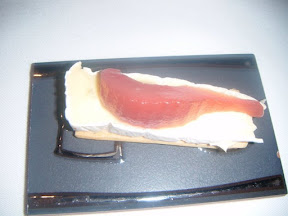
Above: Over the moon brie, blushing pear, house cracker; Creme caramel. Below: Textures of chocolate - Ristretto (Photo: Vera Lingonis).
Αντί για τσικουδιά, εδώ πίνουν οι άνθρωποι καφέ στο τέλος τους γεύματος. Παρόλο που ήταν πολύ πικρός, ταίριαζε μετά 'πο τόσα γλυκά. Πάλι, μια γουλιά μας έφεραν - ούτε το μισώ ποτήρι δε γέμιζε! Μα ήταν και πολύ αργά. Πως κοιμούντ' οι άνθρωποι όταν πίνουν καφέ τέτοια ώρα;
Τη στιγμή που μας έφεραν το καφέ, βγήκε πάλι η ξανθιά μ' έναν άλλο σερβιτόρο και κρατούσαν κάτι που φαινότανε σα μια μικρή τούρτα στους ομοφυλόφιλους στην πέρα γωνιά. Ήταν διακοσμημένο με ράβδους βεγγαλικών πού 'βγαζαν έναν ήχο σαν τα τηγάνια που τσουκνίζουν. Μάλλον γιόρταζε ο ένας τους γενέθλια. Οι υπάλληλοι ήταν όλο χαμόγελα και όλοι έδειχναν χαρούμενοι.
"Χάπι ανιβέσαρι τους ευχήθηκε," λέει η Θεανώ, που είχε ξεσπάσει στα γέλια. Ο Μπάμπης άρχισε να γελάει, αλλά τα παιδιά δεν έδειξαν κανένα αίσθημα.
"Ειντάν' αυτό το πράμα πάλι;" τη ρώτησα, και μου εξήγησε ότι σημαίνει επέτειος γάμου. Τώρα και μερικά χρόνια, η Νέα Ζηλανδία ήταν απ' τις πρώτες χώρες που έδωσε
το δικαίωμα στους πολίτες να παντρεύονται ομοφυλόφιλοι.
"Μη μιλάς δυνατά," την μάλωσε η Στέλλα, που έδειχνε ενοχλημένη με τη συμπεριφορά των γονέων της. "Νομίζεις πως δεν καταλαβαίνουν οι άλλοι γύρω μας τι λες, επειδή μιλάς Ελληνικά;" Τα δίδυμα δεν εκφράσανε γνώμη. Απλά κοιτούσαν απ' τον ένα στον άλλο, αλλά ήταν σαφή τι σκεφτότανε - κάποια πράγματα που είναι επιτρεπτά στη γενική κοινωνία δεν είναι επιτρεπτά ή δε συζητούνται στο σπίτι. Μόνο που η Στέλλα ήταν πιο ελευθερωμένη σαν φοιτήτρια και δεν δεχόταν πια την
αδικαιολόγητη συλλογιστική με την οποία την είχαν μεγαλώσει οι δικοί της.
Παρόλο που γεννήθηκαν και μεγάλωσαν στη Νέα Ζηλανδία, πάντα θεωρούσα τ' ανίψια μου Έλληνες. Τα χαρακτηριστικά τους ήταν Κρητικά, δεν διέφεραν απ' εμάς. Μόνο η γλωσσικές τους γνώσεις ήταν ελλειπείς κι αυτό δικαιολογούταν. Μάλιστα θα μπορούσα να πω ότι ήταν και πιο Έλληνες απ΄ τους Έλληνες. Δε χάναν ούτε μία Κυριακή απ' την εκκλησία, χόρευαν Ελληνικούς χορούς καλύτερα κι' απ' τα δικά μου παιδιά, ανυπομονούσαν ν' ακούσουν το εβδομαδιαίο Ελληνικό πρόγραμμα στο ραδιόφωνο, έβλεπαν Ελληνική τηλεόραση με τους γονείς τους, γνώριζαν καλά την Ελληνική κουζίνα. Είχαν απ' ευθείας σύνδεση με την Μητέρα Ελλάδα, σα να ζούσαν εκεί, με τα ηλεκτρονικά μέσα που υπάρχουν σήμερα. Αλλά γιατί να πάν' εκεί να ζήσουν, αφού εδώ όλα τά 'χανε στα χέρια τους: παιδεία, μόρφωση, δουλειά. Εδώ υπήρχ' ελπίδα να βγάζουν το ψωμί τους μόνοι τους, ενώ στην Ελλάδα θα ήταν εξαρτημένοι μέχρι ένα σημείο στους γονείς τους. Συνέχεια έλεγαν οι γονείς τους να γυρίσουν πίσω στην Ελλάδα, αλλά εγώ δεν μπορούσα να το προβλέψω. Είχαν συνηθίσει στις ευκολίες, ευκολίες που είναι ανύπαρκτες στο χωριό. Εξ' άλλου, τι να κάνουν εκεί;
"Θά 'χεις πολλά να πεις στον κόσμο, αδερφέ μου, όταν γυρίσεις στη πατρίδα." Η Θεανώ είχε πάψει να θυμάται το χωριό. Τώρα θυμόταν τον τόπο της ως ένα σύνολο, και όχι το μοναδικό αποσπασμένο κομμάτι που γνώριζε όταν ζούσε 'κεί. "Όλα τα παρδαλά που δε θα περίμενες να δουν τα μάτια σου και ν' ακούσουν τ' αυτιά σου τά 'δες εδώ."
"Αυτό είν' αλήθεια μέχρι ένα σημείο," της απαντώ, "αλλά έχω δει και πολλά ωραία πράγματα που δε θα ξεχάσω εύκολα."
"Τί σου άρεσε πιο πολύ, θείο;" με ρώτησε ο Σπύρος. Αυτή η ερώτηση ήταν εύκολη για μένα ν' απαντήσω αμέσως.
"Όλα μ' άρεσαν, παιδί μου," του λέω, "αλλά... αυτά που μου άρεσαν το πιο πολύ είν' αυτά που ξέρω ότι δε μπορώ νά 'χω στη πατρίδα. Μου αρέσουν οι φαρδοί σας δρόμοι, η ευκολία της κίνησης με τα μεταφορικά μέσα, τα παλιά πετρόχτιστα κτίρια του πανεπιστήμιου που δίνουν ένα ιδιαίτερο χαρακτήρα στη πόλη, και τα όμορφα ξύλινα σπίτια, όλα μου δίνουν την εντύπωση ότι η ζωή εδώ μπορεί να κυλίσει ήρεμα και ήσυχα, χωρίς άγχος και ταλαιπωρία."
Αυτά που τους έλεγα δε θα μπορούσα να τα περιγράψω σε κανένα στο χωριό, γιατί ποιός θα με πίστευε αν τους έλεγα ότι έζησα μέσα σε μια μικρή παράδεισο, και την ίδια στιγμή αναζητούσα τον τόπο μου; Κάποια πράγματα δεν είναι εύκολα να τ' αποχωρήσεις.
I'm a Greek-New Zealander. I'm also a New Zealand-born Greek. Sometimes, I don't know which one of the two I am more of; the passing of time and the location I find myself in often influence this factor. I may once have been a New Zealand Greek, but I don't think this is the case any longer. Other times I drop the hyphen and one of the parts, according to which way the wind is blowing at the time. Some of us live most of our lives in the twilight zone, while others prefer to keep one of the hyphenated parts in the closet. I still hold on to both passports, though (and so do my children); they're precious items in the times we live in.
©All Rights Reserved/Organically cooked. No part of this blog may be reproduced and/or copied by any means without prior consent from Maria Verivaki.


 I was so enthralled by Delia that I bought Delia Smith's One is Fun! when it first came out after the TV show was screened. Apart from the classic Edmonds Cookbook, every Kiwi's cooking bible for the absolute beginner (few New Zealanders do not own their own copy), this is one of my most well-thumbed books. I'd come home from my classes at university and cook something for myself while my parents were still at work. Then I'd clean up the kitchen, leaving no trace of my passing. The kitchen was still very much my mother's domain, and her cooking dominated. (Left: My edition of Delia's Complete Cookery Course Vol 1-3).


 (by Joanne Harris), which is the sequel to
 , which most of you reading this blog will know from the highly successful film
 . This time, we find Vianne (the heroine of